A house running one crop is easy to zone. A house running six is where the pipework earns its keep, because a mixed crop hydroponic system has to deliver different feed strength, different watering frequency and different cycle lengths down the same mains — a hardware problem before an agronomy one. The failures repeat: one tank feeding lettuce and herbs at a compromise EC, one valve covering blocks planted three weeks apart, and a harvest plan that assumes every bay turns over on the same day.
What follows is from the commissioning side — where boundaries get drawn, and what breaks when they are not.
What a Mixed Crop Hydroponic System Demands From the Hardware
It demands control below whole-house level — feed strength, watering frequency and timing set per block. That means zone valves with their own schedule, dosing that can be trimmed per zone, and a planting calendar drawn to match the zone boundaries.
Three crop variables decide the layout:
- Feed strength and pH target — the range the crop is run in, and how far the team is willing to compromise.
- Irrigation frequency and run-off — how often a block is wetted, and what share leaves as run-off.
- Cycle length and turnaround — how long a bay is occupied, and how long cleaning and replanting take.
Everything else — spacing, cultivar, temperature — is managed inside a zone. These three cannot be, so they set the drawing; feed targets are covered in the EC, pH and PPM guide.
Which Differences Force a Separate Zone

A split is forced by a feed gap wider than the compromise band, a watering pattern the second crop will not tolerate, or a cycle length that drags a neighbouring block through turnaround at the wrong time.
| Difference between crops | Share a zone? | Reason |
|---|---|---|
| EC targets close, same season | Usually yes | One recipe serves both |
| EC gap beyond the band | No | One crop is under-fed |
| Same frequency and run-off | Yes | Valve schedule is identical |
| Opposite wet/dry preference | No | Shared schedule over-waters one block |
| Cycle within about a week | Yes | Block replants as a unit |
| Cycle lengths far apart | No | Turnaround disturbs the neighbour |
Write the compromise band down rather than leaving it to judgement. On a leafy house in a mild season, anything within roughly 0.2–0.4 mS/cm can share; confirm the figure with the agronomist, since cultivar, water analysis and season all move it.
Boundaries have to land on components that can be isolated; where they go is set out in the hydroponic system zoning guide.
Crops That Can Share a Zone
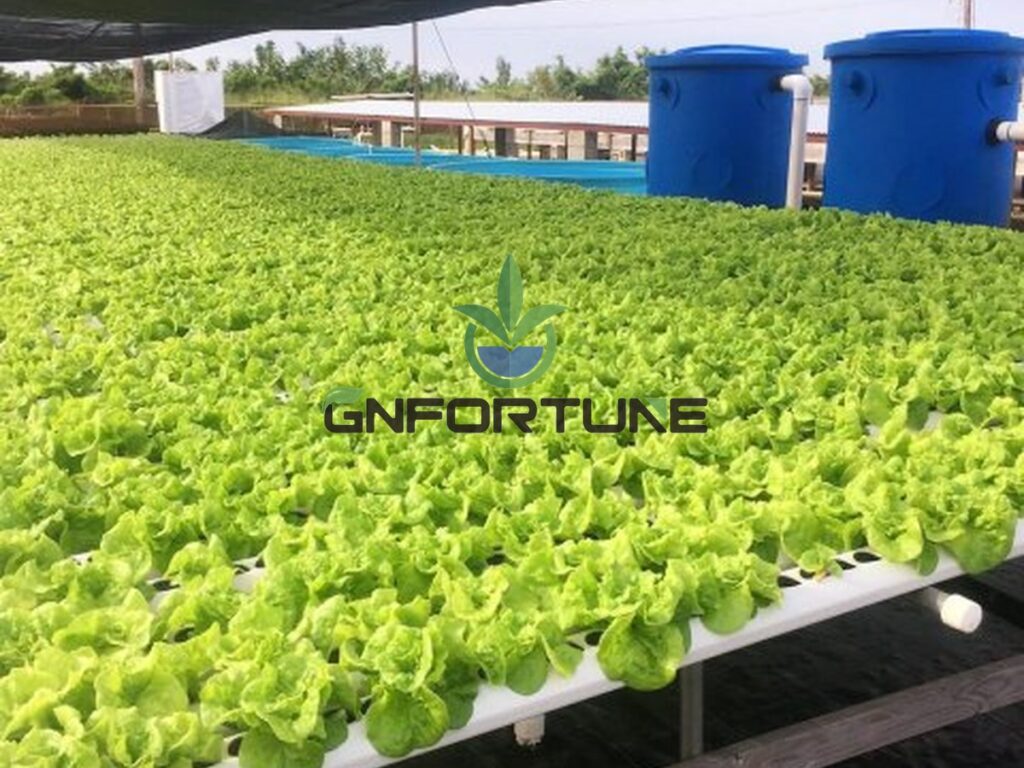
Short-cycle leafy crops with similar turnaround generally can. Lettuce types, Asian greens and some culinary herbs sit close enough to share when cycle lengths land within about a week of each other and one common recipe is accepted.
- Lettuce and leafy types — the reference group most candidates are judged against; the commercial lettuce cycle sets the house rhythm.
- Asian greens — bok choy, tatsoi and similar sit close to lettuce on feed and cycle; see the Asian greens guide.
- Specialty greens — arugula and similar short-cycle lines sharing the same band work; see the arugula cycle guide.
- Herbs at the low end of their range — viable in a cut-once programme, fragile in a long window.
Sharing fails for a scheduling reason more often than an agronomic one: the two crops were planted in different weeks. A shared zone should hold one sowing group.
Crops That Should Not Share a Zone
Fruiting crops, strawberries and anything on a much longer cycle should not share with leafy lines. Structure, climate and labour pattern differ as much as the recipe does.
- Fruiting crops: tomato, cucumber and pepper run on higher feed, heavier irrigation events and much longer cycles, with trellis hardware and a different climate set point.
- Strawberry and cane berries: gutter or slab systems with their own day/night strategy, pollination management and multi-month occupancy — see the strawberry gutter guide.
- Long-cycle crops: celery and similar tie a bay up far longer than lettuce, leaving the leafy side waiting.
- Propagation: always its own zone. Plugs are cheap to lose and expensive in schedule.
Where a farm needs leafy and fruiting production together, the format diverges too. The NFT channels versus substrate gutters comparison is the decision point: channels for the leafy side, gutters or buckets for the rest.
Sequencing Zones Around Different Cycle Lengths
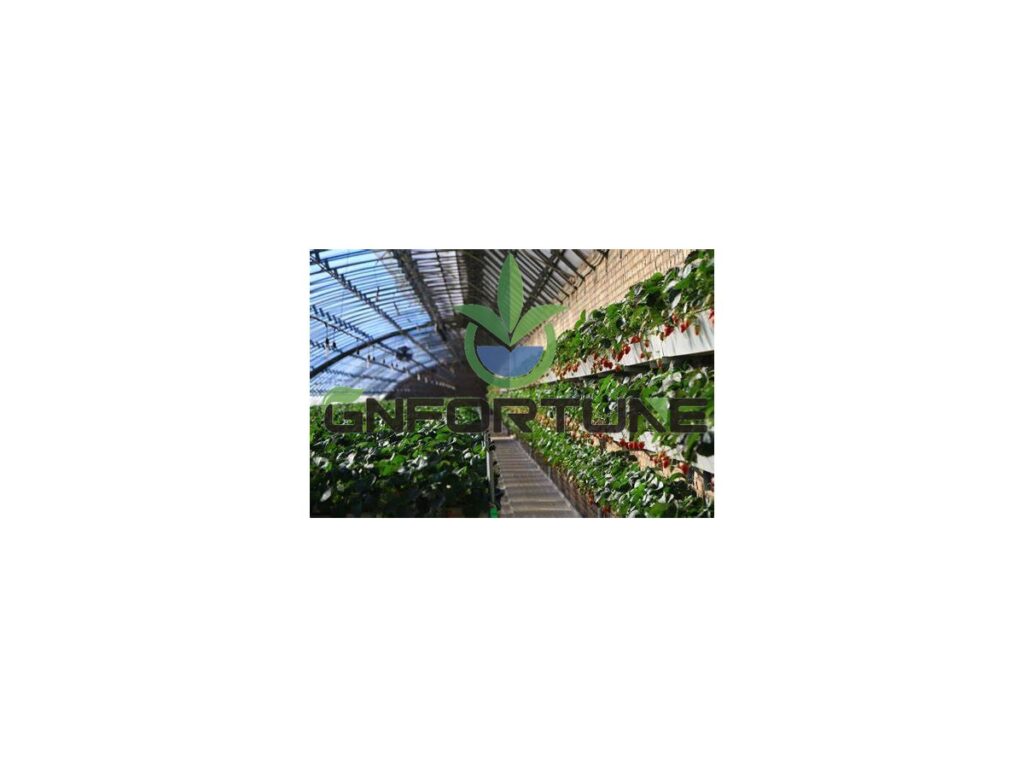
Mixed crop scheduling works when zone boundaries fall on sowing groups, so a zone empties, is cleaned and is replanted as a unit. Zone count follows planting frequency: a weekly sowing on a five-week cycle needs at least five zones, plus turnaround.
- Group crops into cycle bands — short, medium, long — not by species.
- Allocate zones per band, one per sowing week, sized to that band’s weekly volume.
- Add the turnaround window to every band; cleaning and replanting occupy the bay for days.
- Check the peak week, where several bands need attention together.
Turnaround is the step projects forget, and it lengthens when one zone holds crops at staggered maturity. Cleaning practice is covered in the between-cycles cleaning guide; the window has to be in the calendar before any schedule is promised.
Dosing, Run-off and Shared Water
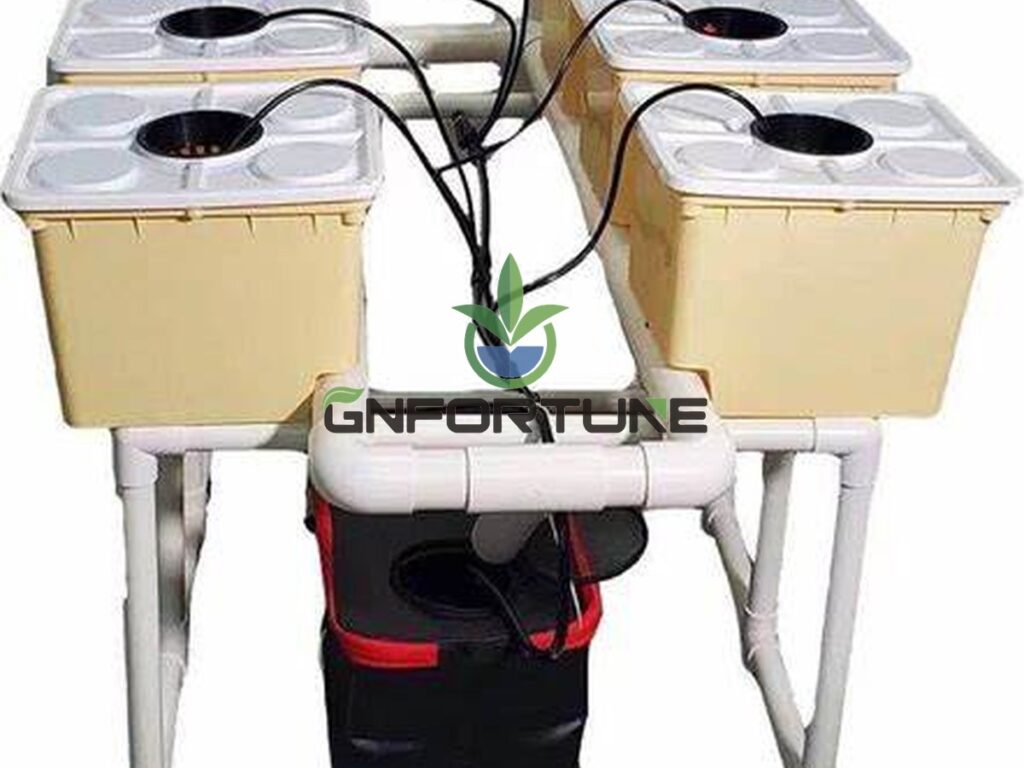
One tank can feed several zones when targets sit close. Running different EC by crop needs a second tank or a branch injector, and both add calibration work the crew has to own.
Shared water is the trade-off. One tank keeps dosing simple, and a bad batch or dosing fault reaches every zone at once — the reasoning behind recirculation versus drain-to-waste. Splitting the tank halves that exposure and doubles the probes needing calibration.
Run-off needs its own decision. Where zones drain to waste, collection can be shared if discharge is treated on site; on recirculating designs a shared return is a shared contamination path and filtration is sized for combined flow — see screen, disc and sand filtration.
Where Mixed Houses Slip in Practice
They slip on records and crew habit. A zone map at the panel, matching valve labels and an alarm that names the zone keep a multi-crop layout working; without them the crew treats the house as one block.
Labour standards need writing per crop: thinning and cut-and-come-again harvesting are not interchangeable, and a crew rated on one is mis-set on the other — see the crop work standards guide. Metering per zone, covered in sub-metering by zone, later shows whether a block pays.
For crop zoning hydroponics projects the key document is a manifold schedule: valve sizes, voltages and labels per crop block. Most suppliers can build manifold assemblies and labelling into the equipment package.
FAQs About Mixed Crop Hydroponic Systems
Can one nutrient tank feed crops with different EC targets?
Only within a narrow compromise band — roughly 0.2–0.4 mS/cm on a leafy house in a mild season, subject to cultivar and water analysis. Beyond that one crop is under-fed, so a second tank is needed.
How many zones does a mixed house need?
At least one per crop band per sowing week, plus the turnaround window. A weekly sowing on a five-week cycle needs five to six zones; fruiting crops are counted separately.
Can leafy and fruiting crops share the same line?
No. They differ on feed strength, irrigation event size, cycle length, structure and climate set point, and the compromise lands on the higher-value crop.
Do herbs need their own zone?
Usually yes at commercial scale. Basil runs warmer and at a different feed level from lettuce, and a long cutting window puts its turnaround out of step with a weekly block.
What is the first thing to fail in a mixed house?
The schedule. Hydraulics hold up because they are fixed; planting dates drift, and two zones need turnaround in the same week with the same crew.
Related Reading
- Best Crops for Hydroponic Systems: Matching Guide — Matching crops to systems before you commit them to one line
- Crop Scheduling for Continuous Production: Building a Planting Calendar That Holds — Building a planting calendar that holds when cycle lengths differ
- Nutrient Solution Management: Recirculation vs Drain-to-Waste, EC Drift and Dump Cycles — Recirculation, EC drift and dump cycles when one tank feeds several crops
- Plant Spacing and Density in Hydroponics: Plants per Square Metre That Pay — Plants per square metre that pay, crop by crop
- Most Profitable Hydroponic Crops: Yield, Price, and Demand — Yield, price and demand across the crops a mixed line has to carry
Next Step: What to Send for a Quotation
A mixed crop hydroponic system is quoted from the crop plan and the sowing calendar. Asked to price from a house size, a supplier assumes one loop, and the zone count is added later at a worse price.
Planning a house with more than one crop? For RFQ or project consultation, send: greenhouse dimensions and usable area; crop list with target EC and pH per crop; cycle length and sowing frequency; target weekly or annual output per crop; preferred format by crop — NFT, DWC, substrate gutters or Dutch buckets; local climate and raw water analysis; automation level; delivery schedule; and the budget band. G AND N FORTUNE LIMITED supplies NFT channels, DWC systems, substrate gutters and greenhouse packages with zone valves and manifolds quoted to those parameters.