

Labour is the largest controllable cost on most hydroponic farms, and the least measured. Crop work labour standards turn an activity everyone agrees is important into a rate, a quality definition and a number that can be compared week to week — which is what makes it manageable.
This guide covers how to set rates from observation, what quality criteria to define, how to train and audit crews, and how to convert it into cost per unit of saleable product.
What Is a Crop Work Standard?
A crop work standard is the agreed definition of how a task is done, how long it should take, and what quality it must reach. It covers pruning, suckering, trellising and lowering, deleafing, harvesting and plant hygiene, and it exists so that labour cost can be planned and quality can be audited rather than argued about.
Without one, two crews on the same crop can differ by a wide margin in both speed and outcome, and neither can be corrected because there is no reference. With one, a supervisor can tell within an hour whether a crew is on pace.
How Do You Set a Realistic Rate?
By observation, not by assumption. Time the task with several experienced workers across different crop stages and times of day, discard the outliers, and set the standard at a sustainable pace rather than the fastest observed one.
- Define the task boundary: what is included — walking, plant handling, tool sanitising, waste removal.
- Time it properly: multiple operators, repeated cycles, across early, mid and late crop stages.
- Set the standard at sustainable pace: typically close to the median of experienced operators, not the best.
- Convert to an output rate: plants per hour, rows per hour, or kilograms per hour.
- Re-time at each crop stage: a rate set on young plants does not hold at peak canopy.
Then express it in the unit the crew works in. Plants per hour means nothing to someone paid by the row; state the standard in both.
What Quality Criteria Should Be Defined?
Quality criteria are where most of the value is, because a fast crew that cuts the wrong thing costs more than a slow one. Define the outcome for each task in terms a supervisor can check visually:
- Pruning and suckering: which shoots are removed, where the cut is made, and what is left — including whether flowers or trusses are being removed by mistake.
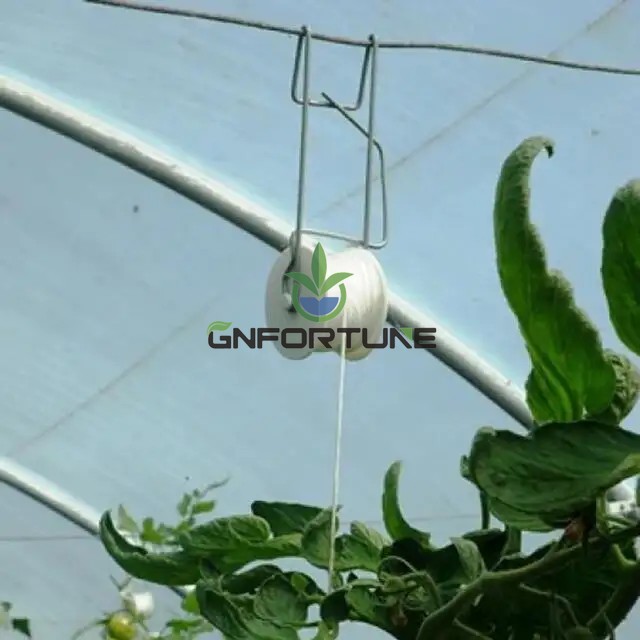
- Trellising and lowering: clip or twist placement, tension, stem damage limits and the frequency of the operation.
- Deleafing: how many leaves per plant per pass, which leaves, and the maximum removed at once to avoid growth checks.
- Plant hygiene: removal of senescing material, tool sanitising frequency, and handling of symptomatic plants.
- Harvest: maturity stage, cut position, pack-handling rules and rejection criteria at the plant.
Photograph the accepted and rejected result for each and keep the images at the point of work. Written criteria alone are interpreted differently by every crew.
How Are Crews Trained and Audited?
Train in the crop, not in a room: demonstrate at working pace, let the trainee work under supervision, then re-check after an hour rather than at the end of the day. Pair new workers with an experienced one for the first cycle, and re-train at every crop stage change because the task changes with the plant.
Audit against the standard, not against opinion. A short weekly check — a defined number of plants inspected per crew against the photographic criteria — produces a quality percentage that can be tracked. Publish it. Crews respond to a visible number far more than to periodic verbal feedback.
How Does This Convert Into Cost per Unit?
Multiply hours by loaded labour cost and divide by saleable output for the period. The useful comparison is labour cost per kilogram or per pack, tracked weekly against the crop plan — it exposes both rate drift and quality problems, because poor quality shows up later as lower saleable weight from the same hours.
Piece rates can work well, but they must be tied to the quality audit. Paid purely on speed, crews optimise speed; a piece rate with a quality threshold written into it produces the outcome the farm actually wants.
FAQs About Crop Work Standards
How long should pruning a tomato plant take?
Measured rates vary with variety, plant age and canopy density, so use your own timed observations rather than a published figure. As a method, time several experienced operators across crop stages and set the standard near the median sustainable pace, re-timed as the canopy develops.
Should crop work be paid hourly or by piece rate?
Both are workable. Hourly pay suits training periods, new crops and tasks where quality dominates; piece rates suit repetitive, measurable tasks with experienced crews. If piece rates are used, tie payment to a quality threshold so speed does not displace standard.
How often should standards be re-timed?
At each significant change in crop stage or variety, and at least twice per season. Canopy density, plant height and fruit load all change task duration, and a rate set early in the crop usually becomes unrealistic by peak production.
What is the most common cause of quality failure?
Undefined criteria. When the standard exists only as verbal instruction, crews fill the gaps differently and supervisors cannot correct consistently. Photographic references and a weekly audit close most of that gap.
How does labour standard affect yield?
Directly. Deleafing beyond the standard checks growth, missed suckers divert assimilate from fruit, and inconsistent pruning produces variable truss size. Yield per square metre and labour hours per kilogram should be reviewed together, never separately.
What to Send When You Request a Quotation
Crop, system type, plant density and target labour hours per square metre, plus the tasks you intend to standardise. Layout, working height and access design all influence how quickly a crew can work, and are easier to specify before installation than to change afterwards.
Related reading: support systems in trellising and plant support, staffing structure in staffing a commercial hydroponic farm, performance metrics in farm KPIs and labour hours, and workflow in internal logistics and layout.
Send your crop, system layout and labour targets, and we will advise on working heights, access and support components that reduce task time: contact our team.