

Ask which hydroponic crop makes the most money and the honest answer is: the one you can sell every week at a good price, in the volume your system produces. The list of most profitable hydroponic crops is never fixed — it shifts with your market, your greenhouse light, your labor costs, and your buyer relationships. Patterns still hold across regions. Leafy greens and herbs turn floor space over quickly and sell in volume; berries and specialty lines earn more per kilogram but need more skill and narrower buyers. This guide sets out a measurement method, the reliable earners, the high-value lines, and a comparison table growers can adapt to their own numbers.
How to Measure Profitability in Hydroponics
The first mistake is comparing price per kilogram. A crop can sell at a premium and still lose per square meter per year if it grows slowly, harvests once, or demands expensive labor. The metric that matters for a fixed greenhouse is gross margin per square meter per year, built up like this:
- Revenue per harvest: crop value per square meter at the density and grade you actually sell.
- Times harvests per year: short crops repeat — this is where lettuce and baby leaf win, because they occupy the bed for weeks, not months.
- Minus variable costs: seed, nutrients, power, water, packaging, and wash-line consumables.
- Minus allocated labor: typically the largest line in leafy programs, and the one most price comparisons forget.
- Equals gross margin per m² per year. Fixed costs — greenhouse, equipment, insurance — sit above this line and are decided by total throughput, not by any single crop.
An example of the logic without region-specific numbers: if a crop returns a high margin per harvest but runs three times longer than an alternative, the slower crop must earn three times as much per harvest just to break even per square meter per year. That is why the fastest-growing greenhouse businesses usually run a mix, and why the annual hydroponic farm ROI guide starts from throughput per square meter before it ever looks at crop prices.
The Reliable Earners: Lettuce, Herbs, and Leafy Greens
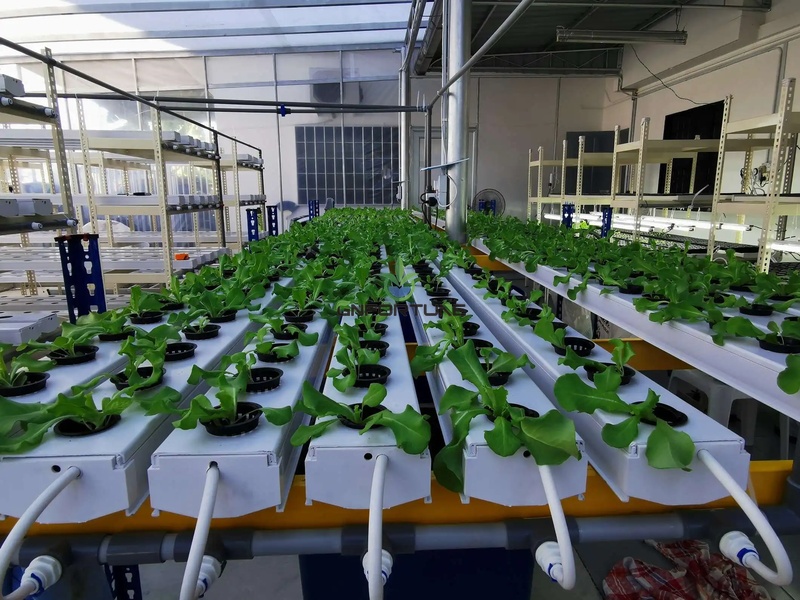
Healthy lettuce crop growing in greenhouse NFT channelsCommodity leafy greens are the financial anchor of commercial hydroponics for a simple reason: they sell. Wholesale demand for head lettuce, baby leaf, and culinary herbs is deep and year-round, which converts into predictable weekly cash flow — the thing investors in a crop actually value.
- Head lettuce is the volume leader. Six to ten crops a year per bed is common in well-run NFT programs, giving steady throughput and forgiving buyer demand. Production mechanics are well documented in the lettuce NFT growing guide.
- Baby leaf and salad mixes earn a premium over whole-head lettuce per kilogram, but they are sold by specification: cut size, leaf maturity, color, and shelf life. Programs that hit a processor’s specification reliably get contract-style volume; the relationship model is described in our guide to leafy greens for salad processors.
- Herbs — basil, mint, cilantro, dill, parsley — typically command the strongest margins in this group because demand is daily, volume per customer is small, and quality is king. The catch is that herb buyers are fewer and more concentrated; losing one account hurts more than losing one lettuce customer.
High-Value Lines: Berries, Specialty Greens, and Edible Flowers
Beyond the leafy anchors sit the crops that justify the phrase “high value” — higher price per kilogram, but a different operating profile:
- Strawberries are the most developed high-value line in hydroponics. A premium, out-of-season berry crop can be worth several times commodity lettuce per kilogram, but the crop runs for months, needs cold-chain handling and soft-fruit labor, and carries real disease pressure. Systems and spacing for this crop are covered in the strawberry gutter growing guide.
- Tomatoes are the volume workhorse of fruiting crops. Margins come from kilograms per square meter over a long season rather than from price spikes, which makes them a cash-flow crop for operations with greenhouse height and a buyer who takes regular trays. The Dutch bucket tomato manual details the root zone side.
- Microgreens and specialty greens sell at a strong premium per kilogram but in small volumes to restaurants and retailers. They are labor-intensive and perishable, and a successful microgreen room is really a marketing company with a grow room attached.
- Edible flowers and ultra-niche lines can carry the highest price per kilogram in the industry. The same fact that makes them valuable makes them fragile: the market is small, the shelf life is short, and one oversupplied week can flood the buyers you spent a season developing.
The Trap of Chasing the Highest-Price Crop
The most common planning error in new hydroponic farms is building the greenhouse around the crop with the highest price per kilogram, then discovering the market for that crop is a handful of buyers who want small, consistent weekly lots. The economics of a crop are decided jointly by price, volume, cycle length, and the cost of selling it:
- Specialty buyers are few. If the crop cannot be sold in wholesale volume, price per kilogram is an academic number.
- Perishability concentrates risk. A crop that must move within days punishes a missed harvest, a broken cooler, or a rejected load harder than lettuce does.
- Labor scales with delicacy. Soft fruit, microgreens, and flowers are handled, trimmed, and packed individually — labor cost per kilogram climbs with the price.
- Skills are specific. A team that grows lettuce well will not automatically grow strawberries or flowers to a saleable grade in season one.
Consultant’s reminder: The crop with the highest per-kilogram price is rarely the crop with the highest profit per square meter per year. Rank your options by gross margin per square meter per year, and only then let price per kilogram break the tie between two similar lines.
A Profitability Comparison Table by Crop
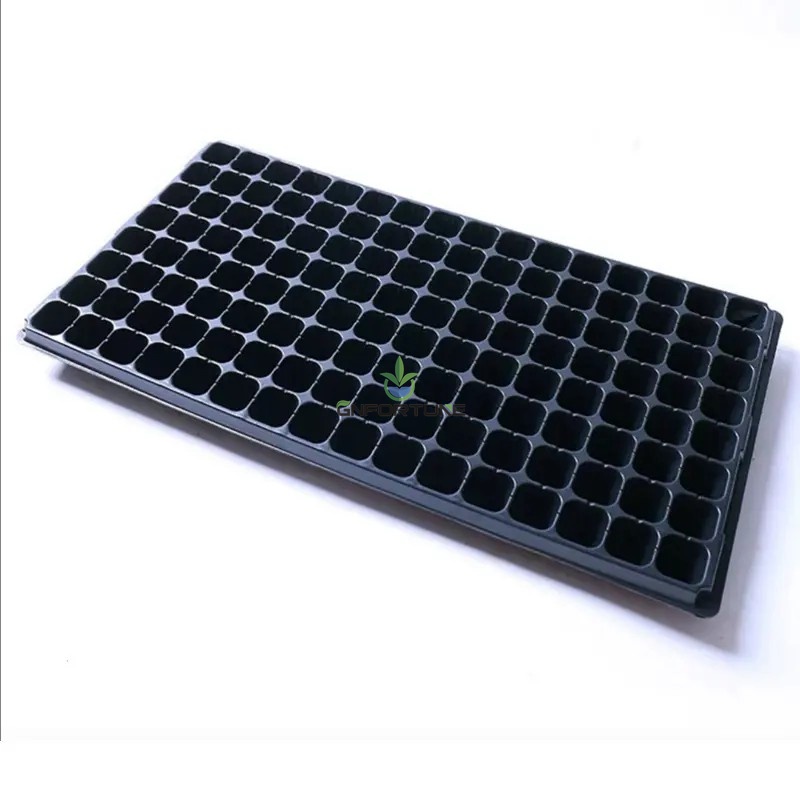
Black seedling propagation tray for hydroponic cropsAs a planning frame, the table below groups crops by their typical commercial position. Yields and prices are indicative industry magnitudes only — figures vary by region and season, and your local wholesale sheet, not any article, is the final authority.
| Crop group | Typical price position | Cycles per year | Main margin driver | Main risk |
|---|---|---|---|---|
| Head lettuce | Commodity | 6–10 | Fast bed turnover and volume | Price swings, buyer specs |
| Baby leaf and salad mixes | Premium over head lettuce | 8–14 | Cut quality and shelf life | Specification rejection |
| Culinary herbs | Premium | 8–12 | Daily wholesale demand | Concentrated buyer base |
| Tomatoes | Mid to premium by type | 1 long season | Kilograms per square meter | Energy and labor intensity |
| Strawberries | High, out-of-season premium | 1–2 seasons | Premium timing and grade | Soft-fruit labor and disease |
| Microgreens and specialty greens | Very high per kilogram | Continuous | Niche unit price | Small client base, short shelf life |
| Edible flowers | Highest per kilogram, niche | Continuous | Unique product | Tiny market, very short life |
Read the table against your own constraints. A low-light greenhouse in winter cannot run a tomato program profitably; a grower with a strong restaurant network can make microgreens work where a wholesale farm cannot. When two crops show similar per-square-meter margins, the tie-breakers are working capital, your team’s skills, and which buyer relationship you already hold.
FAQ
What is the most profitable hydroponic crop?
A: There is no universal answer — it depends on your market, light, and labor. Lettuce and herbs deliver reliable per-square-meter returns through fast turnover, while strawberries and specialty greens can earn more per kilogram but carry more risk.
Are tomatoes or lettuce more profitable in hydroponics?
A: Usually tomatoes earn more revenue per square meter over a full season, but with far higher energy, labor, and crop time. Lettuce wins on cash flow and simplicity; the better crop is the one that matches your greenhouse and buyers.
Why are herbs so profitable?
A: Herbs sell daily, command a premium over leafy greens, and occupy the bed for short cycles. Their weakness is a concentrated buyer base, so margins are only as safe as your accounts.
What is the best crop for a small hydroponic farm?
A: Leafy greens and herbs. They turn over quickly, need modest equipment, and have broad wholesale demand. Reserve premium crops for when you have reliable buyers and labor.
How do I calculate profit per square meter?
A: Multiply crop value per square meter per harvest by harvests per year, then subtract variable costs and allocated labor. Compare crops on that figure, not on price per kilogram.
Get a Crop-Mix Profitability Model for Your Greenhouse
The list above becomes a business plan only when it is run against your light, your cost per square meter, and your local wholesale prices. Send us your greenhouse area, climate, and target market and we will build a crop-mix model with you — get a crop-mix profitability model for your greenhouse. Related reading: