Tenure, not agronomy, decides whether a hydroponic farm should be built to come apart. On leased land, on a plot allocated for a fixed period, or inside a park that plans to redevelop the block, the equipment question changes from lowest installed cost to what can be recovered. A demountable hydroponic system is specified for that situation: joints that open without cutting, structures that unbolt in bays, services that disconnect at points shown on the drawing. The premium is real, and so is the alternative.
These decisions are taken while the layout is still on paper.
When Demountability Belongs in the Brief
Demountable design belongs in the brief when expected tenure is shorter than the period the asset needs to pay back, or when renewal sits outside the grower’s control. As a working rule, projects on land with fewer than roughly seven to ten years of secure tenure should price a demountable option; on freehold ground, a bonded and welded build usually returns more for the same money.
Three lease clauses change the engineering, and they are worth reading before the drawing is frozen:
- Notice and renewal terms — annual or three-year renewals a landlord can decline are the normal pattern for leased land hydroponics.
- Reinstatement obligations — a clause requiring the plot back in its original condition turns slabs and buried services into a liability.
- Ownership of fixtures — what stays with the land at the end, and whether equipment counts as movable or fixed.
Pilot-first projects sit in the same bracket: a house built to prove the market while a permanent site is negotiated follows the logic of phasing a project in stages. Lenders take a related view, since movable collateral is treated differently when financing and insuring a farm.
What Travels and What Gets Written Off
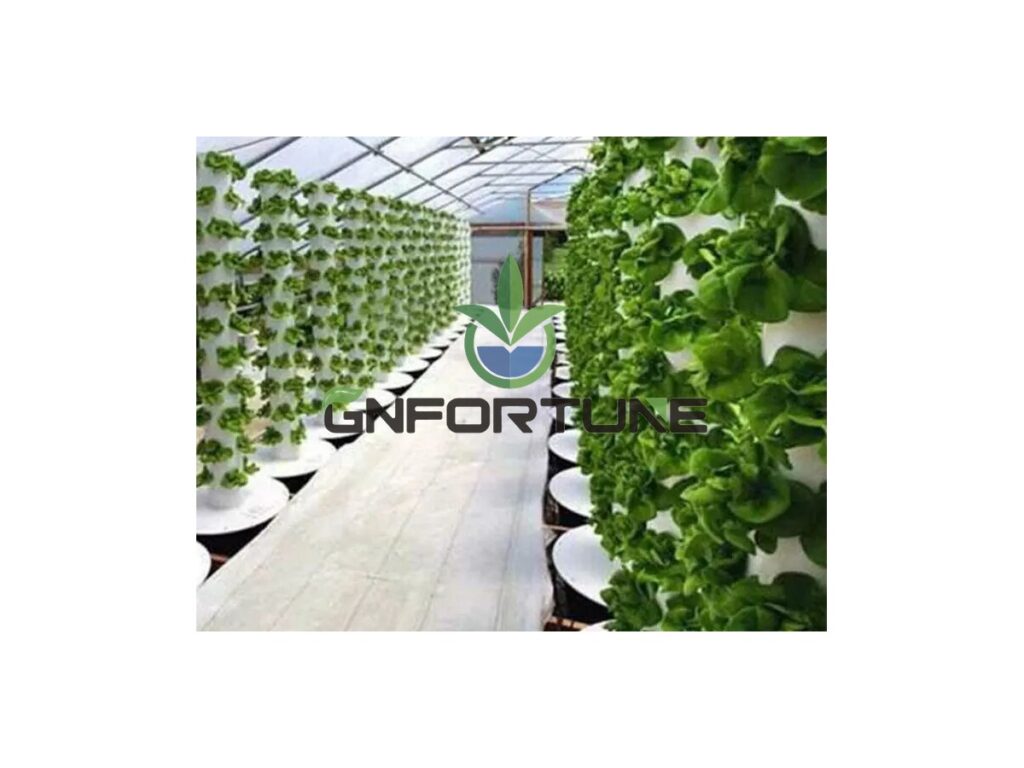
Roughly, everything above floor level can move and everything in the ground cannot. Give every component a recovery assumption before ordering — the total decides whether the demountable premium is worth paying.
| Component | Moves | Written off |
|---|---|---|
| Greenhouse frame | Bolted steel frames | Welded or cast-in frames |
| Covering | Polycarbonate panels, handled | Film in almost every case |
| NFT channels, gutters | Yes, with a loss allowance | Solvent-bonded runs |
| DWC tanks and rafts | Yes, but bulky | Bonded liners |
| Pumps, filters, panels | Yes, if skid mounted | Hard-plumbed wall units |
| Pipework mains | Union and compression joints | Solvent-welded runs |
| Cabling | Tray runs with connectors | Buried cable and splices |
| Groundworks, drainage | Almost never | Nearly always |
| Growing media | Rarely worth the freight | Replace at destination |
Channels are the volume item and the one most often over-estimated. Treat them as a recoverable asset with a loss allowance: extrusions drilled, cut and bonded in place come out as scrap more often than as reusable runs.
Jointing Choices for a System That Comes Apart
The joints decide whether a demountable design survives its second assembly. Mechanical connections — bolts, clips, unions and compression fittings — go wherever a run has to open; adhesives and welds are reserved for parts the project has accepted as consumable.
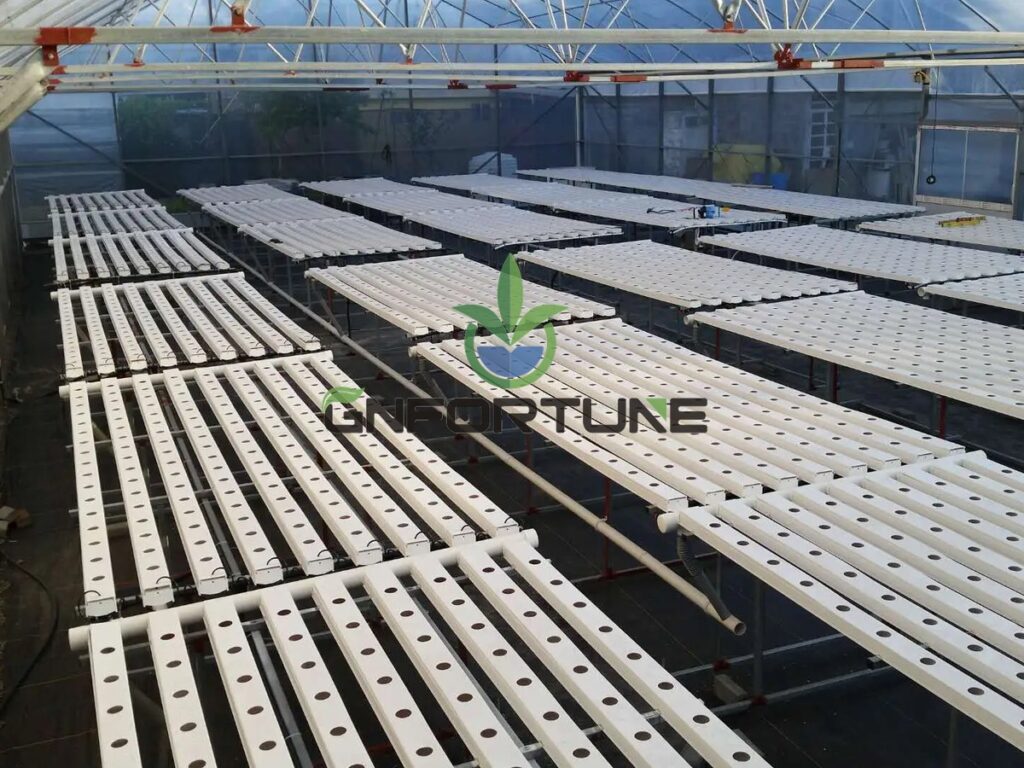
- Gutters: bolted flanges or mechanical couplings instead of solvent cement, so a movable gutter system separates at points shown on the drawing.
- Mains: unions at every zone boundary and on both sides of any pump or filter skid.
- Cabling: labelled plugs or terminal boxes, no buried splices, one numbering system throughout.
- Fasteners: stainless or hot-dip galvanised for a wet, fertiliser-loaded atmosphere, per the guidance on corrosion protection.
- Spares: order 10–15% extra fasteners, gaskets and seals — the parts that disappear in a move are small ones, not extrusions.
Holding a single fastener size and head type across the structure costs nothing at design stage and saves days later.
Foundations and the Relocatable Greenhouse Frame
The frame is the easy part; what it stands on is where demountability gets expensive. Screw piles, ballast blocks and surface-laid services can be recovered; slabs, plinths and trenched drainage generally cannot.
Most projects land on a compromise: a compacted gravel pad with durable ground cover, and a relocatable greenhouse frame anchored by piles or ballast sized to local wind load. Whether piles are permitted at all is a local question — some leases require full removal, others allow footings to stay.
Covering follows the same logic. Film is cheap and is normally replaced rather than moved; polycarbonate panels travel but need careful handling and fresh gaskets, per the covering materials comparison.
What Dismantle and Rebuild Cost
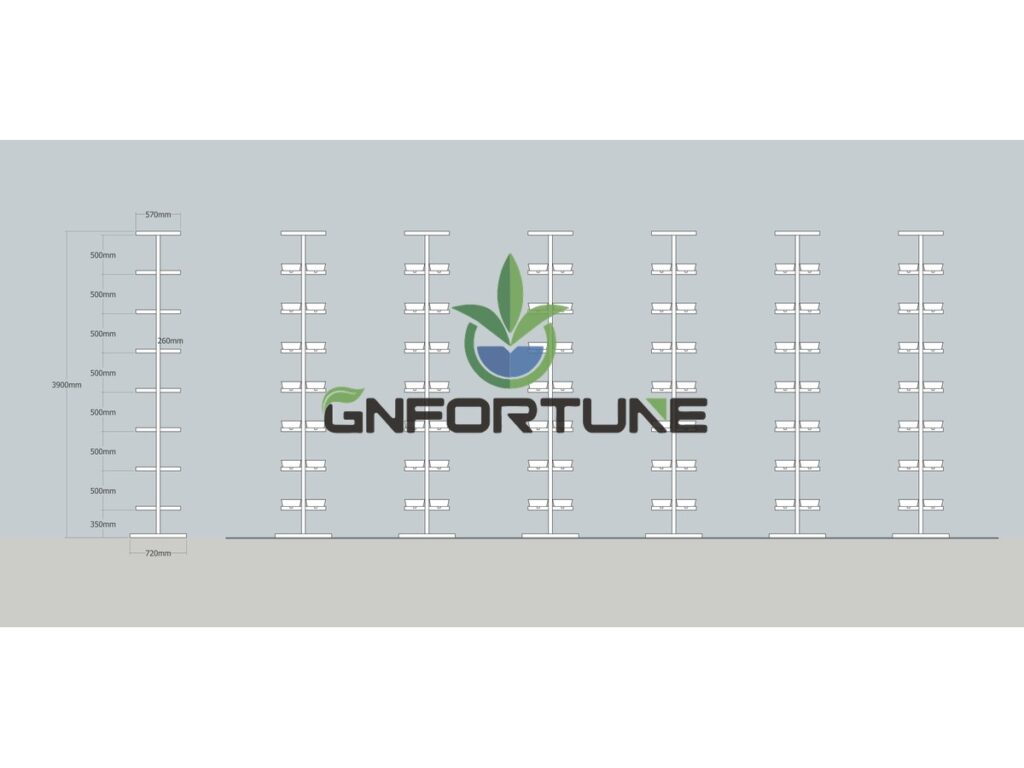
For a system designed to move, budget dismantling, transport and re-erection at roughly 15–30% of original installed equipment cost; for a conventional build taken apart after the fact, plan for 40% or more. Both are planning bands rather than estimates, and they assume the same layout at the destination, a crew that has built the system before, a move within the same region and no structural modification.
- Labour: dismantling is slower than the first build, since fasteners have corroded.
- Consumables: fasteners, gaskets, seals, film and cut lengths — the line most underestimated.
- Handling losses: allow 5–10% replacement on channels and panels.
- Media: budget new media at the destination; moving spent material rarely pays, as the spent media guidance notes.
- Transport: volume rather than weight sets the cost for extrusions and tanks, per the container loading maths.
- Downtime: the largest line for most farms and the one usually omitted. The first cycle at the new site rarely hits target.
Storage is forgotten in most models. Equipment needs covered space between sites, and stacked extrusions left in the sun are not the asset they were.
Who Demountable Design Suits, and Who Should Skip It
It suits operations whose tenure is uncertain, whose market is unproven, or whose model depends on equipment holding value across sites. It does not suit a farm on owned land with a long horizon, where the same money in control, zoning and alarms earns more.
The common case sits in the middle: demount what is expensive and standard — frame, channels, tanks, control panel — and accept that groundworks, media and covering are consumed. A demountable hydroponic system specified that way is not a different product; it is a jointing schedule, a foundation decision and a spares kit. Suppliers with in-house extrusion and moulding can quote runs cut to transport-friendly lengths with matching joint kits, worth raising when the RFQ goes out. The dismantle and rebuild cost figure belongs in the financial model from day one.
FAQs About Demountable Hydroponic Systems
How much does a demountable hydroponic system add to equipment cost?
The premium is modest — mechanical joints, heavier fixings and a spares kit usually sit in the low single to low double digits as a share of equipment value. The bigger number is the later dismantle and rebuild cost, so judge it against the move it buys.
Can an existing bonded system be made demountable?
Partly. Cutting unions into mains at zone boundaries is cheap and worth doing. Converting solvent-bonded gutter runs or a welded frame is not, and is justified only during a planned refit.
Does a relocatable greenhouse meet the same wind and snow ratings?
It can, but the anchoring does the work rather than the frame. Ballasted or piled foundations need engineering against local design loads, and buyers should confirm the load case in writing before ordering.
What is the biggest hidden cost of moving a farm?
Downtime. Labour, transport and consumables arrive on invoices; the missing weeks of production do not, and on a house in full production they usually exceed the moving bill.
Is growing media worth moving to the new site?
Usually not. New media is cheap against the freight and handling of spent material, which also carries root debris with it. The exception is media still holding a standing crop.
Related Reading
- Decommissioning and Moving a Hydroponic Farm — What a farm tear-down actually involves, and the parts that do not survive it
- NFT Channel Accessories: End Caps, Connectors and the Spares Kit to Order Up Front — End caps, connectors and couplings: the hardware that decides reassembly cost
- Greenhouse Structural Design for Hydroponics: Wind, Snow and Foundation Loads — Wind, snow and foundation loads behind any footing decision
- Modular vs Custom Hydroponic Packages: Which — Modular versus custom packages when the site is not permanent
- Refurbishing an Older Hydroponic Greenhouse: What First — What to check first when the second-hand structure has to be reused
Next Step: What to Send for a Quotation
Demountability is quoted from a jointing schedule and a component list, not from a house size. Asked to price without knowing what has to come apart, a supplier will quote the standard bonded build — hard to unwind once production starts.
Planning a house on leased or short-tenure land? For RFQ or project consultation, send: greenhouse dimensions and usable growing area; lease length, renewal terms and reinstatement obligations; foundation type — slab, piles or ballast; crop plan and target weekly or annual output; which components must be recoverable; local climate range, design loads and raw water analysis; automation level required; delivery schedule; and the budget band. G AND N FORTUNE LIMITED supplies NFT channels, DWC systems and matched greenhouse packages, with mechanical joint kits and spares quoted to those parameters.