Most farms find out how their system is zoned on the day something breaks. A solenoid sticks open, a filter blinds off, a pump trips, and the crew discovers that every row in the house sat behind one component. Hydroponic system zoning is the discipline of deciding on the drawing which plants are allowed to fail together. The failure radius is the crop area that goes down with a single fault — a design output, not an accident of layout.
This article comes from the commissioning side of that work: where faults originate, which boundaries actually hold, and what a sectional shutdown needs before anyone should rely on it. It is written for engineering teams specifying a new house or retrofitting one after a loss larger than it needed to be.
What Failure Radius Means on a Working Farm
Failure radius is the crop area that stops receiving water, power or control when one component fails. It is set by how many plants sit behind a shared component, and by whether that component has a path around it.
Two things shrink it: dividing the crop so fewer plants depend on one component, and giving that component a bypass or a standby so its failure never reaches the crop. Most projects need both, because the components worth duplicating are few. Zoning does not make faults less frequent; it changes what each fault costs.
One trap worth stating early: a house can be zoned hydraulically and still share a control point. A single controller, dosing unit or EC probe governing every zone puts the whole crop back into one failure radius.
Where Faults Actually Start
The events that reach a claim or a missed delivery come from a short list, and the list has not changed much across the projects we see:
- Pump stoppage: fast to bite on low-volume systems; detection depends on flow monitoring, not on aisle walks.
- Blocked filtration: slow, with flow declining over days and usually blamed on something else.
- Valve failure: binary. Closed starves a zone; open floods it or drops pressure elsewhere.
- Sensor drift: one EC or pH probe out of calibration drives dosing across every zone it feeds.
- Power loss: one circuit feeding several blocks puts them all in the same radius.
- Human error: a valve closed for a repair and never reopened.
The first five are engineering problems. The last is procedural, and a working lockout-tagout programme covers most of it, including proving the system is back in its normal state before a shift ends.
Irrigation Zone Design: Where the Boundaries Go

Put zone boundaries at components that can be isolated, not at round numbers of plants. Each zone needs its own isolation valve on the supply side, a way of confirming flow or pressure at the far end, and on recirculating systems, isolation on the return as well.
- One valve per zone, reachable without moving plants or equipment.
- Labels matching the panel schedule and the drawing, with one zone numbering system across all three.
- Isolation on feed and return where zones share a return main, so one zone can drain without pulling the house down.
- A drain point at the low end of each zone for clean-out and shutdown.
- No zone spanning a large elevation change, where the low end floods while the high end starves.
Valve specification — voltage, normally open or closed, pressure differential, manual bypass — belongs in the manifold schedule rather than being settled on site.
Electrical and Control Zoning
Power and control should be split so a single trip does not blank the house, but the split has to follow load, cable routes and safety, not geography alone. In practice that means a separate circuit per block or pair of blocks, dosing and control on a protected supply, and enough labelled panel ways that a crew can isolate a zone without guessing.
Instrumentation is the part most often left shared. If one EC probe governs dosing for all zones, the failure radius is the whole house even with clean hydraulic zoning. Options in order of cost: per-zone measurement, a second probe with a documented switchover, or a written fallback recipe the crew runs manually until the probe is replaced. Probe drift is handled in the sensor calibration routine.
Alarms have to resolve to a zone. An alert that reports low flow without saying where sends the crew walking the entire house; thresholds and escalation are set out in the alarm systems guide.
How Small Should a Zone Be
Small enough that losing the largest one is survivable in the production plan, and no smaller. Every extra valve is a leak point, a label and one more thing the crew has to operate correctly.
For a leafy house on weekly planting, size zones against forward cover: the largest zone should not hold more than roughly one to two weeks of promised volume, which on a uniform single-harvest house typically lands in the range of 5–15% of crop area per zone. That range assumes even crop value across the house and one harvest stream. Sites working to contracted volumes should size against the weekly number they have committed to deliver.
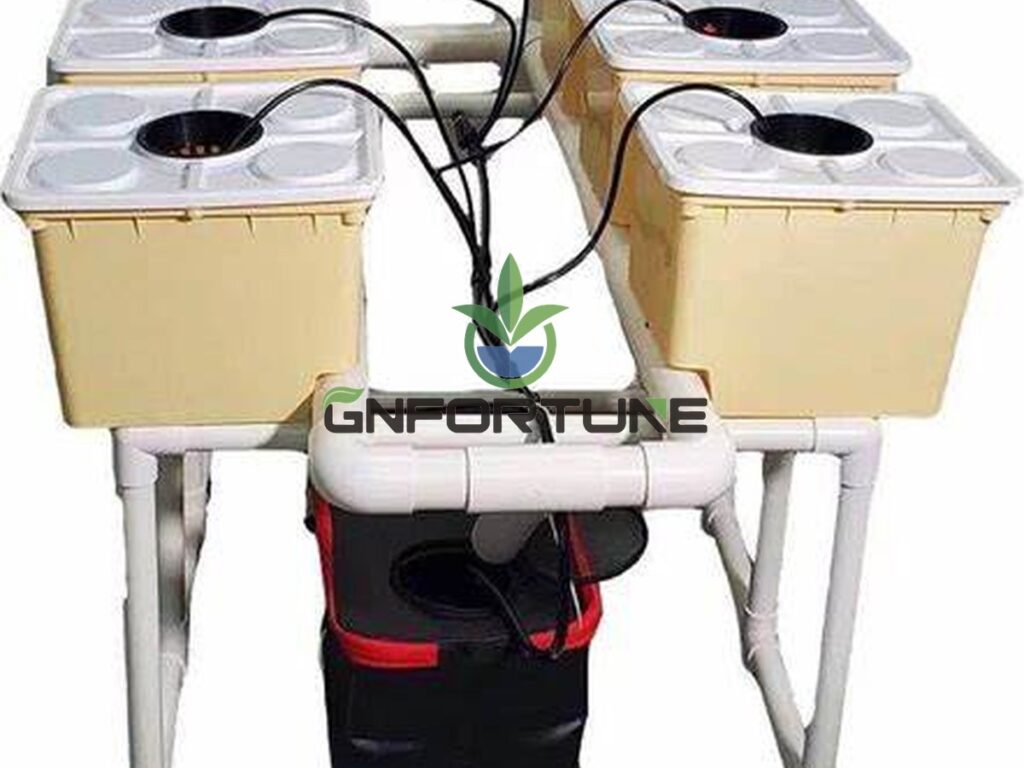
DWC has natural boundaries — each tank or raft bed is already a zone — so the question becomes whether tanks share a pump, filter and chiller, and whether one can be isolated without dropping the rest. Propagation deserves its own zone in almost every design: plugs cost little to lose and a great deal in schedule, because they delay replanting across every finishing zone.
Pump Loops, Cross-Connections and Shared Components
Redundancy only counts where the second path is independent. A standby pump on the same manifold, the same filter and the same controller is a spare part, not a second system.
The common arrangement is a duty and standby pump valved so either can feed either half of the house, with the changeover exercised during commissioning. Whether the standby also needs a separate power feed depends on how the site splits its supply and what the crop tolerates — a design question rather than a purchasing one. Flow, head and how much redundancy a site can justify sit with pump sizing.
Cross-connections raise the same issue from the other side. They let one loop carry another during a fault, and they also let a contamination event, a pressure surge or a dosing error travel between loops. Every cross-connection needs a valve, a label, and a recorded normal state checked daily rather than remembered.
Practising a Sectional Shutdown

A zone that has never been shut down in daylight is a drawing, not a control. Commissioning is where the plan becomes real:
- Operate every isolation valve through its full range and record that it moved freely.
- Shut each zone in turn and confirm the rest of the house holds flow and pressure.
- Confirm the alarm resolves to the right zone and reaches the right person.
- Time the drill — how long the crew takes at 2 a.m. is the number that matters.
- Record the normal state of every cross-connection and post the list at the panel.
After handover the drill needs a schedule. Valves touched only during failures tend to be seized, mislabelled or quietly left in the wrong position by the time they are needed, which is why the sequence belongs in commissioning and site acceptance as a test the buyer witnesses.
What Zoning Costs and Where It Pays Back
Zoning adds valves, manifold ports, circuits, sensors, labels and commissioning hours. It pays back in avoided crop loss, faster diagnosis and the ability to work on one block without stopping the house.
- It pays most on high-value crop, contracted weekly volumes, remote sites with limited technician cover, and houses running year-round with no natural maintenance break.
- It pays least on short-cycle crop in a small house with staff on site around the clock, where the same money in a monitored alarm and a tested standby pump often cuts risk further.
- The hidden cost is operational: more valves means more states to check, and a zone plan nobody understands is worse than none.
Most suppliers can build valve assemblies, manifold layout and labelling into a package quote. Retrofitting boundaries into a running house is possible and usually costs more, mainly because it means draining and re-testing zones that are already planted.
FAQs About Hydroponic System Zoning
How many zones should a commercial hydroponic house have?
Enough that losing the largest zone can be absorbed by the production plan, which for most commercial houses works out between six and twenty zones. The limit is that every extra zone adds valves and operating steps, so the count should follow the delivery commitment rather than a rule of thumb.
Does zoning remove the need for a backup pump?
No. Zoning limits what a pump failure costs; it does not keep water moving. A standby pump on an independent feed addresses the failure itself, and the two measures are complementary rather than interchangeable.
Can several zones share one nutrient reservoir?
Yes, and most do, because one tank keeps dosing and monitoring simple. The trade-off is shared water chemistry: a bad batch, a dosing error or a contamination event reaches every zone fed from that tank.
What is the most common zoning mistake?
Zoning the water and leaving the control shared. One EC probe, controller or dosing unit governing all zones puts the whole crop back into a single failure radius regardless of how the pipework is divided.
Is it worth retrofitting zoning into an existing house?
Usually yes for the valve, labelling and alarm-resolution work, which is cheap relative to the crop at risk. Adding return isolation or splitting electrical circuits is far more invasive and is generally justified only during a planned refit.
Related Reading
- Pipework Runs and Manifold Layout: Farm Rules — Manifold and pipework runs: the layout rules a zone plan has to respect
- NFT Channel Flow Rate, Slope, and Length — Flow rate, slope and run length: what each zone has to deliver
- Hydroponic Pump Sizing: Flow Rate, Head Pressure & Redundancy for Commercial Systems — Pump sizing, head pressure and redundancy per loop
- Critical Spare Parts for Hydroponic Farms: A Stock List Built on Downtime Risk — A downtime-based spare parts stock list for the zones you cannot lose
- Hydroponic Alarm Systems: Thresholds, Escalation and Avoiding Alarm Fatigue — Alarm thresholds and escalation when a zone goes down
Next Step: What to Send for a Quotation
Zone layout is quoted from the crop plan and the site, not from a house size alone. Suppliers asked to price a system without zone quantities will assume a single loop, and that assumption is hard to unwind later.
Planning a house or a retrofit? For RFQ or project consultation, send: greenhouse dimensions and usable growing area; crop plan and target grade specification; target weekly or annual output; local climate range and raw water analysis; number of zones requested, or the weekly volume each zone must protect; automation and alarm level required; delivery schedule; and the budget band. G AND N FORTUNE LIMITED supplies NFT channels, DWC systems and matched greenhouse packages with zone valves, manifolds and labelling quoted to those parameters.