Move or close a hydroponic farm in order: drain and flush, dismantle by system, label for reassembly, freight the kit and what the regulator expects.
Decommissioning and Moving a Hydroponic Farm
A farm move is four projects running in one: a shutdown, a dismantle, a freight job and a restart. The order matters more than the speed: the expensive mistakes are a tank discharged illegally, a channel stack that arrives bent, and a rack nobody can reassemble. Dismantling hydroponic system equipment without a record is the most common cause of cost overrun on a relocation. Relocating greenhouse equipment also carries a decision at the front: what actually travels. This article sets out the move, sell or scrap decision by system, the clean sequence, the dismantle order, the labelling record, and what the old site owes the regulator.
Decision First: Move, Sell or Scrap by System
Score every asset against two numbers: value per cubic meter and replacement cost at the destination. Freight is quoted by container, so volume is the currency, and anything with low value per cubic meter loses to a new order unless the profile is custom.
Nothing leaves the site wet or dirty. Nutrient solution is a wastewater issue once it leaves the system, and wet channels grow biofilm in transit that becomes a disease problem at the other end.
Stop feed one to two days before the shutdown so the crop takes up what is in the system.
Flush mains and channels with clean water to waste, then drain tanks and remove the sludge.
Sanitise with peracetic acid or hydrogen peroxide at label rate, circulate, then rinse or neutralise as the label requires.
Dispose of the spent solution through a permitted route: sewer with consent, tankered removal, or irrigation to land where consent allows. A storm drain is not one.
Record volumes, product names and dates, since that record is what a regulator or a landlord will ask for.
Clean equipment is a biosecurity decision as much as a hygiene one, because pests and pathogens travel on dirty channels.
Cross-border moves add paperwork that is easy to forget. Used growing equipment can require phytosanitary documentation, and an inspector who finds root matter or media residue will hold the container. Clean before loading and carry the cleaning record with the shipment.
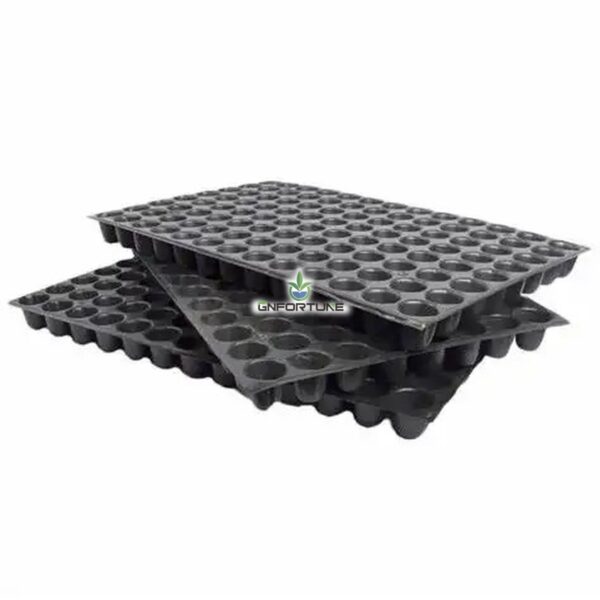
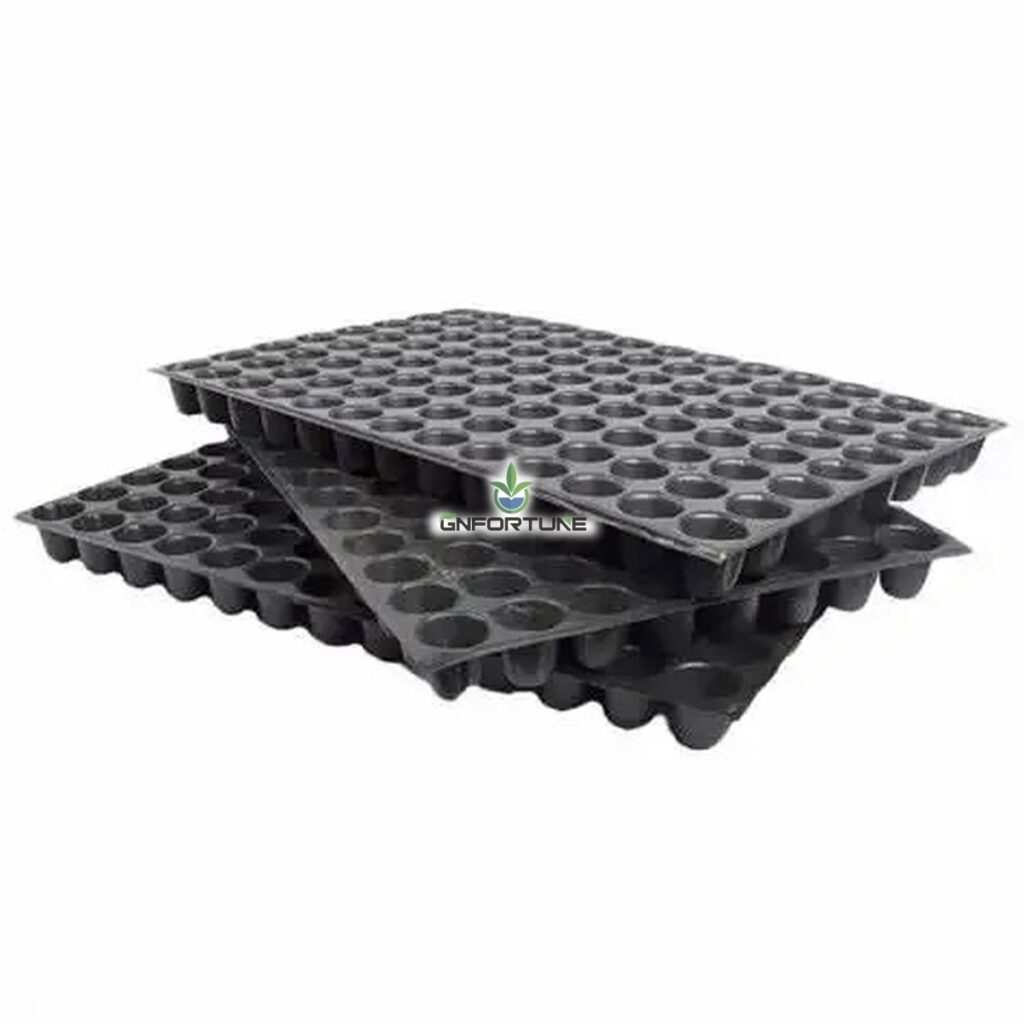
Stacked plug trays cleaned and palletised after a farm move
Dismantling Hydroponic System Order That Protects the Kit
Dismantle in the reverse of the installation sequence, and take the fragile, high-value items out last so they spend the least time on a dusty floor.
Plants and media out first, into a disposal or handling route arranged before the first cut.
Laterals, emitters and drippers next, bagged by bay so the set stays together.
Lids and end caps, bagged and tagged with the channel run they came from.
Channels, carried supported along the length at roughly 1.0 to 1.5 m centers, stacked flat and out of the sun.
Racks and benches, bundled, strapped and counted as pieces rather than as bays.
Tanks, drained, cleaned and capped so nothing enters in transit.
Pumps, dosing units, sensors and controllers last, packed individually, ideally in their original packaging.
Channel handling is where the money goes. A 4 to 6 m gutter bends if carried at one end, and a bent gutter will not sit on the new supports. Keep the stack height modest, do not strap tight enough to deform the bottom layer, and keep it out of direct sun, since heat plus strap pressure is what warps a load.
Labelling and Photo Records for Reassembly
A move without labels costs more in reassembly than the freight saved by moving everything. Use a numbering scheme that matches the destination layout where known, and photograph every connection before it is undone.
Tags: weatherproof, fixed to racks, channel runs and junction boxes, numbered by bay, zone and row.
Cables: numbered at both ends, with the panel photographed before disconnection and the schedule kept with the shipment.
Records: a spreadsheet with tag, item, quantity, condition and destination, plus a photo folder keyed to the tag numbers.
Drawing: one reassembly drawing marked with tag positions, carried in the container rather than in a laptop.
Condition notes: mark anything damaged before loading, so transit damage can be claimed separately.
Relocating Greenhouse Equipment: What Is Worth Freighting
Freight is bought by the container, so the comparison is volume against replacement cost. A 40 ft high-cube gives roughly 65 to 70 m³ of usable load, and the question for every line is whether that cube is better spent elsewhere.
Item
Value density
Freight note
Pumps, dosing units, sensors, controllers
High
Palletised, packed individually, kept dry
LED fixtures
High
Original packaging or foam in place; record hours used
Steel racks and benches
Medium
Bundled, strapped, piece counted
NFT channels
Low per m³
Flat stack; compare against a new order
Pipework and fittings
Low
Buy new unless the sizes are unusual
Film, cladding, screens
Very low
Scrap or leave in place
Tanks
Volume dependent
Local sale often beats the freight
Channels are the line most often moved when it should be replaced. Extruded gutter is produced in runs and standard profiles are ordered from about 1,000 m, so topping up a shortfall at the destination is cheap and removes the risk of shipping a damaged load. The pattern that keeps a container legal and undamaged is set out in the container loading guide, and the same discipline applies to a used shipment.
Old Site: Discharge Rules and Land Condition
The dismantling hydroponic system work leaves a documented state, not a swept floor. Work through the waste streams in order and keep a record for each, because the lease and the regulator both ask for evidence later.
Nutrient solution: permitted route only, with volumes recorded.
Sanitiser: neutralise before discharge as the label requires.
Sludge and spent media: dispose by the local rule for the material; the plastic recycling guide covers the polymer side.
Metals: segregate steel, aluminium and copper, since mixed scrap is priced down.
E-waste: fixtures, drivers, sensors, batteries and control panels go to a licensed handler.
Refrigerant and oils: recovered by a licensed handler, with the certificate kept in the site file.
Land: photograph the site at handover and check the dilapidations clause in the lease before the last load leaves.
Frequently Asked Questions
Can nutrient solution go down a drain at the old site? A: Usually not without consent. High nitrogen and phosphate make it a wastewater, so it needs a permitted route or tankered removal.
Move NFT channels or buy new at the destination? A: Compare freight volume against replacement. Channels are low value per cubic meter, so a long move rarely pays unless the profile is custom.
What has to be labelled before dismantling? A: Every bay, row, rack, channel run and junction box, plus a photo of each connection before it is undone.
Who removes refrigerant and electrical connections? A: A licensed handler for refrigerant and a licensed electrician for disconnection, with both issuing a record for the site file.
How long does a farm move take? A: Four to eight weeks from last harvest to first planting at the destination, with the dismantle itself usually one to three weeks.
Get a Dismantle and Freight Plan
Dismantling hydroponic system equipment in the right order protects resale value and keeps the old site clean on paper. Relocating greenhouse equipment pays only for the lines that carry value per cubic meter, and the decision is easier on a spreadsheet than in a container. Send the system type, bay count, destination and the disposal options at the old site.
A procurement-consultant view of hydroponic farm budget variance: the line items a monthly pack needs, price/volume/efficiency splits, the four variances that dominate, and thresholds that
A consultant's guide to produce quality claims: the triggers behind buyer rejections, the evidence that decides them, how settlements work, and the contract clauses that
Closing the repair loop with maintenance work orders: the six stages, the eight fields worth keeping, planned versus breakdown counting and what ticket data says