

Two numbers decide whether a hydroponic crop thrives or stalls: EC and pH. Read them right, and the nutrient recipe is balanced to the plant’s actual uptake; read them wrong, and even an expensive A/B mix produces weak roots or tip burn. PPM is the third term you see on every meter and on every datasheet, but it is only a translation of EC, not an independent measurement. This guide walks a commercial grower through what each meter reports, how to calibrate it, the daily routine that keeps readings trustworthy, and how to read the numbers alongside what the plant is telling you.
What EC, pH, and PPM Actually Measure
EC (electrical conductivity) is the simplest number to take from a nutrient solution: pass a small alternating current through the liquid, measure how easily that current flows, and report it in millisiemens per centimetre (mS/cm). Because dissolved salts carry the current, EC is effectively a sum of the nutrients in solution. pH is the negative logarithm of hydrogen-ion activity; on the 0–14 scale that hydroponic growers use, 7 is neutral and the 5.5–6.5 band is where most nutrient ions stay chemically available. PPM (parts per million) is the same EC value re-labeled for an industry that grew up around drinking-water testing and fertilizer labels.
The conversion between EC and PPM is a convention, not a constant. Two scales dominate: the 500 scale (common in North America, where 1.0 mS/cm is treated as 500 PPM) and the 700 scale (more common in Europe and Australia, where the same 1.0 mS/cm becomes 700 PPM). A reading of 2.0 mS/cm is therefore 1,000 PPM on the 500 scale or 1,400 PPM on the 700 scale — same nutrient solution, two different numbers. Pick one scale for the whole operation and keep the conversation in EC; PPM only enters the picture when an old datasheet forces it.
Choosing and Calibrating Your Meters
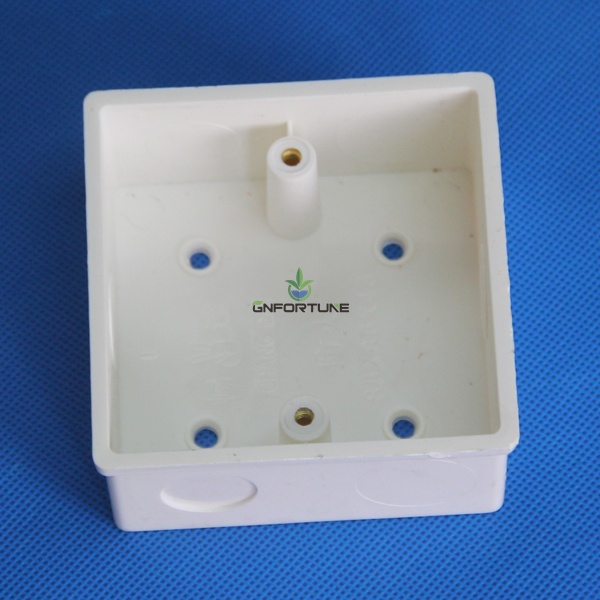
Waterproof PVC electrical box for online pH and EC controller with probe portsA pen-style meter is portable, inexpensive, and easy for any operator to use. Pens are the right tool for daily reservoir checks, but they drift faster than bench meters because the probe is small and the reference junction is exposed. A bench (or wall-mount) meter with a separate probe is more stable, easier to calibrate, and is the right choice for the central nutrient room where every batch is mixed.
For pH, two-point calibration is the minimum on a commercial farm; single-point calibration cannot catch a probe that has lost slope, and a drifted slope reports readings that look plausible yet drift by 0.3–0.5 units across a week. Calibrate with fresh 4.01 and 7.00 buffer, rinse the probe with distilled or deionized water between buffers, and never pour used buffer back into the bottle. EC probes are calibrated against a single standard (1.413 mS/cm is the most common); if the probe reads the standard within ±2%, the field reading is trustworthy. Probe life is the third number in the budget — a glass pH probe in a nutrient room typically lasts 6–12 months; EC probes last 18–36 months but still need a quarterly clean with the manufacturer’s solution.
A Daily Measurement Routine That Survives a Busy Week
Routine beats heroics on a commercial farm. The most reliable readings come from a routine run by the same person at the same time, in the same spot, with the same probe.
Take EC and pH at the same time each day, usually first thing in the morning before irrigation cycles move solution between tanks. Pull the sample from the same point in the reservoir — a sample drawn from a quiet corner of the tank reads differently from one drawn near the pump return. Allow the probe to stabilise for at least 30 seconds; the number on most meters continues to drift for that long before settling.
Temperature compensation matters more than most growers realise. EC rises by roughly 2% for every 1°C of temperature increase, so a reading taken from a warm summer tank and compared to one taken in winter will look like a drift when it is purely thermal. Every modern meter has automatic temperature compensation (ATC); make sure it is enabled and that the probe carries a temperature sensor, not just conductivity electrodes.
Logging is the other half of a survivable routine. Record EC and pH in a fixed column of the daily sheet so a trendline appears within a week. A single reading is a data point; ten readings on the same column are a decision.
Reading the Numbers: When EC Is Too High, Too Low, or Drifting
A single number means less than the difference between this morning’s number and yesterday’s. The table below matches the most common patterns to the most common causes; the fix column is intentionally conservative, because drastic changes to a working reservoir usually cost more than they save.
| Pattern | Likely cause | First check | First correction |
|---|---|---|---|
| EC climbing over 3–5 days, pH stable | Top-up with plain water only — salt concentration is rising | Confirm top-up source is RO or low-EC | Increase drain ratio and refresh the reservoir |
| EC climbing, pH drifting down | Anaerobic zones in reservoir or biofilm on probe | Check pump circulation, look for sediment | Stir and clean reservoir, replace probe if old |
| EC falling over 3–5 days, pH stable | Crop uptake higher than top-up rate | Confirm A/B concentrate is being dosed into top-up | Increase A/B concentrate ratio in top-up water |
| EC stable, pH drifting upward | Bicarbonate (HCO₃) in source water | Send water analysis for alkalinity | Use a nitrogen-acid blend or switch source |
| EC stable, pH drifting downward | Acid overuse or organic-acid build-up | Check dosing-pump calibration | Pause dosing 24 h, recheck, then recalibrate |
| Sudden EC spike | Top-up with concentrate by mistake, or dosing pump stuck on | Confirm recipe log for last 24 h | Dilute with fresh water and restart the reservoir |
| Sudden pH swing (0.5+ in 4 h) | Dosing pump stuck open or probe failure | Inspect dosing pump, swap probe | Stop dosing, hand-correct pH until repaired |
The routine question worth asking before any shipment of plants leaves the greenhouse: “If I had to defend today’s EC and pH reading in front of a customer or auditor, could I show the calibration log and the daily sheet?” A meter that is never calibrated, and a sheet that is never written, produce the same field result — a number nobody can trust.
Calibration Solutions, Storage, and Probe Care
Storing a pH probe dry is the fastest way to kill it; the glass bulb must stay wet. Use the manufacturer’s storage solution (usually 3 mol/L potassium chloride) or, in a pinch, a 3:1 mix of distilled water and table salt. Never store the probe in distilled water alone — it leaches the reference electrolyte out of the junction. Keep the storage bottle sealed; an open bottle absorbs CO₂ from the air and its pH drifts within weeks.
Calibration buffers have a shelf life once opened. pH 4.01 and 7.00 buffers stay usable for 3–6 months if capped and clean. EC standard (1.413 mS/cm) lasts longer because it is less sensitive to CO₂, but a bottle that has been topped up from a beaker is contaminated. Date the bottles when you open them and discard past the date — the cost of buffer is trivial compared to the cost of running a crop on a drifted meter. A probe replacement plan belongs in the annual budget rather than the emergency purchase order; for a farm running several reservoirs, budget two pH probes and one EC probe per year, more often on hot summer reservoirs or with aggressive acid dosing.
When to Trust the Meter vs When to Trust the Plant
The meter is faster than the plant, and that is both its strength and its trap. pH and EC respond within minutes; the plant shows symptoms days later — leaf cup, tip burn, brown roots. Trust the meter when the numbers are stable; trust the plant when the numbers are stable but the crop is not. The most expensive mistake is to chase a meter that disagrees with a healthy crop; the second is to ignore a meter that is screaming while the crop still looks fine.
In practice, act on meter readings first and on plant symptoms second. By the time leaves tip-burn, EC has been wrong for days; when the meter moves, the next irrigation cycle is the cheapest place to correct.
FAQ
How often should I calibrate EC and pH meters?
A: Calibrate pH weekly for pen-style meters and every two weeks for bench meters. EC probes drift more slowly and are recalibrated monthly.
Are 500-scale and 700-scale PPM meters interchangeable?
A: No. 1.0 mS/cm is 500 PPM on the 500 scale and 700 PPM on the 700 scale; pick one scale for the whole operation.
Can one meter serve both pH and EC?
A: Combination pens are fine for spot checks, but a dedicated bench meter with a dedicated pH probe is more stable for central dosing decisions.
What is the cheapest meter upgrade that pays for itself?
A: A second calibration buffer plus a probe storage bottle — two-point pH calibration catches drift that single-point cannot, and a wet-stored probe lasts several times longer than a dry one.
Get a Meter and Buffer Package for Your Greenhouse
For sites that measure nutrient solution across multiple greenhouses, the next decision is usually whether to automate; the trade-off is laid out in our auto-dosing buying guide. The nutrient solution recipe guide covers A/B mixing and crop-specific EC targets, the automation and dosing hardware range integrates pH, EC, and reservoir-level sensors into one dashboard, and the hydroponic engineering input list is what we use when sizing probe count and reservoir turnover.
Send your reservoir volume and crop through the quote form and we will return a meter-and-buffer package with calibration intervals and per-probe replacement cost.