Root crops are the category that soilless growers try once and then either specialise in or quietly drop. The appeal is real: a short-cycle radish, grown locally and delivered fresh with the tops on, has buyers. The constraint is physical. The part you sell grows inside the medium and has to swell against something, so hydroponic root crops fail for reasons that have nothing to do with the nutrient recipe — too little depth, too much resistance, or watering uneven enough to crack the root.
This guide covers where the boundary sits, crop by crop, and what the numbers look like once occupancy and media volume are counted honestly.
Why Hydroponic Root Crops Behave Differently in Soilless Culture
The harvested organ has to expand inside a confined volume, so the limiting factors are depth, media resistance and uniformity rather than feed. A leaf can be pushed back into specification; a radish that met an obstruction at day twelve cannot.
Two consequences follow. Root crops are direct-seeded rather than transplanted, because any check to the taproot shows up as a deformity weeks later — see incoming inspection of seeds and media. And the medium is a structural component, not merely a reservoir.
That rules out most of the common leafy hardware. NFT channels and raft beds give the crop nowhere to swell, so the swelling stage has to happen in substrate — deep trays, grow bags or slabs, substrate gutters, or deep bucket systems.
Media Depth and Swelling Space
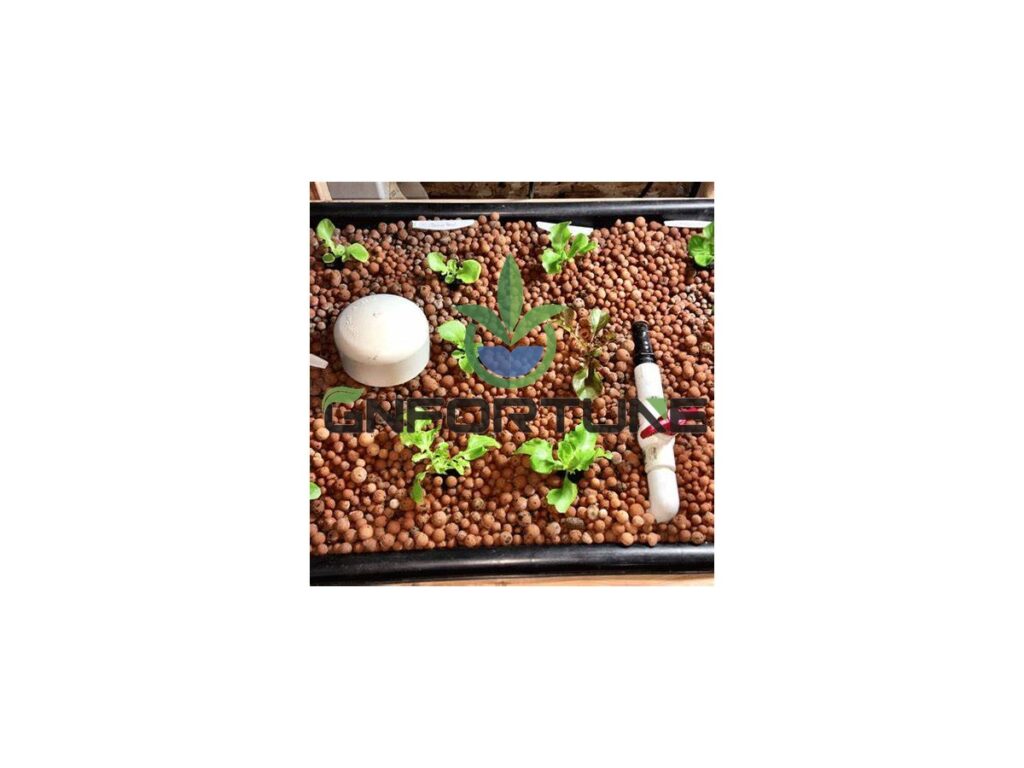
Root crop media depth is the first filter, settled before variety selection. The bands below assume loose, well-drained media, no compaction, uniform moisture and a cultivar matched to the target size; they move with cultivar, season and media type, and should be confirmed by trial.
| Crop and target | Planning media depth | Planning cycle band |
|---|---|---|
| Radish, bunching size | 8–12 cm | 25–40 days |
| Baby beet, whole small root | 12–18 cm | 45–60 days |
| Beet, full size | 20–25 cm | 60–85 days |
| Carrot, finger or baby | 15–20 cm | 55–70 days |
| Carrot, full length | 25–35 cm | 75–100 days |
Texture matters as much as depth. The blend must be fine enough for uniform contact and coarse enough to drain; anything with woody chunks, clods or sharp particles sits in the expansion path and produces a forked root. Options are in the soilless substrates guide.
Depth sets the format too. A tray deep enough for a full-length carrot is different hardware from a lettuce channel, with a different media volume per square metre — the distinction drawn in NFT channels versus substrate gutters is where to start.
Radish: The One With a Real Commercial Case
Radish is the root crop with a defensible commercial case in soilless production. The cycle is short, the root is small, the media depth is modest, plant density is high, and buyers pay for uniformity, colour and freshness rather than for size.
Radish hydroponic production usually runs as a tray or shallow-gutter programme, direct-seeded at a density set by the target diameter — the logic of spacing and density, except that the grid decides root size once.
The failure modes are consistent:
- Cracking and splitting from wet–dry swings, which is an irrigation-uniformity problem rather than a feeding one.
- Pithiness and harsh flavour where the crop runs hot or is left past its target size.
- Bolting under long days and high temperature, which removes the crop from the market entirely.
- Shape defects from compaction, clods or a tray bottom met too early.
Beet in Substrate: Viable at a Smaller Target
Beet in substrate works when the target is baby beet or beet greens. Full-size beet is achievable, but it occupies a bay for several times a lettuce cycle and sells at a lower price per kilo, which is the trade that decides most projects.
Baby beet is normally grown for the whole small root with tops attached, at 12–18 cm of media and a 45–60 day band. Full-size beet needs 20–25 cm and 60–85 days. Both figures move with cultivar, temperature and season, and both assume the shoulders stay covered: an exposed shoulder greens and turns woody.
Handling is the hidden cost. Beet bleeds when cut or bruised, complicating wash water and presentation — see the packaging guide; field heat needs removing quickly per the cold chain guidance.
Carrot Soilless Growing: Where It Breaks
Carrot is where the economics stop. It needs the greatest depth, the longest cycle and the loosest media of the three, deforms most readily, and returns the lowest price per kilo.
Carrot soilless growing fails in a specific way: the taproot meets resistance and forks. Anything in the expansion path — a clod, a coarse particle, a compacted layer, the tray base, or a neighbouring root — produces a split or a stubbed end, and the crop is graded on straightness as well as length. Uniformity suffers further because emergence from direct seeding is rarely even.
The defensible version is narrow: finger or baby carrot for chefs and direct sales, in a media blend proven by trial, at a price that carries the depth, the cycle and the hand harvesting. Treated as a bulk commodity against field-grown carrot, it does not pay.
Deformity Rate and Grading: The Line Nobody Budgets
Budget a downgrade percentage before the first sowing: root crops are graded on shape as well as size, and shape cannot be corrected. As planning assumptions, a well-run radish programme with uniform moisture and correct depth can plan for single-digit downgrades, while carrot in media should be planned in double digits until the site has its own records.
What buyers write into a specification is fairly standard — diameter or length band, straightness, absence of cracks, secondary roots and greening, colour, and how the tops are presented. The structure for building that line is in grading standards.
The Economics: Occupancy, Media Volume and Price
Assess root crops on occupancy days and media volume rather than on yield per plant. A bay tied up for two months has to earn what several short cycles would have earned in it, and the media volume per square metre is several times that of a leafy slab.
- Radish: the case stacks up as a fast catch crop or a rotation filler, because the cycle is short enough that occupancy costs stay low and the media volume is modest.
- Beet: marginal at full size, better as baby beet or as greens, where the shorter cycle and higher price per unit carry the cost.
- Carrot: generally not viable commercially, except in the niche described above.
Run the numbers as for any crop: labour per square metre weighted to harvest, media and seed amortised across the cycle, washing and packing, downgrade and waste, and energy. The cost-per-kilo method applies directly; the comparison sits in most profitable hydroponic crops.
Media handling belongs in the same calculation — for hydroponic root crops the medium is a consumable. Fine root debris throughout the profile limits reuse and adds disposal volume; see reusing growing media and spent media disposal. Potato is a separate case, handled aeroponically as the seed potato guide sets out.
FAQs About Hydroponic Root Crops
Can root crops be grown in NFT channels?
Not for the swelling stage. A channel gives the root nowhere to expand and no resistance to push against, so radish, beet and carrot need substrate — deep trays, gutters, bags or slabs — with enough depth for the target size.
What media depth do hydroponic root crops need?
As planning bands with loose, well-drained media: radish 8–12 cm, baby beet 12–18 cm, full-size beet 20–25 cm, finger carrot 15–20 cm, full-length carrot 25–35 cm. Cultivar, target size, season and media type all move these figures.
Are hydroponic root crops profitable?
Radish can be, as a short-cycle catch crop or rotation filler. Baby beet can be at the right price. Full-size beet is marginal and full-length carrot generally is not, because occupancy days and media volume exceed what the price per kilo carries.
Why do carrots fork in substrate?
Because the taproot met resistance. Clods, coarse particles, a compacted layer, the tray base or a neighbouring root will all split it, and once forked the root cannot be graded back into specification.
Can the media be reused after a root crop?
Occasionally, after screening out root debris, but the debris load is heavy and the disease risk is higher than after a leafy cycle. Most operations plan replacement and budget disposal rather than reuse.
Related Reading
- Best Crops for Hydroponic Systems: Matching Guide — Which crops suit which system before you plan a root crop block
- Grow Bags and Slabs: Sizes, Materials, Drainage — Substrate formats, sizes and the depth each crop needs
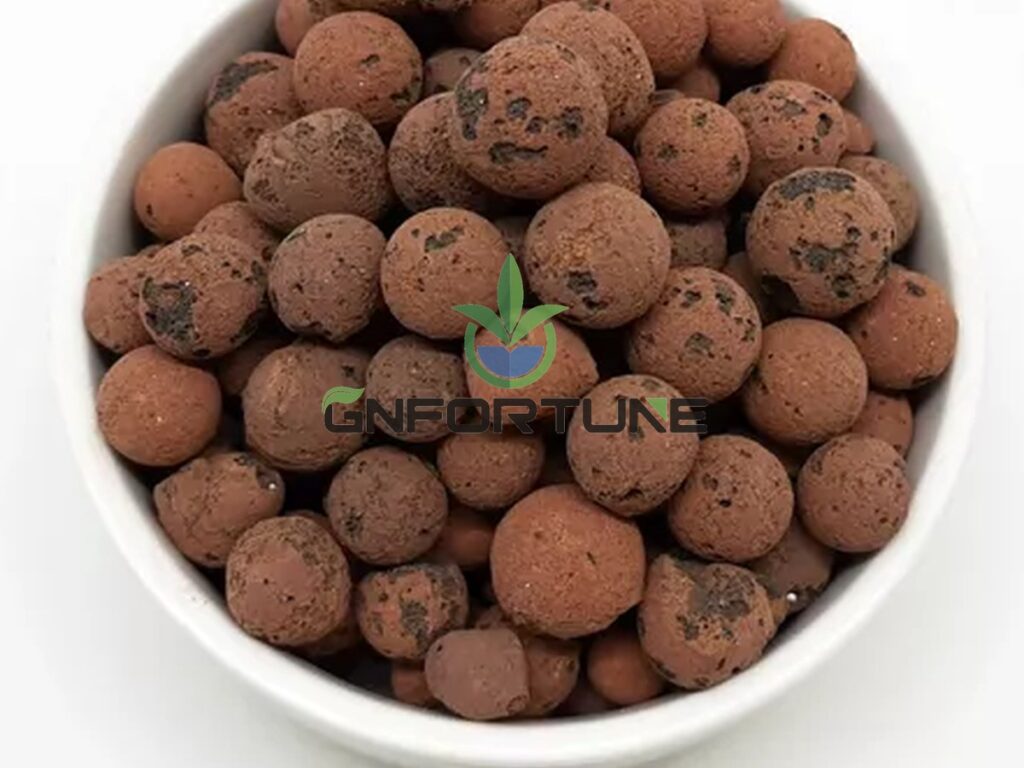
- Pile of expanded clay pellets hydroponic growing media — Soilless substrates compared for root expansion
- Hydroponic Variety Selection and Seed Sourcing: How Commercial Farms Choose Genetics — How commercial farms choose genetics for a soilless crop
- Hydroponic Farm KPIs: Yield per m², Labour Hours and the Numbers That Run a Business — Yield per m² and the numbers that decide whether a block pays
Next Step: What to Send for a Quotation
Root crop systems are quoted from media depth and target size, not from a crop name. Asked for a radish system without a target diameter, a supplier quotes a leafy tray, and it will be too shallow.
Evaluating radish, baby beet or a niche carrot line? For RFQ or project consultation, send: greenhouse dimensions and usable area; crop and target spec — root diameter or length band, tops on or off; target weekly or annual output; preferred format — deep trays, substrate gutters, bags, slabs or buckets; media depth and type; local climate range and raw water analysis; washing and cooling capacity; automation level; delivery schedule; and the budget band. G AND N FORTUNE LIMITED supplies NFT channels, substrate gutters, DWC systems and greenhouse packages quoted to those parameters.