

Genetics Set the Ceiling on Everything Else
You can optimise lighting, nutrition and labour for months and still be beaten by a variety that was never suited to your system. Hydroponic seed varieties differ in ways that matter commercially — days to maturity, uniformity, disease resistance, shelf life, tolerance of low light, and how they behave at the packing line — and those differences compound across every cycle of the year.
Most farms we work with settled on their varieties by accident: whatever the local nursery had, or whatever the first grower had used before. This guide is a structured way to make that decision deliberately, and to change it without gambling a season.
Rank the Traits Before You Look at a Catalogue
| Trait | Why it matters commercially | Who cares most |
|---|---|---|
| Days to maturity | Sets turns per year, which multiplies through the whole budget | Every farm; critical where energy is expensive |
| Uniformity | Drives pack-out rate and whether harvesting can be mechanised | Supply to processors and retailers |
| Disease resistance | Reduces chemical input, crop loss and audit exposure | Humid or poorly ventilated houses |
| Tipburn and physiological disorder tolerance | The most common cause of downgraded leafy greens indoors | Fast-grown lettuce and lettuce grown under high light |
| Bolting tolerance | Extends the marketable window in warm transitions | Unheated or partially heated houses |
| Post-harvest life | Determines distribution radius and reject rate at the customer | Anyone shipping more than a day |
| Flavour and texture | Drives repeat orders more than yield does | Direct-to-retail and foodservice suppliers |
| Handling robustness | Bruising and breakage losses at harvest and packing | Bagged salad and herb lines |
Write your own ranking down before speaking to a seed supplier. Sales catalogues are excellent at selling the trait you did not ask about.
Seed Forms and What You Are Actually Buying
| Form | Description | Advantage | Consideration |
|---|---|---|---|
| Raw seed | Untreated, natural size | Cheapest per seed; maximum storage life | Harder to singulate; variable emergence |
| Pelleted | Coated to a uniform sphere | Accurate singulation in vacuum seeders; less thinning labour | Higher cost; needs even more careful moisture at germination |
| Primed | Hydrated then re-dried to speed emergence | Faster, more uniform germination, especially in cool rooms | Shorter storage life once opened; must be sown on schedule |
| Film-coated | Thin coating, often with protection | Improved flow and handling | Check what is in the coating if you sell into a certified programme |
| Organic | Certified organic origin | Required for organic programmes | Limited variety range; check conductivity of coating materials |
The practical rule: match the seed form to your seeding method. Hand-sown or dibble-sown plugs do not need pelleting; vacuum-drum seeders and any automated line generally do, and the labour saved pays for the seed quickly.
Sourcing: Terms That Catch Buyers Out
- Minimum order quantities. Commercial seed is often sold in packs of a fixed count; small trial quantities can be hard to obtain except through a distributor
- Lead times. Specific varieties sell out ahead of the season. Ordering in the spring for an autumn programme is normal, not cautious
- Lot testing. Ask for the germination percentage and the test date. Good suppliers provide both; use them in your sowing-rate calculation
- Substitution clauses. Confirm in writing whether the supplier may substitute a “comparable” variety if stock runs short
- Territory and licence terms. Some protected varieties carry restrictions on who may propagate and where the product may be sold
- Phytosanitary documentation for any cross-border movement — this is a customs question, not an afterthought
A Trial Protocol That Produces a Decision

The purpose of a trial is to eliminate varieties, not to admire them. Structure it so that at the end you have a yes or no.
- Test no more than three to five varieties at once. More than that and nobody records anything useful
- Replicate. Two or three independent blocks each, randomised within the house; a single tray proves nothing
- Change one thing only. Same sowing date, same media, same zone, same feed — otherwise you are testing the room, not the variety
- Record against a scorecard written before you start: germination percentage, days to transplant, days to harvest, marketable weight per square metre, pack-out rate, defects, and a tasting note
- Score post-harvest separately. Hold samples at realistic distribution temperature and score them on the day your customer would receive them
- Repeat across at least two seasons before committing, because a variety that performs in a mild spring may fail in high summer
- Keep a control. Always include your current commercial variety, so the comparison is against reality
Example Scorecard Weighting
| Criterion | Suggested weighting | How scored |
|---|---|---|
| Marketable yield per m² | High | Measured weight after grading |
| Pack-out rate | High | Marketable as a share of harvested |
| Cycle time | Medium | Days from transplant to harvest |
| Defects and disorders | Medium | Percentage of heads or bunches affected |
| Shelf life | Medium | Condition score after simulated distribution |
| Handling and labour | Low to medium | Harvest time per unit, breakage |
| Flavour panel | Low to medium | Blind scoring by several people |
Changing Variety Without Losing a Season
- Never change variety and system at the same time. If a crop fails you will not know which decision caused it
- Run the new variety in one zone only for the first full commercial cycle
- Tell your buyer. Retail programmes often require notification and re-approval for a variety change
- Re-check spacing and cycle planning: a faster variety changes your planting calendar and may require more transplant slots
- Update the seed record. Lot number, supplier and trial result belong in the same file as the crop records auditors ask for
Seed Records and Germination Testing
Two cheap disciplines prevent most seed-side surprises. First, keep a seed register: supplier, variety, lot number, purchase date, germination percentage from the supplier’s test, and where the remainder is stored. Auditors and buyers both ask for it, and it makes a trial result reproducible a year later.
Second, run your own germination test on every new lot before committing a production sowing. A simple count of a known number of seeds under your own conditions takes a few days and tells you whether to adjust the sowing rate. A lot that germinates poorly and is discovered at transplant is a scheduling failure that costs weeks, not seeds.
Storage matters as much as testing: keep seed cool, dry and dark, sealed against humidity, and record the date a pack was opened. Primed and pelleted seed degrades faster once opened than raw seed does, and mixing old lot with new in one sowing batch is a reliable way to produce an uneven crop.
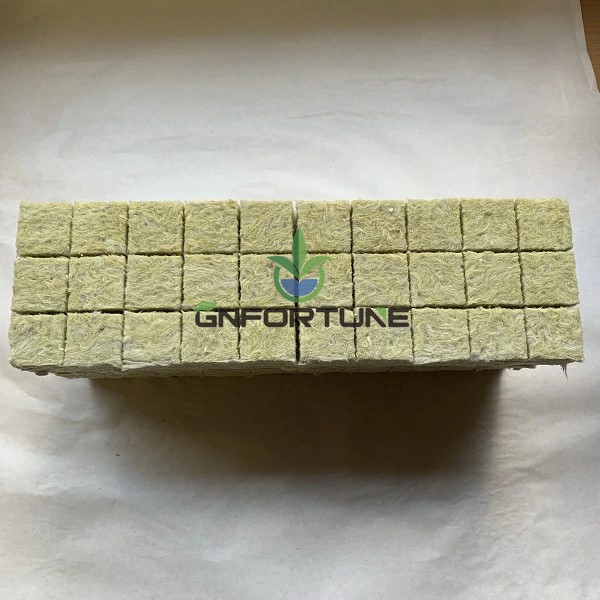
For propagation hardware and media that pair with your seed form, see our guide to rockwool plugs, cubes and slabs and the wider soilless substrate comparison.
FAQ
How many varieties should a commercial farm grow?
Fewer than most do. Each additional variety adds a seed SKU, a spacing plan, a harvest specification and a separate set of records. Many profitable farms run one or two core varieties plus a small seasonal speciality.
Is pelleted seed worth the extra cost?
Where seeding is automated or labour is expensive, usually yes — the saving is in singulation accuracy and thinning labour. Calculate it per thousand plants against your own labour rate rather than accepting a general rule.
Can I save seed from my own crop?
Technically often, commercially rarely. Protected varieties restrict it, and saved seed usually loses the uniformity and vigour that made the variety worth buying.
How long does seed keep?
Cool, dry and dark storage extends viability substantially, but primed seed is the exception and should be sown within the season it was bought. Always check the supplier’s test date and re-test anything held over.
Why does the same variety perform differently in two houses?
Light integral, temperature regime, humidity and airflow all interact with genetics. A variety selected for a heated Dutch house can behave very differently under high light and high temperature — which is exactly why you trial in your own house.
Should I trial varieties in the propagation room or in the finished system?
Both, but the decisive data comes from the finished system. Germination differences show up in propagation; yield, uniformity and shelf life only show up at harvest.
Build a Trial Plan Around Your Crop
Tell us your crop, system and market through the quote form and we will share the spacing, tray and cycle implications of the varieties you are comparing, plus the equipment settings each one changes.
Related reading: variety choice interacts directly with your production plan — see the commercial lettuce production guide and crop profitability by yield, price and demand.