

In soilless production, the growing medium does the jobs soil used to do: it anchors the plant, holds water, keeps air at the roots, and supports the seedling through its first weeks. Choose it well and it disappears into the operation; choose it poorly and it shows up as uneven crops, clogged drippers, and a bill that is hard to justify. This guide compares the commercial soilless growing medium options — rockwool, coco peat, perlite, and clay pebbles — and how to match each one to your crop, your system, and your budget.
What Is a Growing Medium and Why Do You Need One?
A growing medium is the inert or semi-active material that supports plant roots in a hydroponic or substrate-based system. On a commercial site it does four jobs:
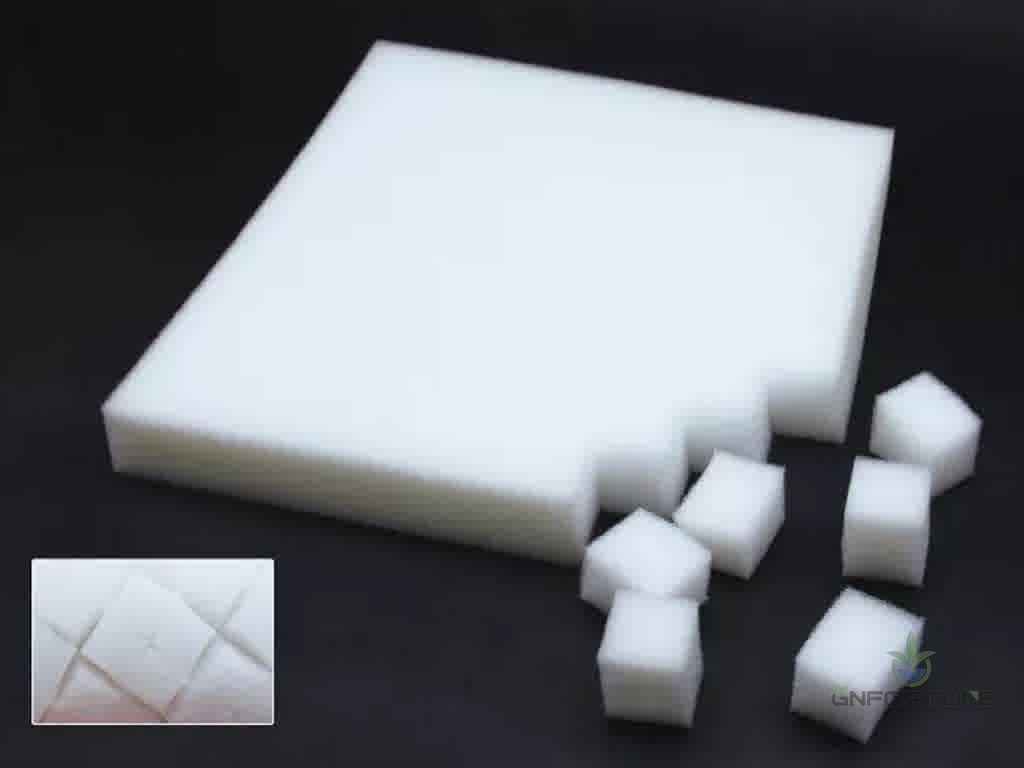
Hydroponic growing sponge blocks for soilless cultivation- Anchorage. It holds the plant upright through fruit load, circulation fans, and harvest handling — without compacting around the roots.
- Water holding. It stores nutrient solution between irrigation events. A lettuce in a small cube needs water near-constantly; a tomato in a slab needs a buffer that lasts a hot afternoon.
- Air and drainage. Roots need oxygen as much as water. The fastest way to lose a container crop is a medium that stays saturated, so air porosity is a spec you ask for, not assume.
- Transplant support. Plugs and cubes carry a seedling from the nursery to the production channel — starters and finishing media are often different materials.
Choosing a growing medium is choosing where the root zone sits between a wet, low-oxygen environment and a dry, high-oxygen one. Each material below is a different answer to that trade-off, and none is universally best.
Inorganic Media: Rockwool, Perlite, Clay Pebbles, and Sand
Inorganic substrates are mined or manufactured, do not decompose, and give a predictable root zone — the backbone of most greenhouse fruit programs.
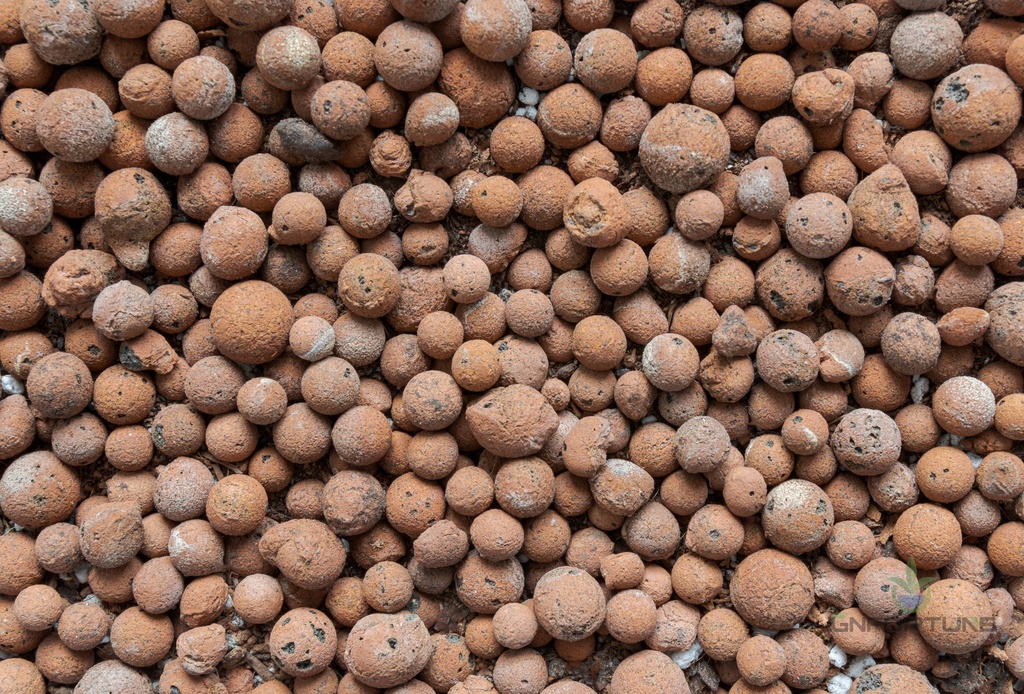
Pile of expanded clay pellets hydroponic growing media- Rockwool is spun basalt fiber formed into cubes, blocks, and slabs. Its defining trait is uniformity: every cube in a batch wets, holds, and drains the same, and it holds water generously. It needs pH buffering before first use and is not biodegradable, so disposal is an operating cost. See it compared with coco and perlite in our rockwool vs coco peat vs perlite guide, and its nursery role in the rockwool propagation guide.
- Perlite is expanded volcanic glass that weighs almost nothing and drains aggressively. It is rarely used alone — it is the standard aeration partner in mixes and the classic Dutch bucket fill, where light weight keeps handling practical. Wet it before handling; dust is its downside.
- Clay pebbles are fired clay pellets that drain freely and can be washed and reused for years. They suit ebb and flow trays and media beds, but their water holding is low, so irrigation frequency must rise.
- Sand appears where it is locally cheap, especially in arid regions. It is heavy, drains poorly unless graded, and demands careful irrigation scheduling — but per ton it can undercut imported substrates.
| Media | Water holding | Air porosity | Reuse life | Main operating note |
|---|---|---|---|---|
| Rockwool slabs/cubes | High | Moderate | 1–2 cycles | pH buffer before use; disposal cost |
| Perlite | Low–moderate | High | Many cycles | Dust on handling; can float on flood trays |
| Clay pebbles | Low | Very high | Years with washing | Irrigation frequency must rise |
| Sand | Depends on grade | Low unless graded | Years | Heavy; frequent irrigation |
Organic Media: Coco Peat, Peat Moss, and Bark
Organic substrates come from plant material, hold water well, and give the root zone some chemistry of their own — and that chemistry is what you must manage.
- Coco peat (coir) is the most commercial organic: consistent, renewable, and available as slabs, grow bags, and bales. It holds water generously while keeping real air porosity. The catch is salt: raw coco carries sodium and potassium that must be buffered before sale, and unbuffered bales burn roots in the first weeks. Many strawberry gutter growers run coco for its water holding — see our strawberry gutter guide.
- Peat moss holds more water per liter than almost anything and arrives acidic (pH 3.5–4.5), so it needs liming and buffering. Sourcing restrictions in some markets keep prices moving. It appears mostly in propagation mixes, not finishing systems.
- Bark and composted fines are regional, low-cost fillers for flood-tray nursery crops. They are the least predictable organic: decomposition continues in the pot, consuming nitrogen and shifting pH, so they suit short cycles better than long fruiting seasons.
Organic media degrade on a schedule — coco serves one to two cycles before fibers break down and drainage falls, peat compacts as it ages, bark keeps decomposing while wet. Plan replacement into the operating budget from the start.
Substrate versus System: Which Media Work with NFT, Dutch Bucket, and Ebb and Flow
The system decides how much the medium must do. A media-free NFT channel puts roots in flowing solution, so its “media” is a small starter cube; a Dutch bucket asks the medium to hold the whole root zone.
| System | Media role | Practical choices | Typical crops |
|---|---|---|---|
| NFT channels | Starter only; roots grow in the solution film | Rockwool cubes or coco plugs | Lettuce, leafy greens, herbs |
| Dutch buckets | Full root zone support and drainage | Perlite, coco/perlite mixes, clay pebbles, sand | Tomatoes, peppers, cucumbers |
| Ebb and flow trays | Wicking and drainage during flood cycles | Clay pebbles, rockwool cubes, nursery mixes | Potted herbs, propagation |
| Gutter/rack strawberries | Slab that buffers hot afternoons | Coco slabs and coco/perlite blends | Strawberries |
Do not pick a medium first and a system second. A water-holding coco in a Dutch bucket drip-scheduled for perlite stays saturated; a free-draining perlite on an ebb and flow tray floods and floats. The NFT channel range and Dutch bucket system pages list the working medium for each configuration — treat those as your starting assumption.
Advice we give every operator budgeting a site: price the medium as a recurring operating cost, not a one-time setup cost. Rockwool and coco are replaced on a cycle; perlite and clay pebbles last, but they still need washing, handling, and dust control. Work the replacement schedule into the crop model before you commit to a volume.
How Much Media Do You Need per Crop Area
Order in volume, not weight. Media is sold loose, in bales, or in slabs, and suppliers quote per liter, per cubic meter, or per slab — so convert your plant count into volume before comparing quotes.
Worked example for Dutch buckets: 2,000 buckets for peppers at a working fill of about 8 L of perlite each is 16,000 L, or 16 m³. Add 10–15% for settling and spillage, and order roughly 18 m³. For slabs, count the other way: a 12,000-plant strawberry gutter program runs about 1,500–2,000 standard 1 m coco slabs if the layout holds six to eight plants per slab — confirm the plant-per-slab number with the slab supplier before converting. Pots and net cups set the per-plant volume, so the container side of this math belongs together with the wholesale net pot buying guide.
If the numbers are getting complicated, that is the point where the hydroponic system design resource converts a crop plan into a complete material list before any money leaves the account.
FAQ
What is the best growing medium for commercial crops?
A: There is no single best. Coco peat and perlite mixes are the most forgiving all-rounders, rockwool gives the most uniformity, and clay pebbles suit flood systems. Match the medium to the system and crop, then to your replacement budget.
Can I reuse a growing medium between crops?
A: Perlite and clay pebbles can be reused for many cycles after washing and sanitizing; rockwool is usually limited to one or two cycles; coco serves one to two cycles before drainage degrades.
Do I need media at all in an NFT system?
A: Only a small starter cube per plant — roots grow in the flowing solution film. Choose a plug that roots out quickly and holds the seedling upright in the channel.
Why do some coco bales burn roots?
A: Unbuffered coco carries residual salts from processing. Buy pre-buffered material, or rinse and buffer with calcium before use, and check the EC of the first irrigation run-off.
How should I budget media across crop cycles?
A: Treat single-cycle media such as rockwool and coco as a recurring cost per crop, and multi-cycle media such as perlite and clay pebbles as depreciation plus washing labor.
Get Bulk Pricing on Rockwool, Coco Peat, and Clay Pebbles
Once your system and plant count fix the growing medium type and volume, the only open question is price and packaging. Send your system layout, crop, and target plant count, and ask for bulk pricing on rockwool, coco peat, and clay pebbles through the quote form — we will return per-cubic-meter or per-slab pricing, MOQs, and a load plan that fits your container, and we can quote media and containers together so the whole order matches.