

The Substrate That Arrives With Opinions
Coco coir behaves like no other substrate. Rockwool arrives inert and predictable; coco arrives as plant material with a chemistry of its own — potassium and sodium on the cation exchange sites, occasionally chloride left from processing. Handled well, it is a superb substrate for tomatoes, strawberries, peppers and cut flowers: strong air-filled porosity, rewetting that rockwool cannot match, and good economics. Handled blind, it quietly changes your nutrition for the first four weeks of every crop.
This guide is about coco coir commercial hydroponics: what washed and buffered actually mean, how to control batch variation, and how to structure the fertigation that keeps coco productive.
Washed, Buffered, or Neither
| Grade | What was done | Typical EC out of the bag | Use |
|---|---|---|---|
| Raw / unwashed | Nothing | High (can exceed 2 mS/cm) | Never for hydroponics |
| Washed | Rinsed to reduce soluble salts | Under ~0.5 mS/cm | Acceptable with a corrected feed program |
| Buffered (treated) | Calcium nitrate soak displaces K and Na | Low, plus stable exchange chemistry | Best choice for fruiting crops |
| Charge-controlled blends | Pre-loaded with a stated nutrient charge | Per specification | Requires matching feed to the charge |
The word that matters is buffered. Washing removes what is dissolved; buffering addresses what is held on exchange sites and would otherwise leak into your solution for weeks. For high-value fruiting crops, buffered coco is not a luxury line item — it is the difference between a feed program that behaves and one you fight.
Batch Variation Is the Real Risk
Coco is an agricultural by-product, not a manufactured mineral. Between lots you can see variation in:
- EC and chloride — driven by wash water quality at the mill
- Particle size and dust — changes air-filled porosity and drainage
- Moisture content — a “wet” bale is heavier and holds less fibre per kilo paid
- Pith-to-fibre-to-chip ratio — the biggest driver of water-holding differences between lots
The control is incoming inspection, exactly as for any input: EC of a standard extract on every batch, a handful squeeze test for dust, batch numbers recorded against plantings. Two out-of-spec batches from one source is a supplier conversation, not a coincidence.
Formats and How They Run
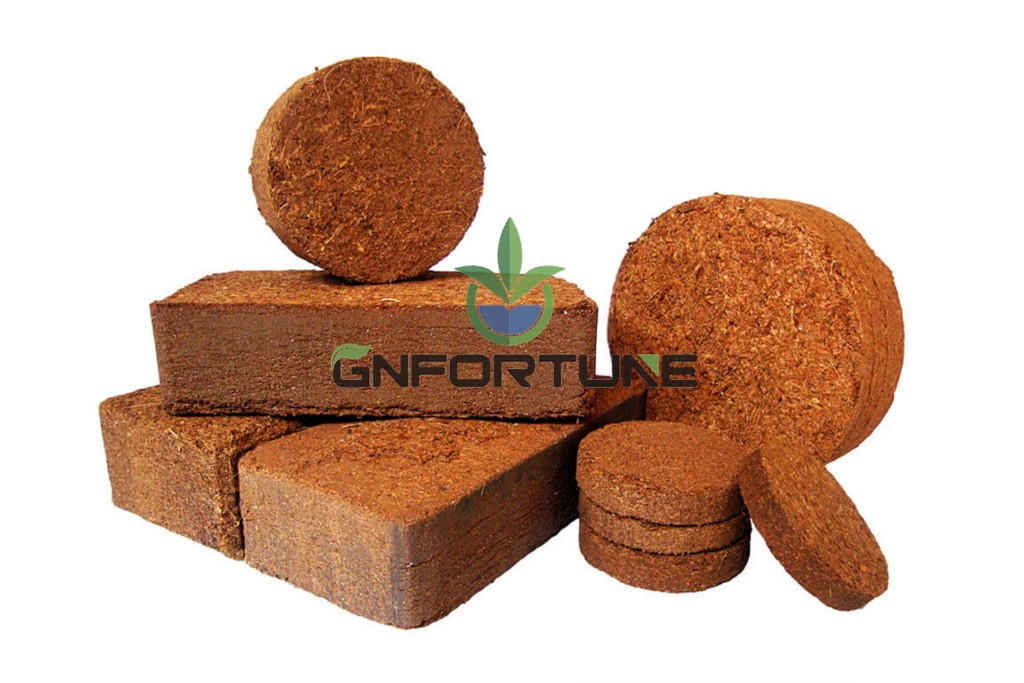
- Grow bags (slabs): the workhorse for vine crops — same layout discipline as rockwool slabs, cut drain slits on a slope, one or two plants per bag
- Open-top pots and crates: strawberries and peppers — more substrate per plant, more forgiving in hot climates
- Loose fill: for refillable containers; check dust content and compaction over time
- Plugs and discs: propagation — good performance, keep them consistently moist from day one
Reuse is possible — typically one to three cycles for bags with a defined steam or chemical sanitation step and a re-check of structure. Beyond that, porosity collapses and the economics of yield loss beat the savings in substrate.
Feeding Coco Properly
- Start with the calcium higher than a rockwool recipe — coco exchanges calcium for potassium
- Watch the first weeks: young crops in fresh coco draw K from the substrate itself; leaf analysis in week 3–4 catches the drift
- Irrigate to a target leaching fraction — 10–20% runoff keeps the substrate’s EC from creeping
- Recheck substrate EC weekly with a pour-through or squeeze test, not by feel
- Log the batch number with each planting — when nutrition drifts, the first question is “which lot is this?”
Run this discipline and coco is one of the most forgiving substrates at scale. Skip it and every lot is a lottery.
Disposal and End of Life
One of coco’s genuine advantages over stone wool is the disposal route. Spent coco — roots and all — can be composted and used as a soil amendment by nearby growers or landscapers, where local rules allow it. Rockwool usually has to be separated and landfilled, or sent to a specialist recycler.
Plan the logistics before the first cycle ends: who collects it, how often, and what documentation is needed. A mountain of wet substrate stacked at the gate is a hygiene and neighbour problem as much as a disposal problem. Where on-farm composting is used, confirm that crop residue disposal is permitted for your crop types and that temperatures in the windrow are adequate before spreading anything back near production areas.
FAQ
Is coco suitable for organic production?
Coco itself is generally accepted in organic programs; the buffer treatment must use approved materials. Confirm with your certifier, and see our organic certification guide for the wider rules.
How does coco compare with rockwool on cost?
Per cycle they are usually close; coco often wins on disposal (compostable) and rewetting, rockwool on lot-to-lot uniformity. The substrate choice should follow your crop and your QA appetite for variation.
Can I buffer coco on the farm?
You can — calcium nitrate soak, measure, rinse — but at commercial volume the labour, water and error rate usually exceed the price difference of buying buffered product.
Why did my EC drift up in coco?
Almost always insufficient leaching fraction or a fresh lot releasing held salts. Raise the runoff percentage for a week and re-measure before changing the feed recipe.
How many cycles can a grow bag last?
Plan for one to three, depending on crop sanitation and structure testing. A bag that passes EC checks but has gone to dust is done — root zone air is worth more than the bag’s remaining cost.
Does coco change pH management?
Coco holds a mildly acidic pH and has some buffering, so it is stable, but the runoff pH should still be checked weekly alongside EC as part of routine substrate monitoring.
Buy the Lot, Not the Logo
We supply washed and buffered coco with batch EC certificates and can match formats to your crop plan. Send us the crops and container counts. Start with the quote form.
Related reading: substrates and feeding work together — see rockwool for propagation and slabs, growing media incoming inspection, nutrient solution management, sanitation between cycles and organic certification.