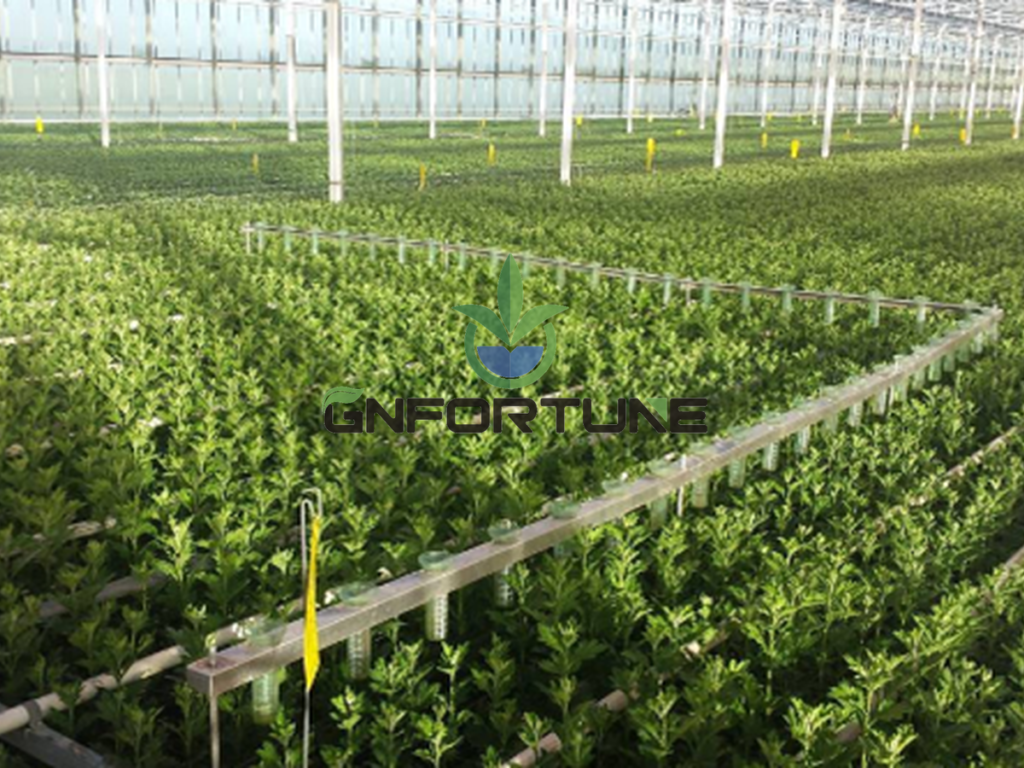
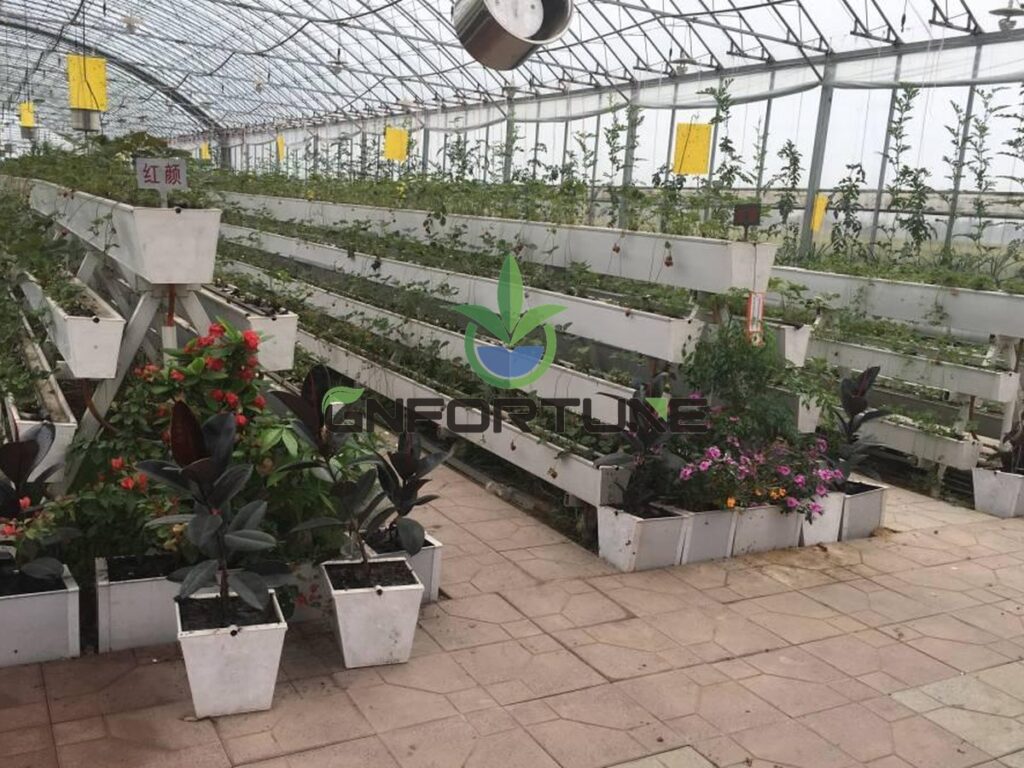
Beans sell at a steady price almost everywhere, and a hydroponic row produces a straighter, cleaner pod than open field can — but the crop’s economics live in two places growers underestimate: the trellis and the calendar. Green beans in hydroponics are a fast, replant-heavy crop with a picking rhythm that dominates labour cost, and the choice between bush and pole types decides how often you rebuild the row.
Pea shoots, a different legume crop for a different market, are covered separately. This article stays on pod beans: type choice, support, feeding, picking and the replant decision.
Bush or Pole: Choosing the Type for the Slot
The two habits behave like different crops. Bush beans crop in one concentrated flush — a planning range of 3–5 weeks of production from transplant, then the row is spent and cleared. Pole (climbing) beans trained on strings or net crop over 8–10 weeks under greenhouse conditions, at a gentler daily pace but with a longer labour commitment to training and lowering.
That difference makes the type a scheduling decision more than an agronomic one:
- Bush types suit a slot you can clear quickly — between lettuce cycles, in a house that must flip to another crop, or on farms that want predictable bulk harvest weeks. Everything arrives at once, so packing and sales capacity must absorb a peak.
- Pole types suit a dedicated bean block with standing demand: spread-out production, higher total yield per square metre over the cycle, and a trellis investment the long cycle justifies.
- Mixed blocks split the difference: a pole block for continuity plus short bush runs for volume weeks. The extra management cost is real but modest once crews know both rhythms.
Temperatures sit in the same band for both: a planning range of 20–26 °C day and 16–20 °C night for good pod set, with set dropping in sustained heat above 30 °C and in cold, wet conditions where pollen suffers.
Trellis Load and Support Hardware
A mature pole bean row is heavier than it looks. Canopy mass, pod weight and the tangle of a crop that grips its support tightly add up to a load comparable to a light vine crop, and support failures mid-cycle drop a whole row’s production into the aisle.
Spec the support as a system rather than improvising:
- Anchor posts and end wires rated for a loaded crop line; a planning approach is to treat a pole bean row like a light tomato line, not like a lettuce bench.
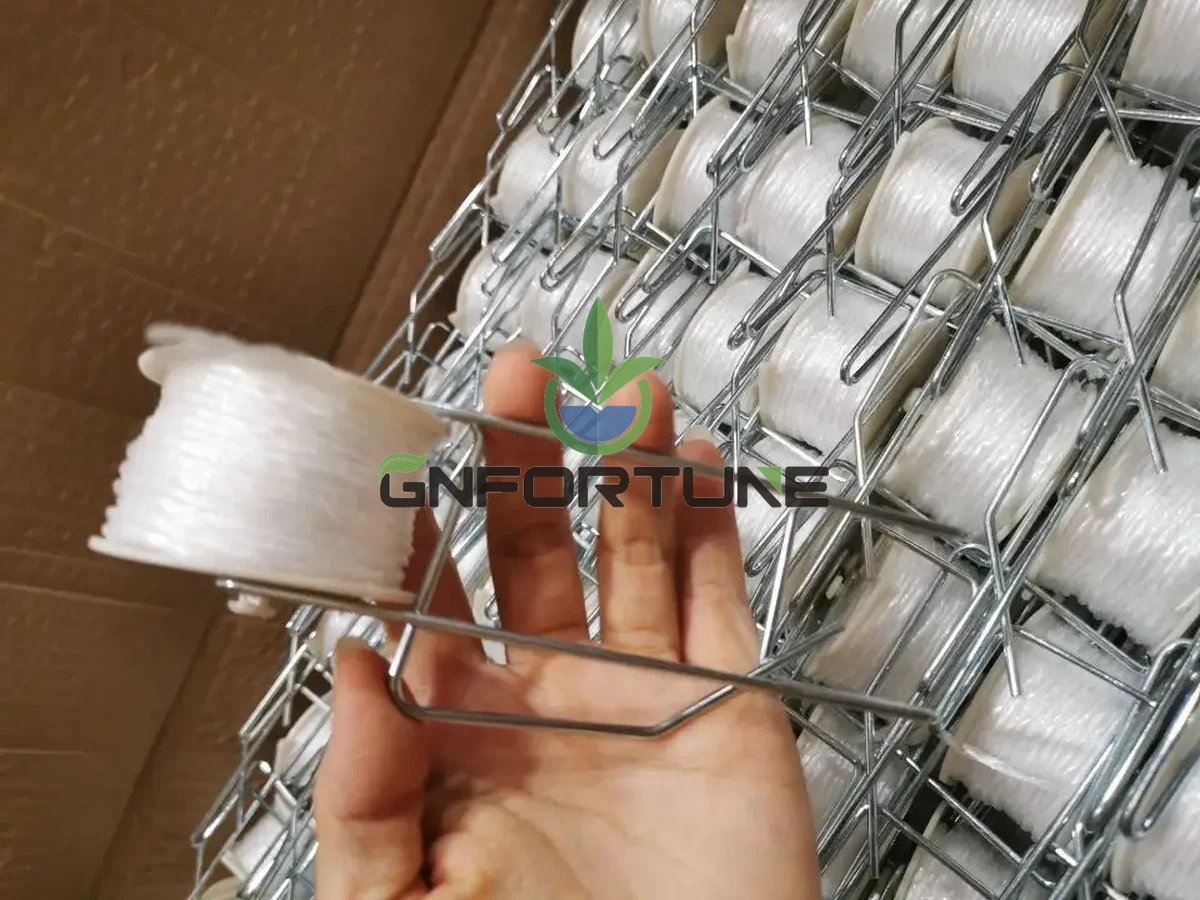
- Strings or mesh at 1.8–2.2 m working height for pole types. Beans climb by twining and need something to grip — smooth wire alone does not hold them; string or netting does.
- Layered bush support: bush types still flop under a pod load; a low mesh layer or open-weave net at 40–60 cm keeps pods off the media and out of the dirt path.
- Weekly training time for pole types: directing leaders onto strings, guiding lateral growth. A crew that skips a week creates a matted canopy that is slower to fix than to maintain.
The trellising guide for vine crops covers wire, twine, clips and the labour pattern in detail, and the weekly labour calendar shows how training slots into the season. Beans fit that same rhythm.
Feeding and Irrigation Through a Short, Sharp Cycle
Beans are legumes, but in soilless culture they behave like ordinary crops: the nodules fix little under high solution nitrogen, and the crop is fed like anything else. Root health is the sensitive point — beans resent waterlogged media more than most greenhouse crops, and damping-off at establishment is the common early failure.
| Parameter | Planning range | Assumptions and notes |
|---|---|---|
| Day / night temperature | 20–26 / 16–20 °C | Pod set drops above 30 °C and in cold, wet conditions |
| Nutrient solution EC | 1.6–2.4 mS/cm | Drain-to-waste or short recirculation; lower end at establishment, rising to full canopy |
| pH | 5.8–6.5 | Standard band; verify against raw water alkalinity |
| Drain fraction | 15–25% | Substrate slabs or buckets; beans tolerate the lower end better than fruiting crops |
| Cycle, bush | 3–5 weeks of pickings | From transplant; single concentrated flush, then clear the row |
| Cycle, pole | 8–10 weeks of pickings | Trained on strings or mesh; gentler daily pace, longer labour tail |
Numbers move with media, climate and variety, so treat them as planning ranges and confirm against drain readings on your own rows. The wider context of recirculation versus drain-to-waste feeding is covered in the nutrient management guide.
Pick Cycles and the Labour Reality
Picking is the cost centre. Beans must be picked every 2–3 days at peak — daily for export-grade or premium lengths — because pods swell past the market size class quickly, and over-mature pods on the plant suppress further set. A row picked late is a row that yields less next week.
Two practical disciplines keep pick cost sane:
- Grade at the plant: pod length classes are decided by the picker, not the pack shed. Training pickers on the length standard costs one session; recutting in the pack shed costs hours every week.
- Pick to a planned route: beans hide under the canopy, and a rushed pass misses pods that then go over-size. A slow, complete pass beats two fast partial ones — the plant standards behind this are covered in the crop work standards guide.
Beans also need two hands: one to hold the stem, one to pick, so they snap cleanly without tearing the plant. Rushed one-handed picking costs more in plant damage than it saves in time.

Replant Windows: When to Clear the Row
The replant decision is where bean blocks quietly lose money. Pushing a spent row for one more flush sounds like free production; in practice the second flush on old bean growth is where root disease, thrips carry-over and falling pod quality concentrate. A planning rule that works: clear the row when weekly yield drops below roughly half its peak, or at the first sign of root browning — whichever comes first — and use the fast turnaround window beans allow.
That fast turnaround is the crop’s hidden advantage. Clearing, sanitising and replanting a bush bean row fits a two-week window under normal conditions, which is why beans slot so well between other crops. The mechanics of that window are covered in the crop turnaround guide, and bean runs fit the same continuous calendar logic described in the crop scheduling guide.
Green beans in hydroponics reward farms that plan the replant as deliberately as the planting: the right type for the slot, a trellis sized for the load, picking that keeps pace, and the discipline to clear a row while it is still making money rather than after it stops.
FAQs About Green Beans in Hydroponics
Should we grow bush or pole beans in a commercial greenhouse?
Choose by slot, not by yield. Bush types give a concentrated 3–5 week flush that clears quickly between other crops; pole types give 8–10 weeks of spread production but need a trellis and weekly training. Farms with a dedicated bean block run pole; farms fitting beans between cycles run bush.
What EC does nutrient solution need for beans?
A planning range of 1.6–2.4 mS/cm covers establishment through full canopy in substrate systems, assuming moderate raw-water salinity. Beans sit below the fruiting crops on EC and are more sensitive to waterlogged media than to salinity, so drainage matters more than concentration.
How often must green beans be picked?
Every 2–3 days at peak, daily for premium length grades. Pods grow past their size class quickly, and over-mature pods suppress further set, so a late pick costs yield twice — once in the grade and once in next week’s flush.
Can we push a bean row for a second flush instead of replanting?
Sometimes, but it is a disease decision more than a yield one. Old bean growth concentrates root problems and pest carry-over, and second flushes rarely repay the weeks they occupy. Clear the row when weekly yield drops to about half of peak or roots start browning.
Do beans need bees or vibration for pod set?
No. Beans are self-pollinating and set pods without bumblebees, unlike tomatoes. Poor set in a bean house usually traces to temperature — sustained heat above 30 °C or cold, wet conditions — rather than to pollination.
Related Reading
- Tomato Clips and Trellis Hardware: Buying Specs — The clips and fixings a bean trellis shares with vine crops
- Plant Spacing and Density in Hydroponics — Sizing rows and plants per square metre before the block is laid out
- Hydroponic Pea Shoots: Growing Legume Shoots at Commercial Scale — The other legume crop, harvested for shoots rather than pods
- Commercial Hydroponic Propagation and Transplanting — Getting each new bean row established cleanly
- Crop Scheduling for Continuous Production — Fitting short bean runs into a continuous calendar
Next Step: What to Send for a Quotation
A bean block is cheap in equipment and expensive in structure — trellis anchors, row spacing and the clear-out route decide more than the irrigation design does. Getting those into the layout before quoting avoids the change orders.
Planning a bean block or a mixed house rotation? For an RFQ or project consultation, send: greenhouse dimensions and ridge height; target crops and rotation plan; bush or pole (or both) and intended cycle lengths; climate data for the growing season; raw water analysis; labour availability for pick cycles; delivery schedule; and the budget band. G AND N FORTUNE LIMITED supplies substrate gutters, bucket systems, trellis hardware and greenhouse structures quoted against those inputs.