Hydroponic raspberry production is not a channel crop with taller plants. It is a perennial root system carrying replacement fruiting canes year after year, and every system decision follows from that: the gutter holds substrate for a decade, the trellis carries a two-metre cane, and irrigation has to serve a plant that is fruiting, building new canes or dormant. Projects that treat a berry gutter as a long strawberry trough usually find the difference in year two.
This guide sets out what to specify before a berry gutter is quoted: substrate build-up, cane and trellis design, irrigation and EC, chilling, and the labour peaks the layout absorbs.
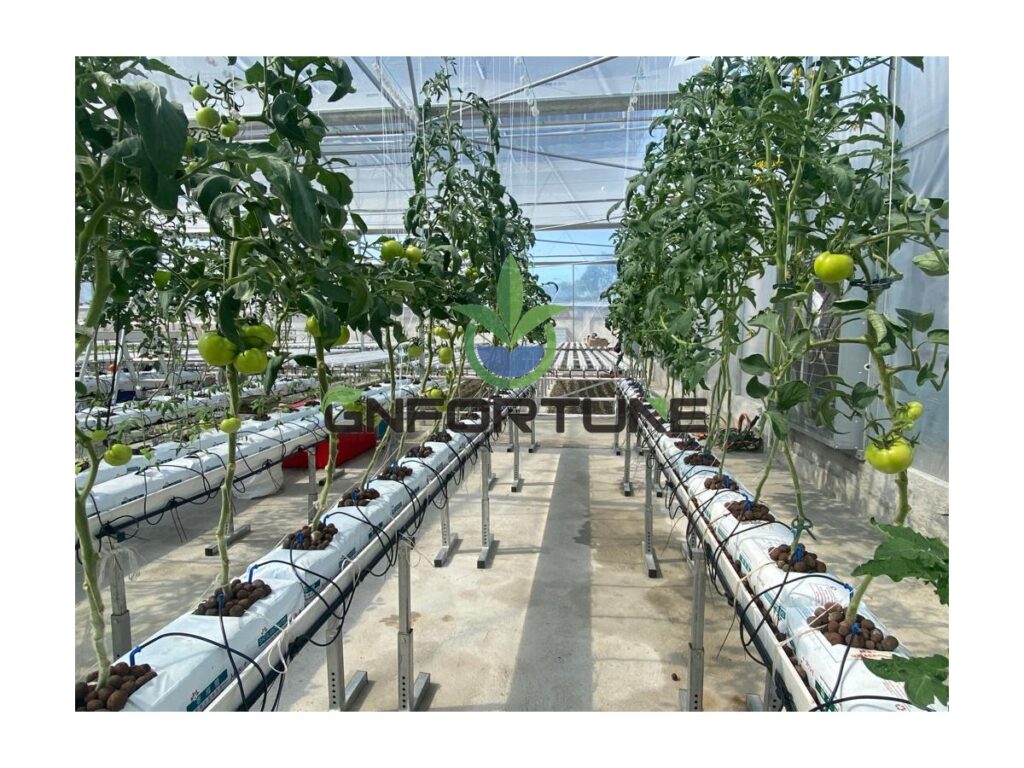
Why cane berries are a multi-year system decision
Annual hydroponic crops are judged on one cycle; hydroponic raspberry production is judged over ten to fifteen years, with substrate that is effectively permanent. That changes what you specify:
- The root plate stays put. You irrigate a permanent root mat, so salt accumulation, algae and root disease are long-term management items.
- Cane renewal is annual. Spent canes come out each winter and primocanes take over, without dismantling the gutter.
- Crop and system run out of phase. Fruiting canes are picked while replacements grow underneath, so one canopy carries two generations.
- Delays cost later years. A berry project cannot scale back quickly if the market moves.
Gutter, substrate and drainage requirements
The blackberry substrate gutter comes first, because everything else sits on it: a closed profile with continuous fall to a drained end, a lip to keep surface water out of the root zone, and end caps that close for sanitation.
On berry gutter substrate depth, commercial projects commonly work at a filled depth of 150–200 mm, then adjust for the crop’s root architecture and the climate. Shallower profiles dry faster; deeper ones stay wet at the base in humid conditions. Confirm internal and filled volume separately — a deep-looking gutter can hold little substrate.
Specify the blend by written specification rather than product name: graded particle size, raw material pH, bulk density and a multi-year stability statement. A blend that slumps loses structure where a permanent root plate needs it most.
Drainage is what ends projects: require a collection channel, a screen at the drain end, and inspection access without dismantling anything.
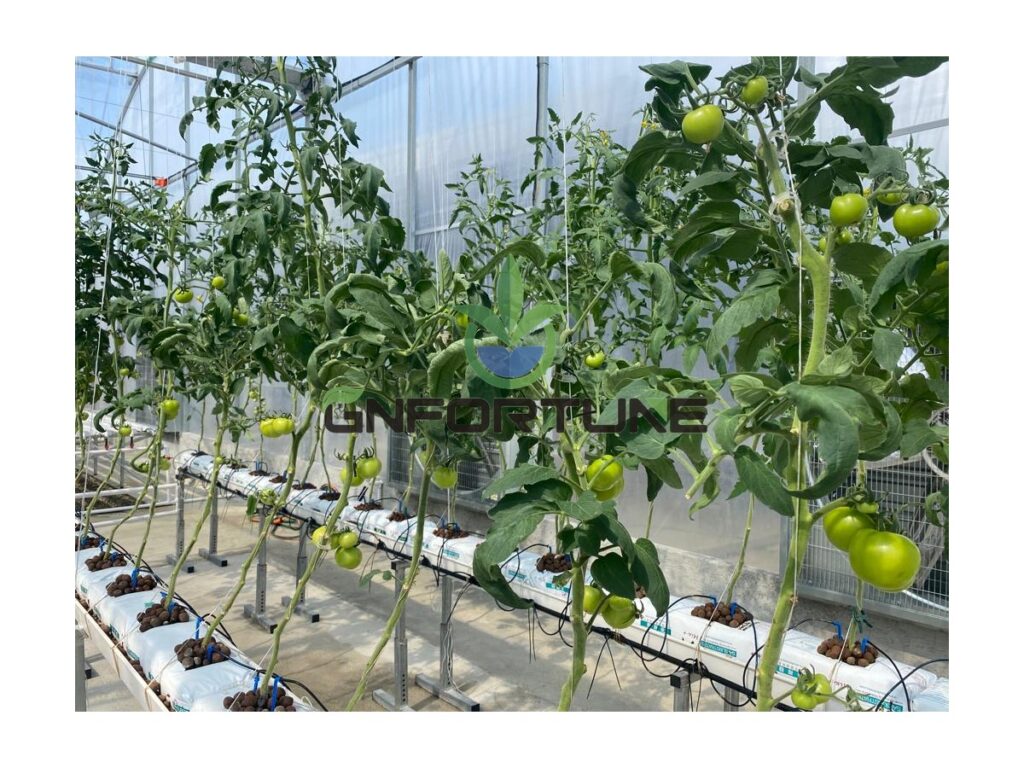
Cane renewal, pruning and trellis design
The cane management programme is the annual routine: cut out spent fruiting canes after harvest, tie in and train the new primocanes, remove weak wood. Design the system so that work fits the labour you actually have. Confirm four things before ordering the cane berry trellis system:
- Support height and wire positions, matched to your variety’s vigour and your canopy plan rather than a generic drawing.
- Anchor type and load. Cane berry anchors carry wind and crop load for years, and most manufacturers do not permit anchoring into the gutter itself.
- Clips and ties, in the annual quantities your renewal programme consumes.
- Working access. If picking and tying cannot both happen from the ground, you need a platform, which changes aisle width.
Hardware specs sit in our trellis hardware buying guide. Where the same gutter also runs tomatoes or cucumbers, read the comparison in Bato bucket versus Dutch bucket: one container behaves very differently under a perennial root plate.
Irrigation, EC programme and run-off management
A perennial root plate needs steadier irrigation than an annual fruiting crop: consistent substrate moisture without daily saturation, verified by probe rather than by eye, because the failure mode is root decline rather than visible wilting. Berry gutter substrate depth sets how often that irrigation has to run.
The berry EC programme runs in seasonal stages — lower concentration for cane and root establishment, higher for fruit filling, reduced after harvest for recovery. Set the targets with your variety and light level, then hold them; week-to-week swings do more damage in a perennial planting.
Measure and log run-off rather than assuming it. Too little accumulates salt, too much strips heat and oxygen from the root mat. When drain pH and EC drift steadily away from feed values, the root zone is changing before the crop shows it. The controller logic described in our strawberry gutter equipment guide and strawberry gutter growing guide carries across from an annual to a perennial crop.
Chilling, dormancy and climate limits
Cane berries need a defined chilling period to break dormancy. It is the requirement most often left out of a greenhouse berry specification, and equipment alone will not fix it later.
Confirm the chilling requirement of your varieties with the supplier, then check the site can deliver it: rest in an unheated structure, a partial cooling set point, or plants bought pre-chilled from a nursery. In warm-winter climates this decides which varieties are viable at all.
Summer heat is the other limit. Above a variety’s comfort range, fruit set drops and ripening turns uneven, so some climates only support a cooler-month cycle. State that in the business plan before the gutter is ordered.
Labour peaks, harvest and pack house link
Berry harvest is concentrated and perishable. Labour peaks cluster into the picking window and again into renewal work in the following months, so two decisions follow.
- Layout for picking speed. Aisle width, row length and access from both sides drive picking rate more than any gutter feature; long rows look efficient and create long walks.
- Post-harvest handling. Cooling capacity and pack house throughput must match peak picking days, not average days.
Plan staffing by week before the first crop — our weekly labour calendar for trellised vine crops shows how those peaks distribute.
G&N Fortune quotes cane berry systems as a package — gutters, substrate specification, irrigation, trellis hardware and layout drawings — because the crop fails at the interfaces. Each hydroponic raspberry production or blackberry enquiry is quoted after set points are confirmed in our 2,400 m² test greenhouse for the varieties you intend to plant.
FAQs About Cane Berries in Substrate Gutters
What substrate depth does a berry gutter need?
Commercial projects commonly work at a filled depth of 150–200 mm and adjust for variety and climate. Confirm internal and filled volume separately, since a deep-looking gutter can hold little substrate.
Can raspberries use the same gutters as strawberries?
The hardware is similar, the management is not. A perennial cane root plate, annual renewal and trellis training change irrigation, substrate life and labour, so quote the berry system on its own requirements.
How much chilling do cane berries need?
Take the figure from the variety supplier, since it differs widely. In warm-winter climates the chilling requirement often decides whether the crop is viable at all.
Do blackberries and raspberries need the same gutter?
Gutter and irrigation can be shared, but blackberries are generally more vigorous and carry a larger trellis load. Size the support structure and canopy spacing to the more demanding variety.
How long does a berry gutter last?
It depends on substrate stability, sanitation routine and whether the fill is ever replaced. Budget for substrate replacement rather than assuming the original fill lasts.
Related Reading
- Strawberry Gutter System Equipment: Buyer’s Guide — Gutter system equipment: profiles, hangers and drainage for berry crops
- Grow Bags and Slabs: Sizes, Materials, Drainage — Substrate formats, sizes and drainage behaviour in gutter systems
- Trellising and Plant Support for Vine Crops: Wire, Twine, Clips and Labour — Wire, twine, clips and the labour behind supporting a perennial canopy
- Hydroponic Blueberries: Why Most Setups Fail — Why perennial berry setups fail in so many commercial projects
- Strawberry Gutter Growing Guide: Commercial Berry Production Step by Step — Step-by-step gutter berry production, including drainage and run-off management
Next Step: What to Send for a Quotation
Berry quotations change significantly with variety, trellis height and chilling provision.
Send us: (1) varieties intended, certified or nursery-sourced; (2) target tonnage and harvest window; (3) growing area with trellis height clearance; (4) climate data and how chilling will be met; (5) water pH, alkalinity and EC; (6) whether trellis and substrate come from us; (7) automation level required; (8) delivery and installation dates; (9) budget range. Ask for a Project Consultation to size a trial planting first.