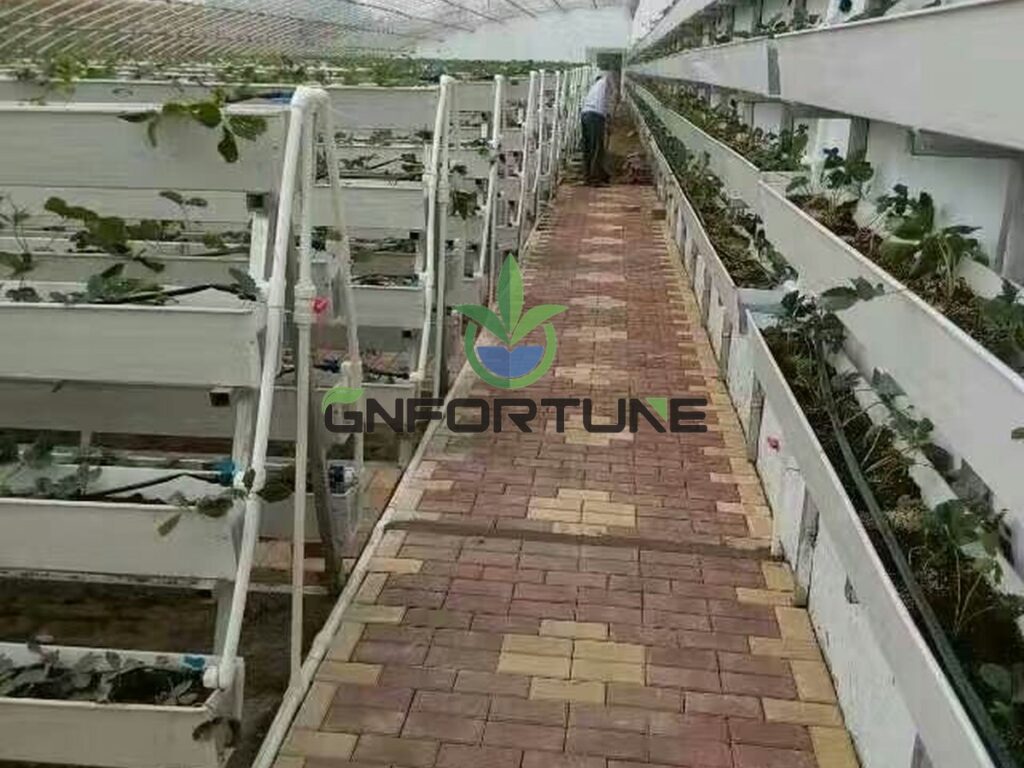
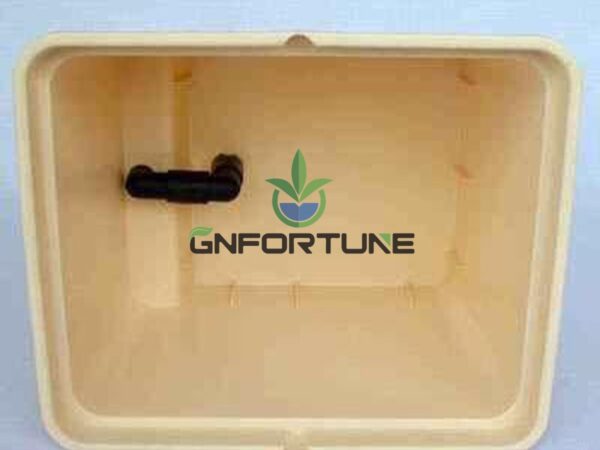
Every commercial reservoir loses water — to transpiration, evaporation and the occasional dump — and somebody has to put it back. On most farms the job runs unattended for months, which is why the failures are quiet: a slow trickle of raw water on a Friday, and by Wednesday the EC logs look like a crop problem.
This article compares the three routes to an auto top up reservoir — a float valve, a tank level switch with a solenoid, and a transmitter-driven controller — with the failure modes we keep finding on site. Tank volume itself is a separate design question, covered in the guide to reservoir sizing and water storage tank design.
What a Make-Up Water Control Has to Do
The job sounds trivial — hold the level between two limits and refill fast enough to survive the worst hour, which is never the average hour. Water leaves through crop uptake, evaporation, drain-to-waste fractions and dumps, and the first two concentrate hard into a hot afternoon under full canopy.
A planning range we use for sizing: peak make-up demand on a full-canopy leafy crop in a warm, ventilated house runs roughly 1.5–3 times the daily average flow, concentrated into 4–6 midday hours. With 3 m³ per day on your records, plan for 0.6–0.9 m³ per hour at peak. Sizing the inlet for the average figure is the most common mistake we see.
Route 1: The Mechanical Float Valve
A float valve is the simplest answer: a lever float on the inlet throttles the supply mechanically as the level rises. No power, no wiring, and it keeps working through a blackout — the reason it remains the default on smaller tanks and remote cisterns.
Capacity depends on supply pressure and orifice size. As a planning range, a 1/2-inch float valve on a 2 bar supply passes on the order of 1.5–2.5 m³/h fully open; a 3/4-inch unit roughly doubles that. Confirm against the manufacturer’s flow curve, because seat design, strainers and long small-bore supply lines all reduce it.
The failure modes are predictable. The seat wears or collects debris and never fully closes, which produces the slow leak discussed below. Scale on the float arm widens the control band. A valve that snaps shut on a fast supply line can contribute to pressure spikes. All of it shows up within the first season where the supply water is hard.
Route 2: Tank Level Switch Plus Solenoid Valve
The second route separates sensing from actuation: a float switch or electrode probe signals the controller, and a normally closed solenoid opens on low level and closes on high level. Two switches — one to start filling, one to stop — give a wide, reliable dead-band. It costs more than a float valve and needs power, but the control band is tighter and components are replaceable without draining the tank.
Three failure modes dominate. A switch hung where the return stream stirs the tank bounces and short-cycles the solenoid. A solenoid that sits energised but unopened because of a stuck plunger burns its coil. And any single-switch installation with a narrow dead-band cycles constantly; give the fill its own hysteresis of 50–100 mm between start and stop levels, and interlock it so a burst line cannot empty the supply tank unnoticed.
Route 3: Level Transmitter and Controller
The third route measures level continuously — a hydrostatic sensor at the tank floor or an ultrasonic unit on the cover — and hands the reading to a controller that drives the fill valve, raises high and low alarms and logs the trend. This is the standard choice where make-up volume matters commercially: it lets you reconcile litres consumed against transpiration and catch leaks in days rather than weeks.
Its failure modes are gentler but real: hydrostatic sensors drift and foul, and a sensing line clogged with sludge reads a slow, wrong level. Calibrate against a dip measurement on a schedule, and keep the sensor out of the direct return stream. Where the controller also runs dosing, one fault can move both level and recipe, so keep the alarms independent.
| Route | Typical hardware | Control precision | Common failure modes | Where it fits |
|---|---|---|---|---|
| Mechanical float valve | Brass or plastic float valve, isolating valve, strainer | Wide band; works unpowered | Leaking seat dilutes EC; scale sticking; slam on closing | Small to mid tanks, remote cisterns, no-power sites |
| Tank level switch + solenoid | Float switches or probes, NC solenoid, relay or small controller | Tight band, set by switch positions | Switch bounce, burned solenoid coil, narrow dead-band cycling | Most commercial reservoirs with power available |
| Level transmitter + controller | Hydrostatic or ultrasonic sensor, controller, logged alarms | Continuous reading, trend and data | Sensor drift, fouled sensing line, shared-controller faults | Larger farms, audited water budgets, automated sites |
The routes are not exclusive: pairing a solenoid fill with a mechanical float valve set a few centimetres higher is a common backup — a stuck solenoid then spills to the overflow.
Installation Details That Decide Reliability
Where the device sits matters as much as which device you buy. A float or switch hung in the return stream never sees a still level; mount it in the quietest corner or behind a simple stilling baffle, away from pump suction vortices, with service access left clear. Three rules cover the rest:
- Overflow above the inlet. Set the overflow so any failed-open fill path spills to a drain before the tank can overtop.
- Air gap or backflow device on the supply. A make-up line tied to potable or mains water must not siphon tank contents back; the required arrangements are covered in the article on backflow prevention on fertigation lines.
- Isolation on every path. Fill line, overflow and sensor connection each need a valve or union so the device can be pulled without draining the tank.
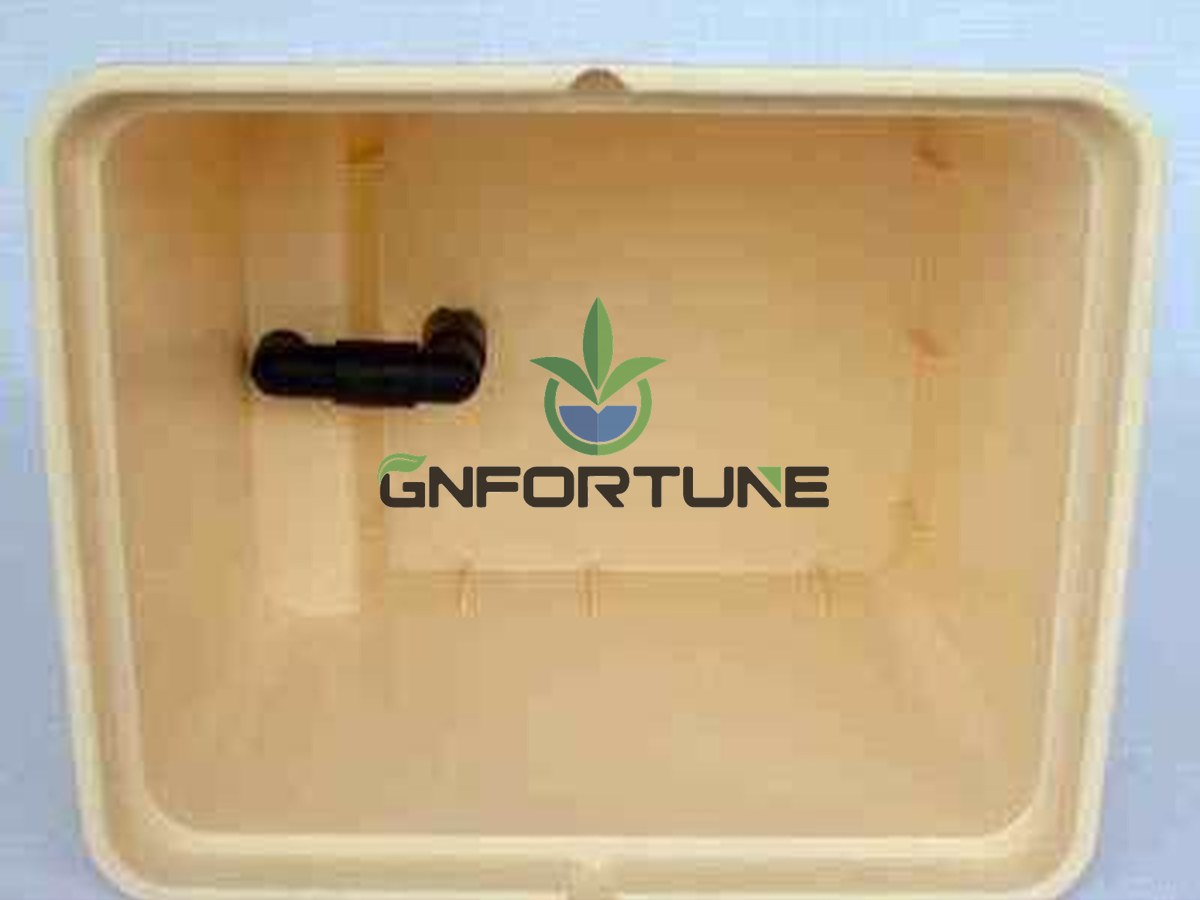
The Slow-Leaking Float Valve That Dilutes EC
This failure costs the most crop quality for the least hardware. A worn seat leaves the valve cracked open, so the tank receives a continuous trickle of raw water. Transpiration concentrates the solution; the trickle dilutes it; the two fight, and EC drifts downward over days while dosing keeps chasing pH. Because the level always sits near the fill stop, nothing looks wrong.
Log make-up volume with a meter — the methods are in the guide to water meters and leak detection — and compare against a rough transpiration estimate for the crop and weather. Make-up consistently above estimate, or a level pinned at the stop height overnight, points at a leaking seat. A shut-off test takes ten minutes: mark the level, isolate irrigation, wait an hour, and see whether it creeps above the stop point.
Maintenance: Scaling, Sticking and Seasonal Checks
Hard water scales floats and seats; media dust and root debris foul switches. A workable routine:
- Monthly: run the shut-off test on mechanical valves; wipe the float arm; check the inlet strainer; exercise the solenoid and confirm the level moves across the switch band.
- Quarterly: dip-check the transmitter against a manual measurement; descale float and seat in weak acid where the supply is hard; confirm the overflow path is clear.
- Seasonally: re-check the stop level against the overflow lip; replace any float switch that has lost buoyancy or shows water inside.
None of this needs a specialist — just a place on the weekly sheet.
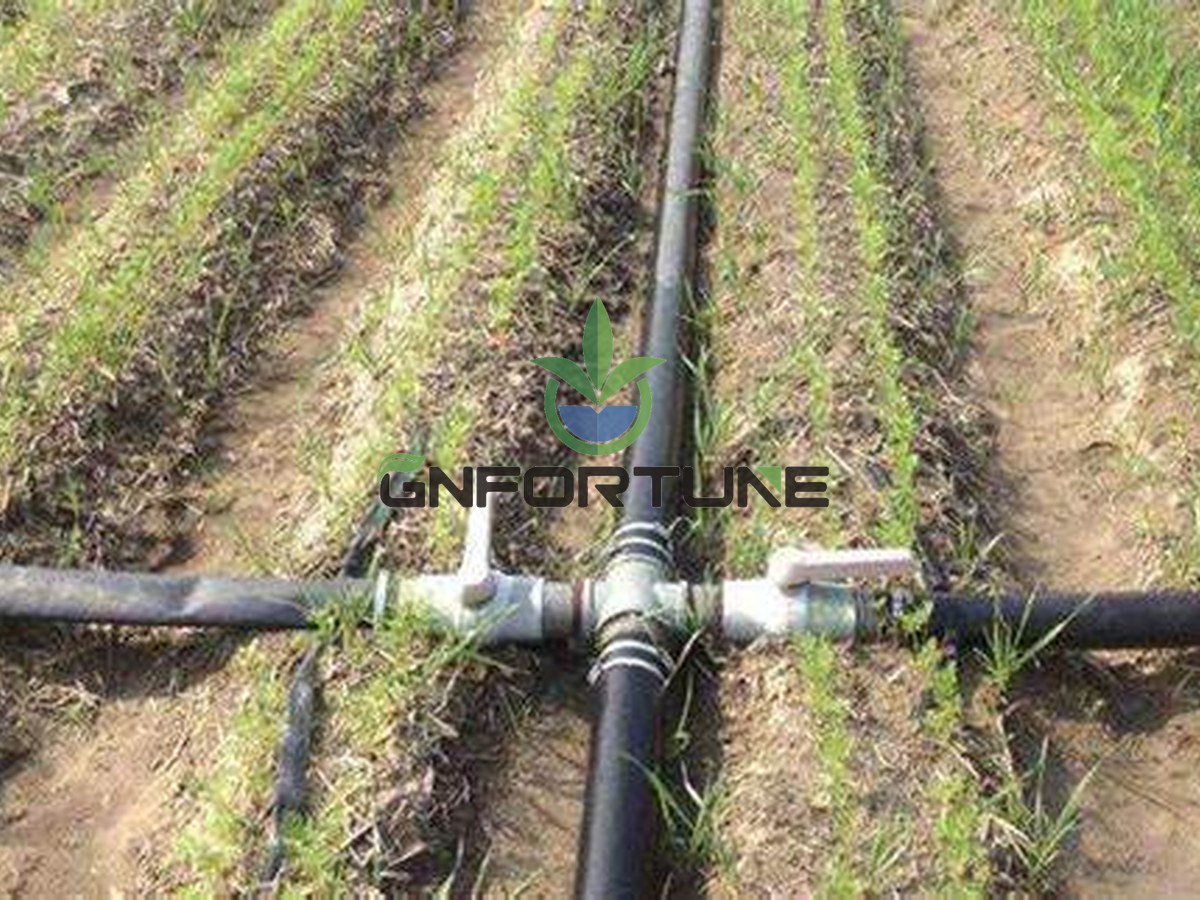
A float valve hydroponic installation sized for peak demand, protected by an overflow and checked on a schedule runs for years without drama. The three-route choice is really about how much you need to know: a valve keeps the level, a switch keeps it tighter, and a transmitter tells you what the water is actually doing.
FAQs About Reservoir Level Control
Can one float valve handle make-up for a whole farm?
Only if its capacity at your supply pressure covers peak, not average, demand. Compare peak midday make-up flow — a planning multiplier of 1.5–3 over the daily average — against the valve’s flow curve. Where one valve falls short, use two inlets or a switched solenoid arrangement.
Why does our EC fall slowly even though dosing is correct?
The usual culprit is a make-up path that never fully closes — a leaking float valve seat or a weeping solenoid — feeding raw water continuously. Run a shut-off test and reconcile make-up meter readings against estimated transpiration; the fix is usually a new seat, not a new nutrient program.
How far apart should the start and stop levels be on a switch system?
A planning band of 50–100 mm between fill-start and fill-stop works for most commercial tanks, assuming a working depth of around 1 m. Widen the band if the solenoid short-cycles; narrow it only if the usable level range is genuinely constrained by tank volume.
Do we need a level transmitter if we already have switches?
Not for control, but for visibility. Switches hold the level; a transmitter tells you how fast it moves — how leaks are caught and transpiration verified. If the farm tracks water use, continuous level pays for itself quickly.
Where should the overflow actually go?
To a visible, open drain — never into a sealed line or back toward the tank. A failed-open fill event should announce itself at a floor drain, not flood a slab or siphon back through the supply. Screen the overflow against insects and check it at every tank clean.
Related Reading
- Hydroponic Reservoir Sizing and Water Storage Tank Design for Commercial Farms — The tank volume and working level these devices protect
- Backflow Prevention on the Fertigation Line — Keeping tank contents out of the supply, by air gap or device
- Water Meters and Leak Detection on Hydroponic Farms — Metering make-up water is how slow leaks get caught
- Hydroponic Nutrient Tank Set — Tank materials, fittings and the interfaces level hardware mounts to
- Water Analysis for Hydroponics: Reading the Report — Why make-up water quality shapes EC and pH behaviour
Next Step: What to Send for a Quotation
Level control is cheap and specifiable in an afternoon, but only with tank, supply pressure and demand data on the table. Guessing the inlet size is how farms end up with a float valve that cannot keep up in July.
Specifying level control or an auto top-up package? For RFQ or project consultation, send: reservoir volume and working depth per tank; number of independent zones; daily and peak make-up demand, or daily use records; supply pressure and pipe diameter at the tank; whether the supply is mains, well or harvested; power availability at the tank; preferred control route (valve, switch, or transmitter with controller); alarm and logging requirements; delivery schedule; and the budget band. G AND N FORTUNE LIMITED supplies nutrient tank sets, level control hardware and matched fertigation rooms quoted to those parameters.