Light intensity tells the crop how much energy it received. Day length tells it what season it is. In photoperiod hydroponics those are separate controls, and confusing them is how a house gets a batch of bolted lettuce in March or premature budding in a crop that should still be vegetative. The duration signal governs flowering, bolting and some aspects of plant form, and it responds to light levels far below anything crops use for photosynthesis.
This article covers the duration side: how the main crop groups respond, what a day actually is in the crop’s terms, and how supplemental lighting, blackout screens and night interruption are planned and verified.
What Photoperiod Hydroponics Controls That Intensity Does Not
Photoperiod is measured as the length of the uninterrupted dark period. That dark duration, not the number of hours lit, is what most plants actually sense, and lengthening the dark period past a threshold triggers or suppresses flowering depending on the species.
Two consequences follow. Low light levels reset the signal, so leakage into a house intended to be dark can undo weeks of scheduling. And intensity can be dialled down for the signalling job — night interruption uses far less energy than extending the whole photoperiod, because it only has to break the darkness.
Long-Day, Short-Day and Day-Neutral Responses
The response is set by genetics and modified by temperature, so treat the grouping below as a starting conversation with your seed or plant supplier rather than a specification. Cultivar variation inside a single species is substantial, especially in lettuce and strawberry.
| Response | Examples in commercial hydroponics | Practical implication |
|---|---|---|
| Long-day | Lettuce, spinach, many brassicas | Lengthening days push towards bolting; scheduling has to be season-aware |
| Short-day | Chrysanthemum and some ornamentals | Flowering is induced by extending the dark period, often with blackout |
| Day-neutral or weakly responsive | Tomato, cucumber, many herbs | Duration mainly affects growth and morphology, not flowering time |
| Cultivar-dependent | Strawberry | Response depends entirely on the planting material chosen |
Where the crop is day-neutral, duration becomes an economic variable: longer light hours cost electricity and buy growth rate. Where it is photoperiod-sensitive, duration is a specification, and getting it wrong costs the crop rather than just its margin.
What Counts as Day: Leaks and Thresholds
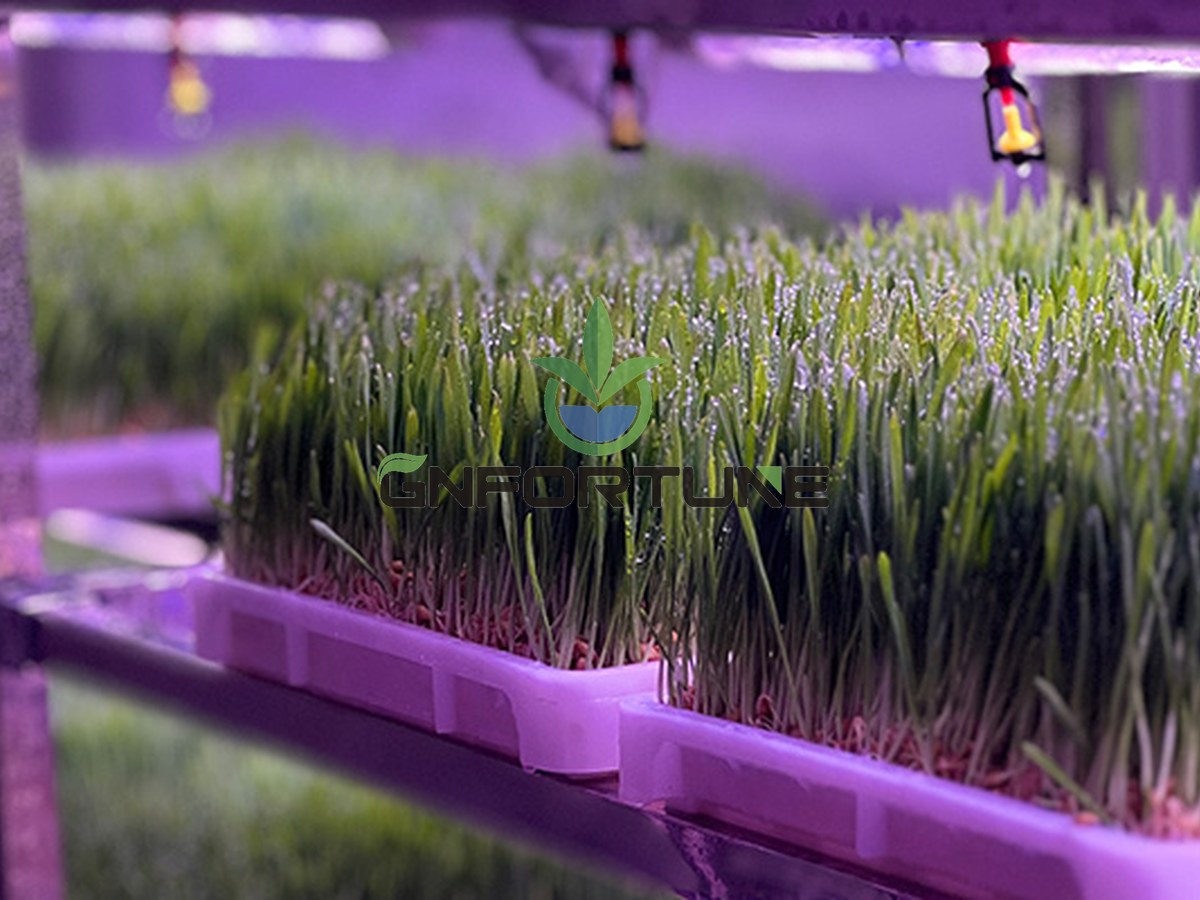
The photoreceptors that read day length respond to much lower light than photosynthesis needs. A corridor door propped open, a gap along a screen seam or a nearby yard light can deliver enough to make a “dark” period register as an interrupted one.
Verification is therefore a measurement job. Readings belong at crop level during the scheduled dark period, at the likely leak paths: doorways, end walls, screen seams and pipework penetrations. Thresholds are species-specific, so aim for whatever the structure can reasonably achieve, and record it rather than assume it.
Extending Day Length: Choosing a Light Duration
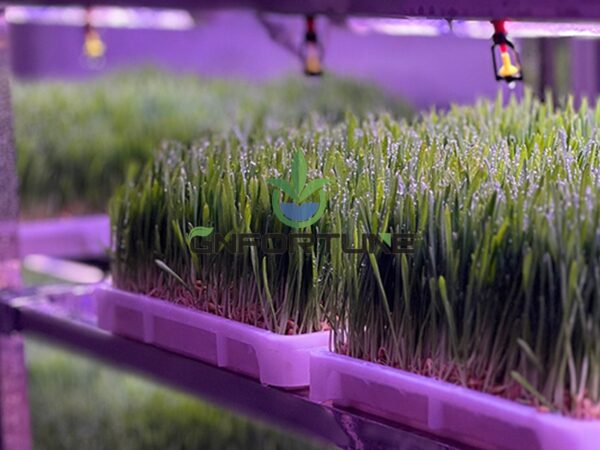
Total photoperiod is whatever the day provides plus whatever is switched on. In low-light months many leafy programmes plan a target day length rather than a start and stop time, commonly in the range of 14–18 hours for vegetative crops, confirmed against their own trials.
Extension can also work against the plan: adding hours to a short-day crop suppresses the flowering the programme depends on, and evening light on a long-day crop near its threshold brings bolting forward. Define the target photoperiod before deciding whether to extend, shorten or leave it alone.
Electrical capacity and heat follow the same decision. Long daily hours mean more emitter run time, so the lighting system’s operating temperature and the house’s night temperature pattern both need checking first.
Blackout for Short-Day Control
A blackout greenhouse extends the dark period rather than adding light. It brings short-day crops into flower on schedule, or stops long-day crops receiving the signal that pushes them towards bolting. Both depend on completeness: the treatment works only where it is genuinely dark.
Two things decide whether it succeeds. Leakage comes first: along seams, around doors and through ventilation paths, since air still has to move without admitting light. Heat comes second — closing the house in warm daylight traps energy, so blackout and temperature control belong in one plan.
Automation needs a failure state written down rather than inherited: what the screen does on loss of power, how the controller reports that a curtain did not reach position, and how much unscheduled light the crop tolerates.

Night Interruption Lighting
Night interruption splits one long dark period into two shorter ones, changing the response of many long-day plants at a fraction of the energy needed to extend the whole photoperiod. It suits sites where tariffs or capacity make long hours expensive.
It commonly takes one of two forms: a single block midway through the dark period, planned in the range of two to four hours, or a cycling pattern alternating short lit and dark intervals. Which suits the crop, and what level the fixtures must deliver, are questions for your agronomist and supplier rather than copied from another site.
Seasonal Transitions and Failure Signs
Most losses cluster at the two crossover points in the year, when natural day length moves fastest. Plantings only weeks apart behave differently under the same recipe, and the cause is usually blamed on nutrition before anyone checks the calendar.
Symptoms also map to the house, and reading that map is usually faster than any other diagnostic. Bolting or budding concentrated near a door, along one screen seam or at the end of a bay points to leakage rather than to a schedule error. Effects spread evenly across compartments point to the controller or the programme itself.
Worth doing beforehand: keep schedules in terms of target day length rather than clock times, re-check them against sunrise and sunset tables for the site’s latitude, and log every change — daylight-saving shifts explain their share of odd crop responses.
FAQs About Photoperiod Management
How many hours of light do hydroponic crops need?
It depends on the crop group and the season. Many leafy programmes plan toward a target day length rather than fixed hours, commonly around 14–18 hours in low-light months, but that figure should come from your own trials and cultivar supplier rather than from a published default.
Do LED fixtures need high output for night interruption?
No. The signalling response works at light levels well below what photosynthesis requires, which is exactly why night interruption costs less than extending the full photoperiod. What level is sufficient at a given mounting height is a question for the fixture supplier and your agronomist.
Can a few light leaks really affect the crop?
Yes. Photoreceptors respond to far lower light than photosynthesis needs, so a doorway gap or a seam can register as an interrupted dark period. Meter readings at crop level during the dark period are the only reliable check.
Is blackout only used to trigger flowering?
Short-day flowering crops use it to schedule budding, but it is also used to prevent long-day crops from receiving the bolting signal. Either way, the value depends on how light-tight the enclosure actually is.
Why do problems cluster in spring and autumn?
Because natural day length changes fastest at those points, so plantings only weeks apart experience different signals under the same recipe. Scheduling in terms of target day length and logging changes removes most of that variability.
Related Reading
- Greenhouse Lighting: LED vs HPS, PPFD, and DLI — The intensity side of the lighting decision
- Thermal Screens for Hydroponic Greenhouses: Night Heat Retention and Energy Saving — Screen hardware and its other functions besides day length
- Crop Steering in Commercial Hydroponics: Vegetative and Generative Control — Season-sensitive crop scheduling in practice
- Hydroponic Alarm Systems: Thresholds, Escalation and Avoiding Alarm Fatigue — Monitoring a screen or lighting controller that fails to reach position
- Crop Turnaround Hydroponics: Scheduling the Window Between Two Cycles — Where photoperiod planning meets the production calendar
Next Step: What to Send for a Quotation
Day-length hardware is quoted from the crop response you need to control and how dark, or how long, the house has to be. Suppliers asked for “lights and screens” without the target photoperiod will size the system to something, and that assumption drives both capital and running cost.
In photoperiod hydroponics the equipment is the easy half. Defining target day length, the failure state of every screen and lighting circuit, and what gets measured every week is what keeps seasonal transitions predictable.
Planning day-length control or blackout for a house? For RFQ or project consultation, send: greenhouse dimensions and usable area; crop list and cultivars; whether the need is day-length extension, blackout or both; target photoperiod per crop stage; existing screen installation and automation level; available electrical capacity; local climate range; target weekly or annual output; delivery schedule; and the budget band. G AND N FORTUNE LIMITED supplies NFT channels and gutter systems with matched greenhouse packages quoted to those parameters.