Most expansions are sold as “adding another block” and delivered as a series of small interruptions to a house that is already producing. To expand hydroponic farm without downtime, the work has to be broken into steps that each touch one zone: a tie-in, a test, a flush, a planting. The crop keeps growing throughout, which is the point — and also the constraint, because every step is scheduled against what the plants can tolerate that day.
This is about construction and operating sequence on a live site; funding stages and refurbishment are separate questions.
What Actually Has to Stop
Very little needs to stop completely. A live expansion is a sequence of short, localised interruptions, one zone at a time, not a shutdown of the house.
The interruptions that cannot be avoided are the manifold tie-in, the pressure test on the new section, and the flush and sanitation before planting. Structure, channels, electrical runs and drainage can all be built while neighbouring zones produce.
As a planning range, a single tie-in on a manifold with working isolation valves is commonly planned as a window of a few hours inside one irrigation day, assuming the zone can be isolated and the crop tolerates one missed feed. Cure time, valve access and pipe diameter move that figure, so confirm it with the installer.
Schedule each window against crop tolerance: recently transplanted plugs and crop close to harvest have the least margin.
Tying Into a Live System
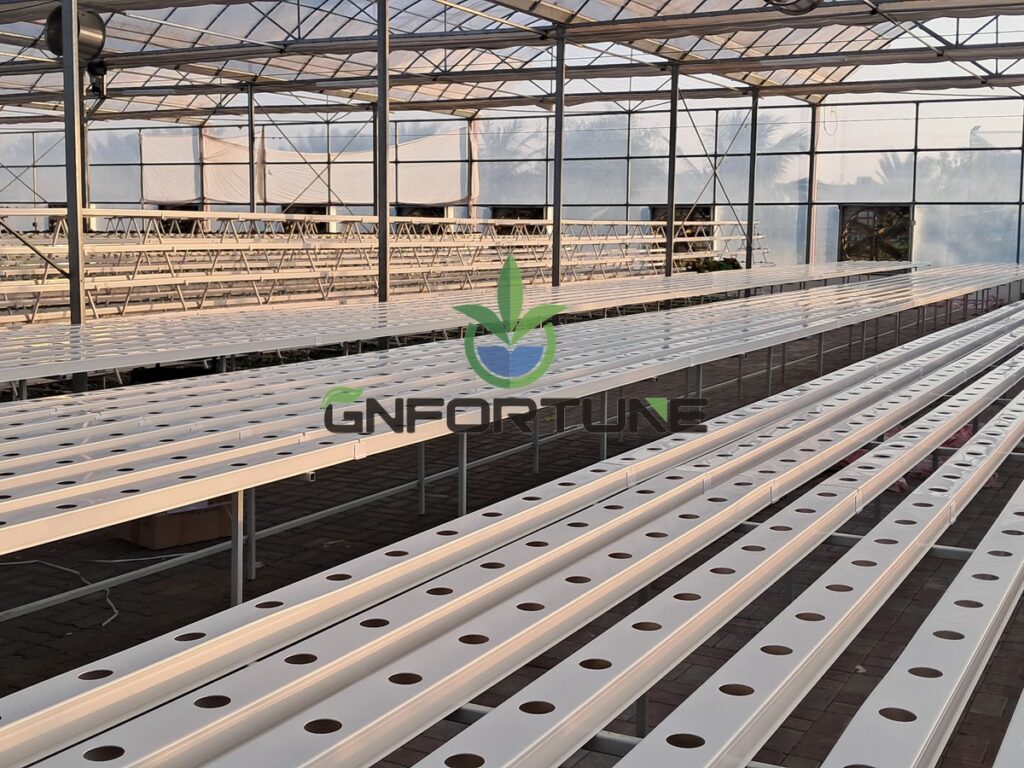
Every new connection needs isolation on both sides, a witnessed pressure test before it is wetted into production, and a flush before planting. The failure mode is rarely the new pipework; it is the disturbance it causes in the existing system.
- Prove the isolation first: a valve never operated often does not hold. Test it days before the window, not during it.
- Fill slowly and vent: new sections arrive full of air, and pushing it into a live zone causes the flow swings the existing crop notices.
- Pressure test with the crop safe: hold time and test pressure agreed in advance, with the new section isolated from planted zones.
- Flush and sanitise before planting: the same discipline as cleaning between cycles, applied to new pipework handled on site.
- Update the drawings: an as-built that stops at the original house makes the next expansion guesswork.
Valve labels and zone numbering should follow the system already in use, or the first night fault becomes a search.
Keeping the Build Out of the Crop
Construction traffic is one of the more reliable ways to bring disease into a clean house, so the build needs its own entry, route and tools rather than sharing the production crew’s.
- Defined access: one door for the build if the site allows it, or entry timed outside crop-work peaks.
- Dedicated tools: build tools stay in the build area; shared trolleys and ladders are how contamination crosses a house.
- Boundary hygiene: footwear and hand protocol at the line between build and production, the same logic as floor and hygiene zoning.
- Debris and standing water: offcuts, packaging and water left by the work are disease risks before they are tidiness problems.
The new zone is also the last area to trust: keep it isolated until it has been flushed, tested and observed, so a problem in new pipework stays there.
Site Logistics Around a Running Crop
Material has to arrive without crossing the crop, and the crew has to work without becoming part of the crop operation — a dedicated route, storage agreed before the first delivery, and hours that avoid harvest and spray windows.
- Route and timing: agreed with the farm manager, and re-agreed when the crop calendar shifts.
- Storage space: channels and fittings need somewhere dry and out of the working aisle.
- Waste removal: packaging and offcuts leave the same day, by the build route rather than the packhouse.
- Working beside crop: any task above a planted row needs a plan for drips, dust and dropped fixings.
Route planning of this kind is ordinary farm logistics, and the existing internal logistics layout usually needs a temporary revision rather than a permanent one.
The Capacity Ramp Is Not the Installation Date
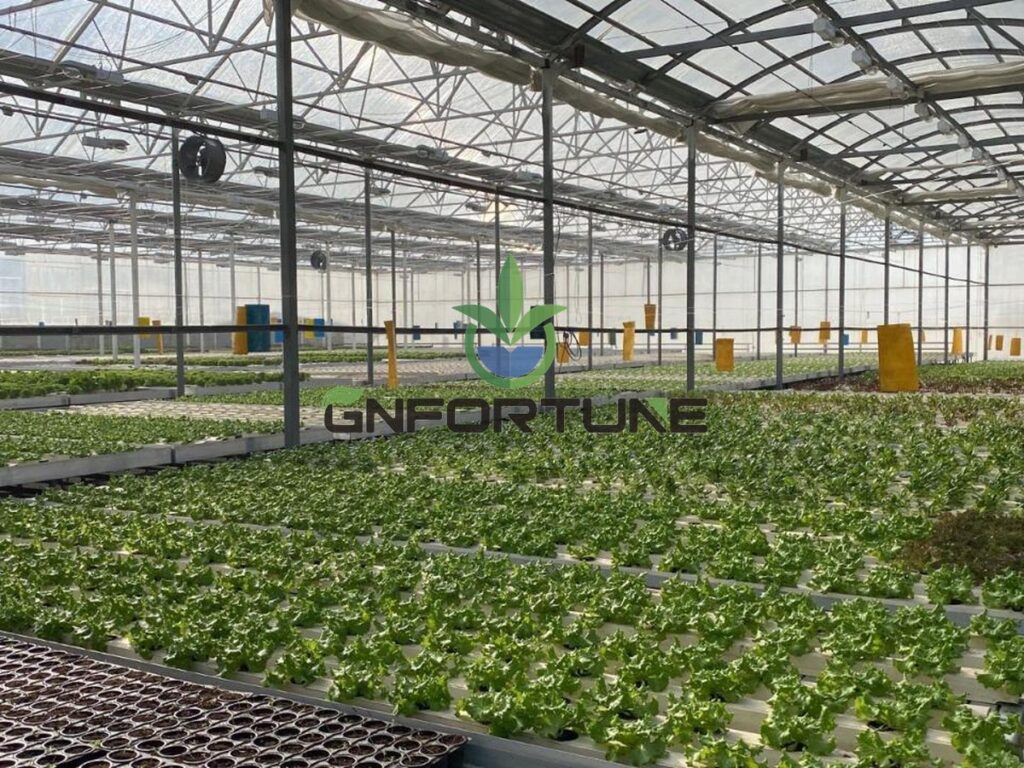
New area produces nothing on the day it is finished. Output follows the crop cycle, so the ramp is set by propagation lead time and by how quickly the crew absorbs extra work.
The bottlenecks sit upstream and downstream of the new gutters:
- Propagation: if plug capacity was not expanded first, the new area waits. This is the most common miss.
- Pump, tank, filtration and chilling: sized for the old area. Adding channels without checking total flow and cooling load reduces delivery everywhere.
- Dosing and control: more zones means more valves and sensors, and a controller with spare capacity.
- Labour and packing: harvest and pack hours rise with output, and the crew has to be in place first — a staffing question as much as an engineering one.
Plan the ramp as added output per week at steady state, and confirm propagation, labour, cooling and packing can each absorb it. A zone that backs up at the packing line has not added capacity.
How to Expand Hydroponic Farm Without Downtime: The Sequence
Infrastructure first, then growing area, then planting. Skipping the infrastructure step turns an expansion into a partial shutdown, because the shortfall appears after the new area is committed.
- Confirm existing capacity: pump, tank, filtration, chilling, dosing and electrical spare ways.
- Extend distribution: manifold ports, valves, mains and labelling in the existing numbering.
- Install channels, gutters or beds with their return or drain path.
- Flush, sanitise, pressure test and commission the new zone in isolation.
- Plant, then ramp against propagation and packing capacity.
Each step has a sign-off, and commissioning belongs in the same site acceptance process used for the original build.
Where Equipment Selection Comes In
Expansion orders are easier to quote when the existing system is described accurately: channel profile and dimensions, manifold arrangement, valve types, zone count, pump and tank sizes. Suppliers need the as-built, not the original brochure.
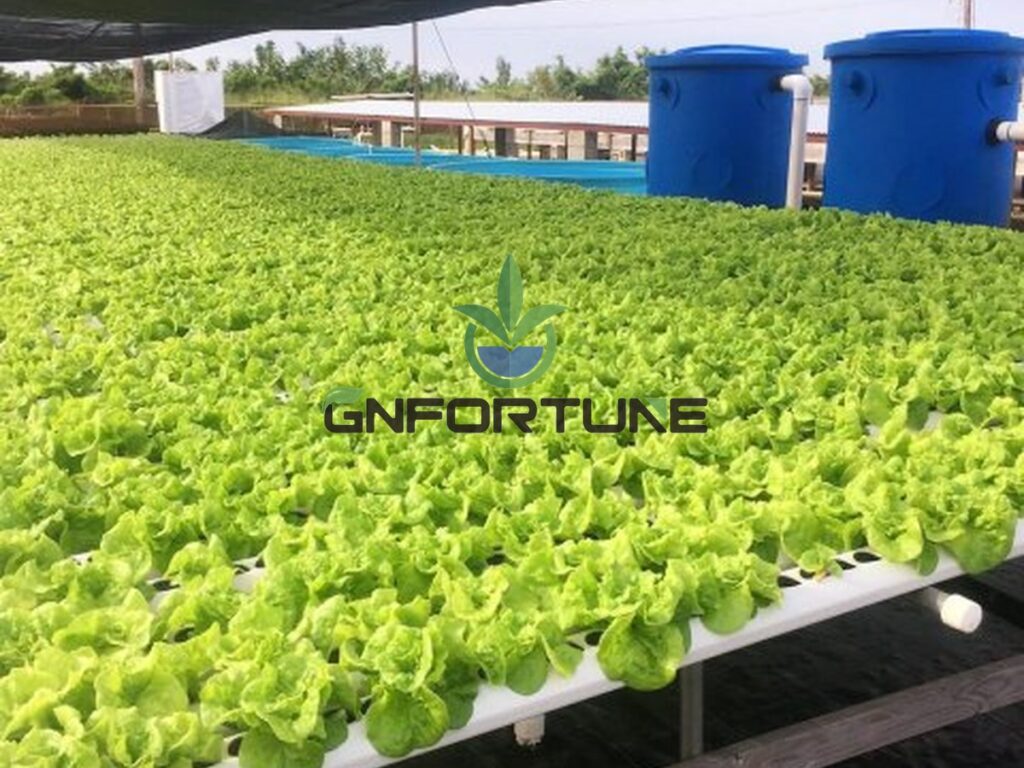
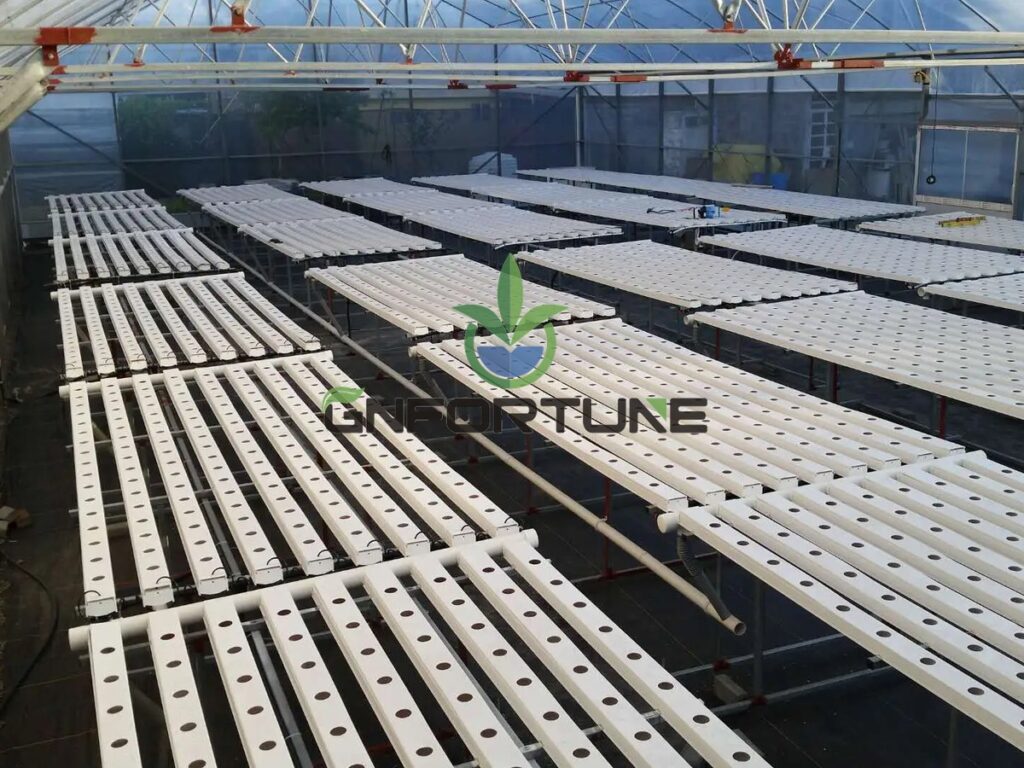
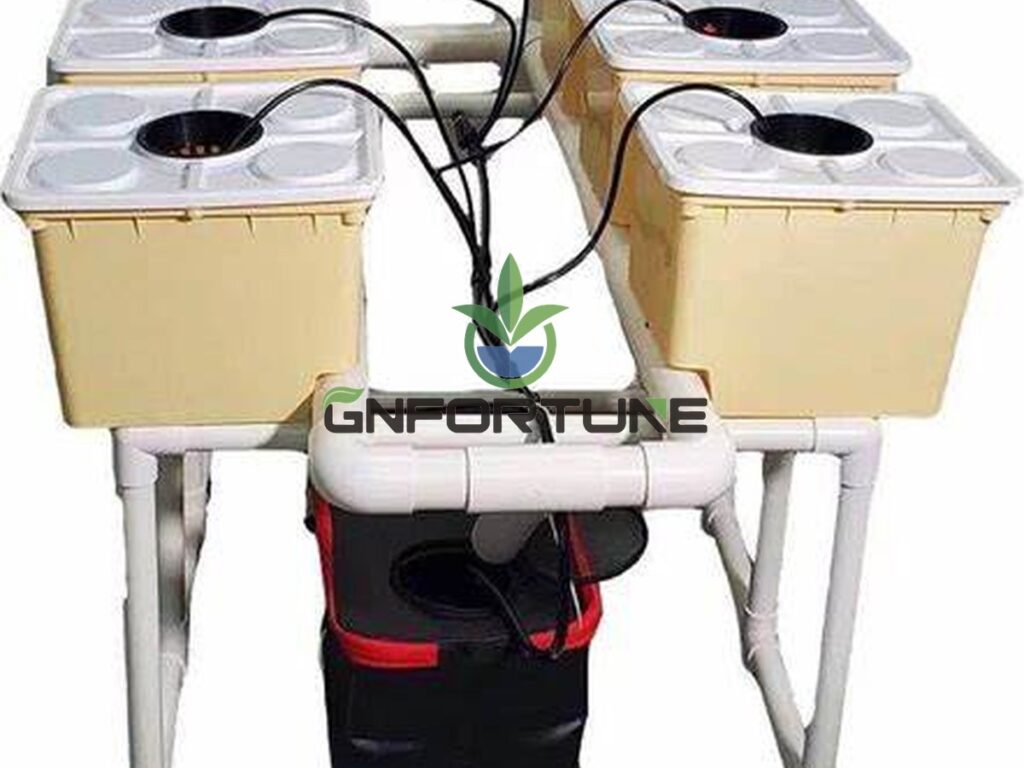
G AND N FORTUNE LIMITED supplies NFT channels, gutter and Dutch bucket systems with matched manifold, valve and pump packages, quoted against the added area and the capacity of the existing set. Matching an installed profile is routine; the risk sits in assuming the existing pump and tank absorb the extra load.
FAQs About Expanding a Live Hydroponic Farm
Can we add gutters without stopping production?
Yes, one zone at a time. Structure, channels and drainage can be built while neighbouring zones produce; the interruptions are the tie-in, the test and the flush.
How long is the water-off window?
As a planning range, a few hours within one irrigation day for a single tie-in with working isolation, assuming the crop tolerates one missed feed. Cure time, valve access and pipe size move it.
Will the existing pump and tank cover the extra area?
Often not without a check. Total flow, filtration area and cooling load rise with the added zone, and a shortfall shows as reduced delivery in the original house.
Should the new zone be planted first or last?
Plant it once flushed, tested and observed in isolation, and only when propagation and packing can absorb the volume. Planting ahead of propagation capacity moves the queue.
What most often goes wrong in an online expansion?
Infrastructure capacity never re-checked, and as-built drawings left unupdated. Both surface after the new area is committed, when the fix is expensive.
Related Reading
- Phasing a Hydroponic Project: Building in Stages Without Strangling Cash Flow — The funding-side decision behind staged building
- Refurbishing an Older Hydroponic Greenhouse: What First — When the existing house needs work before more area
- Hydroponic System Commissioning: Installation Sequence, Testing and Site Acceptance — Where the new zone is proven before handover
- Hydroponic Pump Sizing: Flow Rate, Head Pressure & Redundancy for Commercial Systems — Whether the existing set covers the added load
- Critical Spare Parts for Hydroponic Farms: A Stock List Built on Downtime Risk — What to hold on site while the build runs
Next Step: What to Send for a Quotation
A plan to expand hydroponic farm without downtime is quoted from the added area and the capacity of the existing system, not from the footprint alone. Asked to match an existing house without an as-built, a supplier quotes a standard package that may not fit.
Planning an expansion? For RFQ or project consultation, send: greenhouse dimensions and the area to be added; current system type, channel profile, zone count and manifold arrangement; existing pump, tank, filtration and chilling capacities; crop plan and target weekly or annual output after expansion; propagation and packing capacity today; working windows and site access constraints; local climate range and raw water analysis; automation level required; delivery schedule; and the budget band. G AND N FORTUNE LIMITED supplies NFT channels, gutter and Dutch bucket systems with matched manifold, valve and pump packages quoted to those parameters.