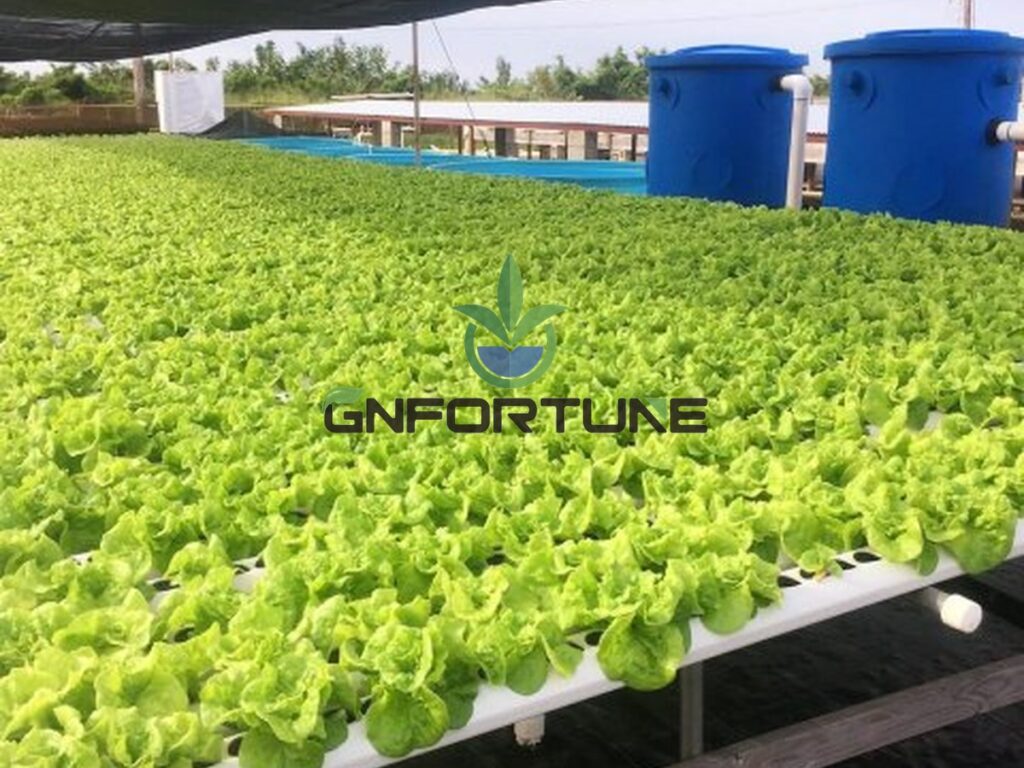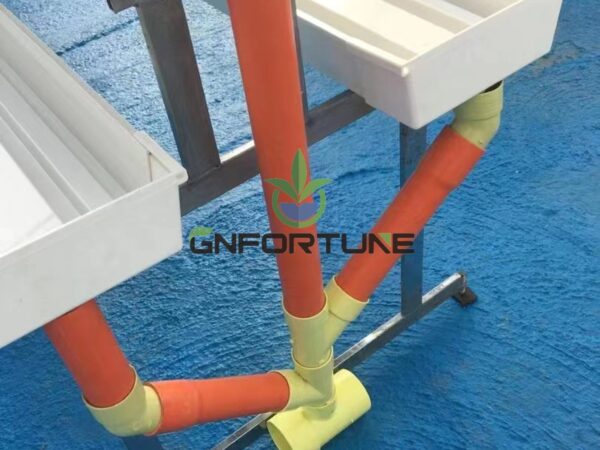
Drain-to-waste is simple until the water bill and the fertiliser bill arrive in the same month. Hydroponic drainage recycling is the alternative: capture what leaves the root zone, treat it, and feed it back. The engineering is not difficult — a collection path, a sump, filtration, disinfection and a return pump. The decision is harder, because whether reuse pays depends on what water and fertiliser cost on your site, and on whether the team can hold the hygiene of a loop that carries everything the crop has already shed.
This is about collection and return: the engineering and the hygiene boundary, not the EC and dump decisions that sit with nutrient solution management.
What a Run-off Collection System Has to Capture
A run-off collection system has to capture a known share of what was applied, at a known peak rate, without letting the water sit warm and untreated. Tank size, filtration and disinfection all follow from that.
As a planning range, a drain-to-waste leafy house commonly sees 20–30% of applied volume leave the root zone, assuming a peat-based or coir blend under a summer canopy. Substrate, scheduling and crop stage move that figure, so measure it on site over several days.
Run-off carries more than water: it carries the fertiliser you paid for, media fines, root debris and whatever biology lives in the root zone — which makes the return side a hygiene question as much as a plumbing one.
When Hydroponic Drainage Recycling Pays
It pays where water is scarce or expensive, discharge is constrained, or the fertiliser in the drain is worth recovering. It pays least where water is cheap and discharge unrestricted, and it can cost dearly on a site already fighting root disease.
- Water cost and reliability: rising municipal tariffs, or a borehole with limited yield, make recovered volume worth real money.
- Fertiliser value in the drain: run-off carries applied nutrient, so reuse cuts the dosing bill too.
- Discharge constraint: where a permit caps volume or nutrient load, collecting is often cheaper than treating for discharge — see nutrient discharge rules.
- Disease pressure: a return loop connects every plant to every other. Where root disease is present, the value of reuse drops sharply.
Do the arithmetic with your own numbers: recovered volume times water and fertiliser cost per cubic metre, against collection, treatment and testing costs. One cost resists it — a contamination event reaching the whole crop at once.
Collection Hardware: Falls, Channels, Mains and the Sump
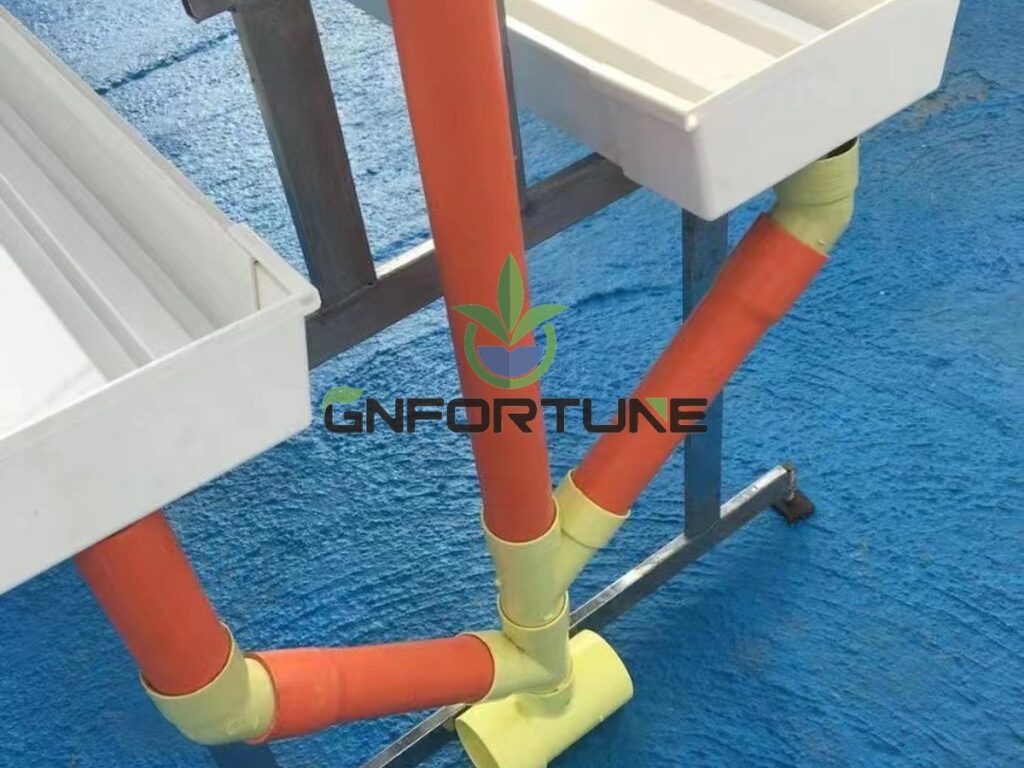
Collection is a gravity problem: everything between the growing surface and the sump needs a continuous fall, no low point that holds water, and capacity for the peak. A channel that ponds becomes a humidity and disease problem before it becomes a plumbing one.
- Floor or under-gutter channel: does the first job, with continuous falls and a cleanable surface — the same discipline as floor drainage and hygiene zoning.
- Collection main: sized for peak flow, with clean-out access at changes of direction.
- Sump or tank: sized on the return pump’s minimum run time and the peak collection rate, with a low-level cut-out.
- Access: opaque, cleanable, with a hatch, level indication and isolation for cleaning.
- Return pump: specified on flow and head for the actual route, including filter and disinfection losses.
Two details decide whether the loop stays serviceable: the tank must be drainable and cleanable, and the pipework must be flushable rather than merely emptied.
Run-off Treatment Before the Water Goes Back
Collected water carries solids and, potentially, pathogens. Filtration deals with the solids, disinfection with the biology; on a loop returning to the crop, neither replaces the other.
- Solids removal: a screen or disc stage first, then a finer stage, a settlement zone or a media filter.
- Settlement: a quiescent zone in the tank removes much of the load cheaply.
- Disinfection: UV, ozone or a chemical oxidant, each with its own dose, contact time and residual behaviour. UV leaves no residual; ozone and peracetic acid need contact time and handling controls — compared under water treatment and sanitisers.
Treatment does not correct chemistry: accumulated sodium, chloride and a drifted balance are handled by blending and by the recipe.
Recirculation Hygiene: What Has to Be Tested
Reuse means the whole crop shares one water body: test the collected water before blending, not only the mixed feed, and define in advance what happens when a result is out of range.
- EC and pH of the collected water: measured at the sump, because the blend ratio depends on what the drain is carrying.
- Sodium and chloride: accumulate where raw water or fertiliser carries them, so the blend ratio is a managed number.
- Pathogen screening: set organisms, method and interval with your agronomist, and keep the loop able to switch to drain-to-waste if a result fails.
- Tank and line cleaning: a return loop never dries, so biofilm control is routine work.
- Records: dates, results and actions taken.
Sampling points are a design item: a loop with nowhere to draw a representative sample cannot be monitored, however good the treatment equipment is.
Drain-to-Waste vs Reuse: Deciding on the Drawing
The two are not a switch that can be flipped later. A drain-to-waste house can be built with the collection path in place and the return pump omitted, which keeps the option open cheaply; a reuse house needs tank, filtration, disinfection and sampling designed in from the start.
| Factor | Drain-to-waste | Collection and reuse |
|---|---|---|
| Capital | Lowest | Path, tank, treatment and controls |
| Water and fertiliser use | Highest | Lower, on the blend ratio |
| Disease spread | Limited to the plant | Shared water body |
| Monitoring | Low | EC, pH, salts, pathogens |
| Best fit | Cheap water, low disease pressure | Costly water, discharge limits |
Many projects settle on a hybrid: reuse in normal operation, with a valved path to discharge so the loop can go to waste the moment a test fails. The valve and the written procedure then matter more than the tank size.
Where Equipment Selection Comes In
Collection-ready design is cheap at the drawing stage and expensive afterwards, because retrofitting falls, a sump and sampling points means working under a planted house. Channel profile, tank and pump set, filtration, disinfection and sampling are specified together.
G AND N FORTUNE LIMITED supplies NFT channels, gutter and Dutch bucket systems with matched tank, pump, filtration and disinfection packages, quoted against the collection volume and treatment level specified.
FAQs About Hydroponic Drainage Recycling
How much run-off should we plan to collect?
As a planning range, 20–30% of applied volume is common for a drain-to-waste leafy house on a peat-based or coir blend under a summer canopy. Measure it on your own site over several days, because substrate and scheduling move it.
Can collected drain water be reused without treatment?
Not safely on a commercial loop. Run-off carries solids and potentially pathogens, so filtration is the minimum and disinfection is expected where return water is shared.
Can a collection loop be added to a drain-to-waste house?
Yes where there is a gravity path and space for a tank. The hard parts are floor falls and sump location, so building the collection path in from the start is cheaper.
Does reuse change the nutrient recipe?
Yes. Returned water carries salts, so the blend ratio becomes a managed number and the recipe is verified against it.
How often should the return loop be tested?
Set the interval with your agronomist against crop, system and buyer requirements, and test after any root symptom appears. The loop should switch to drain-to-waste the same day.
Related Reading
- Nutrient Solution Management: Recirculation vs Drain-to-Waste, EC Drift and Dump Cycles — EC and dump decisions downstream of collection
- Hydroponic Sanitisers Compared: Peracetic Acid, Hydrogen Peroxide and Chlorine Dioxide — Disinfection options and handling requirements
- Biofilm in Recirculating Hydroponics: Why It Survives Cleaning and How to Manage It — Why a loop that never dries needs routine cleaning
- Hydroponic Reservoir Sizing and Water Storage Tank Design for Commercial Farms — Sizing the collection tank and its buffer
- Condensate and Chilled-Water Recovery in Hydroponics: Turning Waste Water Into a Resource — The other recoverable water stream on site
Next Step: What to Send for a Quotation
Hydroponic drainage recycling is quoted from run-off volume and treatment level, not from greenhouse area. Asked to price “a recycling system” without a drain volume, a supplier sizes the tank and filters on assumptions.
Planning a collection loop or a reuse retrofit? For RFQ or project consultation, send: greenhouse dimensions and usable growing area; crop plan and target weekly or annual output; system type (NFT, gutter, Dutch bucket or substrate slabs); measured or estimated run-off percentage and peak irrigation flow; available floor falls and sump location; raw water analysis and local water cost; discharge constraints in your area; treatment level and monitoring required; automation level; delivery schedule; and the budget band. G AND N FORTUNE LIMITED supplies channels, gutter and Dutch bucket systems with matched tank, pump, filtration and disinfection packages quoted to those parameters.