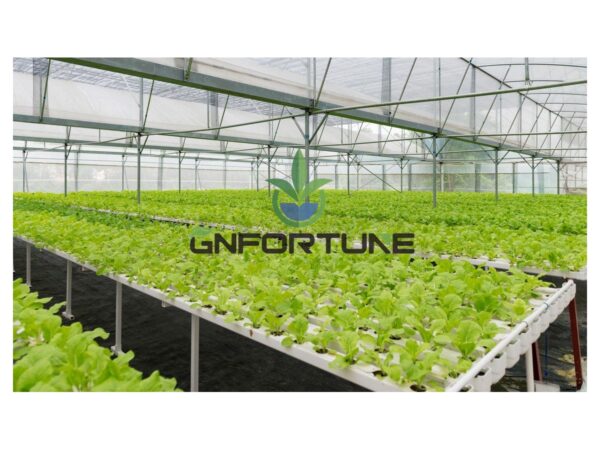
Farms that recirculate learn the same lesson sooner or later: a system can look clean at turnaround and still carry a living film into the next crop. A biofilm hydroponic system problem starts on surfaces, not in the solution — channel walls, tank liners, elbows, dosing lines and the inside of the drain main. The film shields whatever sits underneath it, which is why a dose that clears a water sample can leave the colony in place. This article covers where recirculating nutrient biofilm establishes, why a routine between-crop clean rarely removes it, and what sanitiser rotation, line design and weekly monitoring change.
What biofilm is and why it matters in recirculating systems
Biofilm is a community of bacteria, fungi and algae held against a surface by a self-produced matrix, usually described as extracellular polymeric substance (EPS). Cells begin attaching within hours of a clean surface being wetted; a mature matrix develops over following days and progressively slows sanitiser penetration. In a recirculating layout the same solution passes the same surfaces continuously, so the film is fed continuously — that is the structural difference from a drain-to-waste design.
The consequences show up in four places:
- Flow restriction. Film thickens where velocity is lowest, so zone flow at a fixed pump setting falls.
- Pathogen reservoir. Root-zone organisms shelter in the matrix and are released back into the solution.
- Sensor error. Fouled probes and injection points make the controller correct against readings that no longer reflect the tank.
- Sanitiser demand. Organic load consumes oxidiser before it reaches the film.
This is a different problem from the green growth on exposed surfaces. Algae needs light and sits where it can be seen; a biofilm hydroponic system audit has to look at the shaded, permanently wetted surfaces nobody checks. The two are related and often managed together, but the control methods differ — see the approach in algae control for NFT and ebb-and-flow systems.
Where it forms: liners, elbows, dosing lines, sumps
Biofilm concentrates where flow slows, where surfaces are rough, and where liquid sits between cycles. Four locations account for most of what farms find on inspection, and each has a different cleaning route.
| Location | Why it accumulates | What the farm notices |
|---|---|---|
| Channel wall and liner | Velocity drops along the run; the last third of a long row is slowest | Slime under the root mat, uneven wetting at the tail end, NFT channel biofilm returning quickly after cleaning |
| Elbows, tees, reducers, dead legs | Turbulence plus low average velocity; capped stubs never drain | Pressure loss at fittings, debris catching at diameter changes |
| Dosing and stock lines | Concentrated chemistry, small bore, warm cabinet, intermittent flow | Injector drift, blocked acid line, stock tank haze |
| Tank, sump and filter housing | Waterline film, corners below aeration dead spots, downstream face of filters | Rising differential pressure, smell, temperature drift |
Sensor ports and sampling points deserve their own line: low-flow by design, touched often, and a fouled probe quietly corrupts every decision the dosing controller makes.

Why routine cleaning between cycles is not enough
A standard turnaround removes the free-floating population and the film you can physically reach. It usually leaves the base layer, because contact time, concentration and velocity are set for a flush rather than for film removal. Chemistry alone rarely penetrates a mature matrix at a dose the crop and the materials can tolerate.
Five reasons come up repeatedly on site audits:
- Contact time is short. Circulating sanitiser for an irrigation cycle is not the same as holding concentration for the label contact time.
- Velocity is too low to scour. Normal irrigation velocity does not shear an attached film; removal needs a high-velocity flush or mechanical action.
- Dead legs never drain. Capped stubs and low points keep their charge and re-seed the line afterwards.
- Drying is not a kill step. A dried film rehydrates and releases cells into the first fresh solution.
- Re-inoculation is immediate. Tank walls, filter housings, trays and incoming plants put cells back within days.
The turnaround procedure still matters — follow a written one rather than an improvised one. Our note on cleaning and sanitising a hydroponic system between cycles sets out that sequence; the point is that it treats accessible surfaces, and the rest has to be designed out or removed mechanically.
Sanitiser options and rotation logic
Rotation is not about changing products for its own sake. It alternates modes of action so the population that survives one chemistry is the one the next chemistry handles, and it matches the product to the surface being treated. The plan should name a primary oxidiser for routine work, a second mode for periodic deep cleans, and the interval — set by monitoring trend, not by habit.
| Option | Where it fits | What to check first |
|---|---|---|
| Hydrogen peroxide / peracetic acid | Strong oxidiser for lines and surfaces; breaks down to water, oxygen and acetic acid | Consumed by organic load — clean first, then dose; confirm compatibility with grommets and seals |
| Chlorine dioxide | Effective across a wider pH range and less consumed by organic matter than hypochlorite | Generated on site; needs controlled dosing and clear ventilation and handling rules |
| Sodium hypochlorite | Familiar and low cost for hard surfaces and footbaths | pH dependent, forms by-products with organics, corrosion risk, hard on roots if it returns to the crop |
| Quaternary ammonium compounds | Surfaces, tools and entry hygiene | Not for recirculating solution; residues and foam in lines |
Two rules prevent most incidents. Never mix chemistries — drain and rinse between stages. And record product, concentration, contact time, temperature and operator for every event; without that log a rising problem cannot be separated from a failing product. The detailed comparison sits in hydroponic sanitisers compared.
Solution management sets the background load. Where water quality or EC drift forces frequent dumps, the film gets reset more often; where a farm recirculates hard to save fertiliser, it has to invest more in line hygiene. That trade-off is laid out in recirculation versus drain-to-waste and dump cycles.
Line design and flow changes that starve biofilm
Biofilm thrives on slow flow, warmth and dead volume. Design is the cheapest control, because it removes the habitat instead of treating it every few weeks. Most of these items cost nothing at build stage and a great deal to retrofit later.
The items below cost little at build stage and a great deal to retrofit, and mechanical access is the one that makes everything else workable.
- No dead legs. If a tee exists for a future zone, blank it at the manifold rather than capping a pipe.
- Continuous fall on drain mains. A common planning assumption is around 1–2% slope; confirm it with your designer against pipe size and run length.
- A scouring flush. Many designs work to roughly 1.5–2 m/s in the mains during a flush cycle — verify against the pump curve and pipe rating.
- Smooth bore. Long-radius bends, few elbows on the return main, no abrupt diameter steps.
- Mechanical access. Removable end caps or inspection ports at run ends and manifold junctions; a brush or swab is the only reliable way to remove mature film.
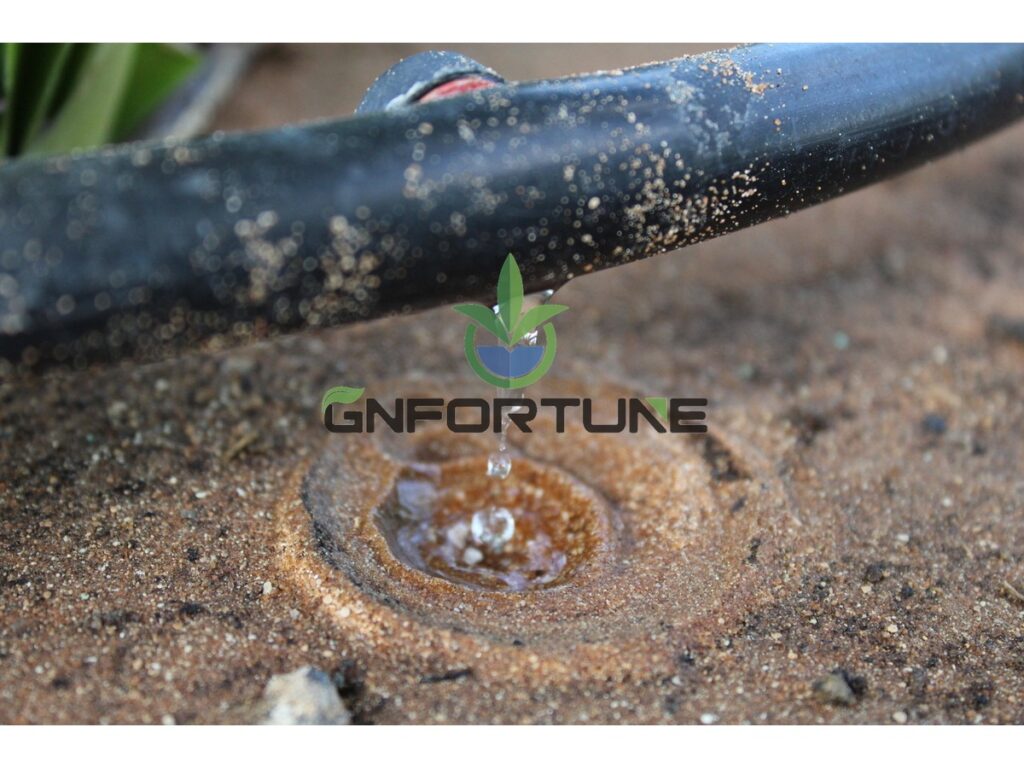
- Short dosing lines and cool solution. Keep acid and stock lines separate, protect injectors from backflow, and insulate or shade the tank in hot climates.
- Filtration, plus UV or ozone where the budget allows. These reduce the free-floating load; none of them remove film already attached.
Monitoring: what to record weekly
Monitoring only works if the method is fixed: same point, same flow setting, same time of day. Single readings mean little; the trend tells a farm whether its hygiene programme is holding.
| Record | Where | Frequency | What a change means |
|---|---|---|---|
| Zone flow at a fixed pump setting | Flow meter per zone | Weekly | Falling flow points to restriction from film or debris |
| Differential pressure across the filter | Filter inlet/outlet | Weekly | Rising differential means loading upstream of the housing |
| Solution temperature, tank and far end | Tank and longest run | Daily in hot weather | A widening gap means slow-moving, warming solution |
| EC and pH, mix versus return | Tank and return line | Daily | A growing gap is either uptake or fouled probes — check the probes first |
| Surface test (dip slide or ATP) | Tank wall, one outlet per zone | Monthly or per cycle | Trend upward = the programme is not holding between cleans |
| Cleaning log | Equipment room | Every event | Shows whether the failure is product, contact time or coverage |
Set the escalation trigger in advance so the decision is not argued at 6 a.m. A common internal rule is a 10% drop in zone flow at a fixed pump setting, or two consecutive surface tests above the farm’s own baseline: either schedules a line clean rather than another dose. Keep post-harvest water separate in the records — it has its own limits, covered in wash water sanitation and control limits.
FAQs About Biofilm in Recirculating Hydroponics
Does biofilm cause root disease?
Not by itself. In a biofilm hydroponic system the film harbours organisms that do cause disease and releases them in pulses, which makes every other control less predictable.
Can the problem be solved by raising the sanitiser dose?
Only up to the limits of crop tolerance and material compatibility; beyond them the farm buys damaged roots, hardened grommets and corroded fittings. Remove the film mechanically first, then dose to a verified contact time.
How often should recirculating lines be cleaned?
Clean accessible surfaces at every crop turnaround and schedule deep cleans of the mains from the monitoring trend. Many farms start with a quarterly deep clean and adjust from the log after a season of data.
Do UV or ozone remove existing biofilm?
No. They reduce the free-floating population, which slows regrowth. Film already attached has to be removed physically — flush at scouring velocity, brush or swab.
Is switching to drain-to-waste the answer?
It removes the recirculation habitat but raises water and fertiliser cost and brings discharge obligations. Most farms recirculate and manage the film, using partial dump cycles where water quality or EC drift forces them.
Related Reading
- Hydroponic Sanitisers Compared: Peracetic Acid, Hydrogen Peroxide and Chlorine Dioxide — Peracetic acid, hydrogen peroxide and chlorine dioxide compared
- Cleaning and Sanitizing a Hydroponic System Between Cycles — The between-cycle clean, and why it does not reach established biofilm
- How to Control Algae in NFT and Ebb & Flow Systems — Algae control in NFT and ebb-and-flow, which follows the same surface logic
- Nutrient Solution Management: Recirculation vs Drain-to-Waste, EC Drift and Dump Cycles — Recirculation versus drain-to-waste, EC drift and dump cycles
- Irrigation Filtration: Screen vs Disc vs Sand Filter — Screen, disc and sand filtration upstream of the biofilm problem
Next Step: What to Send for a Quotation
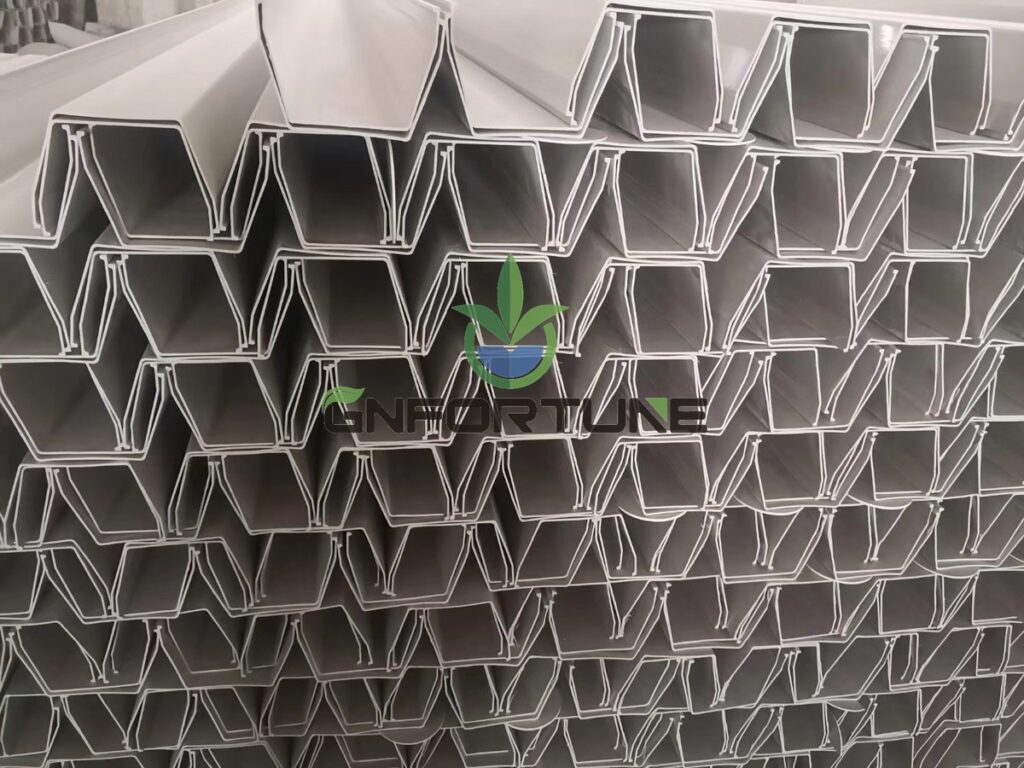
Biofilm hydroponic system control is mostly design and discipline: remove the dead legs, keep the fall and the flush velocity, and log the numbers. A retrofit that adds cleaning ports or re-falls a drain main costs far more than specifying the same items at build stage, and the access ports have to match the channel profile actually installed.
For a system or retrofit quotation, send: system type (NFT, DWC, Dutch bucket or substrate gutter), total recirculating volume and tank size, channel and pipe length with line sizes, crop and cycle length, water source analysis, current dosing and sanitation equipment, number of manifold junctions and clean-out points, greenhouse dimensions, target commissioning date and budget range. G AND N FORTUNE LIMITED supplies matched channels, fittings, grommets and clean-out ports as one kit, with layouts run in its 2,400 m² trial greenhouse before dispatch.