

Algae in NFT and ebb and flow hydroponic systems is the most common avoidable failure on a commercial farm. It is not just an aesthetic problem — algae compete with crops for nutrients, host pythium and other pathogens, and form biofilm that clogs drip emitters, channel outlets, and pump filters. On a commercial NFT channel line, the first green tint inside the channel is the first sign of a maintenance debt that compounds weekly. This article walks through why algae keeps coming back and what we actually do on site to break the cycle.
Why Algae Is Not Just Ugly
Treat algae as a crop. It photosynthesizes, it consumes nitrogen and phosphorus, and it reproduces fast in warm nutrient solution. The three problems it creates on a commercial hydroponic system:
- Nutrient competition. An established algae mat pulls significant N, P, and micronutrients out of the solution before the crop sees them. EC readings stop matching plant uptake.
- Biofilm and clogging. Algae cells embed in a sticky polysaccharide matrix. The matrix catches fine particles and turns into a thick sludge inside drip lines, channel outlets, and pump pre-filters.
- Pathogen habitat. Biofilm protects pythium, fusarium, and other zoospore-producing pathogens from sanitizers and UV, and it gives them a place to multiply between cycles.
The field rule we apply on every audit: if you can see green inside the channel or on the bench, the system has already lost. The fix is not a stronger chemical — it is to remove the conditions that let algae establish in the first place. Chemistry is the last step, not the first.
The Three Causes We See on Real Projects
Across the systems we audit, almost every chronic algae problem comes back to one or more of three root causes. Fixing these usually drops algae counts more than any product:
| Cause | What we find on site | Why it matters |
|---|---|---|
| Translucent channel or pipe | White or clear NFT channels, opaque-but-thin bench trays, exposed irrigation tubing in sunlight | Light reaches the solution, fueling photosynthesis in the channel |
| Nutrient film exposed to light between bays | Open-top channels, missing or damaged covers, sumps with translucent lids | Every exposed surface becomes a biofilm starter |
| Standing water with no turnover | Dead-end drip loops, low spots in return lines, ebb and flow trays that don’t fully drain, pump-off hours during the night | Stagnant solution is the algae equivalent of a culture flask |
The good news: all three are mechanical fixes. They cost less than a year’s worth of algaecide and they hold up across cycles. The bad news: they often require system-level changes — recutting channels, replacing pipe, or rebuilding the return line — which is why buyers discover them only when a retrofit is already on the table.
Light Blocking: Opaque Channels, Covers, and Pipe Color
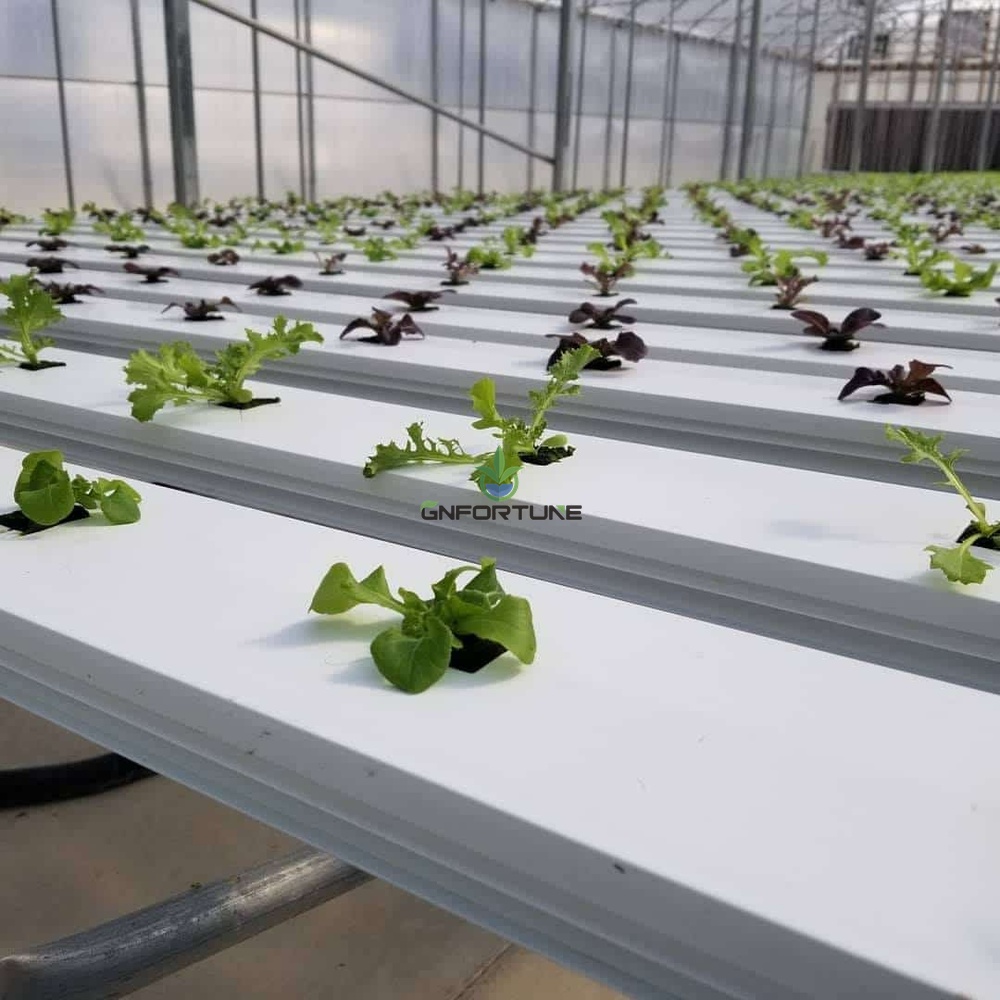
NFT grow channel covered with white opaque lid to block light and prevent algaeAlgae cannot grow where light cannot reach. Light blocking is the single most cost-effective intervention for an existing ebb and flow system or NFT line:
- Channel color and cover. Specify black or dark gray channels with a black lid. White channels look clean at install but always go green inside within a few weeks. For existing translucent channels, an opaque cover or a reflective wrap is a workable retrofit — labor cost is the main consideration.
- Pipe color. Use black PE or PVC for all irrigation pipe exposed to sunlight. Clear or blue pipe always grows biofilm on the inside wall; the biofilm then sheds into drip emitters.
- Reservoir and sump lids. A translucent reservoir lid lets light into the largest body of nutrient solution on the farm. Replace with opaque lids, or shroud the reservoir in reflective insulation.
- Floor and bench surfaces. Algae also grows on the wet floor under NFT lines and on bench legs. A light-colored, sealed floor with good drainage makes the floor itself a hostile surface for algae.
On new builds, every component that touches nutrient solution should be specified as opaque and UV-stabilized. On retrofits, the cheapest first step is to walk the greenhouse with a torch and photograph every visible green surface — those are the surfaces that should not be seeing light.
Cleaning Protocol Between Cycles
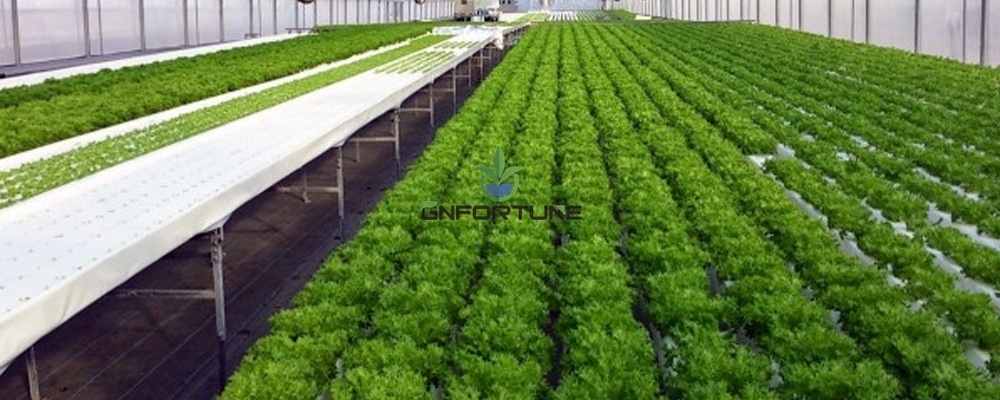
Greenhouse NFT rows with white reflective covers installed across multiple channelsEven a perfectly opaque system needs a sanitation pass between crops. The choice of chemical depends on the system’s materials, the residue rules of the export market, and what the operator is comfortable handling. Three options we use regularly, with their realistic trade-offs:
| Sanitizer | Typical dose | Contact time | Pros | Cautions |
|---|---|---|---|---|
| Hydrogen peroxide (35–50%) | 50–100 mL per 100 L | 30–60 min circulation | Breaks down to water and oxygen; no residue | Strong oxidizer; dose carefully; can damage roots if over-applied to a live system |
| Sodium hypochlorite (chlorine) | 100–200 ppm free chlorine | 20–30 min | Cheap, widely available, well understood | Forms trihalomethanes with organics; rinse thoroughly; corrosive to metals |
| Peracetic acid (PAA) | 30–80 ppm | 15–30 min | Effective across pH; biodegradable residues | Strong odor; PPE required; storage temperature-sensitive |
Whichever sanitizer is used, three steps stay the same: drain the system, brush mechanical residue off the channels and tanks, circulate the sanitizer, then rinse with measured water until the EC matches the input water within 0.1 mS/cm. Skipping the rinse test is how chemical injury shows up two days after transplant.
Beneficial Bacteria and Biological Control
Once light and sanitation are under control, beneficial bacterial inoculants can hold the line. Products based on Bacillus subtilis, Bacillus amyloliquefaciens, and similar heterotrophic strains compete with algae and early-stage biofilm for carbon and surface area. Two practical notes from project experience:
- They supplement, they do not replace. Inoculants alone will not overcome a translucent channel or a stagnant sump. Use them after the mechanical and chemical fixes are in place.
- Match the inoculant to the system. Products designed for organic-soil activation are not the same as products labeled for hydroponic reservoirs. Read the carrier and the rate, and avoid inoculants that contain significant organic carbon, which can actually feed heterotrophic biofilm if overdosed.
Some operators also add hydrogen peroxide at low doses (5–15 mL per 100 L of 35% stock) as a routine maintenance algaecide between cycles. It is a judgment call; on systems with sensitive crops or unpredictable source water, the safer default is mechanical prevention plus periodic deep cleaning.
When the Problem Is Structural, Not Operational
There are projects where no amount of cleaning will solve the algae problem because the system itself is the source. Three recurring structural issues we find on audit:
- Gutters that do not fully drain. A 1–2% slope looks fine on paper but fails at the joint between sections. Standing water in low spots is enough for biofilm to start.
- Translucent return lines. Many older greenhouses used clear PVC for the return line for visibility. It is a permanent algae starter. Replace with opaque PVC or PE.
- Open sumps in direct sun. A common shortcut on small builds; an algae factory on a commercial farm. Replace with a sealed opaque tank.
On these sites the right answer is a partial retrofit — replacing the channels, return lines, or reservoir — not a recurring chemical budget. For an audit and a redesign quote, the fastest route is to send the system layout with photos of the worst-affected zones.
FAQ
Is a little algae in NFT channels actually harmful?
A: Any visible green is a biofilm in progress. It will compete for nutrients, harbor pathogens, and shed into drip emitters. The cost of waiting is always higher than the cost of fixing the light path.
Can I use bleach to clean my hydroponic system?
A: Yes — dilute sodium hypochlorite at 100–200 ppm free chlorine is a standard sanitizer. Rinse thoroughly after contact and verify with an EC drift test before replanting.
Do UV sterilizers on the return line stop algae?
A: They help with pathogens and free-floating algae spores in the solution, but they do not penetrate established biofilm on channel walls. UV is a supplement to mechanical cleaning, not a replacement.
How often should an NFT system be deep-cleaned?
A: At least once between every crop cycle, and ideally a light clean weekly on continuous-production lines. The exact interval depends on crop, water temperature, and how opaque the system is.
Send Your System Specs for an Algae-Prevention Retrofit
Send photos of the channels, reservoir, and return line, plus your crop and cycle length, and the engineering team will return an algae-prevention retrofit plan with the parts list and the order of operations. The same scoping process used for turnkey greenhouse and NFT line design applies — start with the FAQ and shipping reference, then move to the quote form to begin.