

What Is an Ebb and Flow Hydroponic System?
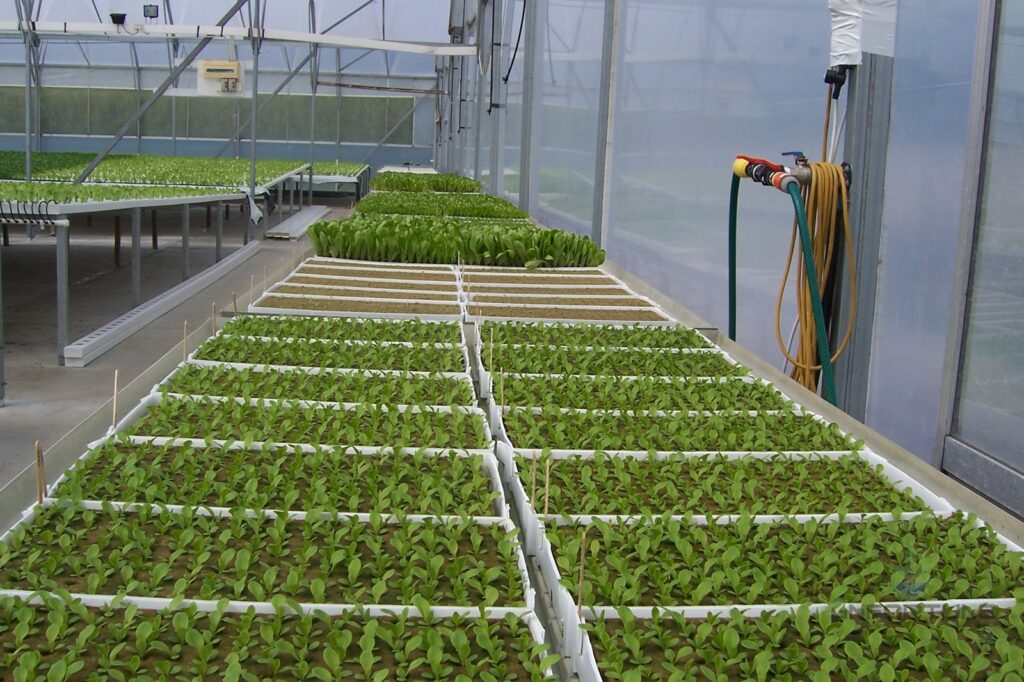
Commercial greenhouse with rows of ebb and flow hydroponic tables growing lettuceAn ebb and flow hydroponic system — also called flood-and-drain — grows plants in a tray that is periodically flooded with nutrient solution and then drained back to a reservoir by gravity. Each flood wets the growing medium from the bottom, each drain pulls fresh oxygen into the root zone. It is the most forgiving recirculating system for heavy-rooted and container-grown crops, and it is the system we most often recommend when a grower asks us to move propagation and potted crops off hand watering.
This article explains how the flood-and-drain cycle works, what hardware it takes, which growing media behave well in it, and the design mistakes we keep fixing in the field.
How an Ebb and Flow System Works
Every ebb and flow hydroponic system runs the same basic loop, and the differences that matter between suppliers are almost all in the details of this loop:
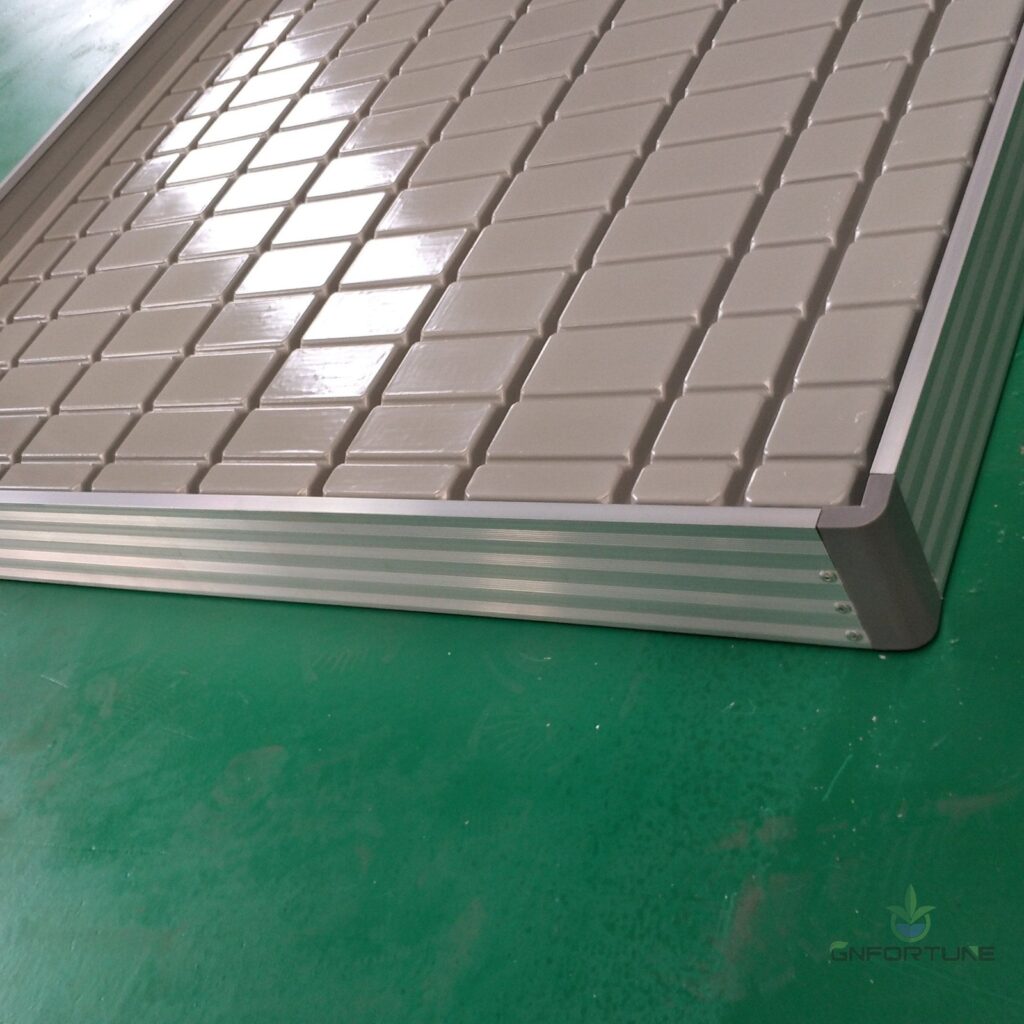
Ebb and flow system panels showing grow tables, trays, and irrigation details| Component | What it does | Field notes |
|---|---|---|
| Grow table or flood tray | Holds plants and growing medium; flooded and drained on each cycle | Depth and flatness decide how evenly the root zone wets |
| Reservoir | Stores nutrient solution between cycles | Size it for full-tray volume plus headroom; bigger buffer = safer power outages |
| Pump | Lifts solution from reservoir into the tray | Flow rate should flood the tray in 5–10 minutes, not 30 |
| Standpipe (overflow) | Sets the maximum flood depth; excess returns to reservoir | Its height is your root-zone water level — a tuning point, not an afterthought |
| Drain return | Gravity line from tray back to reservoir | Undersized or sagging drains are the #1 cause of “the tray won’t empty” calls |
| Timer / controller | Runs the flood cycle on schedule | We use mechanical fail-safe timers in parallel with any digital controller |
How the flood-and-drain cycle works in practice: the pump runs until the nutrient solution reaches the standpipe height and starts returning to the reservoir. The pump stops. Gravity drains the tray back down to whatever residual level the drain design leaves. The roots sit in a wet-but-drained medium for the dry period, and the next flood repeats the cycle. The whole flood typically takes 10–15 minutes; drainage takes another 5–15 depending on pipe size and fall.
How Often to Flood — and for How Long
There is no single schedule that fits every crop, medium, and climate. The variables are medium water-holding capacity, plant size, and how fast your greenhouse dries a tray out. The frequency table below is the range we start projects with — treat it as a starting point, not gospel:
| Crop stage / type | Floods per day | Flood duration | Why |
|---|---|---|---|
| Seedlings and fresh cuttings (small cubes/blocks) | 1–2 | 8–10 min | Small medium volume dries fast but roots are fragile; light, frequent wetting is safest |
| Vegetative leafy greens in containers | 3–5 | 10–15 min | Active growth pulls water quickly; more cycles between flushes keeps salts from climbing |
| Flowering/fruiting crops in pots or buckets | 4–6 | 10–15 min | Big plants, big transpiration; check root-zone EC weekly |
| Low-light or cool-season periods | Cut frequency by ~1/3 | Unchanged | Plants transpire less; extra floods only waste pump life and power |
If a tray is still sitting wet when the next flood starts, your cycle is too long — lengthen the dry period before you reduce duration. If the medium surface is cracking and plants wilt between floods, add a cycle. Sensor-based controllers can automate this once your schedule is proven; see our system design guide for how irrigation zones get laid out.
Ebb and Flow Tables vs Flood Trays: Which to Buy
Buyers use “ebb and flow table” and “flood tray” almost interchangeably, and suppliers ship both. The distinction that matters on site is construction:
- Flood tray (single moulded tray): simplest and cheapest per square meter; sold in standard sizes such as 4×8 ft. Works when you can set it on a bench with fall toward one corner. The limitation we see is deflection — long, unsupported trays bow under wet media and the middle never drains.
- Ebb and flow table with frame: a flood tray mounted on a rigid steel or aluminum frame. The frame stops sagging, sets a consistent working height, and lets you plumb the drain underneath cleanly. This is what commercial nurseries run, and what we supply when trays will hold wet weight for years.
- Multi-bay benches: wide runs made of several table sections sharing one drain line — the layout choice when a whole greenhouse bay is dedicated to flood-and-drain. Bay drains must slope consistently; this is where installation quality shows up.
Working height is a detail buyers miss: tables at 85–90 cm save backs during tray work but complicate drain return if your reservoir sits on the floor. We usually bury or drop reservoirs below bench level so the gravity return never needs a second pump.
Choosing between single trays and framed tables is a quantity and crop decision more than a quality one. If you are speccing a propagation or potted-crop room, the dimensioning math (table count, aisle width, reservoir volume) belongs in the layout stage, not the ordering stage.
Growing Media That Behave in Flood-and-Drain
The medium you fill the tray with changes how the whole cycle behaves, because flood-and-drain moves water from the bottom up. What works:
- Clay pebbles: the classic flood-and-drain medium. Free-draining, reusable, chemically inert. Alone, they dry fast in hot greenhouses — expect 4–6 floods a day in summer.
- Coco coir / perlite mixes: hold water far longer, cutting cycle count and buffering against timer slips. Use a coarse mix; fine coco compacts and starts holding a perched water table at the tray bottom.
- Rockwool blocks and cubes: excellent when trays are used as the wet zone under a drip or mat system, but rockwool alone in a flood tray needs tight cycle control — it wicks well and stays wet longer than coco.
- Perlite alone: drains too freely and floats during floods. We only see it used in drain-to-waste trays, not recirculating flood-and-drain.
One rule we apply on every project: match medium depth to standpipe height, so the flood wets roughly the lower half of the root zone rather than submerging the tray. Submerging the whole pot for every flood is how root-zone oxygen drops and algae appears on the medium surface.
The question we ask every grower designing a flood-and-drain room: “What happens to your plants if the pump fails overnight?” A system with a reservoir large enough to hand-flood the crop and a drain that empties fully by gravity recovers in an hour. A system that relies on continuous pumping — and most cheap “complete kits” do — can lose a tray of transplants in one hot afternoon. This is the single biggest difference between hobby kits and commercial tables.
Problems We Fix on Real Projects
After building and retrofitting flood-and-drain rooms for years, a short list of failures repeats itself:
- The tray won’t drain. Almost always pipe fall: a drain line with a low spot or a too-small return that airlocks. Fix at install by running drains at 1–2% fall with no sags and venting the return.
- The pump never shuts off. A stuck relay or a timer that lost its program. We fit a separate fail-safe timer and an overflow return large enough to carry full pump flow — so even a stuck pump floods to the standpipe and returns, instead of over the edge.
- Uneven wetting. Tables out of level by even 1 cm wet one side and leave the other dry. Check level with the tray full, not empty.
- Algae and slime on the medium surface. Usually a sign of constant surface moisture and light. Flood less often, cap the medium surface, or shade the tray.
- Salt climbing in the root zone. Recirculating flood-and-drain pushes EC up between flushes. Weekly root-zone EC checks and occasional plain-water flushes fix what most growers only notice after tip burn.
None of these are arguments against ebb and flow. They are arguments for designing the water handling properly the first time — which is most of what our design and specification service does.
What Is an Ebb and Flow System Best Used For?
| Strong fit | Weak fit |
|---|---|
| Propagation and nursery rooms (cuttings, plugs, potted starts) | Large-area, bare-root leafy greens — NFT channels do this at lower cost per square meter |
| Container and pot crops that need a stable root-zone moisture cycle | Deep-water crops where roots should stay fully submerged (DWC) |
| Greenhouses running multiple crop sizes in one bay | Very dry, hot climates without evaporation control — media dries between floods too fast |
| Operations that value forgiving, low-labour watering over peak density | Builds where precise per-plant feeding matters more than uniform tray cycles |
If you are comparing system families for a full greenhouse, start with our plain-language comparison of NFT hydroponics, and for the layout and budget side of any of these systems, work through the hydroponic system design guide before ordering hardware.
FAQ
How long should an ebb and flow cycle be?
A: Flood for 10–15 minutes, then drain. Total cycle frequency is 1–6 floods per day depending on crop stage, medium, and greenhouse climate — see the schedule table above.
What can you grow in an ebb and flow hydroponic system?
A: Anything container-friendly: herbs, lettuce in pots, strawberries, peppers, and most propagation work. Deep-rooted fruiting crops grow better in Dutch buckets; dense bare-root greens grow cheaper in NFT channels.
How is ebb and flow different from NFT?
A: NFT runs a shallow, continuous film of water over bare roots in channels. Ebb and flow floods a tray of growing medium on an intermittent cycle, then drains it fully. Ebb and flow is more forgiving and suits pots and propagation; NFT is more space-efficient for leafy greens at scale.
Do you sell complete ebb and flow systems?
A: We manufacture flood trays, framed tables, reservoirs, and fittings, and we spec complete rooms around them. For quantities, MOQs, and a layout based on your greenhouse, use the quote form below — our engineering team, not a sales script, replies with the water-handling details.
Plan Your Ebb and Flow System
Send your crop plan, tray or table quantity, and greenhouse dimensions through the quote form — we will return a flood-and-drain layout with reservoir sizing, drain plumbing, and the fail-safe details that keep a stuck pump from becoming a lost crop.