Every tier in a rack is a slightly different greenhouse. The top level sits under the roof and collects heat, the bottom level sees less light and slower air, and the middle levels inherit what the tiers below have already transpired. Vertical farm microclimate work starts by accepting that: the tiers are not copies, and the crop responds to local conditions rather than to the room average. This piece covers what differs between levels, how the gaps reach the harvest schedule, and what closes them.
It applies to rack, shelf and stacked-gutter systems, in a greenhouse or a sealed room.
What Actually Differs Between Tiers
Six variables change with height: air temperature, leaf temperature, air speed, humidity, carbon dioxide replenishment and the light the canopy actually receives. Only the last is usually designed for; the rest are inherited from the room.
- Air temperature: rises with height as lamp, driver and transpiration heat accumulate upward.
- Leaf temperature: a leaf under a lamp runs warmer than the air around it.
- Air speed: tiers shielded by the structure above and by their own canopy stall.
- Humidity: moisture from lower tiers rises, so upper tiers carry the wettest air.
- CO₂: enrichment at room level does not automatically reach a dense middle tier.
- Light: reflected light, spill from adjacent bays and mounting height vary by level.
None is large in isolation. The crop integrates them over weeks, which is why the symptom appears at harvest rather than at commissioning.
Why the Top Tier Runs Hot
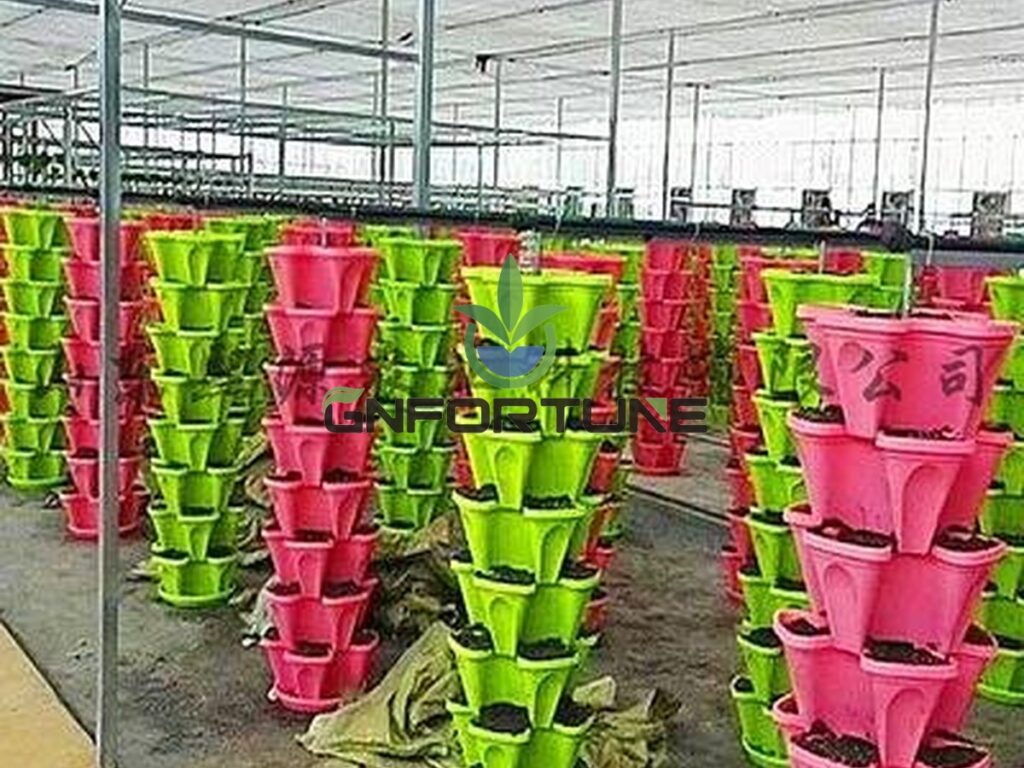
Heat enters at every tier and leaves mostly at the top of the room. Lamp bodies, drivers, transpiration and any roof gain all add heat, and stratification does the rest: warm air rises and pools unless something keeps moving it.
A planning band of 1–3 °C between the bottom and top tier is common in a ventilated room with horizontal airflow fans running. A wider, persistent gap usually means the upper tier is not being flushed rather than that the cooling is undersized; sealed rooms differ with coil placement.
Light Distribution, and the Tiers That Get Shortchanged
Tier lighting is usually specified as a PPFD target, but what reaches the canopy also depends on mounting height, reflector condition, spill from adjacent bays and how much light the surrounding surfaces return.
The result is rarely a clean gradient. Middle tiers, surrounded by other levels, often receive more reflected light than the bottom one, while the top tier loses light to a poorly reflecting roof or gains radiant heat from it. Aged or mismatched lamps add a second layer of variation that one commissioning reading will not show.
Measure at canopy level on every tier, at several points across each one, before concluding that lighting is the cause. The PPFD and DLI method applies at tier scale too.
Airflow and Humidity: The Tier That Never Dries
Airflow has the largest effect on uniformity and is the easiest to get wrong in a rack. A fan at room level moves air down the aisle; it does not push air through a dense canopy on a middle tier.
Where air stalls, the boundary layer thickens, transpiration slows, and the leaf runs warmer and wetter than the room sensors suggest. That shows up as tipburn on fast leafy crops and as botrytis in dense canopies, long before any temperature alarm fires.
Humidity stacks the same way. Moisture from lower tiers rises, so the top tier carries the highest absolute humidity, and dehumidification sized for the room average does not remove it where it collects. The VPD the crop feels is the local one.
How Tier Differences Break the Schedule
Uneven tiers cost calendar as much as yield. A block planted on one day matures across a window instead of on a date, and the packing plan, the labour plan and the delivery promise were all built on a date.
- Harvest spread: a week of production stretches across ten days or more.
- Grading loss: size variation pushes part of the crop into a lower grade.
- Replant wave: the block no longer turns around as one unit.
The second cycle inherits the problem, because staggered maturity means staggered turnaround and the schedule drifts wider each round.
Measuring the Spread Rather Than the Average
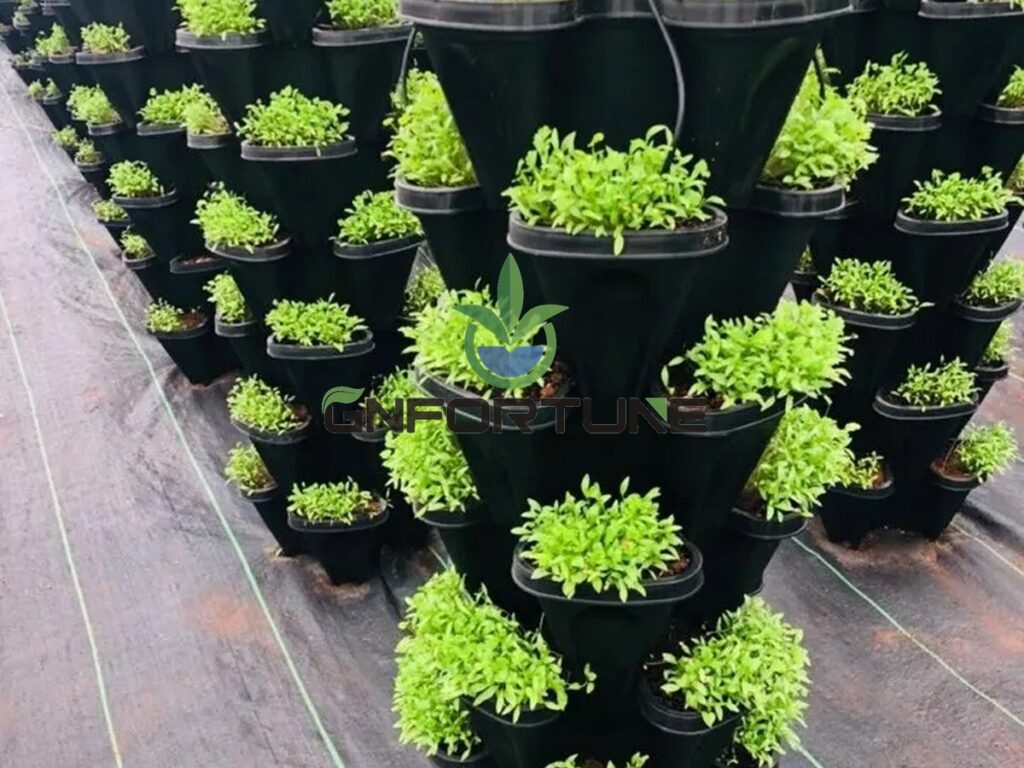
A walk-round with one hand-held meter produces an average and hides the thing that matters. What is needed is a logged comparison between tiers over several days, at canopy height, in the same positions.
- Log temperature and humidity at canopy height on every tier for at least a week.
- Take spot readings at the ends and middle of each tier with lamps on, then off.
- Measure air speed at several points per tier, shielding sensors from lamp radiation.
- Compare leaf temperature against air temperature on the fastest and slowest tiers.
Work with the spread between tiers at the same moment, not the gap to the room setpoint. Siting mistakes that invalidate a survey are set out in the sensor placement guide.
Fixes: Tier-Level Air, Rotation, Zoned Lighting
Three measures do most of the work, in this order of return: air delivered at each tier, swapping levels part-way through the cycle, and lighting that can be adjusted per level.
- Tier-level air: a perforated duct or small circulation fan per level moves air through the canopy instead of past it. Check that racks do not block the throw.
- Rotation: swap trays or gutters between the top and bottom tier around canopy closure. It averages the cumulative difference and costs labour plus handling damage.
- Zoned lighting: separate dimming groups let shaded levels receive more and hot levels less, which also removes upper tier heat where the gap is worst.
- Placement: put propagation and heat-sensitive cultivars on the mildest tier.
Where nothing closes the gap, schedule the tiers separately: a level that runs two days faster gets its own planting and harvest date.
What to Ask for When Specifying a Multi-Level System
These differences are cheaper to design out than to fix later, so the specification should ask about the environment at each tier, not only plants per square metre.
- Air distribution provisions at every tier, with access for cleaning.
- Sensor points and cable routes per tier, not one probe per room.
- Lamp mounting height, dimming groups, and where driver heat is discharged.
G AND N FORTUNE LIMITED supplies multi-tier NFT and rack systems with layout drawings, and set points are confirmed in a 2,400 m² test greenhouse before shipment.
FAQs About Vertical Farm Microclimate
How large is the tier temperature difference in practice?
A bottom-to-top gap of 1–3 °C is a common planning band in a ventilated room with horizontal airflow running. Wider persistent gaps mean the top tier is not being flushed; sealed rooms differ with coil placement.
Which tier grows best?
Usually the one with the best combination of air movement and light, which is often a middle tier rather than the top. It cannot be assumed from the drawing and has to be measured on the installed rack.
Can tier differences be designed out completely?
No. Even a well-designed rack shows some spread, so the aim is to keep it small enough that one planting date still delivers one harvest window.
Is rotating trays between tiers worth the labour?
Where the format allows lifting and the gap is wide enough to move harvest dates, yes. Where handling damage or labour cost is high, tier-level air and zoned lighting usually pay better.
How many sensors does a tier survey need?
At least one logged temperature and humidity point per tier for a week, plus spot air-speed and leaf-temperature readings. Fewer than that produces an average, which hides the spread.
Related Reading
- Vertical Tower Density: Plants per Square Metre — Plants per square metre in vertical configurations
- Commercial Vertical Growing Systems: Racks, Walls, Towers — Racks, walls and towers: the structures that create the tiers
- Greenhouse Ventilation Design: Vents and HAF Fans — Vents and HAF fans, including between-tier air movement
- Greenhouse Humidity Control and VPD for Hydroponics — Humidity control and VPD when tiers differ
- Hydroponic Rack Systems: Multi-Layer Beds, Shelves, Racks — Multi-layer beds and racks, and their access constraints
Next Step: What to Send for a Quotation
Multi-tier systems are quoted from the rack layout and the crop, and vertical farm microclimate provisions belong in that enquiry rather than in a later variation order.
Planning a multi-level block? For RFQ or project consultation, send: greenhouse or room dimensions and usable floor area; number of tiers and tier height; rack length and aisle width; crop plan with cultivars and target cycle length; system type (NFT channels, substrate gutters or trays) and medium; supplemental lighting type and target DLI per tier; existing ventilation, dehumidification and airflow equipment; local climate range; automation level required; delivery schedule; and the budget band. G AND N FORTUNE LIMITED supplies multi-tier NFT systems, racks and matched greenhouse packages quoted to those parameters.