A clock does not know when it is cloudy. Fixed-hour programmes give a dull November week the same shots as a bright June one, and the crop absorbs the difference as run-off, EC drift or midday wilt. Radiation-based irrigation scheduling replaces the clock with a light sum: the controller accumulates incoming radiation and fires an event each time the running total crosses a threshold in J/cm² or mol/m². The rest covers what the sensor has to be and the clamps that stop the method hurting the crop.
Why a Clock Schedule Falls Out of Step With the Crop
A fixed schedule is calibrated against one kind of day and then has to serve every other kind. Dull days receive more water than the crop uses, bright days receive less, and the crew sees it first as run-off percentage and root-zone EC.
- Seasonal change: a programme written in April over-waters by June and under-waters by October unless someone rewrites it.
- A bright day after a dull spell: the medium is already wet, then demand jumps within hours.
- Canopy or cover: a young crop transpires a fraction of a closed canopy, and screens cut light the calendar still counts.
A clock programme can be held together by a grower who adjusts it weekly by eye. That dependency is what a light-sum trigger removes.
What the Light Sum Measures, and Which Unit to Use
Two units are in use, and they are not interchangeable by arithmetic alone. A pyranometer reports total solar radiation, integrated by the controller into J/cm²; a PAR quantum sensor reports mol/m² across the 400–700 nm band.
Both drive a trigger, and the choice follows what the site already measures. Houses tracking DLI and PPFD run a quantum sensor; sites with a weather station tend to have a pyranometer.
| Sensor | Reports | Watch-out |
|---|---|---|
| Thermopile pyranometer | Total solar, J/cm² | Misses lamp light; keep the dome clean |
| Silicon photodiode | Solar or PAR, low cost | Spectral error and drift |
| PAR quantum sensor | mol/m², 400–700 nm | Must match the lamp spectrum |
PAR is roughly 45–50% of total solar energy, and 1 mol/m² is about 20–22 J/cm² of PAR energy — a sanity check, not a conversion. Measure both types before porting a number.
Sensor and Controller Requirements
The sensor has to see the light the crop sees, and the controller has to accumulate it, clamp it and fall back from it. Projects that abandon the method fail on one of those, not on the agronomy.
- Siting: above the canopy, clear of purlins, vents and lamp bodies, level, cleaned on a schedule.
- One accumulator per zone where orientation, cover condition, screens or lamps differ.
- Controller functions: light-sum accumulation, per-event shot volume, day window, minimum and maximum interval, fallback programme with an alarm.
- Logging: light sum, event count, run-off volume and EC, retrievable by day.
Accuracy is a maintenance matter too. The discipline applied to EC and pH probes in the calibration routine extends to light sensors, and siting errors are covered in the sensor placement guide.
Deriving the First Threshold From Your Own Schedule
Do not start from a published number. Start from the programme you already run, on the days when the crop looked right, and divide the light sum by the event count.
- Run the existing clock programme for a week with a closed canopy, logging daily light sum, events, run-off and any midday wilt.
- Pick the days where run-off sat inside your target band and the canopy never flagged.
- Divide those days’ light sum by the event count. That quotient is your starting threshold.
- Set the day window and intervals, run two weeks, and compare run-off against the clock baseline.
For scale: on a temperate site with a full canopy and no heavy shading, daily outside light sums commonly fall between 800 and 2,500 J/cm², roughly 15–55 mol/m² PAR, so substrate irrigation frequency follows the season rather than a fixed event count.
Pairing the Trigger With Run-Off Percentage
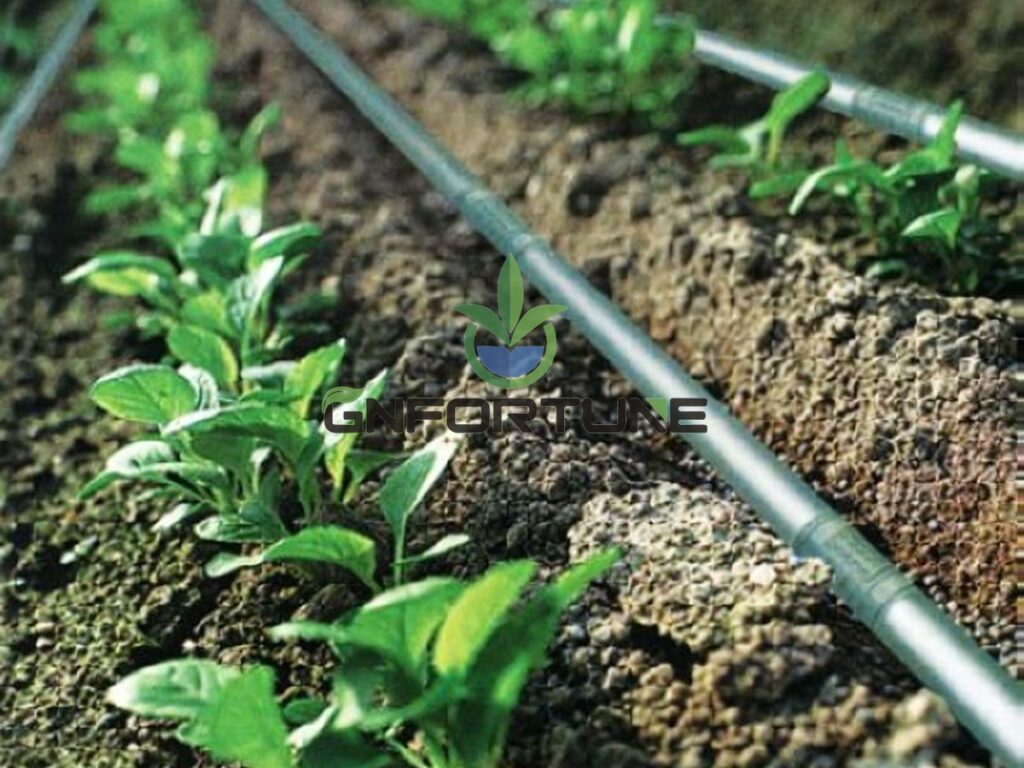
The trigger decides when to water; shot volume and run-off decide whether each event was enough. Running the trigger without watching run-off moves the error somewhere less visible.
A planning range of 10–30% run-off per event suits substrate systems with a mature summer canopy on a coir or peat-blend medium; drain-to-waste on a young crop sits lower, and recirculating designs manage EC instead.
The mistake to watch is holding shot volume constant while the season changes. Event count tracks light, but run-off still swings as demand per event moves with day length and vapour pressure deficit.
A catch tray on one slab per zone gives the crew a daily number; rising run-off EC under high radiation warns that the threshold has gone too high, which is the same review that governs solution management.
Seasonal Calibration and the Three Clamps
A light-sum trigger without clamps will eventually hurt the crop, usually in winter or at dusk. Three limits belong in every configuration.
- Maximum time since the last event: on dull days the threshold may never be reached, so force an event by a set afternoon hour. In winter this clamp becomes the working schedule.
- Day window: stop several hours before dark and start after sunrise, so the medium is not left wet overnight.
- Minimum interval between events: prevents short-cycling on bright days and lets the medium redistribute.
After planting, or after a turnaround, there is no canopy: the sensor reads full sun while transpiration is near zero, so run a clock-based establishment programme first. Screens break the same link, so site the sensor inside where they close often.
Where Light-Sum Triggers Fail, and What to Specify
Nearly every failure is a sensor or configuration failure, and the dangerous ones are silent: a dirty sensor under-waters the crop with no alarm, a failed sensor has to fall back to a written time programme rather than switch silently, and a reset at the wrong hour quietly halves the threshold.
Supplemental lighting is the fourth. An outside pyranometer does not see lamp light, and a daylight-matched sensor can misreport LED output. Keep a spare sensor on the critical spares list, post the fallback programme at the panel, and set an implausible-value alarm on the daily sum; escalation is covered in the alarm systems guide.
Ask for the accumulator behaviour in writing rather than accepting that a controller supports radiation input: per-zone accumulators with their own thresholds, configurable minimum and maximum wait, and a fallback programme. Most suppliers can build sensor, controller, valve manifold and dosing into one package quoted to the zone layout. G AND N FORTUNE LIMITED supplies irrigation and automation packages alongside NFT channels, substrate gutters and greenhouse structures.
FAQs About Radiation-Based Irrigation Scheduling
Is a light-sum trigger worth it on a small house?
It pays where day-to-day light variation is large and labour for manual adjustment is thin. A small house with an attentive grower present each morning gains less than the hardware costs.
Should the threshold be set in J/cm² or mol/m²?
Whichever your existing sensor reports, provided the controller can accumulate it. Do not convert a published threshold; measure both and use your own ratio.
Can one sensor drive several irrigation zones?
Only where the zones see the same light. Differences in orientation, cover cleanliness, screen state or lamps call for separate accumulators, or one zone will be mis-watered.
What happens if the radiation sensor fails?
The controller should fall back to a written time programme and raise an alarm. If it does neither, the trigger is a liability, and the crop reports the fault before the crew does.
Does a light-sum trigger replace run-off monitoring?
No. The trigger sets frequency; run-off volume and EC show whether the shot volume still suits the canopy and season.
Related Reading
- Sensor Placement: Where Readings Go Wrong — Where sensor readings go wrong, and how to place them
- Hydroponic Sensor Calibration: EC, pH and DO Probe Maintenance for Commercial Farms — EC, pH and probe maintenance behind any sensor-driven trigger
- Nutrient Solution Management: Recirculation vs Drain-to-Waste, EC Drift and Dump Cycles — Recirculation versus drain-to-waste and the run-off fraction
- Greenhouse Lighting: LED vs HPS, PPFD, and DLI — LED versus HPS, PPFD and DLI as the radiation input
- Smart Hydroponics: IoT and Remote Monitoring — IoT and remote monitoring for controller-based scheduling
Next Step: What to Send for a Quotation
Radiation-based irrigation scheduling is specified from the zone layout and sensor plan rather than from house area, so a supplier quoting without those will price a plain time clock and bill the difference later.
Planning an irrigation upgrade? For RFQ or project consultation, send: greenhouse dimensions and usable growing area; crop plan and cultivars with target cycle length; system type and medium; number of irrigation zones and whether they share cover or screen conditions; supplemental lighting type if known; local climate range including dull-week radiation; raw water analysis; automation and alarm level; delivery schedule; and the budget band. G AND N FORTUNE LIMITED supplies NFT channels, substrate gutters, valve manifolds, sensors and control packages quoted to those parameters.