

Pollination Is a Yield Line Item, Not a Detail
In leafy crops, nothing has to be pollinated. In fruiting crops — tomato, pepper, cucumber, strawberry, blueberry — every fruit you sell began as a flower that either set or did not. A pollinated tomato flower becomes a marketable truss. An unpollinated one becomes a small, hollow, misshapen fruit that goes to the waste bin with the same labour and growing cost attached as a good one.
That is why hydroponic pollination deserves its own line in the crop plan rather than being left to whatever insects happen to be inside the structure. This guide covers which crops need help, how to manage bumblebee hives and vibration tools, the climate conditions that quietly ruin set, and how to read a bad set before it costs you a week of production.
Which Crops Need Help, and How Much
| Crop | Flower type | Usual method | Notes |
|---|---|---|---|
| Tomato | Self-fertile, but needs agitation | Vibration (electric bee), bumblebees optional | Set rate is the single most useful weekly indicator in the crop |
| Pepper | Self-fertile | Vibration, or bumblebees | Sensitive to high temperatures at flowering; set drops fast above roughly 30 °C |
| Eggplant | Self-fertile, heavy pollen | Vibration | Benefits from repeated agitation over several days |
| Cucumber | Separate male and female flowers | Bumblebees; some varieties parthenocarpic | Parthenocarpic types set without pollination — confirm before buying hives |
| Strawberry | Self-fertile, pollination shapes the berry | Bumblebees | Poor pollination gives uneven, mis-shapen berries rather than no fruit |
| Blueberry | Cross-pollination usually needed | Bumblebees, multiple varieties | Requires compatible variety pairs; check chill and pH requirements first |
| Leafy greens, herbs, microgreens | Harvested before flowering | None | Do not introduce pollinators into a crop you do not want seeded |
Two questions decide the method: does the flower release pollen on its own when disturbed, and does the fruit need cross-pollination from another variety. Everything else is scheduling and environment.
Managing Bumblebee Hives
Bumblebees remain the most reliable pollinator for greenhouse fruiting crops because they work in low light, at low temperatures, and inside a structure where honeybees often refuse to forage. Getting a hive to work is mostly about placement and protection, not about the bees themselves.
- Place hives in shade, at least a metre off the floor, on a stable surface. Hives in direct midday sun overheat and stop working in the middle of the day, which is exactly when flowers need attention.
- Keep the entrance clear and roughly level, facing into the crop rather than into a walkway or a fan air stream.
- Do not move a hive once it is flying — foraging bees return to the exact position. If you must move it, move it at night and at least two metres, and expect a day of lost work.
- Plan a replacement cycle. A working hive has a productive life measured in weeks, not months. Write the delivery dates into the crop calendar so a hive never runs out of brood mid-truss.
- Watch bee activity as a diagnostic. Bees that stay inside on a warm bright day are telling you something about air movement, temperature or spray residue.
Temperature, humidity and hive performance
Bumblebees do not fly well when the air is very hot and still, and they stop working when humidity is extreme in either direction. A house that swings between a humid overnight period and a hot, dry afternoon will show poor pollination even with a healthy hive in place. If set rates are poor and the hive looks active, look at climate control before ordering replacement bees.
Vibration Pollination for Tomatoes
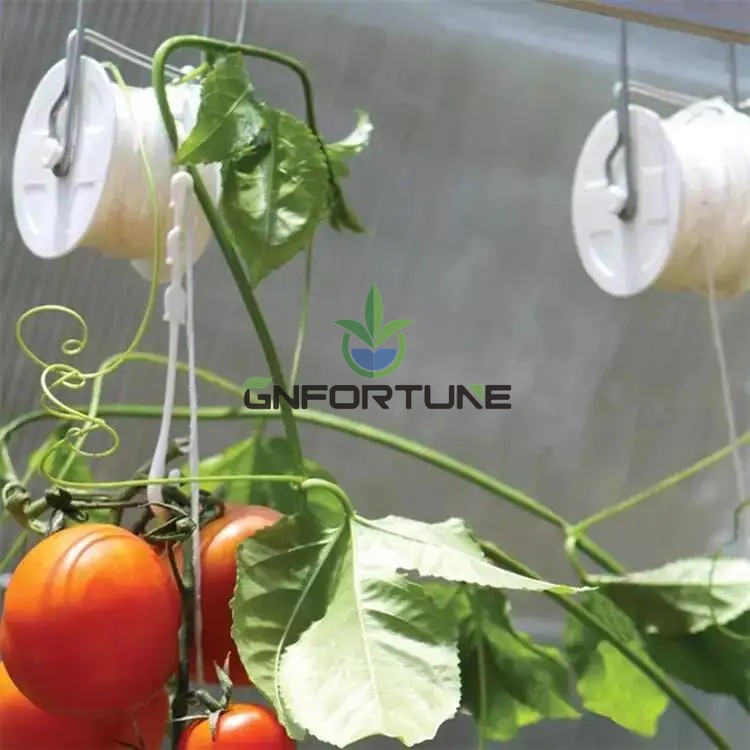
Tomato pollen is held inside a cone-shaped anther and released only when the flower is shaken at the right frequency. Handheld and overhead vibration tools imitate the buzz of a bee and do the job mechanically.
- Time it to full flower opening, usually mid-morning after the flower has dried but before the hottest part of the day.
- Work every open flower on the truss, not just the first one — flowers on a truss open over several days.
- Repeat on a fixed rhythm. Two or three passes across the same truss over its flowering window gives a markedly better set than a single hit.
- Keep a spare tool and battery. This is a daily task on a fruiting crop; a broken tool becomes a missed week of set.
Where labour is scarce, bumblebees often pay for themselves simply by removing the daily walk. Where a house is kept too hot for bees, vibration remains the dependable method.
What a Poor Set Looks Like
| Symptom | Usual cause | First check |
|---|---|---|
| Small, hollow, seedless fruit | Not pollinated | Was the flower agitated on the right days, and did bees fly? |
| Uneven, lobed strawberry | Partial pollination | Hive activity and humidity during flowering |
| Flowers aborting before opening | Heat or water stress | Day temperature and root-zone temperature |
| Flowers drop after opening | Humidity too low, air movement too high | VPD and fan positioning |
| Good set in one bay, poor in the next | Local climate or hive placement | Sensor placement and hive distance from fans |
| Set collapsing after a spray | Pesticide residue | Product choice and application timing |
Record set rate weekly per bay — for tomato, the number of set fruit on a fixed sample of trusses. It converts a vague feeling that the crop “looks a bit thin” into a number you can compare against last month.
Pollination and Pest Control Must Be Planned Together
This is where most pollination programmes fail. A pesticide applied for whitefly or mildew at the wrong time will kill the hive, and the loss appears not as dead bees but as a week of unpollinated flowers three weeks later.
- Choose products compatible with pollinators and check the label’s bee warning before ordering, not before spraying
- Apply in the evening after foraging has stopped, and close the hive where practical
- Keep the hive out of the spray path, and never spray directly over it
- Keep a written record of every application: product, rate, date, area and hive status
- Prefer biological and cultural controls first — a working IPM programme reduces the number of times you have to make this choice
The IPM playbook we use on commercial projects treats the hive as part of the beneficial insect programme rather than as an outside purchase.
FAQ
Do I need bumblebees for tomatoes if I use an electric bee?
No. Vibration alone sets tomato reliably if it is done on the right days and repeated. Bees reduce labour and often give a slightly better set on older varieties, but they are not compulsory.
How many hives does a commercial greenhouse need?
It depends on crop, flower density and house size. Suppliers quote per unit of flowering area, so give them the crop, the number of plants in flower and the bay layout rather than the greenhouse area alone.
Can I use honeybee hives instead?
Usually not in a closed greenhouse. Honeybees are reluctant to work inside structures and often fly to vents instead of flowers. Bumblebees forage in confined spaces and in dim light, which is why they became the standard.
Why are my cucumbers not setting?
First confirm whether your variety is parthenocarpic — those set without pollination and adding hives changes nothing. If it is not, check bee activity, night temperature and humidity at flowering.
Do pollinators matter in a vertical farm or container?
Only for fruiting crops, and only if you deliberately introduce them. Most indoor leafy production does not need pollination at all, and introducing bees into a crop you do not want seeded creates work rather than value.
How do I keep bees out of the packing area?
Physical separation. Bees follow flowers, so keep flowering crop away from packhouse doors and use screened doors on the packhouse. Do not rely on sprays to solve a layout problem.
Plan Pollination With the Crop Calendar
Send us your crop list, planting schedule and bay layout and we will return a pollination plan alongside the system design — including hive positions, vibration schedule and the spray compatibility list that keeps both programmes working. Start with the quote form.
Related reading: fruiting crops reward tight climate control — see our guides to humidity and VPD and CO2 enrichment, and match the system to the crop in crop profitability by yield and demand.