Micro Irrigation Components: The Buyer’s Checklist
Micro irrigation supplies a measured volume of water and fertilizer at each root zone, at low pressure, several times a day. A system is a chain of small components — filter, regulator, valve, manifold, lateral, emitter, end cap — and the chain is only as good as its least specified part. Most order problems are missing lines on a quotation rather than technical failures: a regulator never quoted, fittings counted in bags rather than by size. This checklist walks the water path from pump to end cap and sets out the specification to confirm before a micro irrigation equipment order ships.
What Counts as Micro Irrigation on a Farm
Micro irrigation covers every low-volume delivery method: inline drip line, drip tape, online button emitters, micro-sprinklers, jets and bubblers. What they share is pressure below about 2.5 bar and flow measured in litres per hour at each outlet rather than cubic metres per hour per head.
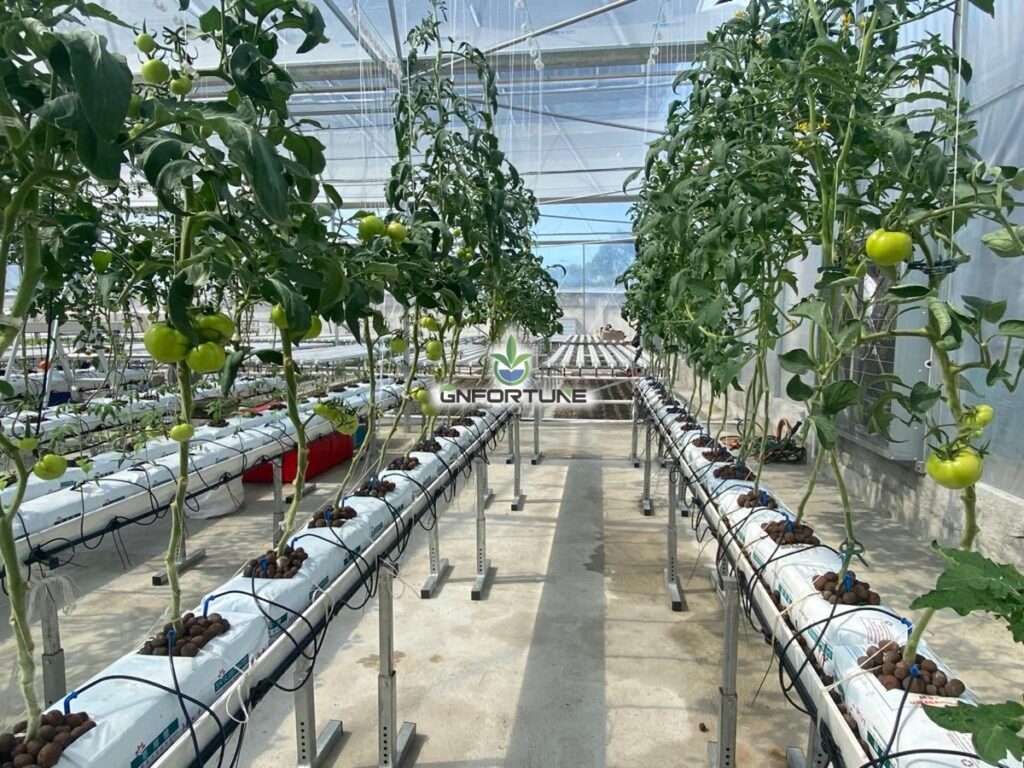
Drip line and tape dominate on vegetable and berry blocks; micro-sprinklers and jets suit orchards and vine crops. On substrate greenhouses the same set feeds buckets, slabs and gutters on a schedule measured in minutes, so the greenhouse drip layout starts from the same parts list.
The practical difference from overhead irrigation is tolerance. An emitter passage is measured in fractions of a millimetre, so filtration, pressure stability and flushing access decide whether the system runs for years or blocks in weeks.
Micro Irrigation Equipment at the Head: Filters, Valves, Regulators
Everything upstream of the first lateral is the head assembly. It is a small share of the invoice and the source of most performance complaints, so specify it line by line.
| Component | Spec to confirm | Typical range |
|---|---|---|
| Filtration stage | Mesh or micron rating, flow rating, body material | 120 to 200 mesh final stage; two stages on surface water |
| Pressure regulator | Set pressure, flow range, accuracy | 1.0 to 2.0 bar, held within about 10% across the flow range |
| Main and zone valves | Size, body material, actuation | Manual ball or butterfly on mains; solenoid or hydraulic on zones |
| Air and vacuum relief | Location on long or rising runs | One at each high point and ahead of each zone valve |
| Fertigation point | Injection ratio and where it sits | 1:100 to 1:200, downstream of the filter |
| Instrumentation | Gauges either side of the filter, flow meter per zone | One differential reading across the filter is the minimum |
Filtration grade is set by the emitter, not by the pipe. The effective opening must be smaller than the emitter’s smallest passage, which for common 2 to 4 L per hour emitters puts the final stage at roughly 120 to 200 mesh. The screen, disc and sand filter comparison shows which body suits which water source.
Regulators are the cheapest insurance in the set. A zone that sees 3 bar instead of 1.5 bar over-delivers at every emitter, and on sloping ground the low corner drowns while the high corner starves.
Emitters and Drip Lines
Emitter choice is a uniformity decision, and uniformity is what makes a block finish on the same day. Confirm flow at the working pressure, the compensation range, and the filtration grade the manufacturer requires.
| Product | Flow per outlet | Pressure | Where it fits |
|---|---|---|---|
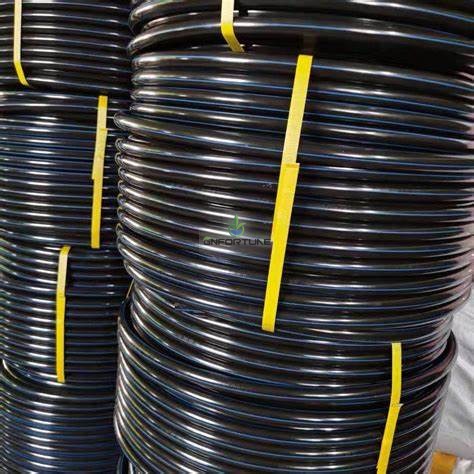
| Inline drip line | 1 to 4 L/h, spaced 20 to 50 cm | 1.0 to 2.0 bar | Substrate rows, beds, permanent orchard lines |
| Drip tape | 0.5 to 2 L/h, spaced 10 to 30 cm | 0.5 to 1.5 bar | Seasonal field rows; wall thickness 6 to 15 mil sets service life |
| Online button emitter | 2 to 8 L/h, one per plant | 1.0 to 2.0 bar | Buckets, pots, widely spaced trees |
| Micro-sprinkler or jet | 20 to 120 L/h | 1.5 to 2.5 bar | Orchards, vine blocks, wider wetted area |
Pressure-compensating emitters hold flow across a band, commonly 0.8 to 3.5 bar, and pay for themselves on runs beyond roughly 30 m, on sloping ground, and on long greenhouse rows. On short flat runs, non-compensating emitters give the same result for less money.
Tape wall thickness is the decision buyers get wrong most often. Thin-wall tape at 6 to 8 mil suits a single season; 12 to 15 mil survives several seasons and traffic, at a higher cost per metre and more container volume.
Distribution: Laterals, Manifolds, Fittings
Laterals and manifolds are sized by velocity and by the number of outlets they feed. Keep the lateral below about 1 to 1.5 m per second and the manifold below about 1.5 to 2.5 m per second, and the pressure at the last emitter stays close to the pressure at the first.
- Lateral length: 16 mm laterals are commonly limited to roughly 50 to 80 m by emitter count and flow; check the manufacturer’s pressure-loss table rather than assuming a fixed figure.
- Manifold size: 32 to 63 mm PE by zone flow, with a valve and flushing point each.
- Fitting types: compression for PE mains, barbed or compression for laterals, threaded where a valve or gauge joins. Sizes and threads are covered in the pipe fittings sizing guide.
- Thread standard: BSP or NPT stated on the quotation, consistent across valves, gauges and adaptors.
- UV package: carbon-black PE for anything left in the sun; service life drops sharply without it in high-irradiance regions.
Fittings deserve their own line on the order. They are cheap per unit and never cheap when a container arrives short of one size, because the fix is an air-freighted bag or a delayed commissioning.
Flushing Lines and End Caps
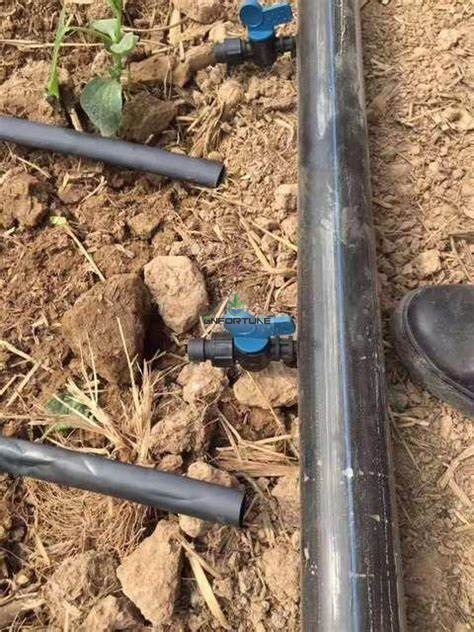
Every lateral needs a way to be flushed, and every manifold needs a way to be drained. Flushing is what carries settled silt and precipitated salts out of the line before they harden in an emitter.
Design for a flushing velocity of roughly 0.5 m per second or more, which means an end valve or removable cap sized to flow freely rather than a small bleed. On long laterals, flush in sections so the velocity is reached along the whole run.
End caps, line ends and flushing valves are the items most often left off a quotation because they count as accessories. Put them in the bill of materials with a quantity; the emitter clogging and flushing guide gives the rhythm they support.
Ordering: Spares Factor and Packaging
Two items decide whether the first season runs smoothly: the spares factor and the packing breakdown. Both belong in the purchase order, not in an email after dispatch.
A quote that says “fittings included” is not a quote. Ask for the count by size and type — how many 16 mm barbed tees, how many 32 mm compression couplings, how many end caps — and then compare two suppliers on that list. A supplier who cannot break the fitting count out by size is quoting a guess, and the guess is always short on the size you need most.
- Spares factor: 3 to 5% extra fittings and emitters over the design count, plus one spare filter cartridge or disc stack per station.
- Coil lengths: drip line and tape in 100 to 500 m coils, stated on the order; short coils mean more joins and more labour.
- Carton breakdown: cartons counted and labelled by component, so the receiving count matches the packing list.
- Material declaration: PE grade, UV stabiliser content, and any certification the destination market requires.
- Lead time: stated from order confirmation to ex-works, and whether repeat orders hold the same slot.
- Freight shape: tape and fittings are dense, coils and manifolds bulky; the mix decides whether a container cubes out or weighs out.
Matched sets avoid the assembly problem. A micro irrigation set supplied as one package arrives with filter, regulator, fittings and flushing hardware counted against one design.
Frequently Asked Questions
What pressure does micro irrigation run at?
A: Emitters work between roughly 0.5 and 2.5 bar, with 1.0 to 2.0 bar typical for drip line and tape. The regulator holds that pressure when the pump or zone count changes.
Which filter grade do emitters need?
A: A final stage of 120 to 200 mesh, chosen so the opening is smaller than the emitter’s smallest passage. Surface water usually needs a sand separator or media filter ahead of that stage.
How long can a drip lateral run before pressure falls?
A: 16 mm laterals are commonly limited to roughly 50 to 80 m by emitter count and total flow. Use the manufacturer’s pressure-loss table for the actual emitter spacing.
How many spares should I order?
A: 3 to 5% over the design count on fittings and emitters, plus a spare filter cartridge set per station. Fittings are the items that run short first.
Is drip tape or drip line better value?
A: Tape wins on cost per metre for seasonal rows; thicker drip line wins where laterals stay several seasons and take traffic.
Request a Micro Irrigation Component Quote
The cheapest way to buy micro irrigation supplies is one counted list rather than ten purchases: filter, regulator, valves, manifolds, laterals, emitters, fittings and flushing hardware specified against one design.
Send crop, row layout, zone flow, water source and emitter preference, and the team will return a component list with quantities. To request a micro irrigation component quote, include the thread standard and fitting sizes used on site.