Investors are often drawn to aquaponics by the idea of one loop doing everything: fish feed plants, plants clean water, water returns to the fish. It works, right up to the point where a farm has to hit a delivery contract. A decoupled aquaponics system drops that single-loop romance in exchange for control — and control is what commercial buyers actually pay for.
This article sets out where the split sits, what it costs, and which kinds of projects should not attempt it.
What Decoupled Aquaponics Is
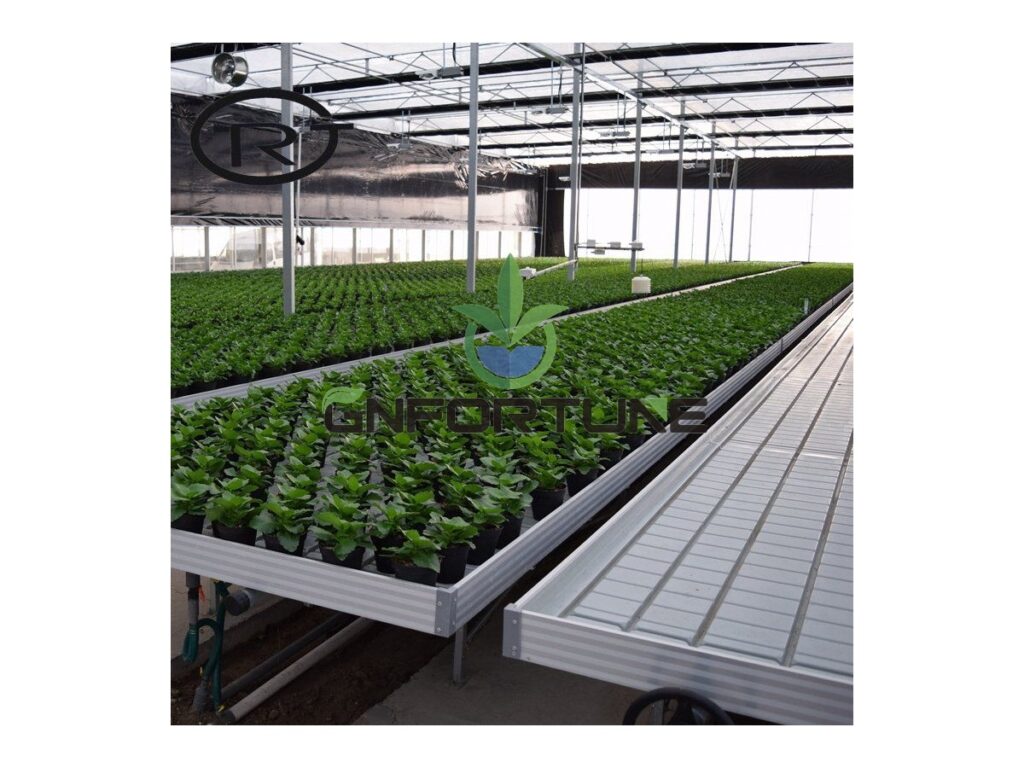
In a decoupled design the aquaculture side and the plant side each run their own loop. Water does not continuously circulate from fish tank to grow bed and back. Instead, nutrient-rich water moves one way — from the recirculating aquaculture system to the plant loop — and does not return.
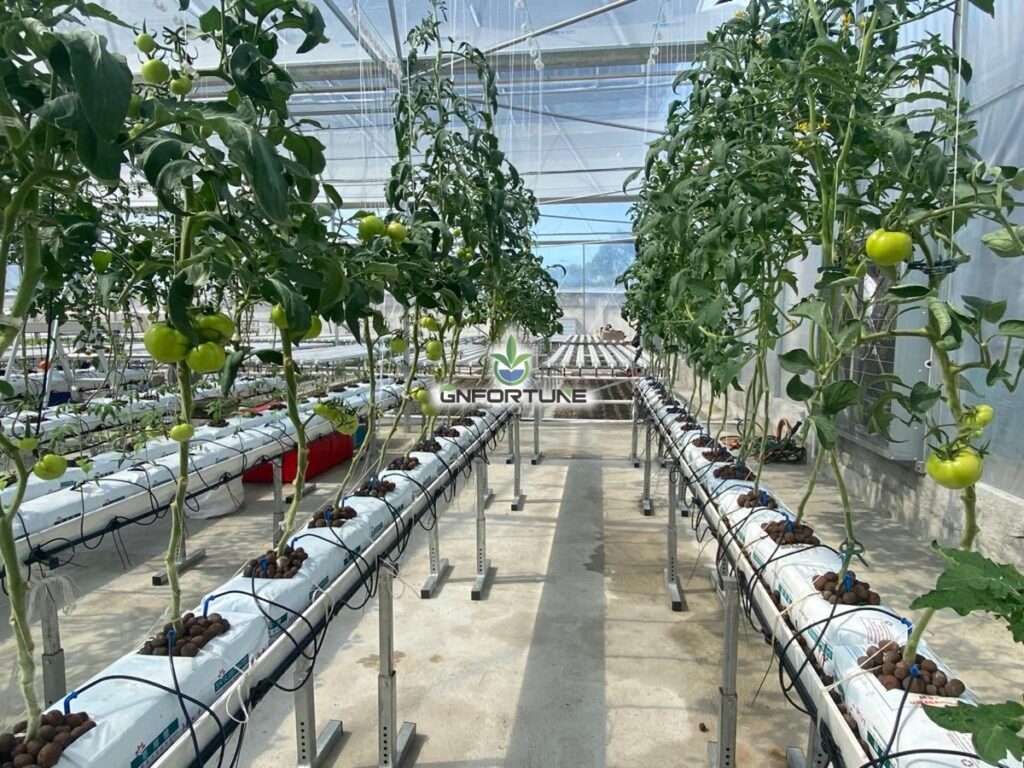
The plant side then behaves much closer to a conventional hydroponic operation: its own recipe, its own EC and pH targets, its own top-up from fertiliser when fish effluent cannot supply enough of a given element.
The arrangement is frequently called DAPS aquaponics, shorthand for double-recirculating aquaponic system. The defining feature is not equipment but direction: one-way transfer plus independent nutrification on the crop side.
Coupled vs Decoupled: Nutrient, pH and Temperature Conflicts
A coupled loop forces three species groups — fish, nitrifying bacteria and plants — to accept one water chemistry. Each has a preferred band, and the overlaps are narrow enough that operators spend their careers managing compromise rather than optimising growth.
| Parameter | Coupled loop | Decoupled loop |
|---|---|---|
| pH | Single compromise value for fish, bacteria and crop | Set per loop |
| Nutrient profile | Whatever fish waste supplies | Plant recipe corrected independently |
| Temperature | Shared; often set by fish requirements | Separate control per loop |
| Disease treatment | Any additive reaches the fish | Crop-side treatment isolated |
| Output planning | Fish and plant targets constrain each other | Each side planned separately |
That last row is the commercial crux. In a coupled system you cannot add potassium for fruiting crops without considering what it does downstream, and you cannot raise temperature for tomato without asking what it does to fish. The integrated fish and vegetable greenhouse route remains viable for simpler operations, but it concentrates risk.
Loop Components and Where Water Moves
A decoupled layout is easier to follow by tracking water rather than equipment. On the fish side, a standard recirculating aquaculture system handles solids removal, biofiltration and aeration, keeping its own water quality independent of crop demand.
A take-off point sends a controlled volume of that nutrient-rich water to the plant loop, usually into a mixing or holding tank. From there the crop side operates on its own schedule, and because return flow to the fish is not required, operators regain freedom in irrigation strategy.
Practical points that come up repeatedly during design:
- Solids removal quality decides downstream maintenance — poor capture loads fine screens and drippers on the plant side.
- A single one-way line still needs a valve and metering plan, so transfer volume is recorded rather than estimated.
- Supplemental dosing is expected, not a failure; fish effluent rarely matches a full plant recipe on its own.
- Each loop needs its own monitoring, because shared instrumentation hides which side caused a drift.
Equipment selection for tanks, filters and aeration follows the fish-side specification first, which is covered in detail in the fish farm equipment guide. Background on how waste becomes plant-available nutrient sits with the aquaponics nitrogen cycle.
Sizing Fish and Plant Sides Independently
Decoupling changes sizing from a ratio problem into two separate design problems. Instead of balancing fish biomass against plant uptake area so both stay happy in one water body, each side is sized against its own market.
Fish volume is set by target harvest weight, species, stocking density and grow-out duration — aquaculture numbers, not crop numbers. Plant area is set by weekly output targets, crop cycle length and finished specification.
The link between them becomes a transfer calculation: how much nutrient-loaded water the fish side generates, and how much of the crop recipe that volume can reasonably carry. Everything else is made up with standard fertiliser dosing, which is why the plant side can be designed essentially as hydroponics.
Cost, Skills and Failure Points
The honest answer on cost: a decoupled aquaponics system costs more to build. There is more tank volume, more pumping, separate dosing equipment and two sets of instrumentation. Anyone presenting it as the cheaper option has left something out of the quotation.
The money it protects is on the output side. Meeting a supermarket specification on the crop side, and a processor specification on the fish side, both become feasible without trading one against the other. Whether that protection is worth the extra capital depends on what each output sells for.
Skills are the underestimated line item. Coupled and decoupled operations need different people, and the second set is harder to hire:
- Aquaculture operators who understand water quality independent of crop calendars.
- Crop technicians comfortable running standard hydroponic recipes and dosing corrections.
- Someone accountable for the transfer point, which is where both disciplines meet and where handovers usually fail.
Failure modes cluster predictably: solids breakthrough fouling emitters, transfer volumes guessed rather than measured, and crop deficiency because nobody was authorised to supplement nutrients. All three are management failures before they are engineering ones.
Nutrient handling also deserves its own review — recirculation behaviour, EC drift and dump cycles behave differently once the plant loop runs autonomously, which is discussed further under recirculation versus drain-to-waste.
Who Should and Should Not Build It
A decoupled aquaponics system suits projects with committed buyers on both outputs, capital headroom for duplicated equipment, and access to aquaculture expertise. It particularly suits situations where fish and crop are sold into different markets with different specifications.
It suits education sites, demonstration farms and single-output businesses far less. If there is no buyer enforcing specification on the crop side, the simplest profitable option is usually conventional hydroponics with its own tank room.
Aquaponics vs hydroponics is therefore not an ideological question. If the fish enterprise is genuinely part of the business model, loop separation protects it. If fish are there to make a hydroponic farm sound greener, the added plumbing buys complexity and nothing else.
Crop selection should be tested at the same time — the best aquaponics crops review covers what adapts well before infrastructure is fixed.
FAQs About the Decoupled Aquaponics System
Does decoupling mean the fish and plant sides never share water?
Water still moves from the fish loop to the plant loop, so nutrients are reused. It simply does not flow back, which is what keeps plant-side chemistry independent.
Is decoupled aquaponics more expensive than coupled?
Normally yes on capital, because tanks, pumping, dosing and instrumentation are duplicated. The comparison should be made against revenue protected, not just against installed cost.
Can the plant side still be described as organic?
Certification depends on the scheme and jurisdiction, and supplemental fertiliser use may disqualify the crop under some standards. Confirm with the certifier before writing anything into a business plan.
Which crops suit a decoupled plant loop?
Leafy crops and herbs are the common starting point because cycle times are short and recipes are well understood; fruiting crops are possible but raise the nutrient correction burden noticeably.
What usually goes wrong after commissioning?
Undefined ownership of the transfer point. When neither the fish team nor the crop team is accountable for transfer volume and composition, water quality drifts on both sides quietly.
Next Step: What to Send for a Quotation
Decoupled projects are quoted in two halves, and the interface between them belongs in writing. Send one package covering both sides plus the transfer specification.
Evaluating a commercial aquaponics design? For RFQ or project consultation, send: total site and greenhouse dimensions; fish species with target annual harvest weight; crop list with weekly output targets; whether the loops are already decided as coupled or decoupled; local climate range and raw water analysis; required automation and monitoring level; delivery schedule; and the budget band. G AND N FORTUNE LIMITED supplies both the plant-side systems and the matching greenhouse structure, quoted against those parameters.