The hottest weeks of the year break most hydroponic leaf programs. Lettuce bolts, spinach goes bitter, and the house that ran full production in spring idles through summer. Malabar spinach and purslane are the two crops that run straight through that weather — one climbing, one spreading — and both answer to buyers the standard salad program never reaches.
The wider heat-crop list and amaranth have their own articles; this one stays on these two tropical leaf crops and how they combine in a summer plan.
Two Different Habits: Climber and Spreader
Malabar spinach (Basella) is a tropical climbing vine with thick, glossy leaf and a texture that turns mucilaginous when cooked — the quality that defines its place in Asian cuisines. Purslane (Portulaca) is the opposite build: a low, spreading, semi-succulent plant with a lemony, slightly salty taste and a remarkable tolerance for heat and salinity. They share almost nothing except the weather they prefer, which is exactly why they pair well in a summer program: the vine uses vertical space, the spreader uses benches.
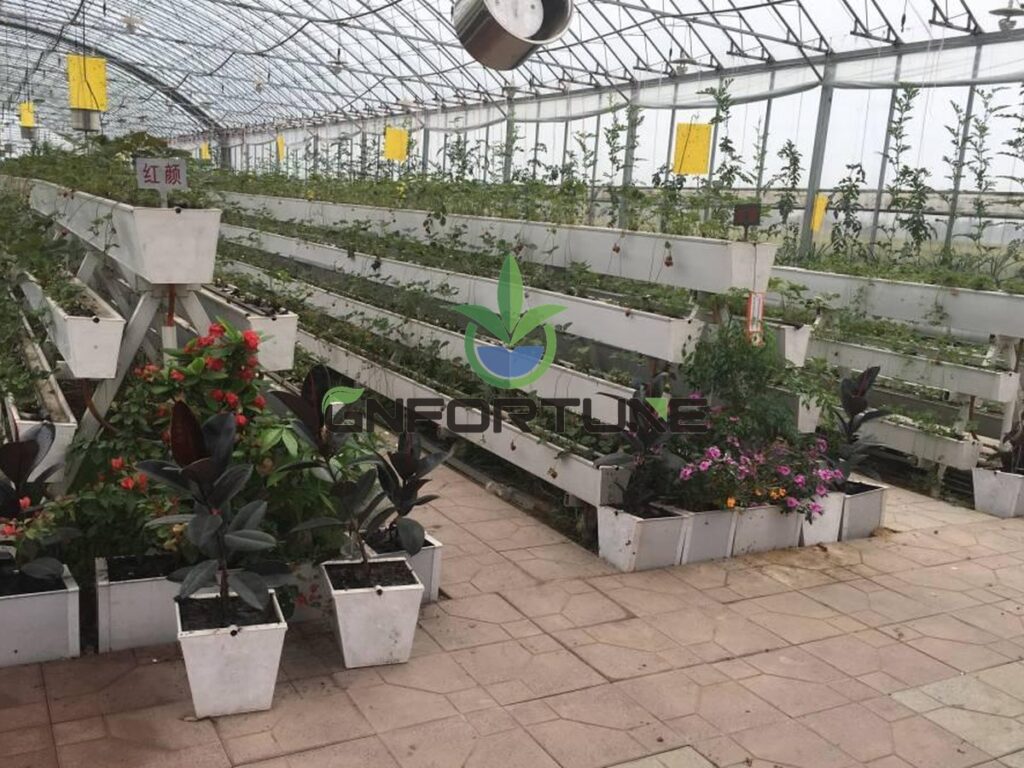
- Malabar spinach wants structure: vertical strings, mesh or a low trellis to 2–2.5 m, in the manner of a light vine crop. Grown flat it produces poorly and the leaf stays small.
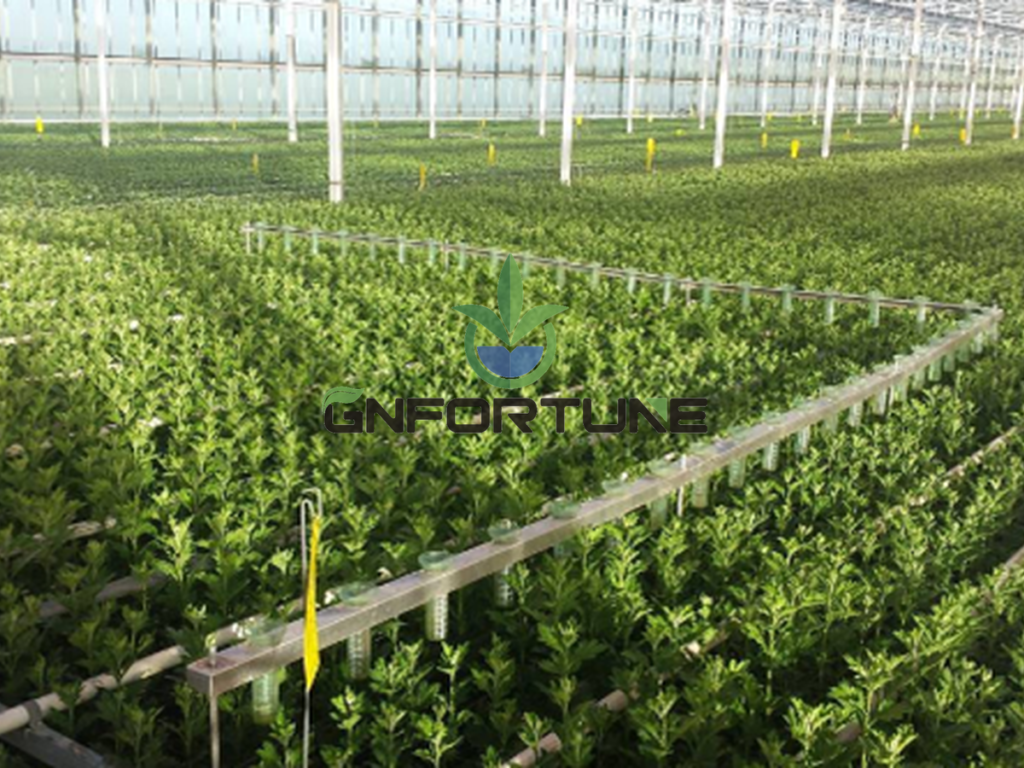
- Purslane wants width: shallow media, wide spacing, and room to spread. It suits bench culture and cut trays rather than channels built for upright leaf.
- Both hate cool weather: growth stalls below roughly 20 °C, so they are summer crops by definition — plan them into the hot slot, then hand the space back.
Malabar Spinach and Purslane in the Hot-Season Plan
The two crops cover the summer differently, and the combined program is more useful than either alone:
| Parameter | Malabar spinach | Purslane |
|---|---|---|
| Growth habit | Climbing vine on strings or mesh to 2–2.5 m | Low spreading succulent on benches or trays |
| Comfortable temperature | 25–35 °C, growth holds in peak heat | 25–38 °C, tolerates the hottest weeks |
| Nutrient solution EC | 1.6–2.2 mS/cm planning range | 1.4–2.0 mS/cm; notably salinity-tolerant |
| System fit | Substrate buckets or beds with trellis; weak fit in NFT | Shallow beds and cut trays; possible in wide channels |
| Transplant to first cut | Roughly 25–35 days, then repeated picks | Roughly 20–30 days, cut by tray or bed section |
| Harvest style | Tip and leaf picking every 5–7 days | Single cut per section; rapid regrowth possible |
Ranges assume warm-climate greenhouse conditions and moderate raw-water salinity — confirm against drain readings on your own system. Malabar spinach’s salinity tolerance is ordinary; purslane’s is exceptional, a legacy of its coastal origins, and it is one of the few crops that stays productive where irrigation water runs salty. That trait matters in regions where summer irrigation quality declines; the wider picture of growing with saline water is covered in the brackish water guide.
System Notes for Each Crop
Purslane is simpler: shallow substrate, dense sowing, and cut sections. It grows fast, regrows after cutting, and shrugs off conditions that ruin other leaf — a dry afternoon that would wilt a lettuce tray barely slows it. The management questions are freshness (succulent leaf wilts fast after cutting) and weed-of-the-field perceptions — grown clean in substrate, it presents as a premium specialty leaf, which is the whole commercial point. Red-stemmed purslane types add colour for chef buyers; green types move in volume to the same customers.

The Texture Question and the Market
Both crops carry a texture or flavour that mainstream buyers either love or reject, and that decides the program:
- Malabar spinach sells on the mucilaginous cooked texture valued in South and Southeast Asian cuisine, and as a thick, salad-ready leaf in green form. Buyers outside those cuisines often read the texture as a defect, so the program lives or dies with the customer base.
- Purslane sells on its omega-rich profile and lemony bite to chefs, health-forward retail and Mediterranean customers; the same mucilaginous note that defines it limits mainstream salad acceptance.
- Both need a named buyer: these are specialty greens with dedicated demand — the channel logic in the produce selling guide applies in full, and the pricing reality is closer to specialty arugula programs than to bulk leaf.
Post-harvest is the second constraint. Succulent leaf loses water fast; both crops need fast cooling and short shelf paths, following the standard cold chain discipline. In hot weather that discipline is harder to keep, which is one more reason the crops suit farms whose packhouse sits close to the greenhouse.

Combining the Two in a Summer Rotation
The practical summer plan runs the vine crop on the vertical infrastructure and purslane on the benches beneath or beside it: one irrigation family, two harvest rhythms, and a combined offer that keeps Asian and specialty buyers supplied through the months the standard program cannot. Sow both crops late spring, cut purslane sections through summer, pick malabar tips on the weekly rhythm, and hand the space back to the autumn lettuce program when nights cool. Germination of both crops is straightforward in warm conditions — malabar spinach germinates at 25–30 °C within a week to ten days, purslane even faster — so the propagation load is light and plugs can be raised in-house on the standard bench. Running two crops through one system works best when the irrigation zones follow the crops rather than the benches; the layout options are set out in the mixed-crop zoning guide.
Two cautions close the plan. First, keep the vine crop’s canopy on its strings: a malabar planting left untrained for two weeks mats into a tangle that takes longer to fix than the training ever cost. Second, watch the harvest clock on purslane — sections cut late in the day carry more field heat into the packhouse, and in summer that difference is the difference between a fresh leaf and a wilted one.
Malabar spinach and purslane turn the hottest weeks from dead time into specialty production on hardware a farm largely owns. The requirements are honest ones: trellis for the vine, a real buyer for the texture, and fast movement after the cut.
FAQs About Malabar Spinach and Purslane
Can malabar spinach grow in NFT channels?
Poorly. It is a vigorous vine with a substantial root system and a two-metre canopy, so it suits substrate buckets or deep beds with trellis. NFT channels built for upright leaf crops cannot carry the plant mass; where only channels exist, other heat-tolerant leaf crops fit better.
What EC should purslane run?
A planning range of 1.4–2.0 mS/cm is comfortable, and purslane tolerates considerably higher salinity than most leaf crops thanks to its coastal origins. It stays productive where summer irrigation water turns salty — the brackish water guide covers that wider scenario.
Do buyers actually accept the mucilaginous texture?
The buyers who want these crops want exactly that texture — it defines malabar spinach in Asian cuisine and purslane in Mediterranean and health-forward cooking. Mainstream salad buyers often reject it, so the program should be sold to named specialty buyers before planting, not after.
How often is malabar spinach picked?
Tip and leaf picking every 5–7 days once the vine is established, with weekly training to keep the canopy on its strings. Tender shoot tips are the marketable part, so the picking rhythm protects both yield and grade.
Can both crops share one irrigation zone?
Usually yes — their EC bands overlap and both are summer crops on the same schedule. The exception is where purslane runs on salty water the vine crop cannot share; then the salinity split, not the crop list, decides the zoning.
Related Reading
- Tipburn, Bolting and Other Physiological Disorders — What the summer heat does to the crops that cannot cope
- Cut-and-Come-Again Hydroponics: Managing Regrowth — The regrowth rhythm purslane cutting follows
- Selling Hydroponic Produce: Channels, Contracts and Pricing Discipline — Naming the specialty buyer before planting
- Greenhouse Cooling in Hot Climates: Pads vs Fog vs Shade — Keeping the hottest slots survivable for leaf crops
- Commercial Hydroponics in Southeast Asia — Structure and climate choices for genuinely hot regions
Next Step: What to Send for a Quotation
A summer greens block is mostly structure — trellis, benches and an irrigation zone — and it should be specified with the crops and buyers in mind rather than patched onto a lettuce design afterwards.
Planning a hot-season greens program? For an RFQ or project consultation, send: greenhouse dimensions and summer temperature data; target crops and buyer channels; raw water analysis (including any seasonal salinity rise); existing or planned trellis infrastructure; packhouse cooling capacity; delivery schedule; and the budget band. G AND N FORTUNE LIMITED supplies substrate systems, trellis hardware and climate equipment quoted against those inputs.