A fertilizer injector is the part of a fertigation system that decides whether the crop reads the recipe or an approximation of it. It takes concentrate from a stock tank and delivers it into the mainline at a fixed ratio, and it does that work under conditions that change through the day: pressure moves as zones switch, flow drops as filters load, and concentrate density changes as tanks are refilled. When the injector cannot hold its ratio across those changes, the symptom shows up as EC drift at the far end of the house rather than as a fault at the head assembly. This guide compares the four injector types used on commercial farms and how to size one to a mainline.
Injection Ratio: What the Numbers Mean
Ratio is the only injector specification most buyers read, and it is the one that is easiest to misread. A ratio of 1:100 means one part concentrate to one hundred parts water, so the injector delivers roughly 1 percent of mainline flow. The number that matters on site is not the nominal ratio but the ratio the unit actually holds across the flow range the farm uses.
Three numbers have to line up. The injector’s ratio range must reach the ratio the recipe needs, the injector’s flow range must cover the smallest and largest zone set that can run at once, and the pressure available at the injection point must cover the pressure the injector consumes.
| Type | Drive | Ratio range | Accuracy across flow | Pressure cost | Fits |
|---|---|---|---|---|---|
| Venturi | Pressure differential | 1:10 to 1:200, adjustable | Poor; ratio follows pressure and flow | Highest; needs a real differential | Single-zone blocks, steady pressure |
| Piston | Water-driven, volumetric | 1:50 to 1:500 by model | Good within its flow band | Low; small differential | Constant-flow mains, no power available |
| Diaphragm | Water-driven, volumetric | 1:20 to 1:200 by model | Good; tolerant of dirtier water | Low to moderate | Surface water sites, medium flow |
| Pump-driven skid | Electric dosing pump or pumps | Set by controller, effectively wide | Best; follows EC feedback | None downstream; pump adds head | Multi-zone houses, variable flow |
Venturi Injectors: Cheap and Pressure Hungry
A venturi has no moving parts. It works by forcing part of the mainline flow through a constriction, dropping pressure at the throat, and drawing concentrate in through a suction port. That simplicity is the whole argument for it, and the pressure differential it needs is also the whole argument against it.
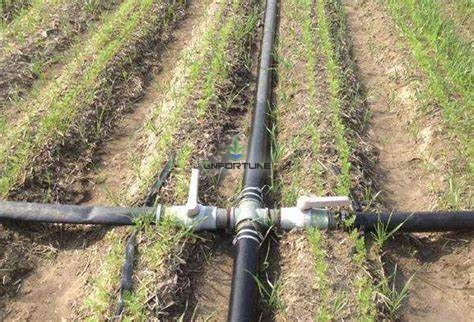
A venturi typically needs a meaningful share of line pressure to work at all, and the differential is what sets the suction. As soon as the mainline flow changes, the differential changes, and the injection ratio follows. On a fixed single-zone block with a constant-speed pump, a venturi holds a workable ratio. Add zone valves, a variable-speed pump, or a second block with a different emitter count, and the ratio moves every time the system reconfigures. On site we often see venturis sized to the pump’s maximum flow and then run at half flow, where suction collapses and the crop quietly receives a weaker solution than the recipe.
- Best case: one zone, steady pressure, ratio checked weekly with a drawdown test.
- Weak point: any change in downstream demand, including filter loading as the day goes on. Fit a differential gauge and a suction strainer.
Positive Displacement: Piston and Diaphragm
Water-driven piston and diaphragm injectors meter volume rather than relying on a pressure drop, so the ratio stays close to nominal across most of their flow band. They need a minimum flow to start cycling and a modest differential to operate, both stated by the manufacturer, and both easy to overlook when the injector is chosen by pipe size rather than by flow range.
Piston units give the tighter ratio and are the usual choice where the mainline runs at a fairly constant flow. Diaphragm units tolerate slightly dirtier water and are more forgiving of pressure variation, at some cost in precision. Both have seals and check valves that wear, and both should be installed with isolation valves and a bypass so the injector can be serviced without stopping irrigation.
The practical selection rule is turndown. Take the farm’s minimum and maximum simultaneous flow, then choose an injector whose stated flow range covers both with margin. An injector run below its minimum flow does not inject; run above its maximum, it wears and loses accuracy.
Pump-Driven Proportioning Skids
A proportioning skid replaces ratio-with-flow with ratio-by-feedback. A dosing pump injects concentrate, a flow meter tells the controller how much water is passing, and an EC probe downstream tells the controller whether the result is right. Because injection is driven by a pump rather than by line pressure, mainline pressure changes no longer move the ratio.
Skids suit houses with variable zone counts, sites running several recipes at once, and farms that need a record of what was dosed. They cost more, need power at the head assembly, and add maintenance items: peristaltic tubing, injection check valves, and probes that drift. Dosing pumps have their own turndown limit, so a skid sized for peak demand may pulse at low flow in a way the EC loop cannot smooth. The choice between a water-driven injector and a skid is set out in the auto dosing systems guide, with the control side in the nutrient controller guide.
Sizing to Mainline Flow
Sizing has five measured inputs. Record these before requesting a quotation.
| Sizing input | How to obtain it | Typical value |
|---|---|---|
| Minimum simultaneous flow | Smallest single zone at design pressure | Often 20 to 40 percent of peak |
| Maximum simultaneous flow | Largest zone set that can run at once | Set by pump duty point |
| Pressure at injection point | Gauge reading with all zones open | 2 to 4 bar on substrate houses |
| Pressure available to lose | Budget left after filter, valve and emitter needs | Venturi needs the most by a wide margin |
| Concentrate strength and target EC | From the recipe and stock tank dilution | A and B tanks commonly 1:100 to 1:200 working strength |
| Stock tank volume | Refill interval against daily concentrate draw | Sized for at least one day of dosing |
Concentrate strength sets the ratio the injector must deliver, so stock tank practice belongs alongside sizing: see the A and B tank mixing guide and the EC and ppm guide. The wider head assembly is listed in the greenhouse irrigation supplies checklist.
Calibrating and Maintaining a Fertilizer Injector
Calibration is a drawdown test, and it takes ten minutes. Measure how far the concentrate level in the stock tank falls over a timed run while the mainline flow meter records volume delivered. Divide the two and compare with the set ratio. Run it at minimum and maximum flow, where injectors drift most, and write both results on the unit.
- Weekly: read the differential gauge, check the suction strainer, confirm the concentrate tank is not running dry mid-cycle.
- Monthly: repeat the drawdown test at both flow extremes; inspect seals, check valves and any peristaltic tube.
- Per crop turn: replace wear parts on a schedule rather than on failure; injection check valves stick before they leak.
- Never: mix acid and oxidising treatments in the same concentrate line, or top up a tank without filtering the make-up water.
The fault we fix most often on fertigation head assemblies: the injector keeps running after the concentrate tank empties, so the crop receives plain water at full flow and the EC alarm only triggers several cycles later. A float switch in the stock tank and a low-level alarm cost little and remove the most common cause of a silent feeding gap.
FAQ
What injection ratio does a hydroponic farm usually run?
A: Commonly around 1:100, with the useful adjustable band from roughly 1:50 to 1:200 depending on stock tank concentration. The recipe, not the injector, sets the number.
Is a venturi injector accurate enough for commercial production?
A: Only where mainline flow and pressure stay constant. On multi-zone houses, ratio follows the differential, so a meter-driven or volumetric injector is the safer choice.
How do I know if an injector is undersized?
A: Compare its stated flow range with the farm’s minimum and maximum simultaneous flow. Below minimum flow it stops injecting; above maximum it loses accuracy and wears quickly.
Where should the injector sit in the head assembly?
A: Downstream of the filter, so any precipitate from concentrate is caught before the emitters, with isolation valves and a bypass around the unit for service.
How often should injection be recalibrated?
A: A drawdown test at minimum and maximum flow at least monthly, and again after any change to pump speed, zone count, or recipe strength.
Get an Injector Sized to Your Mainline
Send minimum and maximum simultaneous flow, pressure at the injection point, concentrate strength, and target EC, and the specification comes back as a matched injector rather than a catalogue part number. A fertilizer injector selected on those four inputs holds its ratio across the day instead of drifting with zone changes. Use the get an injector sized to your mainline form to send them.