

A greenhouse specified for a European summer and shipped to the Gulf does not underperform — it simply does not function for four months of the year. Commercial hydroponics in the Middle East is an engineering problem before it is an agronomic one, and the two budgets that decide feasibility are cooling and water.
This guide covers what changes at 45°C, how desalinated and brackish water reshape the nutrient strategy, which crops hold up, and where projects in the region most often lose a season.
What Changes When You Grow in the Gulf?
Three conditions set the design. Peak summer temperatures routinely exceed 45°C with high radiant load; freshwater is scarce, desalinated or brackish, and priced accordingly; and the productive season is effectively inverted, with the valuable months running from autumn through spring and a summer gap that must be planned for rather than fought.
The practical consequence is that capital goes into cooling and water treatment rather than into lighting or heating. A project budget copied from a temperate-climate design will be allocated wrong before the first plant goes in.
How Much Cooling Capacity Is Actually Needed?
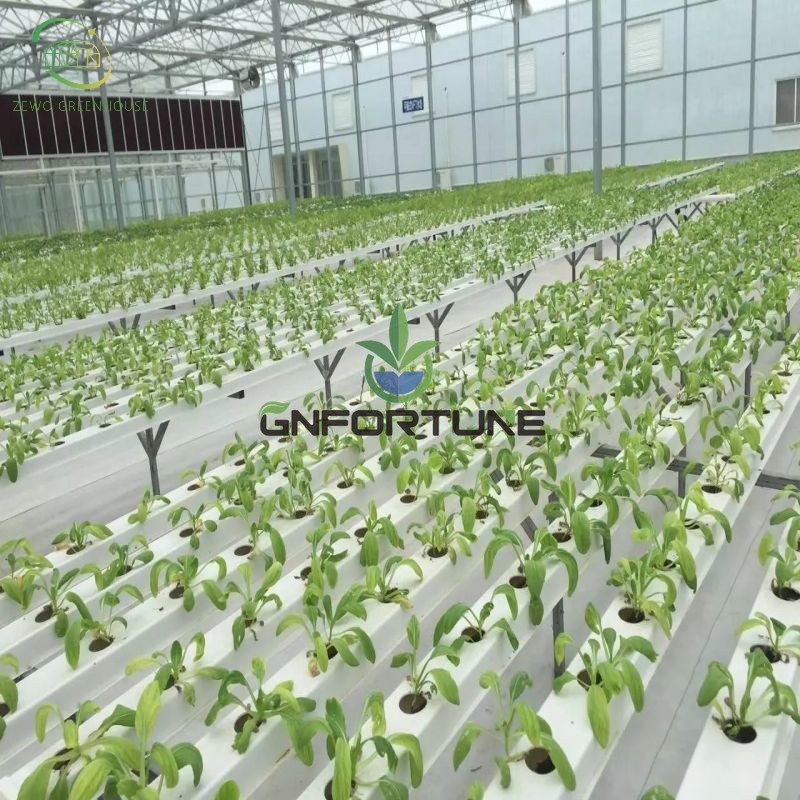
Enough to hold root-zone and canopy temperature through the worst hour of the worst day, not the seasonal average. Pad-and-fan systems remain the workhorse for leafy crops, with fogging and shade used to reduce peak load; where air temperature control reaches its limit, chilled nutrient solution usually buys more productive weeks per unit of currency spent than anything else on the site.
| Approach | Best for | Key consideration |
|---|---|---|
| Pad-and-fan evaporative cooling | Leafy greens and herbs in dry heat | Performance drops as humidity rises; pad maintenance and water quality matter |
| Fogging with ventilation | Peak load shaving on high-value crops | Needs clean water and pressure control; nozzle clogging is the failure mode |
| Shade and thermal screens | Reducing radiant load before mechanical cooling | Cheapest first step; slightly reduces light in the valuable winter months |
| Chilled nutrient solution | Holding root-zone temperature when air cooling is maxed out | Energy intensive but often the highest-return intervention in extreme heat |
Size to local extremes and then verify against a design-day calculation. Vent area and fan capacity copied from a Netherlands specification is the single most common technical error in the region.
How Do Desalinated and Brackish Water Change the Nutrient Plan?
Desalinated water is low in everything, including the calcium and magnesium a recipe normally assumes, so the base formulation has to be rebuilt rather than diluted. Brackish water brings the opposite problem: sodium, chloride or boron above crop tolerance, which constrains both crop choice and the recirculation ratio.
Two operational rules follow. Blending quality must be monitored continuously, because desalination plant output varies. And recirculation with saline feedstock accumulates salt faster, forcing more frequent dump cycles — which raises both water consumption and discharge volume. Test the actual supply before specifying treatment, since blending ratios and membrane choices depend entirely on the analysis.
Which Crops Are Realistic, and When?
Leafy greens, herbs and strawberries suit the productive season and are the usual entry point. Tomatoes, peppers and cucumbers are viable in cooled houses but carry much higher energy cost and a longer commissioning curve, and their summer fruit-set problems are the reason many regional projects stall in year two.
Plan the calendar around the gap. Either accept a summer fallow with maintenance and sanitation work scheduled into it, or invest in the cooling and shading needed to keep a reduced area productive. Projects that assume a twelve-month crop plan without paying for it are the ones that run out of working capital first.
What Mistakes Cost a Season in the Region?
The first is specifying to European drawings instead of local design days. The second is ignoring root-zone temperature while spending heavily on air temperature. The third is undersizing filtration: filters work hard in dusty, high-salinity conditions, and a blocked filter in July costs plants within hours.
Two more are organisational. Commissioning often gets scheduled into the hottest months because of procurement lead times, leaving no margin for correction. And spare parts lead times are routinely underestimated — anything not held locally arrives after the crop has already taken the loss.
FAQs About Hydroponics in the Middle East
Can a greenhouse be cooled enough to grow through a Gulf summer?
Yes for leafy greens and herbs in a well-designed pad-and-fan house with shading, and for vine crops where chilled water and root-zone control are funded. The question is economic rather than technical: the energy cost per kilogram in July often exceeds the market price, so many farms plan a reduced summer area instead.
Is desalinated water suitable for hydroponics?
It is usable and common in the region, but it is almost mineral-free, so calcium, magnesium and micronutrients must be added deliberately and the recipe rebuilt around the analysis. Blending with a brackish source to reduce cost introduces sodium and chloride limits that constrain crop choice.
How much water does a Gulf hydroponic farm actually consume?
Net consumption depends on cooling method and recirculation ratio. Evaporative cooling is itself a significant water user, so a farm can recirculate nutrient effectively and still draw heavily for pads. Meter cooling water and crop water separately before quoting a consumption figure.
Which system type is most common in the region?
NFT and Dutch bucket systems dominate commercial leafy and vine production respectively, both usually recirculating. Tower and vertical systems appear in urban and retail-facing projects where land cost rather than climate drives the decision.
What should be specified for filtration?
Redundant filtration stages with differential pressure monitoring, and spare elements held on site in sealed storage. Single-path filtration sized for laboratory conditions clogs faster than any regional maintenance plan can keep up with.
What to Send When You Request a Quotation
Site location and design-day temperatures, water analysis for every available source, available power capacity and tariff, target crop and monthly volume, and whether a summer production gap is acceptable. Those six inputs determine cooling method, treatment train and system choice.
Related reading: cooling options are compared in pads vs fog vs shade, saline supply is covered under brackish and high-salinity water, treatment choices in RO, UV and ozone systems, and regional context in hydroponic farms in Saudi Arabia and the UAE.
Send your site temperatures, water analysis, power availability and target crop, and we will specify cooling, filtration and system type against those constraints: contact our team.