

Commercial Drip Irrigation for Hydroponic Greenhouses
A commercial drip irrigation system is the plumbing layer that decides whether a substrate greenhouse hits its yield plan or spends the season chasing wet and dry patches. In bucket rows and slabs, drip delivers a measured volume of nutrient solution to each root zone on a schedule, several times a day, with a drain fraction that carries excess salts away. The hardware list is short: pump, filtration, mainline, manifolds, laterals, emitters. The decisions that cost money come earlier — flow per emitter, filtration grade, and whether runoff is collected or drained to waste.
What Commercial-Grade Drip Irrigation Includes
Commercial drip differs from field drip in three ways: it runs on a schedule measured in minutes, it feeds a root zone with no soil buffer, and it carries fertilizer, so a blocked emitter shows in the crop within days. A commercial package therefore needs isolation valves, filtration redundancy, and instrumentation that a field kit does without.
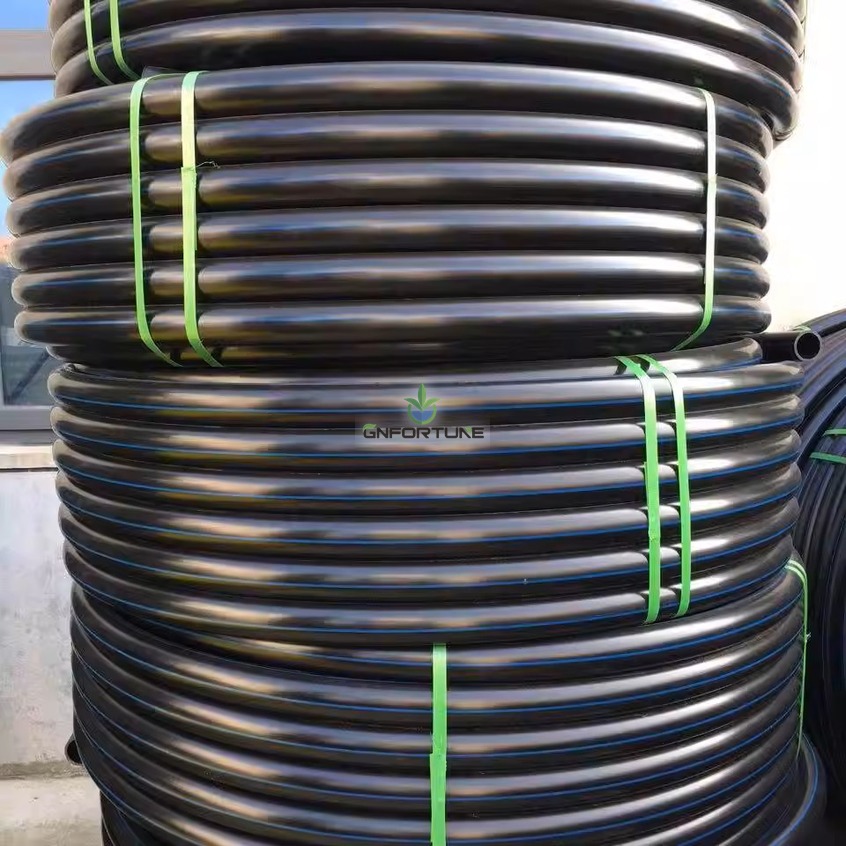
- Supply sized to peak simultaneous demand, not to average daily demand.
- Filtration matched to the emitter’s smallest passage, with a second filter body in parallel so one can be cleaned without stopping irrigation.
- Fertigation injection with EC and pH control, plus a strainer on each concentrate line.
- A manifold valve per block, so one block can be flushed while the rest keeps running.
- Laterals and emitters with flow and pressure range stated on the quotation, not described as standard drip line.
- A designed return path — collection and treatment, or metered drain-to-waste.
- Instrumentation: pressure gauges either side of the filter, a flow meter per zone, and alarms on low pressure.
The irrigation system product range shows what is supplied as a matched set versus assembled from loose parts; mismatched components cause most pressure complaints later.
System Anatomy From Pump to Emitter
Water and fertilizer follow the same path on every substrate farm. Knowing it makes a quotation readable line by line.
- Source and pump sized for peak flow plus filter backwash; variable-speed drives hold pressure steady as zones switch.
- Filtration train, usually two stages, with the final stage sized to the emitter rather than to the pipe.
- Fertigation injection downstream of the filter, so any precipitate is caught before the emitters.
- Mainline in PE or PVC sized for roughly 1.5 to 2.5 m per second water velocity.
- Manifold and zone valves, with air and vacuum relief on long runs.
- Lateral lines kept below about 1 m per second velocity.
- Emitters at 2 to 4 L per hour per point for buckets and slabs.
- Return or drain, either to a treatment tank or to a discharge sized for the daily volume.
Bucket houses add one detail: each bucket needs its own delivery point, and the drain elbow sets whether it holds a small reservoir or empties fully. The drip layout for Dutch buckets covers that branch.
Filtration First: Screen, Disc, or Media
Choose filtration before emitters. The filter’s effective opening must be smaller than the emitter’s smallest passage, which for common 2 to 4 L per hour emitters means roughly 120 to 200 mesh. Go coarser and clogging becomes a routine rather than an occasional task.
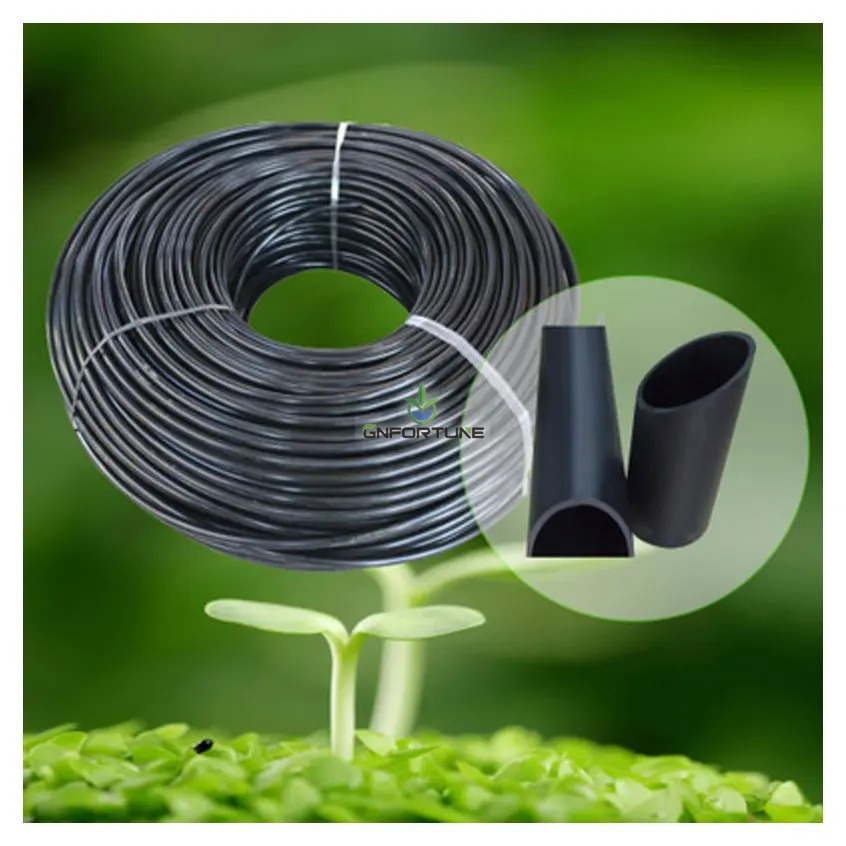
| Filter type | Opening | Suits | Trade-off |
|---|---|---|---|
| Screen filter | 120 to 200 mesh | Clean municipal or RO water, final polish stage | Low dirt capacity; frequent flushing on surface water |
| Disc filter | 100 to 200 mesh equivalent | Surface water with silt and fine sand | Better dirt capacity, easier cleaning, higher unit cost |
| Media filter | 50 to 100 micron effective | Raw well, river, or reservoir supply | Large footprint, backwash volume, needs a second stage |
| Sand separator | Removes the sand fraction | Pre-filter ahead of disc or media on sandy wells | Does not remove organics; never used alone |
Two-stage filtration is the norm whenever the source is a well or an open channel. A single screen filter on raw surface water spends most of its life being cleaned, and every cleaning cycle that runs during an irrigation event leaves a block under-watered.
Watch the differential. Once pressure drop across a cleanable filter rises roughly 0.3 to 0.5 bar above its clean value, downstream flow is already falling, and the zones at the far end suffer first.
Pressure, Spacing, and Emitter Choice
Emitter choice is a uniformity decision. Uniformity is what makes a block finish on the same day, and it comes from stable pressure at every emitter rather than from nominal flow rate.
| Parameter | Typical range | Why it matters |
|---|---|---|
| Emitter flow rate | 2 to 4 L per hour | Sets how long a cycle must run to hit the target volume |
| Pressure at emitter | 1.0 to 2.0 bar | Below about 1 bar, non-compensating emitters lose uniformity fast |
| Compensating range | 1.0 to 4.0 bar | Needed on runs over roughly 30 m or on sloped sites |
| Emitter spacing | 0.15 to 0.30 m on slabs; one point per bucket | Must match the wetted spread of the substrate |
| Laterals per slab | 1 to 2 | Two laterals even out wide slabs and add redundancy |
| Mainline pressure class | PN6 to PN10 PE for 4 to 6 bar systems | Thin-wall mainline splits on pump start-up surge |
| Filtration grade | 120 to 200 mesh | Must be finer than the emitter passage |
Pipe selection is tied to the same decision; the farm irrigation pipe guide sets out how wall thickness and pressure class interact with surge. Fittings deserve equal attention, since joints are what fail first under pulsating pressure — see the pipe fittings sizing guide.
On flat sites with runs under 30 m, non-compensating emitters are adequate. Add slope, long runs, or zones at different elevations, and pressure-compensating emitters stop being an upgrade.
A Maintenance Schedule That Keeps Emitters Open
Chemical and biological clogging are both predictable, so both belong on a calendar.
- Daily: read filter inlet and outlet gauges, and compare each zone’s flow meter against the previous day. A 10 percent drift means flushing is due.
- Weekly: flush lateral ends, clean filter bodies, and walk one block looking for dry substrate.
- Monthly: run an acid treatment for scale and a separate oxidising treatment for biofilm. Never mix them.
- Per crop turn: sample-test emitter flow and replace any kinked or sun-damaged lateral.
- Annually: pressure-test the mainline, check valve diaphragms, recalibrate EC and pH probes.
Acid and oxidising treatments are the two tasks most often skipped, and they are why correctly specified emitters still block in year two. Scale narrows the passage; biofilm finishes the job.
Where Buyers Overspend or Under-Specify
The advisory line we repeat most often on substrate projects: budgets go wrong in the same two places — filtration and valves are under-specified to win the tender, and emitters are over-specified to look modern. Buy the filtration grade the water needs, put a valve on every block, and choose the simplest emitter that holds pressure.
Drain-water reuse is the other area where numbers mislead. A return system lowers water and fertilizer cost, but adds a tank, a treatment step, and a monitoring obligation. Where water is cheap and discharge is permitted, drain-to-waste is often the better business decision; where water is expensive or discharge is regulated, collection pays back. Salt and sodium build-up have to be tracked either way, because recycling without monitoring concentrates the ions the crop tolerates least.
Capital cost per irrigated hectare spans a wide band with filtration level, automation, and return design; figures vary by region and season, so compare quotations on specification rather than on the bottom line. A commercial drip irrigation specification is judged on four lines: pressure class, filtration grade, emitter type, and valve count.
FAQ
How many emitters does a Dutch bucket need?
A: One delivery point per bucket at 2 to 4 L per hour, or two on large buckets and high-demand crops. The drain elbow, not the emitter, sets how much solution the bucket retains.
Do I need pressure-compensating emitters?
A: Yes when a run exceeds roughly 30 m, when zones sit at different elevations, or when the site slopes. On short flat runs, non-compensating emitters give the same uniformity for less money.
Can drain water be reused safely?
A: Yes, if collected, filtered, disinfected, and checked for EC and sodium before blending back. Without monitoring, recycled water concentrates salts and pathogens over successive cycles.
What filtration is enough for river or canal water?
A: Two stages — a sand separator or media filter for the heavy fraction, then a disc or screen filter at 120 to 200 mesh.
How long do drip laterals last?
A: Several seasons inside a greenhouse, less where lines sit in direct sun or on hot cover material. UV exposure and chemical dosing both shorten service life; figures vary by region and season.
Get a Drip Layout and Quotation
Send crop, growing area, water source, and target cycle count through the commercial drip irrigation quote form and the engineering team will return a filtration train, mainline sizing, manifold layout, and emitter specification matched to those inputs.