
Hydroponic Equipment Lifespan: 10-Year vs 3-Year Parts
Ask a farm manager what hydroponic equipment lifespan means and you get a two-part answer. The big plastic and metal structures — NFT channels, flood tables, benches — are bought once and expected to run a decade or more. The moving and small parts — pumps, timers, drip fittings — are replaced on a three-year […]
Aquaponics Fish Farm Equipment: Tanks, Filters, and Aeration
Specifying fish farm equipment for an aquaponics project means matching tanks, filters, and aeration to your fish biomass and crop area — not buying a catalog package and hoping it balances. The list looks short: tanks, a mechanical filter, a biofilter, a pump, and an air blower. What matters is whether each piece is sized […]
Farm Irrigation Pipes: PVC vs Aluminum, Sizes, and Fittings
Farm irrigation pipes are the cheapest component in an irrigation system and the most expensive one to replace, because they are buried, bracket-mounted, or woven through a greenhouse structure by the time anyone notices a problem. Most agricultural irrigation pipe in a commercial greenhouse is uPVC, PE, or aluminum, and each earns its place in […]
Agricultural Irrigation Equipment for Commercial Farms
Agricultural irrigation equipment for a commercial greenhouse is a chain, not a machine: it moves water from a reservoir to the root of every plant, in the right amount, at the right time. A pump pushes, a filter protects, valves divide, fertigation feeds, drip lines deliver, and a controller decides. Bought in the right order, […]
Rockwool for Commercial Propagation: Plugs, Cubes, and Slabs
Rockwool is the most widely used growing medium for commercial crop starts because it turns seedling care into a repeatable process: every plug wets the same, drains the same, and roots out on the same schedule. Get the format, the buffering, and the fertigation right in the nursery, and transplanting becomes a routine calendar event […]
Pile of expanded clay pellets hydroponic growing media
Rockwool vs Coco Peat vs Perlite: Which Substrate Fits You Rockwool, coco peat, and perlite answer the same question differently: how do you keep water and air at the roots of a commercial crop. Rockwool stores a lot of water very uniformly, coco buffers between irrigation events with some chemistry of its own, and perlite […]
Hydroponic Growing Media: A Guide to Soilless Substrates
In soilless production, the growing medium does the jobs soil used to do: it anchors the plant, holds water, keeps air at the roots, and supports the seedling through its first weeks. Choose it well and it disappears into the operation; choose it poorly and it shows up as uneven crops, clogged drippers, and a […]
Net Pot Sizes Explained: 2-6 Inch Net Cups Compared
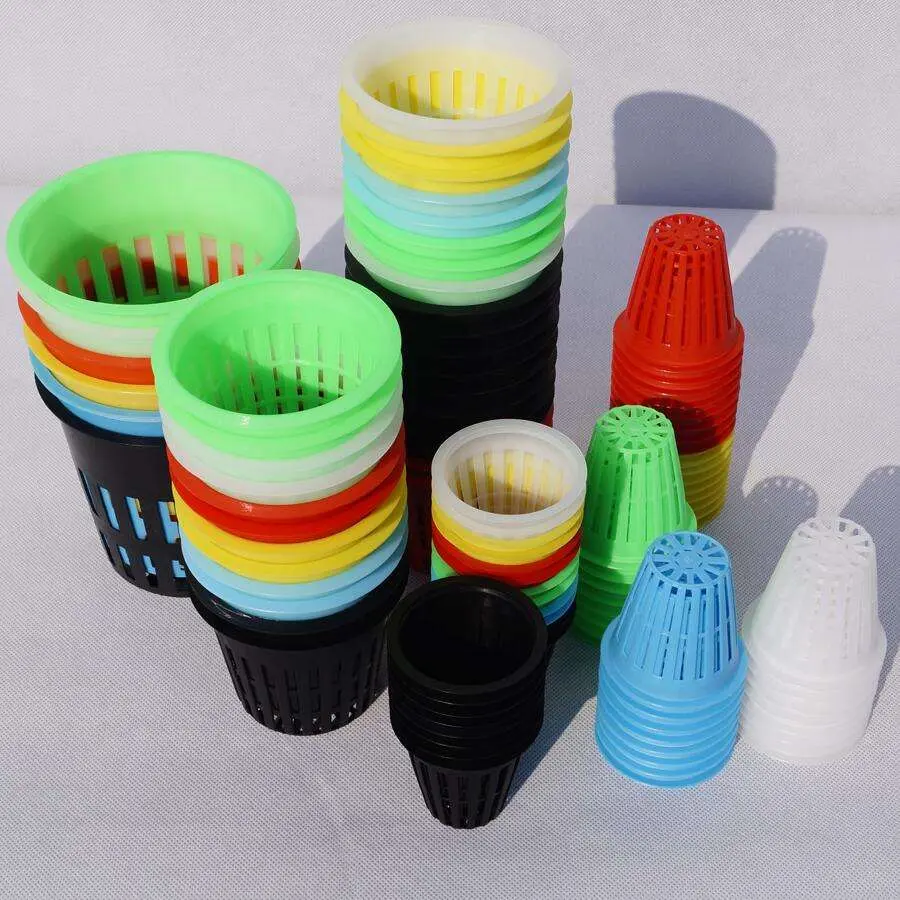
A net pot is the small perforated cup that holds a plant and its medium above or inside a hydroponic channel, tray, or bucket. The size you choose — 2, 3, 4, 5, or 6 inches — decides how much room the root zone has, how often irrigation must run, and how many plants fit […]
Ebb and Flow Tables and Flood Trays: A Buying Guide
An ebb and flow table is the workhorse of commercial propagation and container growing: a flood tray, usually on a steel or aluminum frame, that fills with nutrient solution for a few minutes and then drains by gravity. Buyers call them flood tables, grow tables, flood-and-drain tables, or simply flood trays — and the naming […]
Hydroponic Nutrient Controllers & Automation: Dosing, pH & EC Monitoring
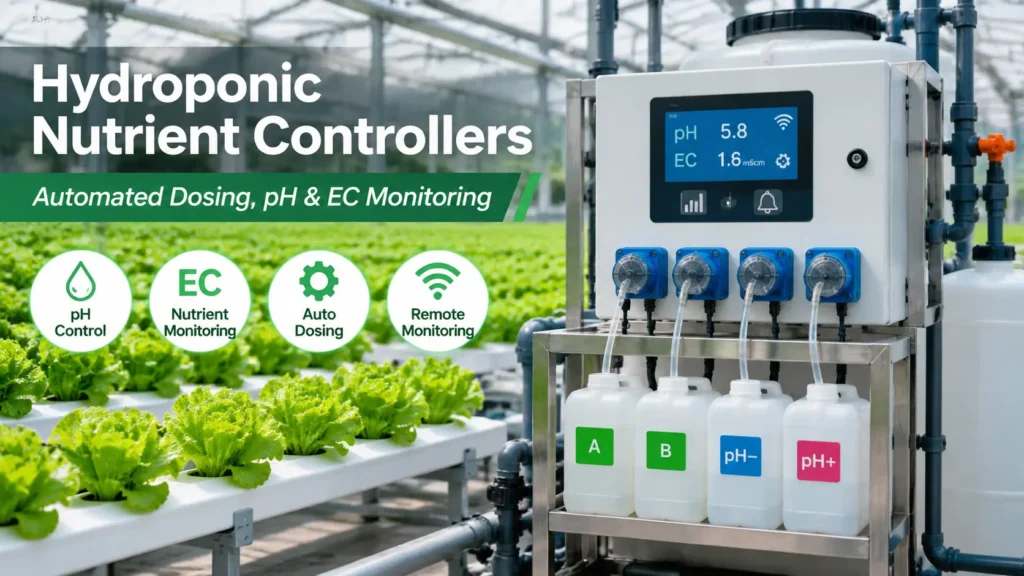
Manual dosing works — until it doesn’t. Every commercial hydroponic farm above pilot scale eventually learns the same lesson: the value of automation isn’t saving labor, it’s preventing the one bad night when EC drifts, pH locks out nutrients, and a whole tank of plants starts the morning damaged. This page explains what a nutrient control system […]