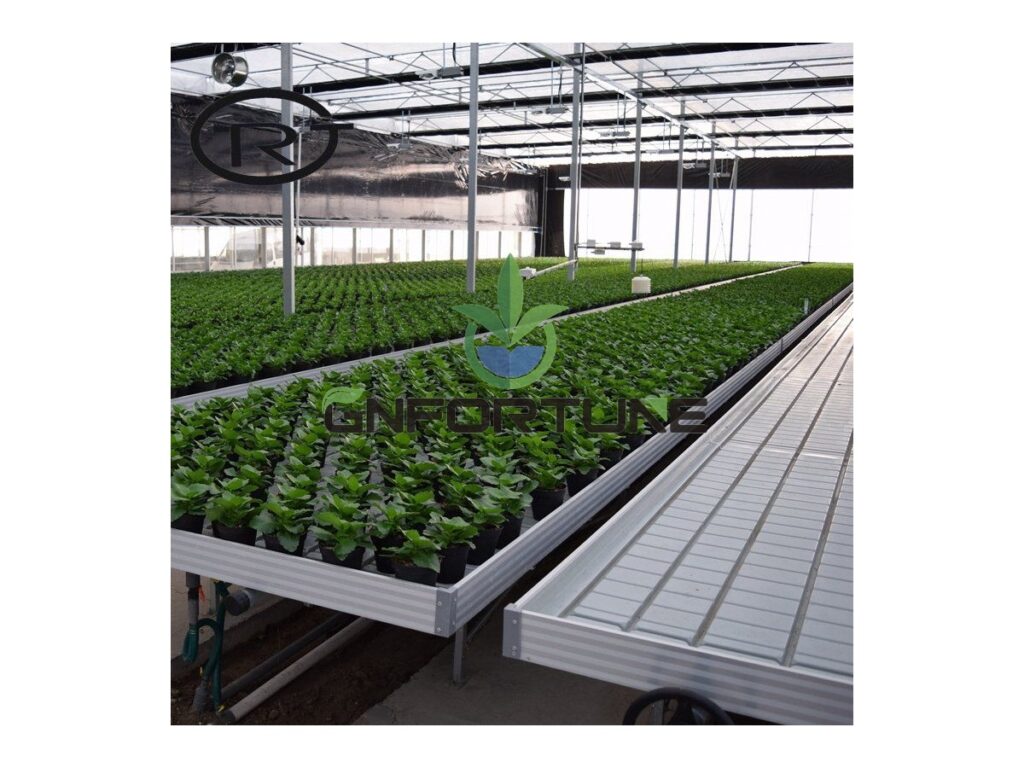
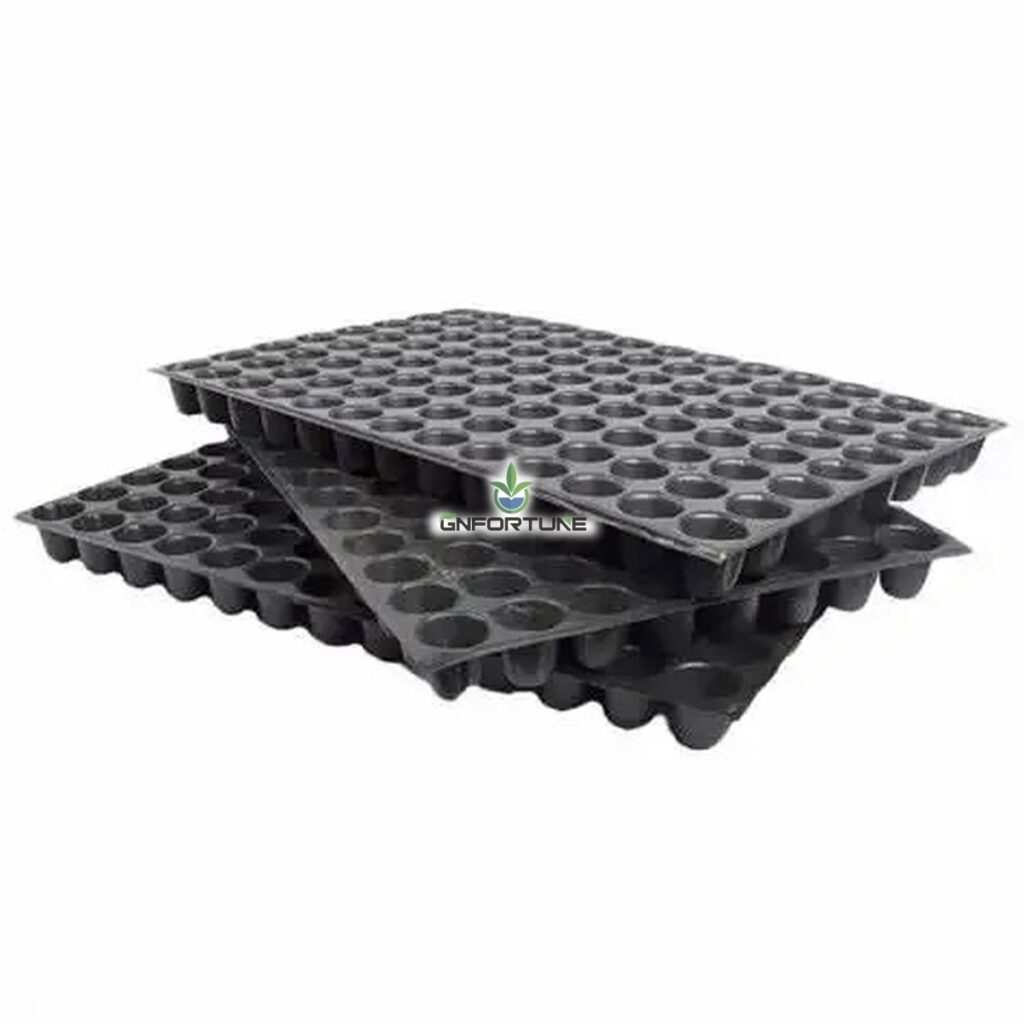
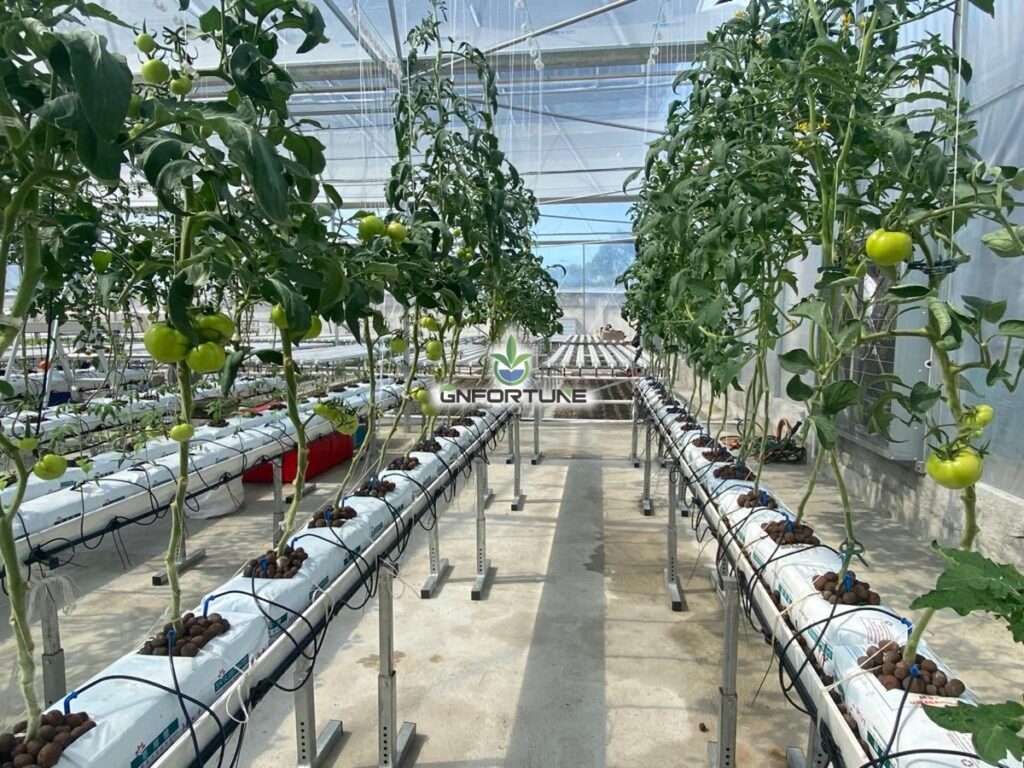
“How to build a hydro system” search results mostly return DIY bucket builds. This guide is the commercial version — the actual project sequence that takes a hydroponic farm from idea to first harvest, written from the projects we’ve delivered. Seven steps, in the order that prevents expensive rework. Skip a step and you’ll usually meet it again later, at a higher price.
Step 1: Validate the Market Before Anything Else
Boring step, most-skipped step, the step that decides everything. Before equipment talk, answer in writing:
- Who buys your produce, at what price, at what volume, all year?
- Standing contract or spot market?
- What does competing local supply cost them?
Your equipment choice barely moves project ROI next to these answers — the ROI framework shows the math. A farm with secured buyers scales; a farm with optimistic assumptions has a very nice greenhouse with no revenue.
Step 2: Choose the System by Crop and Site, Not by Catalog
| If your plan is… | Your system is… |
|---|---|
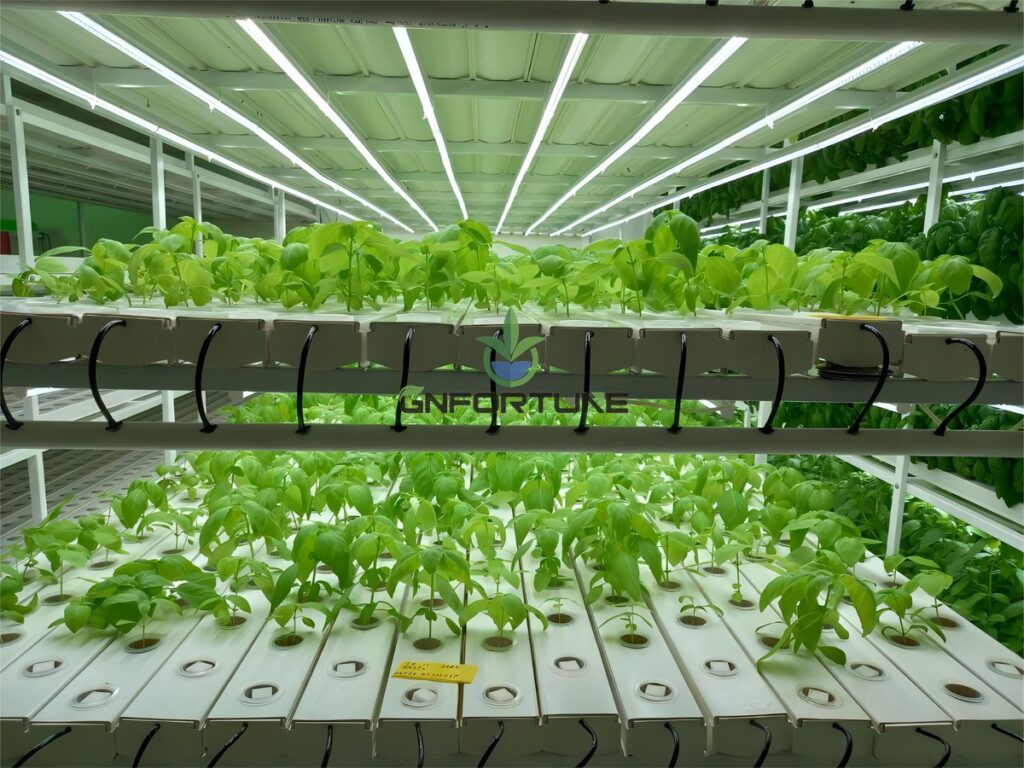
| Leafy greens volume, reliable power | NFT channels |
| Tomatoes, peppers, cucumbers | Dutch buckets |
| Strawberries at pick height | Suspended gutters |
| Mixed crops, one roof | Zoned layout with separate nutrient loops |
Also decide system boundaries honestly: drain-to-waste or recirculating, automation level, phased expansion. Full comparison detail: dutch bucket vs NFT and NFT vs DWC.
Step 3: Design Around Site Facts
Get these verified before drawings start — the four facts that most often contradict assumptions:
- Floor level and drainage — gravity runs your return lines
- Power capacity and reliability — dictates backup generator sizing
- Water source and quality — dictates filtration design (test it, don’t guess)
- Structural capacity — gutters and trellis loads go somewhere specific
What a complete design package must contain: the system design buyer’s guide.
Step 4: Order Equipment with a Fixed Scope List
Compare quotes line-by-line against a fixed scope — channels/buckets, stands, supply and return piping, filtration, dosing, pumps plus one standby, spares, commissioning, training. Two quotes 30% apart are usually different scopes, not different prices. Budget bands by scale and system: the cost breakdown. And confirm landed cost (freight + duties + delivery) — the cheapest FOB number is often not the cheapest project.
Step 5: Install with a Checkable Sequence
Whether your crew or a contractor installs, the non-negotiables are the commissioning checks — measured slope, far-end flow rates, leak test under full load, balanced manifold. The complete sequence with target numbers: NFT channel installation guide.
The phase that kills first farms: it’s not installation — it’s the gap between “equipment installed” and “biological system running.” Germination, seedling care and first-cycle crop management are a skill set, and the first 90 days is when it’s weakest. Solve this deliberately: training included in your supplier scope, a grower consultant for cycle one, or a deliberately small pilot zone before full-speed operation.
Step 6: Commission and Train
- Run the full system empty, then with solution, before plants
- Calibrate probes; log baseline EC/pH/flow values
- Train the actual operating team — the people present at 6 AM, not the owner who attended the sales call
- Write the operating manual while habits form: irrigation schedule, monitoring log, alarm response
Step 7: Plant, Measure, Expand on Evidence
Start with staggered planting from cycle one — weekly seeding, weekly harvest, weekly cash. Measure actual performance for 2–3 cycles: yield per channel, labor hours, power draw, reject rate. Expand on those measured numbers, not on projections. The farms that scale successfully all did one thing identically: they let data set the pace.
Timeline Reality
| Phase | Typical duration |
|---|---|
| Market validation & business planning | 4–8 weeks |
| Design, quoting, supplier selection | 3–6 weeks |
| Equipment production + freight | 6–12 weeks |
| Installation & commissioning | 2–6 weeks |
| First harvest | +4–8 weeks after planting |
Plan roughly 5–8 months from committed decision to first revenue — faster is possible with stock equipment and an existing structure, and slower is common when site works surprise you. Working capital through this window belongs in the plan.
FAQ
Should I build a pilot first?
A: If you’re new to controlled-environment growing, yes — a 200–500 m² zone inside an existing structure proves your market access and operating discipline at minimum capital before you scale the decision, not just the equipment.
Can I buy the greenhouse locally and the hydroponic system from you?
A: That’s a common and sensible split — we coordinate loads and interfaces with your greenhouse contractor. See turnkey delivery.
What’s the biggest project killer?
A: Step 1 skipped. Equipment problems are fixable; missing markets are not.
Start at Step 2
You know your market. We’ll handle the system side — send crop plan, site basics and timeline through the quote form and get an itemized design-back quote within 24 hours.