

Strawberries in suspended gutters are one of the strongest commercial upgrades in protected agriculture — when the setup is right, and a slow-motion disappointment when it isn’t. The method is simple: plants grow in soilless gutters hung at working height, fed by drip irrigation, with fruit hanging clean above the floor. What trips farms up is rarely the gutter; it’s variety chilling requirements, load-bearing math and salt management. This guide walks the whole process, including the parts that quietly decide profitability.
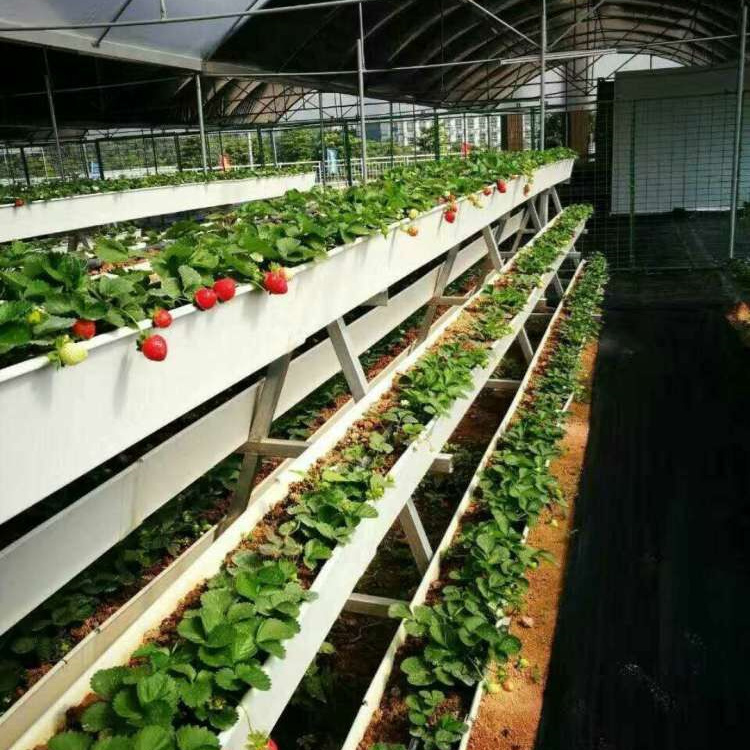
Why Gutters Beat Ground Beds for Commercial Berries
| Factor | Ground beds | Suspended gutters |
|---|---|---|
| Disease pressure | Soil-borne pathogens (Fusarium, Phytophthora) persist for years | Soilless substrate, soil contact eliminated |
| Fruit quality | Fruit contacts soil — rot, grit, wash-off | Fruit hangs clean; fewer rejects |
| Harvest speed | Stooped picking | Standing picking — typically 30–50% faster |
| Rain protection | None — fruit splashes, botrytis risk | Gutter + greenhouse cover keeps foliage dry |
| Spray residue | Full ground application | Targeted treatment, dramatically reduced chemical use |
| Turnover between seasons | Soil sterilization cycle | Replace substrate, replant |
Step 1 — Verify Your Variety’s Chilling Requirement
This is the step that kills more first-year strawberry projects than anything else, and it happens before any equipment is ordered. Strawberry varieties split into short-day (June-bearing), day-neutral and everbearing types, and each carries a chilling hour requirement — hours below ~7°C the plant needs before productive flowering.
- Day-neutral varieties (Albion, San Andreas, Seascape) are the commercial default for gutter systems — they fruit continuously without a deep chill
- Short-day varieties in the wrong latitude either never chill properly or over-chill — both mean weak flowering
- Rule: confirm the variety with your plant supplier for your latitude and planting date, in writing. The right gutter cannot rescue the wrong variety.
Step 2 — Structure & Load: The Engineering Nobody Skips Twice
A productive gutter line is heavier than it looks. Wet substrate + mature plants + fruit + irrigation hardware adds up — and it all hangs from your greenhouse frame.
| Load component | Planning figure |
|---|---|
| Wet substrate & gutter | ~25–40 kg per running meter |
| Mature crop + irrigation | ~5–10 kg per running meter |
| Safety margin on steel | Always — verify frame capacity with the greenhouse supplier |
The failure we see most: a farm hangs gutters from a tunnel frame rated for light poly loads, then a wet-season crop plus maintenance staff on the walkway overloads the frame. Sagging rows mean pooling irrigation and uneven feeding — and the fix is structural, not agricultural. Get the load calc done before ordering steel.
Step 3 — Substrate & Planting
- Substrate: coco coir in grow bags or direct gutter fill; 100% perlite in hot climates (wets and dries predictably)
- Planting density: commonly 8–12 plants per running meter depending on variety vigor
- Planting: crown at substrate surface — buried crowns rot, exposed crowns dry; this one detail decides establishment rate
- Timing: plant into pre-warmed substrate; cold roots stall establishment
Step 4 — Irrigation & Nutrition
Strawberries are salt-sensitive, and gutter systems make salt management a weekly discipline:
- EC targets: ~1.0–1.4 mS/cm in run-off for fruiting; higher EC means firmer, smaller, sweeter fruit and lower yield — decide deliberately per your market
- pH: 5.5–6.0
- Drip strategy: pressure-compensating drippers at 1–2 L/h, multiple short irrigations per day rather than few long ones
- Salt flushing: monitor run-off EC weekly; when it climbs, apply a deliberate over-drain (10–20% leaching fraction) to push accumulated salts out of the root zone
Skip the over-drain discipline and this happens: run-off EC creeps up over 6–8 weeks, leaf margins scorch, fruit size drops — and it looks exactly like a nutrient deficiency, so farms respond by feeding more, which makes it worse. The pattern is common enough that we now build run-off monitoring into every strawberry project’s operating manual.
Step 5 — Season Management
- Pollination: bumblebee hives or managed pollinator access — poor pollination shows as misshapen fruit months later in your reject rate
- Runner control: remove runners weekly; they drain the plant and tangle the line
- Canopy: keep gutters clear of dead leaves — humidity trapped inside the row is botrytis’s invitation
- Pest watch: two-spotted mite and thrips are the usual suspects; gutter height actually makes scouting easier — use it
Economics — The Honest Version
Gutter systems carry higher capital than ground growing, and the payback depends on the price premium clean, grade-A fruit earns in your market. Faster picking, lower reject rates and multi-year soilless production are what close the gap. Do the math with your local picking wage and reject rate, not a brochure’s — the system cost guide shows the framework.
FAQ
Can I convert existing NFT channels to strawberry gutters?
A: No — strawberries need deeper substrate volume and different load paths. Design the strawberry zone separately; see the strawberry gutter system product page.
How long do plants produce?
A: Day-neutrals produce 5–8 months per planting in good conditions; substrate is typically replaced after 1–2 seasons.
Do gutters guarantee higher yields?
A: No. They improve fruit quality, harvest speed and disease control. Yield still follows variety, climate management and nutrition discipline. Any supplier promising a yield multiple is selling, not advising.
Plan Your Berry Project
Send greenhouse dimensions, target variety and your latitude through the quote form — we’ll return a gutter layout with hanging hardware, drip design and a load summary you can hand to your greenhouse engineer.