Every metre of elevation is about 0.1 bar of pressure that costs no electricity and cannot fail at 2 a.m. Gravity-fed hydroponics uses that head instead of a pump, and on sites with unreliable power, cheap labour or short runs, the trade is genuinely attractive. It is also a design with hard limits: head is fixed once the steelwork is built, and the flow it delivers falls exactly when the crops need it most.
Pumped-system sizing lives in the article on pump sizing and redundancy, and the flow workbook in the reservoir pump worksheet. This piece stays on the gravity side: the head budget, the header tank, and where elevation wins or loses.
The Head Budget: Converting Elevation to Pressure
The conversion is fixed: roughly 0.98 bar per 10 metres of height difference, or about 0.1 bar per metre. What matters is not total building height but the difference between the water level in the header tank and the highest point water must reach, minus what friction consumes on the way.
Three deductions shrink the gross number before it reaches the crop:
- Friction loss in the supply main, which at gravity velocities of 0.5–1.0 m/s is modest but real — plan for its consumption in long or narrow runs.
- Level swing in the header tank: a tank that swings 0.5 m between full and refill loses a proportional share of its head at the bottom of the cycle.
- Vertical rise the water must climb back up to reach channels or gutters mounted above the delivery point.
As a planning reference, a header tank surface 2–3 m above the highest channel gives roughly 0.2–0.3 bar at the inlet before friction deductions — enough for NFT, marginal for drippers, hopeless for fogging. Those are planning figures with the premises stated: verify against your own geometry.
The Header Tank: Constant Head Is the Whole Design
The header tank does two jobs at once. It converts a variable input (a refilling pump, a mains line, a spring) into a near-constant output, and it holds a volume that keeps feeding during refill interruptions. Design priorities in order:
- Constant water level. A float valve or overflow-controlled makeup holds the level within a narrow band, because flow out of the tank follows the level — let it swing and every channel’s flow rate swings with it. The level-control hardware family is described in the reservoir level control article listed below.
- Enough volume to ride through refill gaps. If the low-level pump or the mains only refills on schedule, the header volume must cover the gap at full design flow. Size it for the longest realistic interruption, not the average one.
- Height above the highest feed point with margin. The structural frame carrying the tank must be designed for the water weight, which at several cubic metres is a real structural load, not a shed job.
One subtlety worth flagging in a gravity design review: nutrient mixing and dosing happen either in the header tank or upstream of it. The header is a small, frequently-stirred body of water, and EC stratification is easier to control there than in a tall, thin tank — but dosing hardware still needs the same calibration discipline as any pumped system.
Matching Head to System Type
Gravity is not equally suited to every hydroponic method. The table gives planning-order requirements and the honest verdict for each.
| System type | Head needed (planning range) | Gravity verdict | Why |
|---|---|---|---|
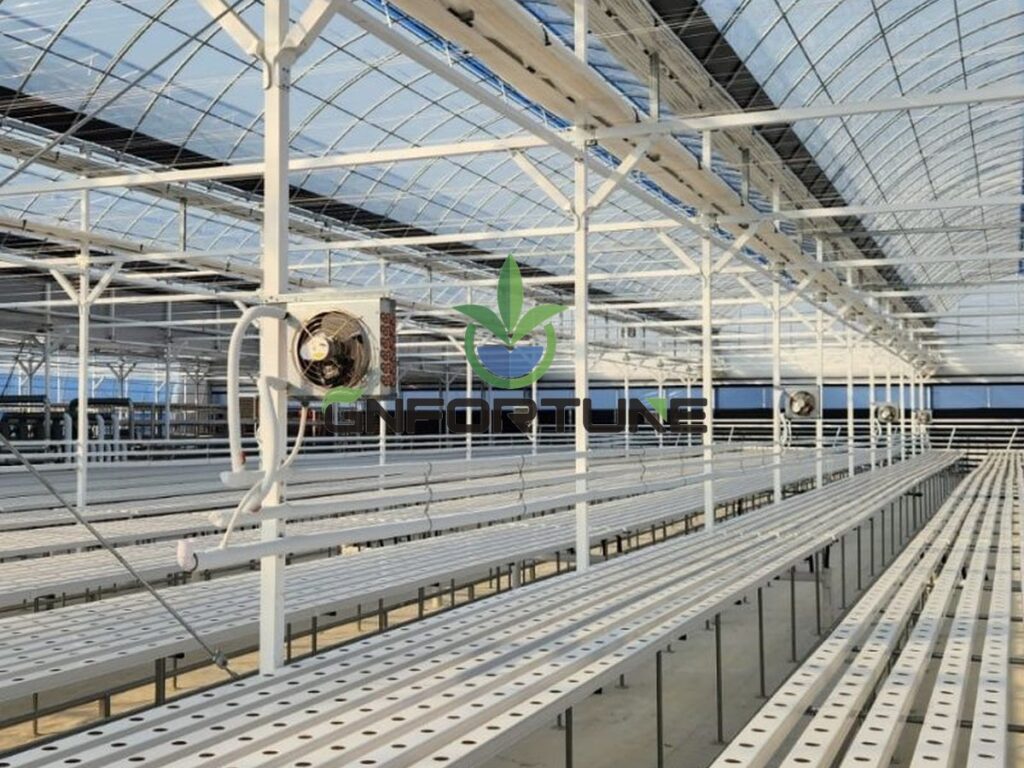
| NFT channels | Roughly 1–3 m of head above channel inlets | Best fit | Thin film needs modest, steady flow — not pressure; uniformity depends on consistent inlet head |
| DWC / raft beds | Minimal — fill and drain, often batch-fed | Good fit | Beds can be filled by gravity and drained by siphon or valve; no continuous pressure duty |
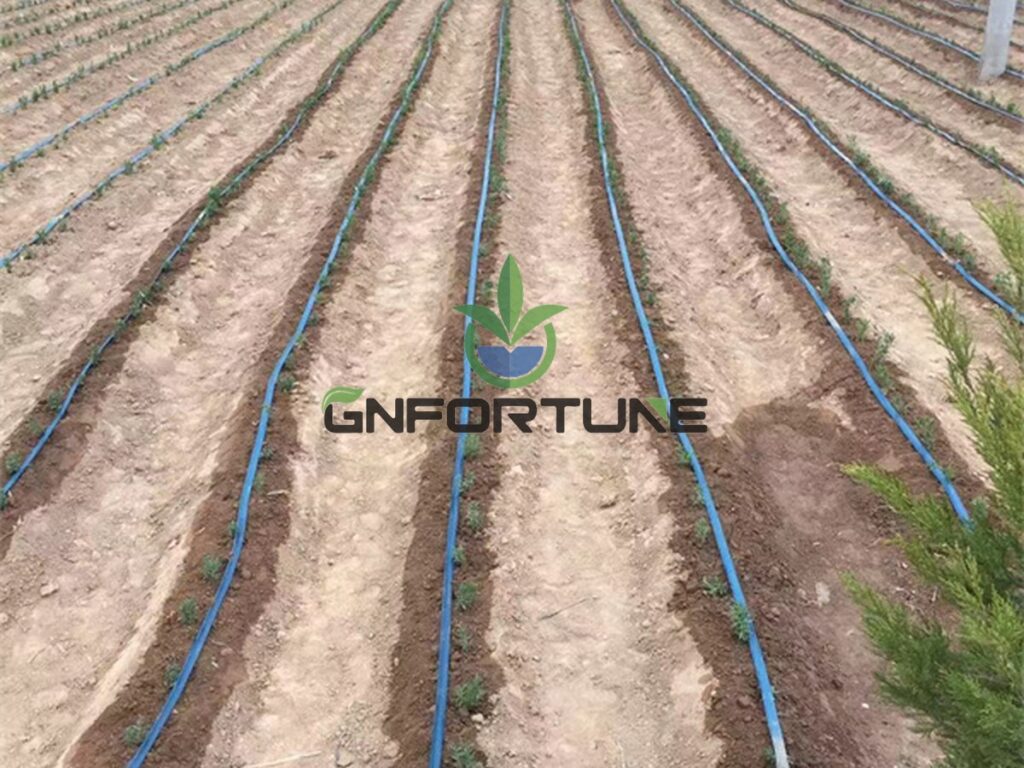
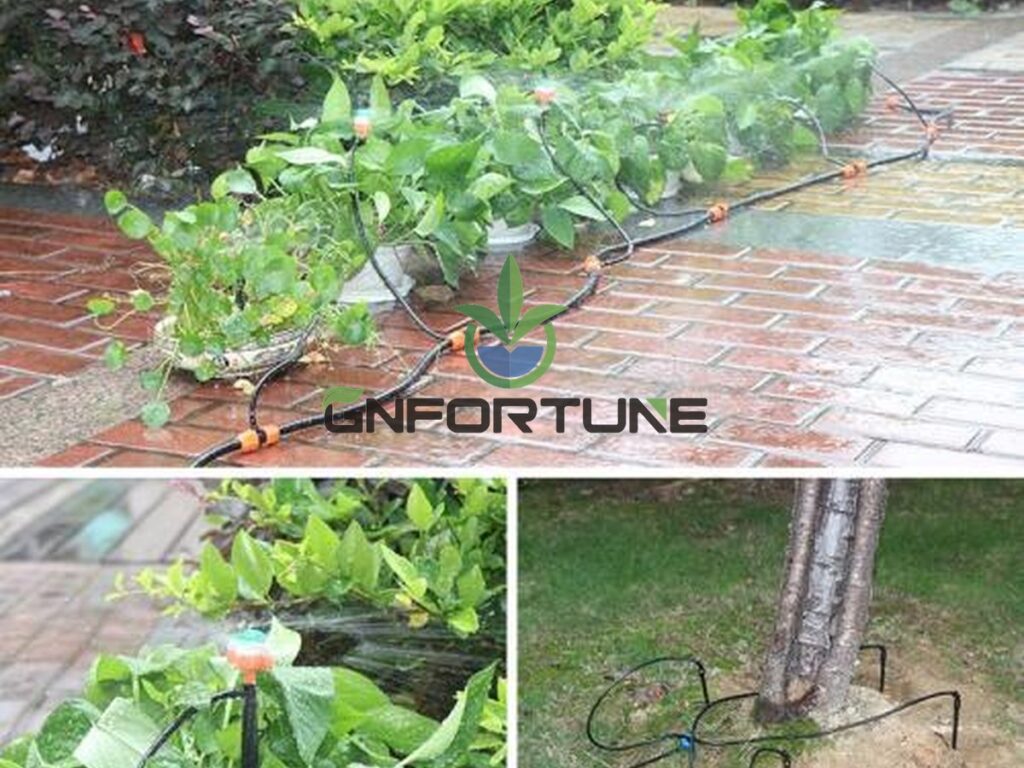
| Dutch buckets / drip | Roughly 5–10 m for non-compensating drippers; PC drippers relax the floor but need a pressure window | Possible with real height | Emitter pressure requirements eat head fast; pressure-compensating drippers change the math, see the PC dripper discussion in the drip article |
| Aeroponics / fogging | High-pressure nozzles, tens of metres of head equivalent | Not realistic | Nozzle pressure duty belongs to pumps; gravity cannot reach it at any sane tank height |
The pattern: gravity suits systems whose requirement is flow at low pressure, and fails where the requirement is pressure itself.
NFT Slope, Flow and Uniformity Limits
NFT under gravity inherits two constraints. The first is the channel slope itself — the 1–3% falls that NFT needs are set out in the article on NFT flow rate, slope and length, and gravity does not change them. The second is the inlet head consistency: channels at the start of a manifold and channels at its end see different residual pressure, and at gravity’s small head budget that difference is proportionally large.
In practice this shows up as the familiar last-channel problem — the run furthest from the tank delivers visibly less, which the multi-tier pressure article examines for pumped systems too. Under gravity the fixes are blunter: shorter manifold runs, larger supply pipe cross-sections to cut friction, and tuning inlet restrictors by measurement. What is not available is the brute-force answer a pump gives — more pressure to waste on balancing.
Channel run length limits also tighten. Every additional metre of channel consumes flow budget that gravity delivered at a fixed head, so gravity-fed NFT usually runs shorter rows than pumped NFT on the same channel section.
Where Gravity Fails and a Pump Returns
Honest designs name their own exit conditions. Gravity feed stops working when:
- The site cannot give height cheaply. A 6 m tank tower is a structural project; on flat sites the steelwork cost can exceed the pump cost it was meant to avoid.
- The crop list changes. Add drippers, misting or a pressure-dependent crop and the head budget collapses; the farm ends up pumping to the header tank anyway, now at greater height.
- Uniformity targets tighten. Certifications and buyers increasingly ask for measured distribution uniformity; gravity can hit the target on short runs, but every added row moves the system toward the edge.
- Sanitising and flushing need velocity. Pipe-flush duties that rely on flow velocity to carry debris may not reach it at gravity head, pushing farms toward auxiliary flushing connections.
The realistic hybrid most projects land on: gravity for distribution, a low-duty pump only to refill the header tank. That keeps the pump small, cycle it rarely, and — the part buyers care about — leaves the farm irrigating on stored head even during a power cut, provided the refill schedule tolerates the outage. On sites where power reliability is the motive, weigh gravity against the generator and inverter sizing covered in the article on backup generator sizing.
Gravity-fed hydroponics succeeds when the system’s needs are flow-shaped and the site gives height for free. Where either condition fails, the pump is not a failure of the concept — it is the correct answer to a different head budget.
FAQs About Gravity-Fed Hydroponics
How much elevation do we need for gravity-fed NFT?
Plan on a header tank surface roughly 2–3 m above the highest channel inlet as a working band, then subtract friction losses on the supply run. Short, large-bore manifolds hold uniformity; long small-bore runs consume head that NFT needs for flow consistency.
Can gravity feed run drip emitters?
Only with real height. Non-compensating drippers want several bars that no practical tank height provides; pressure-compensating drippers lower the floor but still need their minimum working pressure. Measure the emitter spec before committing the steelwork.
Does a header tank replace the nutrient tank?
It can, on small sites — the header becomes the dose body — but the farm loses the volume that buffers EC and temperature. Most commercial designs keep a main nutrient tank and treat the header as a constant-head staging volume above it.
Is gravity feed really more reliable than a pump?
It removes the pump as a single failure point and keeps feeding through power cuts, which is exactly why off-grid sites choose it. The trade is a fixed flow profile and a refill system that still needs its own power and float hardware to work.
What maintenance does a gravity system still need?
Float valves, tank hygiene, flush points and channel slope checks — all the duties a pumped system has minus the pump itself. Gravity is not a maintenance-free design; it is a design with one fewer rotating machine.
Related Reading
- Hydroponic Pump Sizing: Flow Rate, Head Pressure and Redundancy — The pumped alternative gravity designs are measured against
- NFT Channel Flow Rate, Slope and Length — The channel requirements gravity feed must satisfy
- Multi-Tier Irrigation: Pressure and Drainage — The last-gutter uniformity problem in both pumped and gravity layouts
- Reservoir Level Control and Float Valves — The hardware that holds header tank head constant
- Reservoir and Pump Sizing Worksheet — The arithmetic either design must survive
Next Step: What to Send for a Quotation
Whether gravity or pumping wins on a site is decided by two numbers: the height available above the crop and the flow the system must deliver. Send both with the layout, and the header tank, channel sections and any refill pumping can be sized as one coherent design.
Evaluating a gravity-fed layout or a hybrid design? For RFQ or project consultation, send: site elevation difference from water source to highest feed point; system type and channel or emitter specification; total growing area and number of zones; power reliability on site and backup power plans; crop list and future expansion intent; water source and analysis; delivery schedule; and the budget band. G AND N FORTUNE LIMITED supplies NFT, DWC, Dutch bucket and substrate systems with header tank, pumping and refill packages quoted to those parameters.