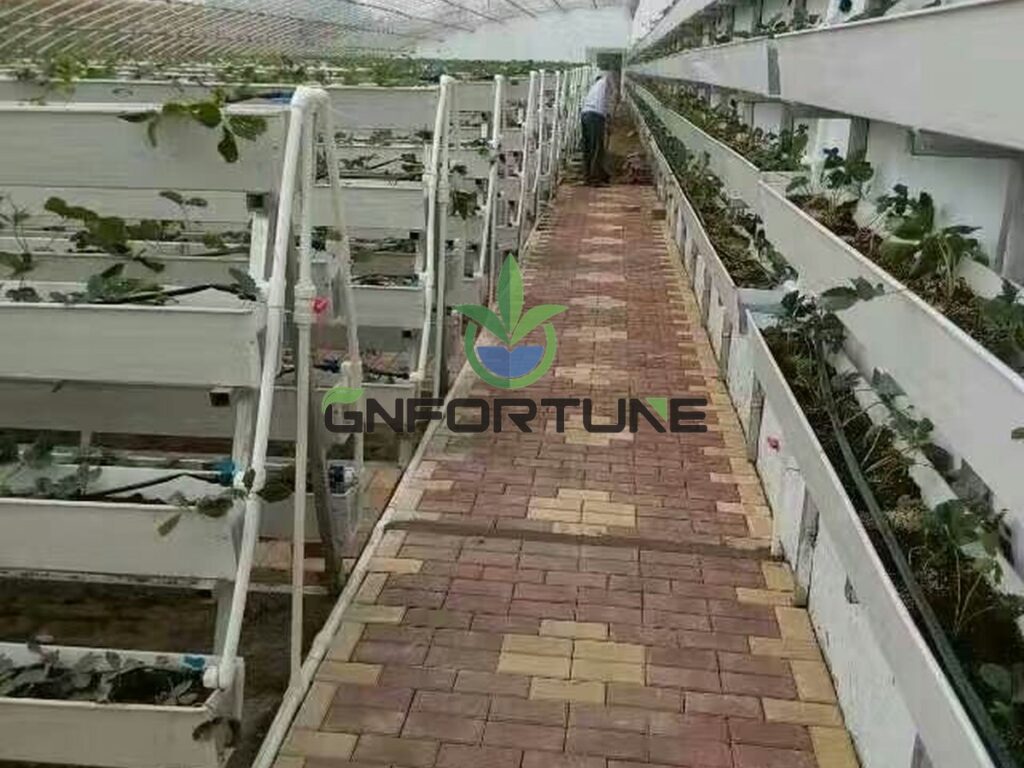
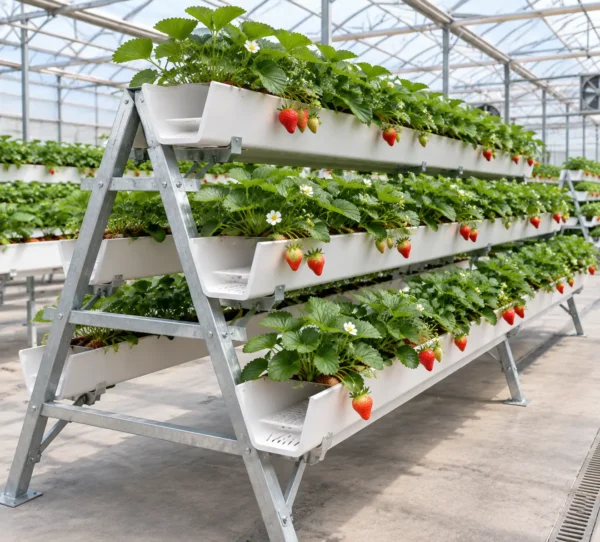
Choosing a strawberry gutter system for a commercial greenhouse involves more than selecting a PVC channel with the right dimensions. The growing gutter affects root-zone management, drainage, irrigation distribution, plant spacing, harvesting access and the overall greenhouse layout.
For commercial growers, greenhouse contractors and hydroponic system integrators, the right equipment must work as part of a complete growing system. A gutter that fits the substrate bag but cannot handle the drainage arrangement, support structure or irrigation requirements may create problems long after installation.
This guide explains the main types of commercial strawberry gutters, how substrate-based systems differ from NFT channels, which technical specifications matter during procurement, and what to prepare before requesting a quotation.
If you are planning a complete greenhouse project, you should also review our commercial hydroponic system design guide before finalizing the equipment layout.
What Is a Commercial Strawberry Gutter System?
A commercial strawberry gutter system is an elevated or supported growing structure designed to hold strawberry plants, growing media or substrate containers while providing an organized route for irrigation and drainage.
Unlike traditional soil beds, greenhouse gutter systems allow growers to position the root zone above the ground. This can improve access for planting, crop maintenance and harvesting while making the growing area easier to organize.
A complete installation may include several components:
| Component | Main Function |
|---|---|
| Strawberry growing gutter | Supports the growing container or substrate |
| Substrate bag or growing media | Provides the root environment |
| Drip irrigation line | Delivers water and nutrients to individual plants |
| Drainage board or outlet | Directs excess water away from the root zone |
| Support frame or hanging rail | Holds the gutter at the required height |
| End caps and connectors | Connects gutter sections and manages water flow |
| Drainage collection line | Collects or directs drainage water |
The exact configuration depends on the growing method, greenhouse structure, crop requirements and operating preferences.
A strawberry gutter should therefore be selected as part of the complete system rather than as an isolated plastic component.
Substrate Gutter vs. NFT Channel: Which System Should You Choose?
One of the most important decisions is determining how the strawberry root zone will receive water and nutrients.
Although some products are marketed as NFT strawberry gutters, not every gutter installation is a true NFT system.
Substrate-Based Strawberry Gutter Systems
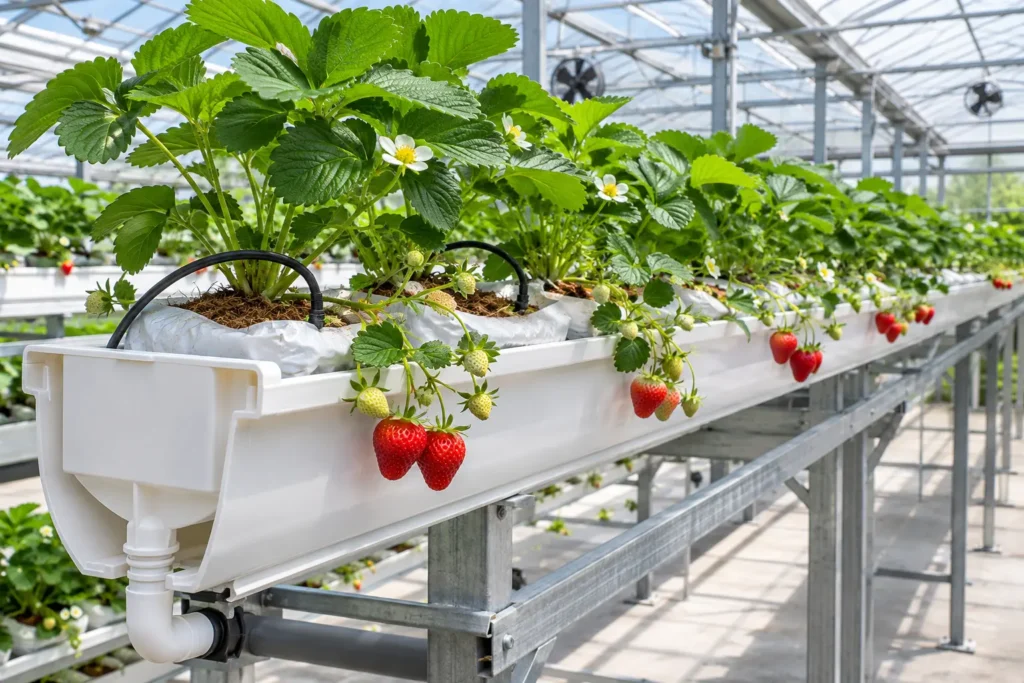
Substrate-based systems use materials such as coco coir, rockwool or other suitable soilless growing media.
Plants grow in substrate bags, slabs or loose-fill containers positioned inside or above the gutter. Water and nutrients are generally delivered through drip irrigation, while excess drainage is directed away from the growing area.
This approach offers several practical considerations:
- The substrate provides a physical root environment.
- Water and nutrients can be supplied through controlled drip irrigation.
- Substrate capacity can be matched to the growing method.
- Drainage can be collected and managed separately.
- The system can be configured for tabletop, suspended or selected vertical arrangements.
Substrate-based cultivation is an established approach in commercial controlled-environment strawberry production.
NFT Strawberry Systems
A true Nutrient Film Technique (NFT) system delivers a continuously circulating nutrient solution through the growing channel.
Unlike a substrate-based system, NFT does not rely on a substantial growing media volume to buffer the root zone.
This means pump operation, nutrient circulation and backup arrangements become particularly important.
NFT channels are widely used for leafy greens, but strawberry production has different root-zone and production-cycle requirements. It is therefore important to evaluate the actual growing method rather than selecting an NFT product based only on its name.
A 2025 comparative study published in Frontiers in Plant Science evaluated substrate, NFT, vertical and aeroponic systems for greenhouse strawberry production. The substrate system performed best in that particular experiment, while the authors noted that further testing was needed to assess the commercial scalability of alternative systems.
Quick Comparison
| Selection Factor | Substrate Gutter | True NFT Channel |
|---|---|---|
| Root environment | Growing media | Circulating nutrient solution |
| Water delivery | Usually drip irrigation | Continuous nutrient circulation |
| Root-zone buffering | Provided by substrate | More dependent on system operation |
| Main equipment | Gutter, media, drip line and drainage | Channel, pump, reservoir and circulation line |
| Main design concern | Media capacity and drainage | Flow stability and pump reliability |
| Typical consideration | Commercial substrate strawberry growing | Specialized water-culture projects |
Important: A substrate bag placed inside a PVC gutter does not automatically make the installation an NFT system. Confirm the actual water delivery method before specifying the equipment.
Common Strawberry Gutter Installation Layouts
The physical arrangement of the gutters determines how efficiently the greenhouse space can be used.
Three common configurations are worth considering.
Tabletop or Ground-Supported Gutter Systems
Tabletop systems use raised gutters supported by legs, benches or structural frames.
They are often suitable for growers who prioritize straightforward access to individual planting rows.
Potential advantages include:
- Convenient access for planting and harvesting.
- Easier inspection of individual growing rows.
- Straightforward integration with drip irrigation.
- More accessible cleaning and maintenance.
The support height, aisle width and drainage route should be established before installation.
Hanging Strawberry Gutter Systems
Hanging systems suspend growing gutters from a greenhouse support structure.
They can free up floor space and provide flexibility when arranging growing rows.
However, buyers should confirm:
- The load capacity of the greenhouse structure.
- The weight of fully loaded gutters.
- Suspension point spacing.
- Irrigation and drainage connections.
- Access for cleaning and maintenance.
A hanging arrangement should never be selected without checking the structural requirements of the greenhouse.
Vertical and A-Frame Strawberry Gutter Systems
Vertical and A-frame arrangements position growing gutters at different heights or angles.
They can make better use of available growing space, especially when floor area is limited.
However, adding more growing levels does not automatically improve production.
The design must account for:
- Light distribution across different levels.
- Plant access and harvesting positions.
- Air movement around the crop.
- Drainage from upper and lower sections.
- Structural loading.
- Irrigation distribution between rows.
For this reason, growers should evaluate usable growing area and operational access rather than comparing systems only by the number of planting positions.
How to Choose the Right Strawberry Gutter Dimensions
Gutter dimensions should be matched to the growing container, root-zone requirements and installation configuration.
A wider gutter is not necessarily better, and a smaller profile is not always more economical.
Before selecting a profile, check the following.
Gutter Width and Depth
The internal dimensions must accommodate the selected substrate bag, growing slab or loose substrate.
Check:
- Substrate bag width and height.
- Required root-zone volume.
- Planting arrangement.
- Drainage space.
- Root growth and mature plant size.
The gutter should support the growing method without unnecessarily restricting the root environment.
Profile Design
Different gutter profiles serve different applications.
Some designs include an integrated drainage board, while others are intended to hold substrate bags or growing containers.
Check whether the profile provides:
- Stable substrate support.
- Adequate drainage outlets.
- Suitable end-cap connections.
- Consistent dimensions along the entire length.
- Compatibility with the supporting structure.
Standard and Customized Lengths
Commercial greenhouse projects often require long, continuous growing rows.
Common considerations include:
- Standard section length.
- Total row length.
- Connector requirements.
- Greenhouse bay dimensions.
- Transportation and container loading.
- Replacement section availability.
Customized lengths may help reduce unnecessary joints, but transport limitations and installation requirements must also be considered.
Drainage and Irrigation: Two Critical Design Considerations
A commercial strawberry gutter should not be selected without understanding how water enters and leaves the growing system.
Drainage Design
Excess water must have a clear drainage route.
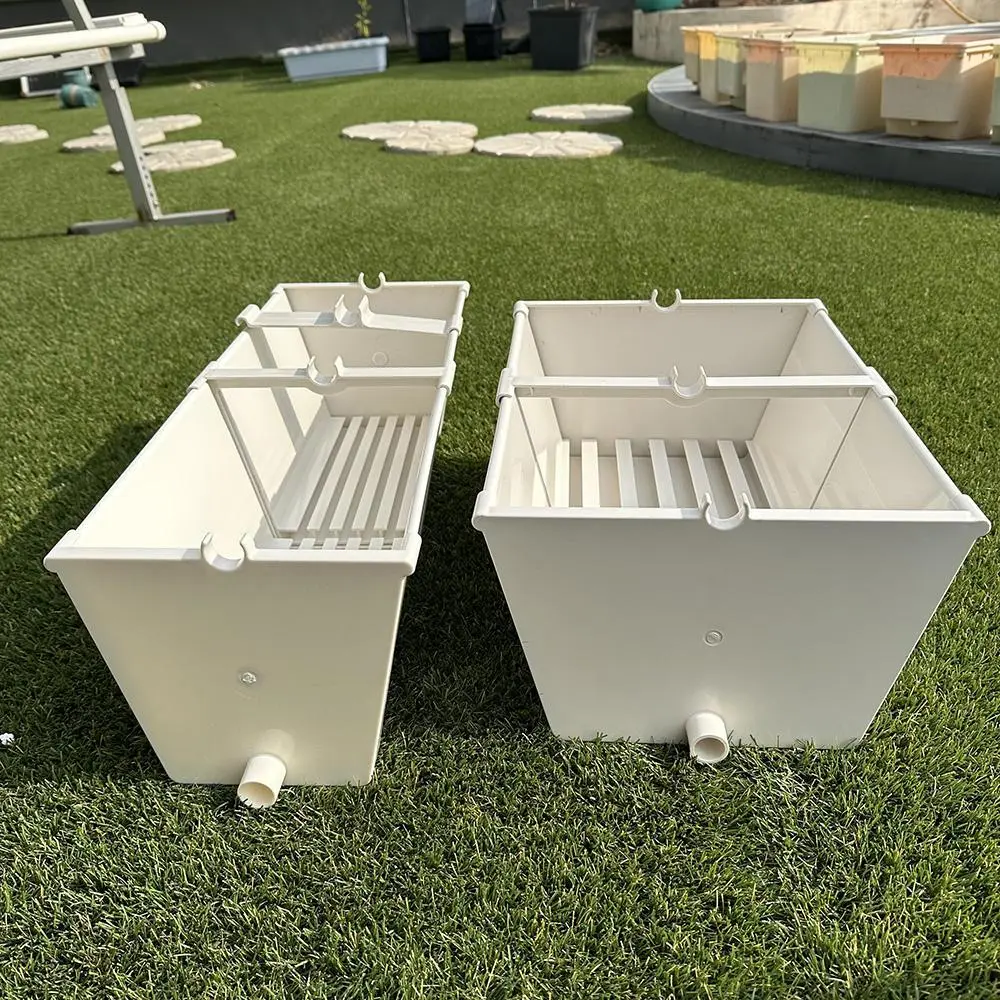
Poor drainage arrangements can result in standing water, inconsistent root-zone moisture and additional cleaning requirements.
When reviewing a gutter design, ask:
- Does the gutter include an integrated drainage board?
- Where are the drainage outlets located?
- What installation slope is required?
- How is drainage collected?
- Can the drainage components be inspected and cleaned?
- Is the system designed for recirculation or drain-to-waste operation?
The required slope should be determined by the gutter design, row length and drainage configuration.
For reference, an NC State Extension greenhouse strawberry trial used an approximately 2% slope in its particular custom tabletop installation. This is an example of one project design, not a universal specification for every commercial greenhouse.
Irrigation Distribution
Strawberry plants need a consistent irrigation and fertigation arrangement.
The irrigation system should be evaluated alongside the gutter rather than specified separately.
Important considerations include:
- Drip line positioning.
- Number and location of emitters.
- Pressure consistency across long rows.
- Filtration requirements.
- Irrigation zoning.
- Fertigation compatibility.
- Drainage monitoring.
The required irrigation schedule depends on the cultivar, growing media, plant stage and greenhouse environment.
A supplier should understand the intended irrigation arrangement before recommending the final gutter configuration.
Material Selection: PVC, Wall Thickness and Durability
The gutter material affects product weight, installation, maintenance and long-term operating conditions.
For commercial greenhouse projects, buyers should review the following specifications.
| Specification | What Buyers Should Check |
|---|---|
| Material | PVC, UPVC or other specified material |
| Wall thickness | Whether it suits the intended support and load conditions |
| UV resistance | Suitability for the intended greenhouse environment |
| Chemical compatibility | Compatibility with fertilizers and cleaning products |
| Surface finish | Ease of cleaning and maintenance |
| Food-contact documentation | Relevant material declarations or test documents |
| Certifications | RoHS or other project-specific requirements |
| Service life | Supporting test information and warranty conditions |
Do not rely on a product description alone when making a large-volume purchase.
Request the relevant technical documents and confirm that the specifications apply to the exact model being quoted.
What Affects the Total Cost of a Strawberry Gutter Project?
Comparing suppliers by the price per meter alone can lead to an incomplete purchasing decision.
A commercial strawberry gutter installation may involve several cost components.
| Cost Component | Items to Include |
|---|---|
| Growing gutters | Profile, dimensions, wall thickness and total length |
| Support structure | Legs, frames, brackets, rails or suspension components |
| Connections | End caps, connectors and fittings |
| Irrigation | Pipes, drip lines, emitters and valves |
| Drainage | Drainage boards, outlets and collection lines |
| Water management | Filters, pumps and fertigation components |
| Installation | Labor, assembly and site preparation |
| Logistics | Packing, container loading and international shipping |
| Maintenance | Replacement sections and spare components |
A more useful comparison is the total installed cost per growing row or planting position.
When comparing quotations, make sure all suppliers are pricing the same system scope.
How to Evaluate a Strawberry Gutter Supplier
A suitable supplier should understand more than the dimensions of the plastic gutter.
For commercial projects, evaluate the supplier’s ability to support the required product specifications and installation requirements.
Consider these questions:
Manufacturing capability
Can the supplier manufacture the required profile, wall thickness and section length consistently?
Customization
Can the gutter dimensions, colors, drainage features and connections be adjusted to project requirements?
Technical communication
Can the supplier review greenhouse drawings and discuss the relationship between gutter dimensions, substrate bags and support structures?
Quality documentation
Can the supplier provide relevant material information, product specifications and inspection documents?
Packing and delivery
Can the supplier prepare long PVC profiles for international transportation with suitable protective packaging?
You can also review the G&N Hydroponic factory and manufacturing capabilities before discussing a project.
G&N Hydroponic Strawberry Gutter Options
G&N Hydroponic supplies different PVC growing gutter configurations for commercial greenhouse and soilless cultivation projects.
Two product groups are particularly relevant when comparing strawberry growing equipment.
Strawberry Gutter with Drainage Board
The 13 × 19 × 17.5 cm Strawberry Gutter with Drainage Board is designed for vertical greenhouse growing applications.
The product page lists five profile sizes:
- 13 × 19 × 17.5 cm
- 14 × 19 × 16 cm
- 18 × 24 × 20 cm
- 28 × 40 × 32 cm
- 30 × 45 × 45 cm
Available length options include 2.9 m, 5.8 m and customized lengths.
The design incorporates a drainage board beneath the growing area and can be considered for ground-supported or selected vertical arrangements.
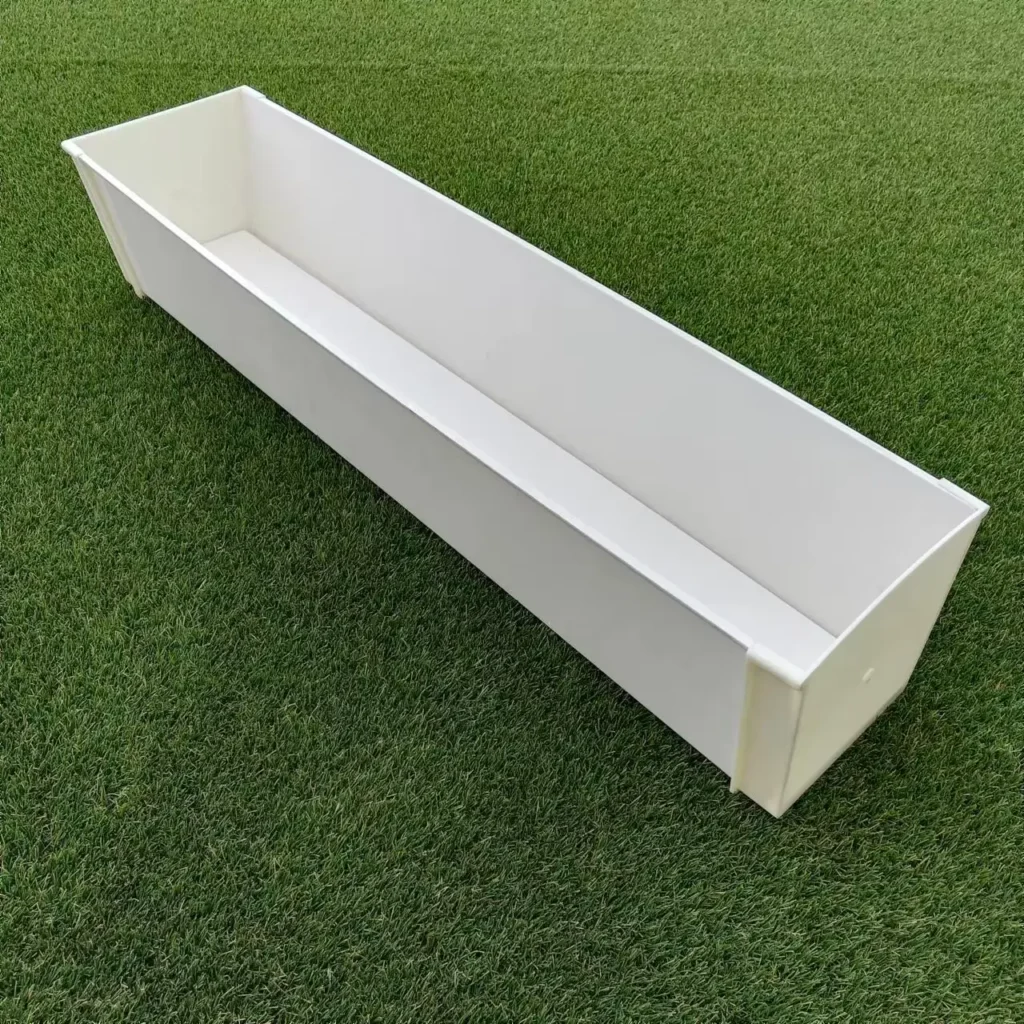
Substrate Bag Gutter
The 18.5 cm Substrate Gutter is designed to accommodate standard 150 mm substrate bags.
The listed specifications include:
- 18.5 cm profile.
- 4 mm wall thickness.
- White PVC construction.
- 2.9 m and 5.8 m standard lengths.
- Customized lengths available.
- RoHS certification.
The product is intended for substrate-based greenhouse growing and can be considered for strawberry, tomato, pepper and cucumber applications.
You can also browse the complete Strawberry Gutter product category and Substrate Gutter product category to compare the available configurations.
The appropriate model should be selected according to the substrate, plant arrangement, greenhouse dimensions and drainage requirements.
Strawberry Gutter System RFQ Checklist
Before requesting a quotation, prepare the following project information.
Project information
- Country and delivery destination.
- Greenhouse type and total growing area.
- Greenhouse bay dimensions.
- New installation or existing greenhouse upgrade.
Growing requirements
- Strawberry cultivar or intended crop.
- Substrate type.
- Substrate bag or slab dimensions.
- Target planting arrangement.
- Preferred growing layout.
Equipment requirements
- Gutter profile and dimensions.
- Required wall thickness and material.
- Standard or customized lengths.
- Total row length and estimated quantity.
- Support structure requirements.
- Drainage boards and connection fittings.
Irrigation requirements
- Drip irrigation configuration.
- Required irrigation zones.
- Filtration and fertigation scope.
- Drainage collection or recirculation requirements.
Commercial requirements
- Estimated order quantity.
- Required certifications.
- Sample requirements.
- Packing and shipping destination.
- Expected delivery schedule.
If available, include greenhouse drawings, installation photographs or a preliminary system layout.
This information helps suppliers understand the actual project rather than simply quoting a product by its name.
Frequently Asked Questions
What is the difference between a strawberry gutter and a substrate gutter?
A strawberry gutter is a broader term for a growing channel designed for strawberry production. A substrate gutter specifically accommodates growing media, substrate bags or slabs. The actual design and irrigation method should be checked before selecting a product.
Are strawberry gutter systems suitable for commercial greenhouses?
Yes. Raised, tabletop and hanging gutter arrangements are used in commercial greenhouse strawberry production. The suitable configuration depends on greenhouse dimensions, crop requirements, drainage and support structure.
What material is commonly used for strawberry growing gutters?
PVC and other specified materials can be used depending on the system design. Buyers should check material quality, wall thickness, UV resistance, chemical compatibility and relevant documentation before purchasing.
How do I choose the correct strawberry gutter size?
Start with the substrate bag or growing media dimensions, required root-zone capacity and planting arrangement. Then confirm gutter width, depth, drainage design, support spacing and installation requirements with the supplier.
What information is needed to get a commercial strawberry gutter quotation?
Provide the greenhouse dimensions, crop type, substrate specifications, preferred gutter arrangement, required quantities, irrigation and drainage requirements, and delivery destination. A layout drawing can make the quotation process more accurate.
Planning a Commercial Strawberry Growing Project?
The right strawberry gutter configuration should match your growing method, greenhouse structure and long-term operating requirements.
Whether you need PVC strawberry gutters, substrate bag gutters or customized growing channel configurations, G&N Hydroponic can discuss suitable equipment options for your project.
Share your greenhouse dimensions, substrate specifications, preferred layout and estimated quantity with our team.