Most NFT bays are quoted by total channel metres and then hung on whatever bracket the installer had in the van. That is where sag begins. NFT channel support brackets decide whether a long run still holds its slope after two seasons, whether a loaded channel can be lifted clear for cleaning, and whether the fixing survives years of humidity. This article covers the load each point carries, the spacing that keeps deflection out of sight, the bracket forms in common use, and how the 100×50mm and 73×62mm profiles change the answer.
It is written for engineering teams specifying or re-fitting channel runs on commercial sites, where a soft support shows up as standing solution, uneven crop and long clean-outs.
What Load Does One Support Point Actually Carry
Each hanger carries the wet weight of the channel, the solution inside it, the crop and the root mat, plus a margin for service loads. Sizing brackets from the dry weight of an empty extrusion is the most common specification error on new installations.
The load is not static. It builds through the crop cycle, spikes when a channel is flushed or an outlet blocks, and changes again when the canopy is cut:
- Channel self-weight: a function of profile and wall thickness, taken from the extrusion data rather than outer dimensions.
- Solution volume: normally a shallow film, but a blocked outlet can fill the section well above its working level.
- Crop and root mass: rises through the cycle, and a dense root mat retains water after flow stops.
- Service load: a lid being lifted or a hand on the channel during clean-out.
As a planning range, project teams commonly work in the order of several kilograms per running metre for a 100×50mm channel at full canopy, assuming a mature leafy crop, a working nutrient film and an established root mat. Confirm it against the actual profile, wall thickness and crop; it rises sharply if outlets block.
Bracket ratings are working load limits, not failure loads. Specifying at the rating leaves no allowance for corrosion, fatigue or accidental service loads.
How Hanger Spacing Sets the Sag You Live With
Sag is governed by span more than by bracket strength. Halving the support spacing reduces deflection substantially more than doubling the rating of the same bracket, and it is usually the cheaper change.
Spacing in the region of 1.0–1.5 m is a common planning range for suspended PVC runs at working load, assuming a saddle bearing along the channel and a lid throughout. Longer spans need checking at summer temperature, not at installation temperature.
PVC loses stiffness as it warms, so a run that looks straight on a cool morning can show low spots by the afternoon. Those collect standing solution, dry shoulders at the high points, root mats that dam the flow, and lids that no longer seat.
Slope and flow behaviour interact with this directly. A channel that has lost its fall will not deliver the flow rate the design assumed whatever the pump does upstream; the relationship is set out in the NFT channel layout, slope and flow rate guide, which belongs alongside the support specification rather than after it.
Bracket Forms: Hanger, Cantilever and Rack Cradle
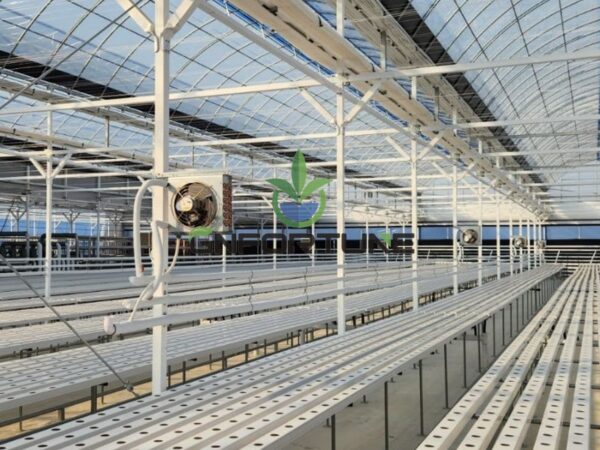
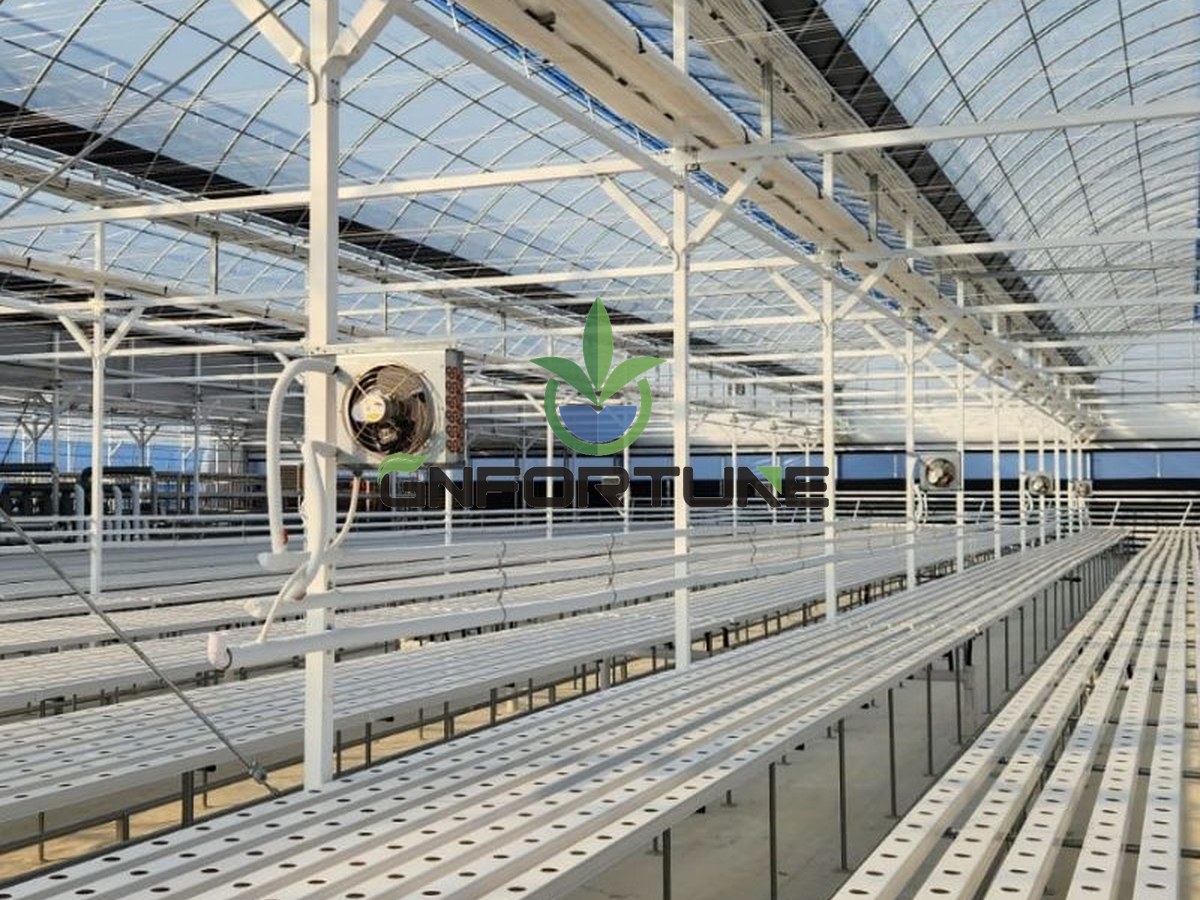
Three families cover most commercial work: a suspended hanger, a cantilever bracket off a structural member, and a cradle sitting on a rack. The choice is made by what the structure offers, then checked against load.
| Form | How it carries load | Typical use | What to check |
|---|---|---|---|
| Drop hanger with saddle | Threaded rod from purlin or truss, channel cradled in a saddle | Long suspended runs, adjustable height | Rod diameter, nut locking, saddle bearing width |
| Cantilever wall or post bracket | Arm fixed to a column, side rail or wall | Single rows against a wall, perimeter lines | Arm deflection, fixings, corrosion at the plate |
| Rack-mounted cradle | Channel rests on a rack member or clip | Multi-tier builds, gutter systems | Rack member stiffness, clip retention, access |
| Light clip-in pipe hanger | Clip grips the profile directly | Short runs, light crops | Pull-out load, grip when wet, UV life |
Access decides more than load in practice. A saddle that lets a channel lift straight out saves hours at every clean-out; one that traps the profile means sliding the channel out lengthways.
100×50mm vs 73×62mm MGS: What Changes
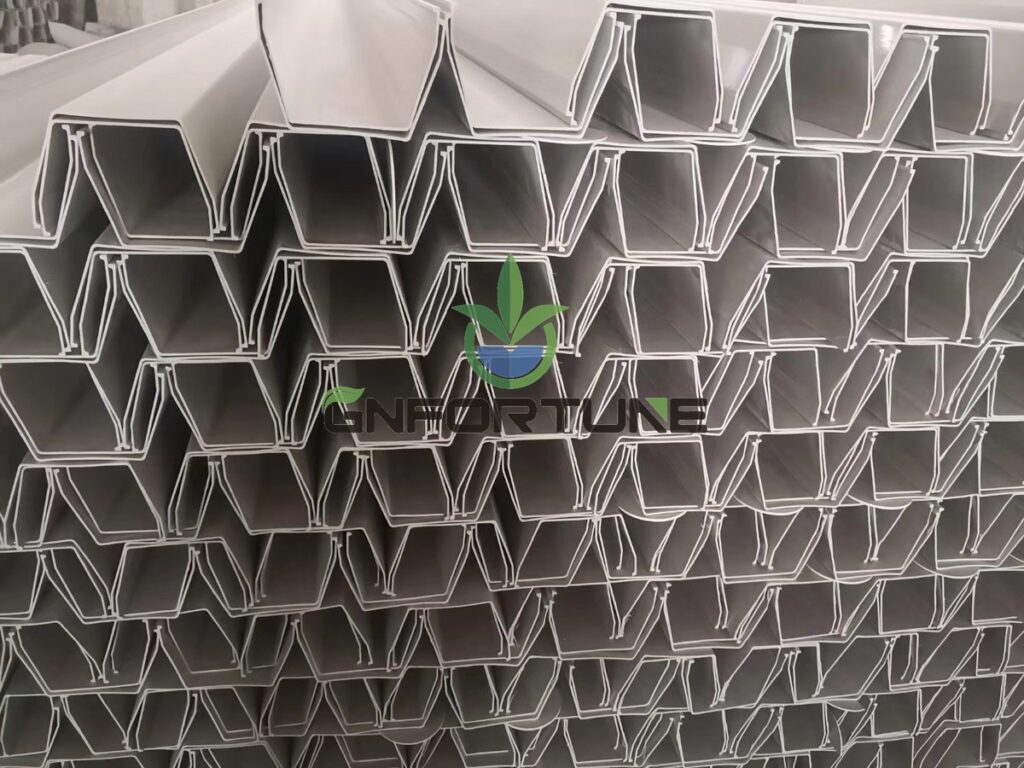
The larger section carries more solution and crop per metre and needs a wider bearing surface; the 100×50mm is lighter but deflects sooner if the span is stretched. Brackets are not interchangeable across the two without checking the saddle profile.
- Bearing width: a saddle cut for one profile will pinch or over-spread the other, and a pinched section cracks under thermal movement.
- Load per point: the bigger section’s wet running weight is higher at comparable canopy, so the same spacing puts more on each hanger.
Profile and support choice belong in the same conversation; the dimensional side is covered in the 100×50mm vs 73×62mm channel comparison.
Adjustable Height and Finding the Slope
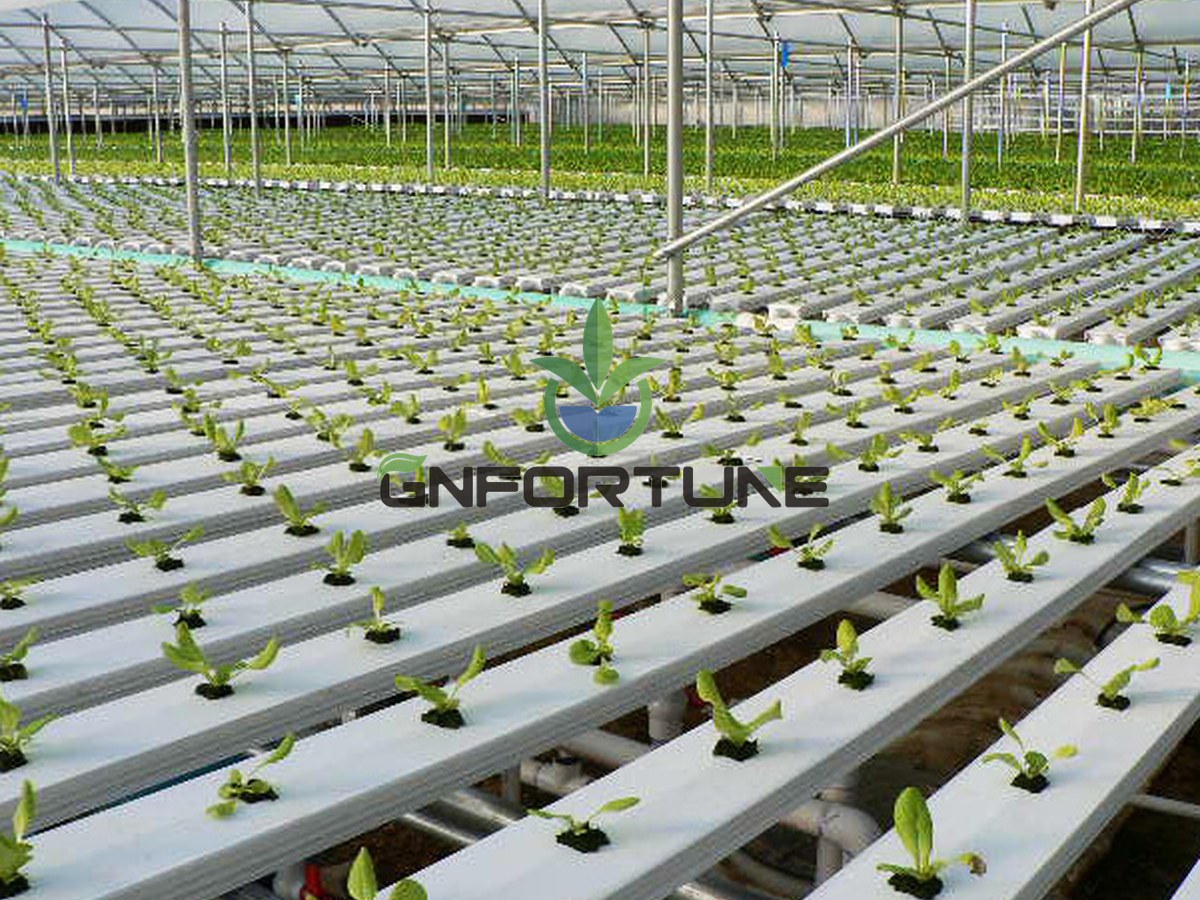
Adjustable hangers exist to set the fall, but every adjustment feature is also a slip risk. What holds a slope for years is a locking nut, a serrated saddle face or a second fixing point rather than friction alone.
NFT runs are commonly planned with a fall in the 1–2% band, with the actual figure set by run length, target flow rate and crop. That belongs in the installation drawing, not in the installer’s judgement on the day.
- Set the adjustment range so the whole run can be brought to fall without any hanger reaching the end of its thread.
- Allow for thermal movement, because long PVC runs expand and contract and rigid clamping turns that into buckling.
- Re-check the fall after the first season, since structures settle and fixings bed in.
Installation Errors That Surface a Season Later
The failures reaching support hardware are usually fixing and material errors rather than strength errors. The recurring ones on site:
- Fixing into the wrong member: a film lock channel or light rail is not structure.
- Mixed metals in a wet house: stainless against galvanised, or the reverse, corrodes at the contact point.
- Brackets set before a survey: without a level reference the run steps from bay to bay.
- No allowance for the lid: lids need clearance to open or lift.
- Over-tightened clamps: crushing a PVC profile at the hanger is a crack waiting for the first cold morning.
- Spacing varied around obstructions: the long span over a service drop is exactly where sag appears.
Commissioning should include a walk of every run with channels full, looking for standing water and brackets showing gaps at the saddle.
Specifying NFT Channel Support Brackets in an RFQ
Ask for support hardware as its own line item with its own specification, not as a bundled accessory. A supplier needs the following to size it:
- Channel profile, wall thickness and whether a lid is fitted, with run lengths and number of runs.
- Proposed hanger spacing and the working load per point required.
- What the brackets fix into: truss, purlin, column, wall or rack member, and that member’s material.
- Corrosion requirement for the house environment, including the sanitiser used in clean-down.
- Vertical adjustment range needed, and whether channels must lift out for cleaning.
On multi-tier projects the support question merges into the rack question and the two are best resolved together; the structural side sits under hydroponic rack systems.
G AND N FORTUNE LIMITED extrudes NFT channels in 100×50mm and 73×62mm MGS profiles and supplies matching hanging hardware, quoted against the run lengths, spacing and structure you specify.
FAQs About NFT Channel Support Brackets
How far apart should NFT channel hangers be?
Spacing in the region of 1.0–1.5 m is a common planning range for suspended PVC runs at working load, assuming a saddle bearing along the channel and a lid throughout. Shorten the span if deflection shows.
Can one bracket serve both 100×50mm and 73×62mm channels?
Only if the saddle profile and load rating suit both. A saddle cut for one section will pinch or over-spread the other, and the larger section puts more wet weight on the same spacing. Confirm the saddle radius against the actual profile before ordering.
Should channels be hung from the structure or sat on racks?
Hanging suits long single-level runs where slope adjustment matters; racks suit multi-tier builds where the tier member already carries the load. Cleaning access often decides it.
How much load margin should a bracket have?
Specify against a working load limit comfortably above the calculated wet load; the difference is your allowance for corrosion, fatigue and accidental service loads.
Do adjustable hangers lose their setting over time?
They can, if the adjustment relies on friction. Locking nuts or serrated faces hold a slope better, and the fall should be re-checked after the first season regardless.
Related Reading
- How to Install NFT Channels: Layout, Slope and Flow Rate Guide — How slope and flow rate are set, and why support spacing feeds into both
- NFT Channel Sizes: 100×50mm vs 73×62mm Compared — The dimensional and capacity differences that change bracket choice
- How PVC NFT Channels Are Extruded: Wall Thickness, UV Stability and the Tolerances That Matter — Why wall thickness and tolerance affect stiffness, sag and hanger grip
- Hydroponic Rack Systems: Multi-Layer Beds, Shelves and Racks — Where rack members replace hangers and what that does to access
- Hydroponic System Commissioning: Installation Sequence, Testing and Site Acceptance — Checks that catch standing water and mis-set brackets before handover
Next Step: What to Send for a Quotation
NFT channel support brackets are a small line item that decides whether a bay drains properly. They are quoted from the run layout, so a bay drawing has to exist before any number is reliable.
Specifying channel runs? For RFQ or project consultation, send: greenhouse dimensions and available bay area; channel profile, wall thickness and lid type; run lengths, number of runs and proposed hanger spacing; what the brackets fix into and that member’s material; single level or multi-tier layout; crop and target plant spacing; corrosion and sanitiser environment; local climate range; automation level requested; delivery schedule; and the budget band. G AND N FORTUNE LIMITED supplies NFT channels and matching support hardware quoted to those parameters.