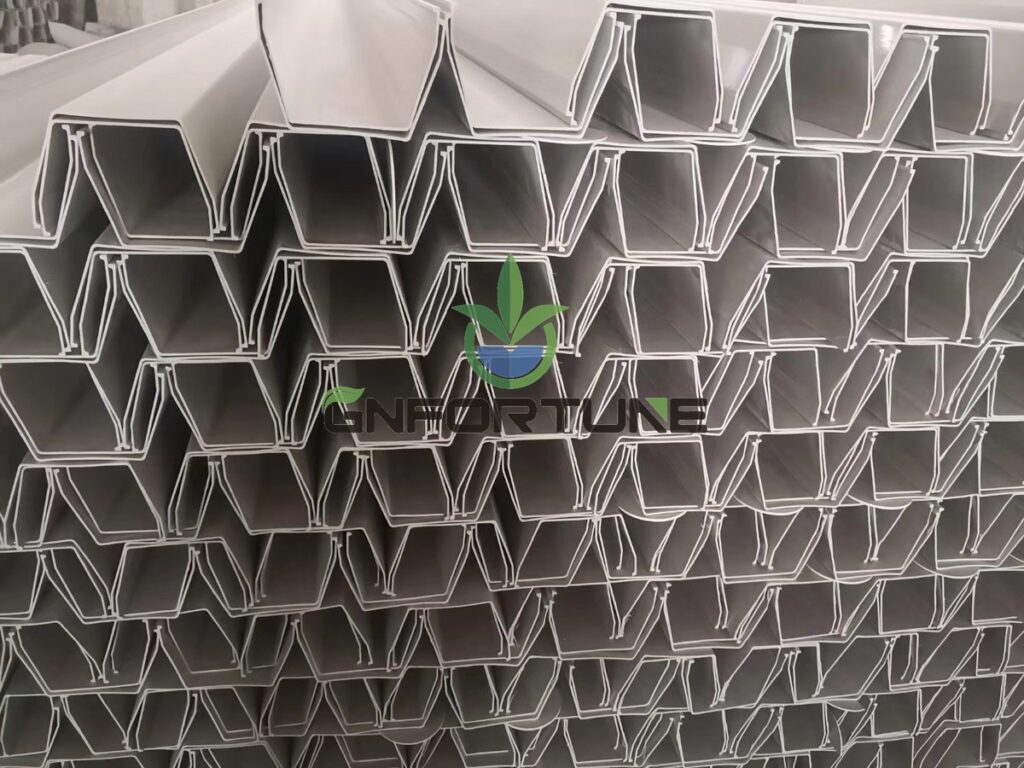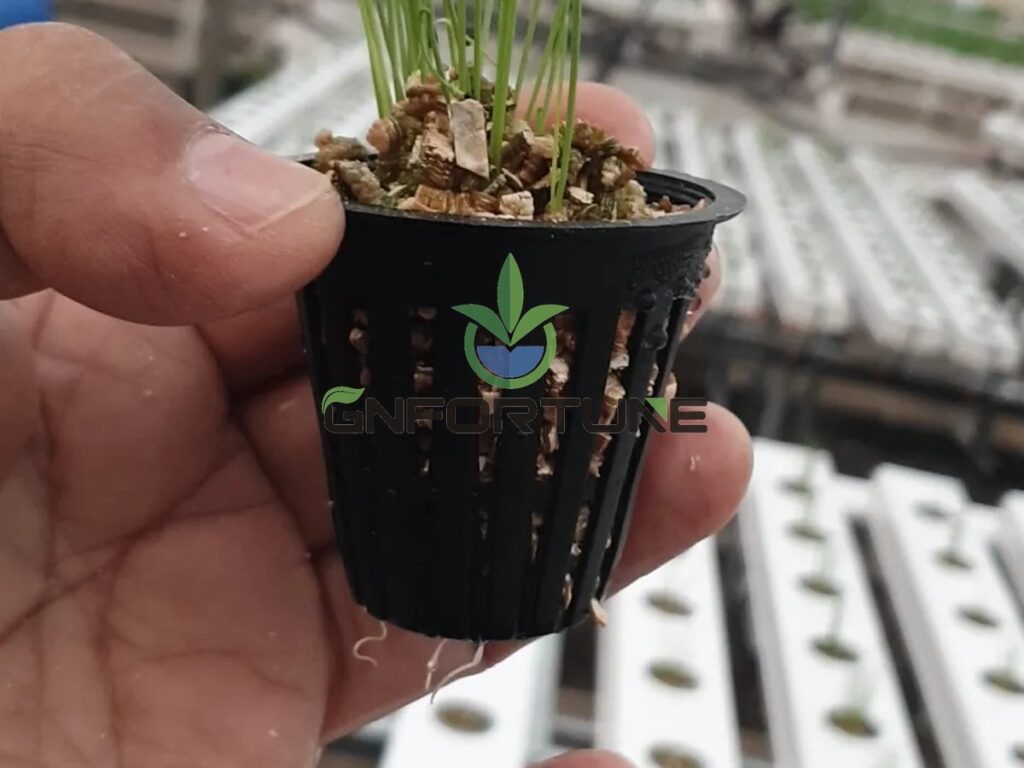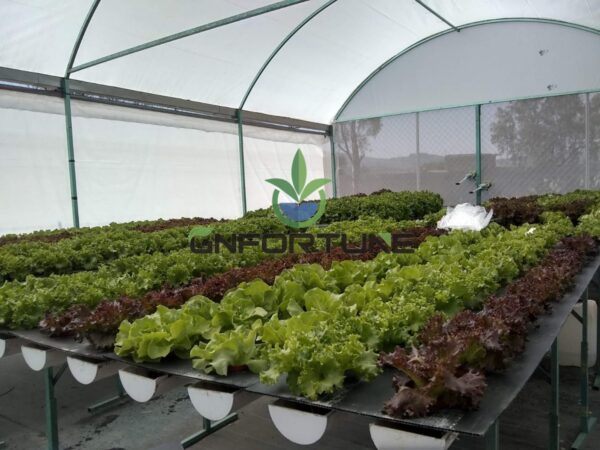
NFT channel lids are usually the last line on a channel order and the first place a thin specification shows up. A lid decides how much light reaches the nutrient, how warm the channel runs, how far apart plants sit, and how long a crew spends opening a bay. Buyers who compare only price per metre end up with covers that fit badly, crack in the second season, or slow every inspection. This guide treats the lid as a purchased component with its own sheet of specifications.
It is written for procurement and project teams, where two quotes often differ by the lid rather than the channel.
What an NFT Channel Lid Is Actually Doing
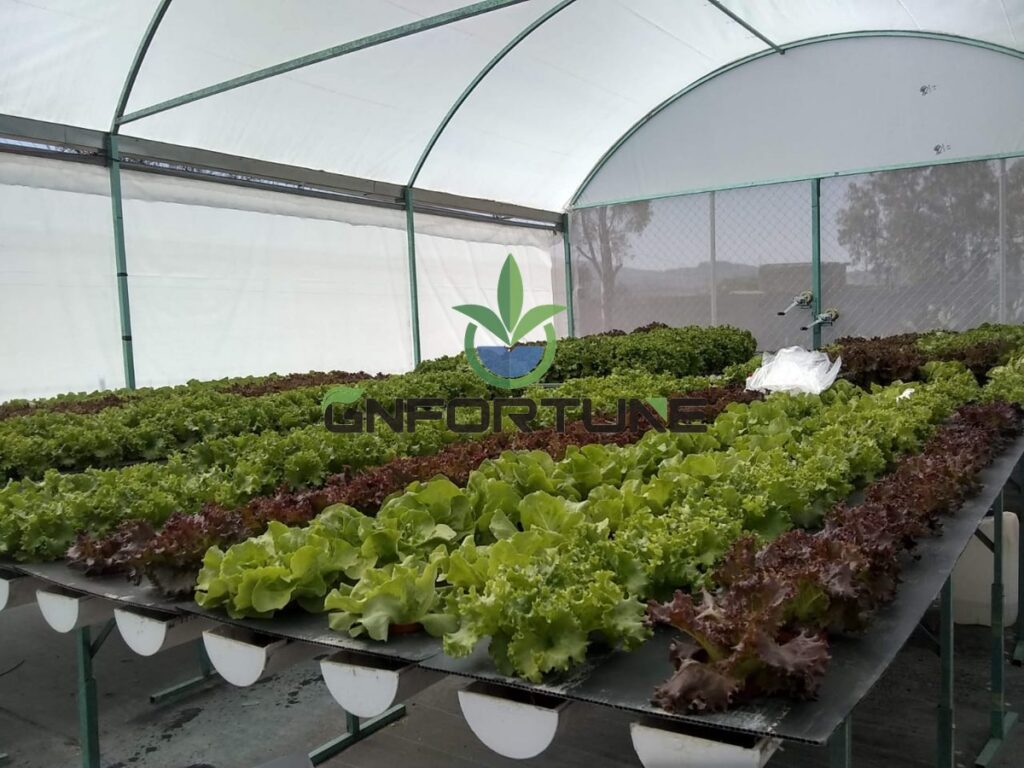
A lid closes the channel, locates each plant at a fixed position, and keeps the root zone dark. Those three jobs are the specification; everything else describes how well they are done.
Light exclusion is the commercial reason most lids exist. Solution moving through an open channel is a habitat, and a cover with gaps at the ends or oversized holes undoes an opaque sheet. The joint matters as much as the flat surface.
The second job is mechanical. A plug sits in a hole of a stated diameter at a stated pitch, and that pitch sets plants per metre for the life of the channel. The third is thermal: the lid separates the film from aisle air, changing evaporation and radiant heat gain.
Clip-On or Hinged: What Changes for the Crew
Clip-on lids lift off completely; hinged lids stay attached along one edge and fold back. Clip-on is cheaper per metre and simpler to replace in sections, while a hinged lid NFT channel costs more but opens one-handed where crews inspect roots often.
| Factor | Clip-on (lift-off) | Hinged (integral hinge) |
|---|---|---|
| Unit price | Lower, simpler profile | Higher, more complex profile |
| Inspection speed | Two hands, one lid at a time | One hand, faster along a row |
| Cleaning | Stacks flat, easy to wash in racks | Hinge line traps debris and biofilm |
| Typical failure | Cracked clip tabs, lids lost off-site | Hinge fatigue, split along the fold |
| Best fit | Whole-bay harvest, low inspection frequency | Frequent root checks, high labour cost |
The decision follows inspection frequency and harvest method rather than crop. A finishing bay cut once per cycle rarely justifies a hinge; a propagation or trial bay opened several times a week often does. Ask for a hinge sample that has been cycled and folded back flat, because the fold is where a cheap profile fails.
Colour, Opacity and Light Exclusion
White lids reflect more radiation and run cooler than black ones, and neither colour compensates for a translucent sheet. For light exclusion in NFT, the sheet must be opaque first and the colour chosen second.
Opacity is a property of the sheet; light exclusion is a property of the assembly. A fully opaque lid with 45 mm holes, a loose clip and open channel ends still admits light along every row, and an algae control channel lid only performs where the fit is tight. When a supplier quotes “100% opaque”, ask for the transmission figure and test method, then check a sample over a lamp.
Colour stability deserves its own line. A white cover that chalks and yellows is still opaque, but the change usually signals a weak UV package, and that batch embrittles at the clip tabs first.
Plant Holes: Diameter, Pitch and Position
Holes should match the plug, cube or net pot the nursery actually produces, and the pitch should match the planting density in the crop plan. Both are fixed once the tooling is cut, so they belong in the enquiry rather than the follow-up email.
For lettuce and Asian greens in a 100×50 mm channel, hole diameters commonly fall in a 30–45 mm planning range, depending on whether the grower uses a net pot, a rockwool cube or a bare plug. The upper end suits a pot collar; the lower end suits a plug with a firm root ball.
Position is the part buyers query least and regret most. Centreline holes suit flat benches, offset holes suit channels set at an angle, and holes too close to the edge leave a thin ligament that cracks at harvest. Tolerance drives labour: a hole 2 mm oversized lets plugs wobble, one undersized adds seconds to every plant.
Material, UV Grade and Wall Thickness
Lids are usually extruded in PS, PP or PVC, and the polymer name explains less than the UV stabiliser package, the recycled content and the wall thickness tolerance.
- UV declaration: ask for the stabiliser type and expected outdoor service life, noting that life depends on latitude, shade and cleaning chemicals.
- Recycled content: a declared percentage is acceptable on many sites, but expect colour variation and faster embrittlement at thin sections.
- Wall thickness: a 1.0–1.8 mm planning range covers most commercial profiles; thin lids sag between supports, thick lids add weight and cost.
Thickness also carries a tolerance, and the tolerance is what gets delivered. Ask for the minimum wall at the clip tab, the section that carries the load every time the lid opens.
Heat, Condensation and Root-Zone Temperature
A lid changes channel temperature in two ways: it reflects or absorbs incoming radiation, and it traps humid air above the nutrient film. The second effect is the one buyers forget, and it shows up as condensation under a sagging cover.
A white surface under the same radiation typically runs cooler than a black one, but the difference shrinks under shade screen, high airflow or a chilled solution. Treat colour as one input to root-zone temperature alongside shading, ventilation and chiller capacity.
Condensate that collects and drips onto crowns is a disease pathway, and a lid that bows between supports collects it. Stiffness and clip spacing matter more here than another tenth of a millimetre of sheet.
Removal, Cleaning and the Spare Ratio
Budget the handling before the price. A lid that needs two people and a tool to open costs more across a season than the gap between two quotes.
Cleaning is a storage problem as much as a washing problem. Clip-on lids stack on racks and wash with the channels; hinged lids stay attached and present a fold line that traps debris.
Carry spares from the first order. A 3–5% extra allowance, plus a box of end pieces, assumes whole-bay manual harvest; sites using grabs or dropping lids into bulk bins should plan higher.
What to Confirm Before Ordering
Put these on the purchase specification rather than in conversation, because each one is a place where a cheaper bid quietly differs:
- Channel profile and locking method, matched to 100×50 mm, 73×62 mm MGS or your own extrusion, with a sample fitted to a production channel.
- Opening type, clip force and hinge cycle count if hinged, tested on the sample rather than described in a brochure.
- Sheet light transmission figure and test method, plus how the ends and joints are closed.
- Hole diameter, pitch, position and tolerance, referenced to the plug or pot you will plant.
- UV stabiliser declaration, recycled content percentage and minimum wall at the clip tab.
- Colour reference sample, length tolerance and end treatment, since a 5 mm short lid leaves a light gap on every row.
- Spare ratio, packaging, stack height, warranty terms on embrittlement, and the claim route in writing.
FAQs About NFT Channel Lids
Are lids necessary on an NFT channel?
For most commercial leafy production, yes: they exclude light from the nutrient and hold plants at a repeatable spacing. Short-cycle crops in a very clean house can run partly open, but cleaning frequency and algal risk rise.
Do white lids keep the solution cooler?
They reflect more radiation than black lids, so the surface runs cooler under direct light. The size of the difference depends on radiation, airflow, shade and chilling, so the lid supports a cooling strategy rather than replacing one.
Can we retrofit lids onto channels we already own?
Yes, if the profile matches the channel shoulder and the existing clip feature. Fit a sample to a production channel first, because a lid that sits slightly high fouls the joint and lifts at the ends.
What hole size should we use for lettuce?
Match the hole to the plug or pot, which for many lettuce programmes lands in a 30–45 mm planning range. Holes sized for convenience rather than for the plug cost labour at planting and light exclusion later.
How many spare lids should we hold?
A 3–5% allowance is a reasonable start for clip-on lids under manual harvest. Sites that handle lids in bulk bins or open bays often should plan higher and hold one spare row set.
Related Reading
- How to Control Algae in NFT and Ebb & Flow Systems — Algae control, which is the reason light exclusion matters
- Patented NFT Channel Design: What the Curved Base Does — What the curved channel base does, and the lid geometry that fits it
- NFT Channel Sizes: 100x50mm vs 73x62mm Compared — Channel sizes compared, and the matching cover widths
- How PVC NFT Channels Are Extruded: Wall Thickness, UV Stability and the Tolerances That Matter — Wall thickness, UV stability and the tolerances a lid has to bridge
- Food-Safe Materials in Hydroponics: UPVC, RoHS Certification — UPVC and RoHS: what food contact claims actually mean
Next Step: What to Send for a Quotation
NFT channel lids are priced on tooling, thickness, hole pattern and quantity, so a quote without those four items is only an estimate.
For RFQ or project consultation, send: greenhouse dimensions and growing area; channel profile and wall thickness, or the model you are matching; crop and plug or pot type; hole diameter, pitch and rows per channel; opening type preferred; lid colour and opacity requirement; target quantity and spare allowance; local climate and UV exposure; delivery schedule; and the budget band. G AND N FORTUNE LIMITED extrudes and moulds NFT channels and matching covers in-house, including lids for 100×50 mm and 73×62 mm MGS profiles, quoted to those parameters.