Water hammer is why a fitting that held for two years fails in one afternoon. A valve closes, the moving column of water stops, and the energy goes into the pipe wall as a pressure spike — the bang crews hear when the first zone fires at 6 a.m. Water hammer hydroponics failures follow a recognisable pattern: fast solenoid closures, pump starts against a full main, and pipework that was never restrained. The visible results are split tees, blown end caps, emitters pushed out of laterals, and joints that leak again the week after they were re-made.
This is from the commissioning side — what to look for, and which fixes hold up after handover.
What a Pressure Spike Looks Like on a Farm
It presents as noise, movement and repeated failures in the same places. A pressure spike irrigation event is brief — from a fraction of a second up to a couple of seconds — so the crew usually sees the damage rather than the event itself.
- A bang or thud at valve closure or pump stop, described as the pipe kicking.
- Visible pipe movement on long runs, with clips rattling loose.
- Split tees and cracked end caps, joints that separate rather than weep.
- Emitters pushed out of thin-wall laterals.
- A gauge needle swinging past working pressure, then settling.
- The same joint failing twice — the signature; steady over-pressure fails many at once.
Steady over-pressure is a different fault with a different fix. It points to a regulator, a pump setting or a blocked downstream line, and it shows as continuous pressure rather than a transient tied to a switching event.
Water Hammer Hydroponics: Where the Pressure Spike Comes From
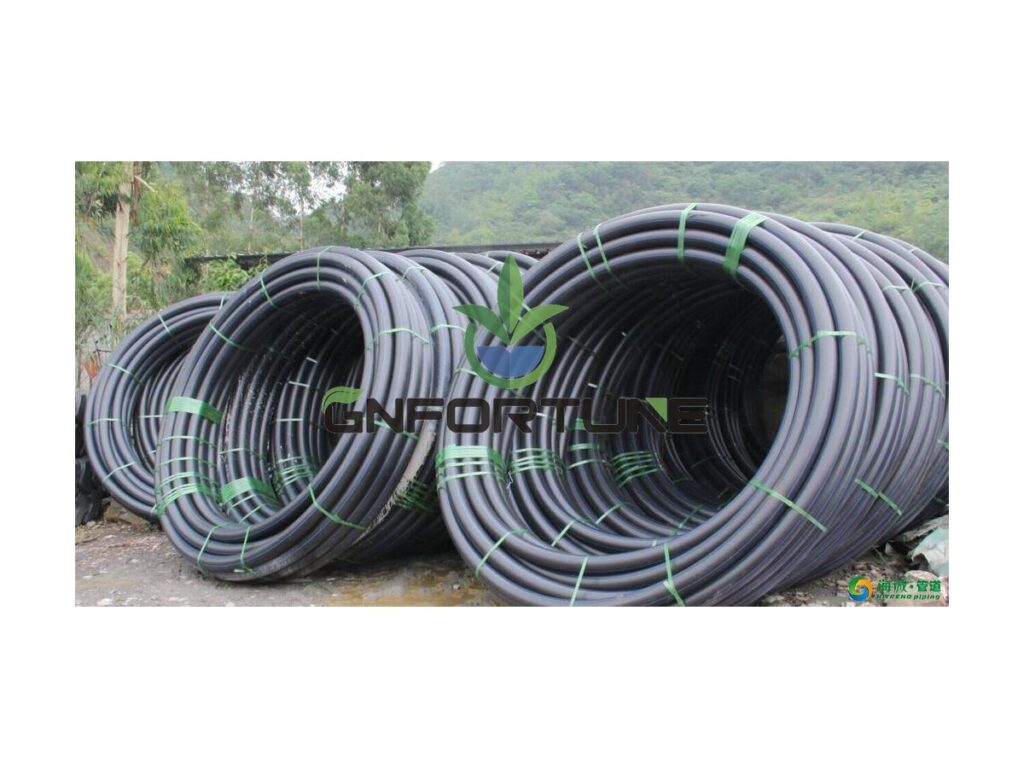
A spike comes from a change in water velocity that happens faster than the system can absorb it. The momentum of the moving column has to go somewhere, and it goes into the pipe wall, the fittings and the supports.
- Solenoid valve slam: the classic source in zone-irrigated houses — a small-orifice valve closing fast on a long run.
- Pump starts and stops: starting against an empty main accelerates the column; power loss lets it run back.
- Check valves: a swing check slamming shut on reversal adds its own spike.
- Long straight runs: more momentum, so the same closure hits harder.
- Trapped air: compresses and releases, and makes runs rattle at moderate pressure.
- High velocity: an undersized main raises both momentum and peak.
Mains sized on average flow rather than peak demand run fast when two zones call together, exactly when valves switch — see pump sizing.
Velocity, Pipe Size and Pressure Rating
Keep velocity inside a planning band and leave headroom on the rating. For thermoplastic mains on intermittent duty with clean water, 1.5–2.5 m/s is a common band; check it against actual peak flow rather than adopting it as a rule.
The rating question is whether the pipe class leaves room above the highest transient, not merely above working pressure. Pressure rating PE pipe is quoted as a PN class at a reference temperature, and allowable pressure falls as water warms — relevant where a main sits in warm greenhouse air. Confirm the derating curve with the supplier and state the maximum water temperature in the enquiry.
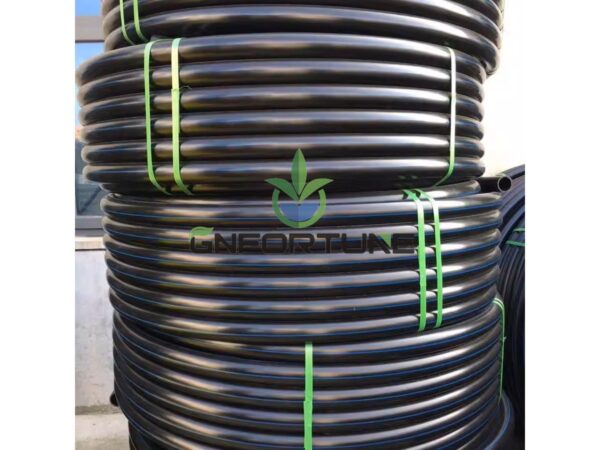
Material changes the failure mode. PE is flexible and absorbs some energy but needs continuous support; PVC is stiffer and fails at joints and solvent welds. The trade-offs are set out in the PVC versus PE mains comparison, and support conventions under pipework and manifold layout.
Slowing the Valve, Softening the Start
Most spikes are removed by changing how fast things close and start, not by fitting stronger pipe. The measures below are ordered by how often they solve the problem on their own.
- Slow-closing valves: solenoids with damped or adjustable closure; a fraction of a second is the difference.
- Staggered starts: offset zone actuation by a few seconds so two columns never start together.
- Ramped pump start: a soft starter or VFD brings the column up over seconds, and ramps down too.
- Closure sequence: ramp the pump down before the last zone closes, not a valve slammed against a running pump.
- Non-slam check valves: spring-loaded or damped types wherever reversal is possible.
- An air chamber: a compressible cushion for the column, sized to the line and re-checked periodically.
Valve specification belongs in the schedule, not on site: voltage, normally open or closed, orifice size, closing time and working differential. What to confirm is listed in the pipe fittings and micro irrigation components guides.
Supports, Anchors and Trapped Air

Restraint and venting are the cheap half of the fix, and the half most often skipped because nothing looks wrong at commissioning. Most pipe surge greenhouse damage starts at a run that was never restrained, and a run that can move eventually works a joint loose however good the valve is.
- Clip spacing: anchor horizontal PE mains at roughly 1.0–1.5 m, tighter near valves and bends; confirm against diameter, wall temperature and clip type.
- Anchor points: both sides of every solenoid, at each bend and tee, and at run ends.
- Pump connections: flexible connectors stop vibration, not surge — anchor the pipe on both sides.
- Air release and vacuum breakers: at high points, so a pocket cannot compress and a draining line cannot collapse.
- Fill procedure: fill slowly and purge air before any full-flow test.
Layflat and hose runs need the same treatment; they move more than rigid pipe and are often laid loose. The layflat buying specs cover what to check where hose is a main.
Commissioning Checks and What to Put in the Spec
Test before the crop goes in, with a gauge at the far end of the longest run.
- Record working pressure at rest, then close the furthest zone and record the peak.
- Start and stop the pump against the same gauge and record both peaks.
- Walk the run during each event and note any movement at anchors and bends.
- Purge air, repeat the tests, and compare — a large difference means trapped air is part of the problem.
- Compare the highest peak against the pipe rating at the site’s maximum water temperature.
The specification list is short: pipe material and PN class with derating temperature, valve closing time, pump ramp time, clip spacing, air release and drain points, and any surge device with its size. Those items make commissioning and site acceptance a test rather than a walkthrough.
Diagnosing water hammer hydroponics complaints is pattern matching: a bang at a fixed time each morning points at a valve, a bang at power loss at a check valve or pump stop, and clustered failures at one bend point to restraint.
FAQs About Water Hammer in Hydroponics
What causes water hammer in a hydroponic system?
A fast change in water velocity — usually a solenoid closing quickly, a pump starting against a full main, or a check valve slamming on reversal; velocity and unrestrained pipe decide the damage.
Can pressure spikes burst PE pipe?
Fittings and joints usually fail first, since the pipe wall is more tolerant. Repeated spikes against a rating with no headroom can split the pipe, and the risk rises as the PE warms.
Do air chambers need maintenance?
Yes. The cushion is lost once the chamber fills with water, after which it does nothing. Chambers need a periodic check; the interval depends on design and how often the line is drained.
Will a pressure regulator stop a spike?
No. A regulator controls steady downstream pressure and does not react fast enough to a transient lasting a fraction of a second; repeated spikes can damage it instead.
How do we tell water hammer from over-pressure?
Watch a gauge through a switching event. A peak that returns to normal within a second or two is surge; pressure that stays high points at the pump setting or a blockage.
Related Reading
- Irrigation Filtration: Screen vs Disc vs Sand Filter — Filtration upstream, and how a blocked filter changes line behaviour
- Auto-Dosing Systems for Hydroponics: When and What to Buy — Dosing and valve hardware that sits on the same pressurised main
- PVC vs PE Pipe for Irrigation Mains: Which Wins — PVC versus PE mains, and the pressure ratings that matter
- Hydroponic Pump Sizing: Flow Rate, Head Pressure & Redundancy for Commercial Systems — Flow rate, head pressure and why pump starts are a surge source
- Agricultural Irrigation Pipe Fittings: Types and Sizing — Fitting types and sizing, which is where leaks usually start
Next Step: What to Send for a Quotation
Surge control is quoted from a pipe schedule and valve specification, not from a house size. Asked for a standard irrigation package, a supplier sizes the main on average flow.
Specifying or troubleshooting a system with surge problems? For RFQ or project consultation, send: greenhouse dimensions and usable area; crop plan and zone count; peak simultaneous flow and working pressure; pipe material and PN requirement; maximum water temperature at the main; valve voltage, orifice and closing time; pump type with soft-start or VFD; automation level; delivery schedule; and the budget band. G AND N FORTUNE LIMITED supplies NFT channels, DWC systems and greenhouse packages with pipe schedules, valve sets and supports quoted to those parameters.