
Tomato Clips and Trellis Hardware: Buying Specs
Tomato clips are a small line in a greenhouse budget and a large one on the labour sheet. A vine crop is trained every week of a nine or ten month season, and the clip is what holds the stem to the twine and the truss off the ground. Buying on price per thousand, without a grip range, a load rating and a UV package declared, is the usual route from a cheap clip to an expensive season.
Tomato Clips by Type: Stem, Truss, Twist and Hook
Four hardware families do the work, and they are quoted separately:
- Stem clips. The standard C or ring clip that grips the stem and hooks over the twine, applied at roughly 20 to 30 cm intervals as the plant grows.
- Truss support clips. Wider clips or cradles that take the weight of a fruiting truss and stop the stem kinking below it.
- Twist ties. Wire-core tape or reusable twists, used on young plants, for repairs and where a crew prefers speed over uniformity.
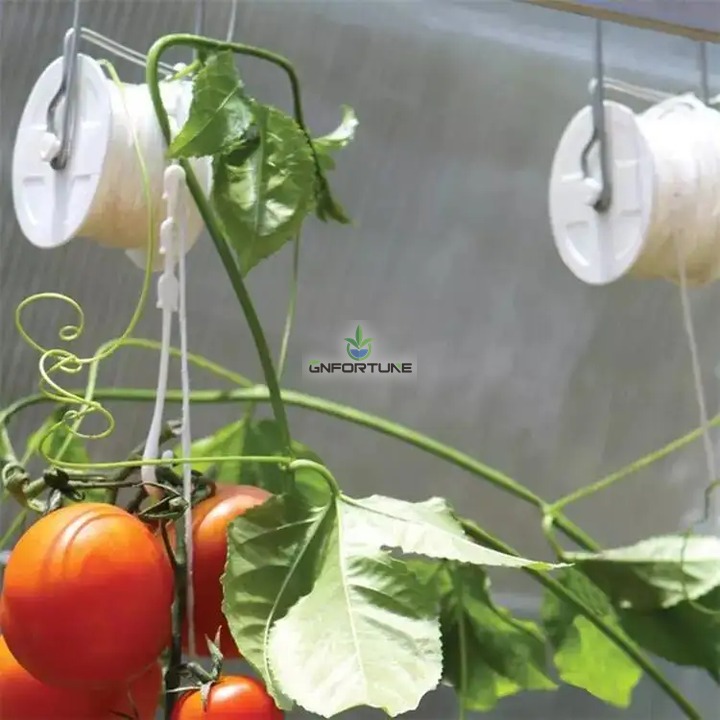
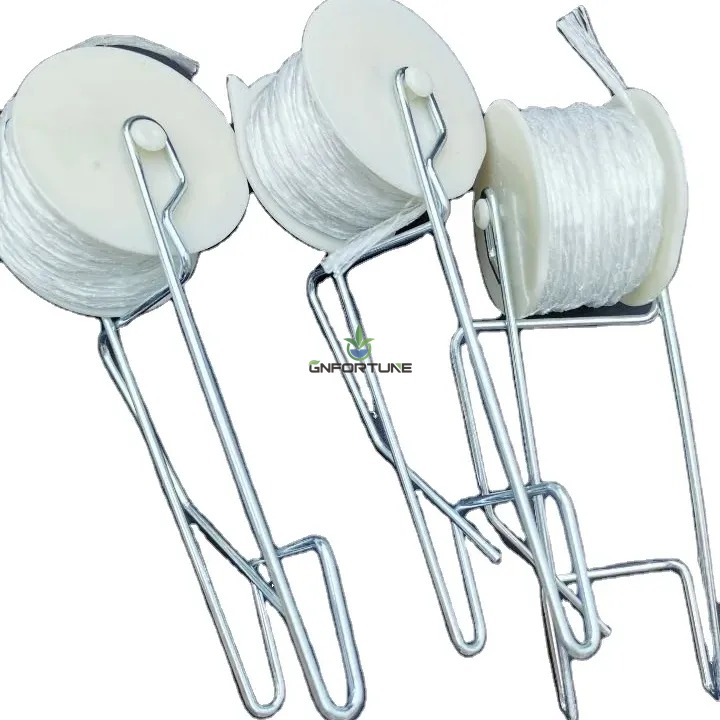
- Roller hooks. A twine spool in a housing that hooks over the support wire and pays out as the plant is lowered in a high-wire system.
Material choice sits underneath all four. Plastic clips are cheaper and do not rust; galvanised parts cost more and survive longer where the crop is lowered repeatedly, and the hook is the part that fails under load.
Most commercial houses buy two or three of these rather than one. Quantity per hectare is dominated by whichever the crew uses weekly, and that choice is a labour decision before it is a purchasing one. The trellising and plant support guide compares the labour side of each option.
Stem Diameter and Grip Range
Grip range is the specification that decides whether a clip works. A clip sized for a young stem will split on a mature one, and a clip sized too loose slips down the stem and lets the plant lean.
| Hardware | Grip or fit range | Typical load | Where it is used |
|---|---|---|---|
| Stem clip | 4 to 8 mm stem | Stem weight only | Weekly training at 20 to 30 cm |
| Truss support clip | 5 to 10 mm | 0.5 to 1.5 kg per truss | Fruit support from first truss |
| Twist tie | Up to about 12 mm | Light, temporary | Young plants and repairs |
| Roller hook | Fits 2.5 to 4 mm support wire | 5 to 10 kg working load | Plant suspension and lowering |
Measure the stem where the clip sits, mid-season, not at transplanting. Stems on a vigorous plant run 8 to 12 mm at the head by mid-cycle, so a clip graded only to 8 mm will be at its limit exactly when the crop is heaviest. Buy the grip range in writing, and buy two sizes where the season is long enough to make a single size a compromise.
UV Life and Reuse
Clips and hook bodies are usually polypropylene, and service life is set by the UV stabiliser package rather than by the base polymer. In a house under single-layer film in a high-radiation climate, parts without a stabiliser package become brittle inside a season, while stabilised parts commonly run two to five seasons. Ask for the stabiliser as a line in the specification, and ask what reuse assumption sits behind the quoted price.
Colour and storage shorten life as well. Dark clips absorb heat and fail earlier in a hot house, and clips left in an unshaded yard between seasons lose service life faster than clips stored under cover.
Whether reuse pays depends on labour. Clips collected at crop change can be washed and reused, but the sorting and washing time is the real cost, and where labour rates are high, single-use clips are often cheaper once that time is counted. The same UV logic applies across greenhouse parts, as the equipment lifespan guide sets out.
Trellis Hooks, Twine and Wire: Load Ratings
The load path matters more than any single rating. A fruiting truss weighs roughly 0.5 to 1.5 kg and a plant carries several at once, so hook, twine and wire should all be rated above the worst realistic case, and the wire end fixings are usually the weakest link in that path.
| Component | Typical specification | What to confirm |
|---|---|---|
| Trellis hook | Twine capacity 15 to 25 m, working load 5 to 10 kg | Hook material, galvanised steel versus plastic |
| Tomato twine | Breaking load 30 to 70 kg, around 2 to 3 mm | UV resistance and knot holding |
| Support wire | 2.5 to 3.5 mm galvanised | Span, sag and end fixing detail |
| Ratchet or tensioner | Sized to the wire diameter | Slip under load at the end of a span |
Two ordering details follow from the table. Twine and hooks are consumed together, so buy them on the same schedule rather than discovering mid-season that the twine ran out. And confirm the hook fits the wire diameter you already have, because a hook that rocks on an undersized wire wears at the contact point and drops plants.
Quantity per Hectare Estimate
Build the order from plant count, not from a rule of thumb. Commercial high-wire tomato runs roughly 25,000 to 35,000 plants per hectare, and every quantity below scales from that figure.
| Item | Basis | Per hectare per season |
|---|---|---|
| Stem clips | 10 to 20 per plant | 300,000 to 600,000 |
| Truss support clips | 15 to 25 trusses per plant | 450,000 to 750,000 |
| Roller hooks | One per plant plus spares | 33,000 to 40,000 |
| Twine | 15 to 25 m per plant | 450 to 750 km |
| Support wire | Row length times row count | Site specific |
Add a spares allowance of 5 to 10 percent on clips and treat the truss count as the number most likely to come in above plan. Figures vary by region and season, and by whether the house runs one long crop or two shorter ones.
The ordering schedule matters as much as the quantity. Hooks and wire are bought once and last for years, while clips and twine are a repeating order tied to the crop calendar, so the recurring line should be quoted with a delivery schedule rather than as a single shipment.
How to read a clip quote: price per thousand means nothing until the grip range and the UV package sit on the same line. A clip quoted without a grip range in millimetres is a sample of whatever that mould produced that week, and the second container will not match the first.
Packing Units, Pricing and Red Flags
Confirm the commercial detail before the technical spec is frozen, because both move the landed number:
- Packing. Clips in cartons of 1,000 to 5,000 pieces, hooks in cartons of 500 to 1,000, twine on spools of 1 to 5 kg.
- Freight. Clips are light and bulky, so a container of clips alone rarely fills by weight; consolidate with other hardware.
- Minimums. Stock items sell by the carton, while a custom colour or a moulded mark usually carries a one production run minimum.
- Spares. Hold 5 to 10 percent of annual clip volume so a mid-season shortfall does not become an air freight order.
Red flags repeat across suppliers. A price with no grip range, no working load and no UV declaration cannot be compared with anything. Cartons with mixed sizes indicate a supplier packing from several moulds. Samples that are not from production tooling tell you nothing, and a supplier quoting twine by weight rather than by length and breaking load is hiding the numbers that matter. Quantities also need to be reconciled against crew output, which the crop work standards article covers, and against the plant count used in a Dutch bucket tomato layout.
Frequently Asked Questions
What grip range should tomato clips cover?
A: 4 to 8 mm for stem clips, with a larger size for truss supports, checked against mid-season stems of 8 to 12 mm.
How many clips does a hectare of tomato use?
A: Roughly 0.75 to 1.35 million per season at 25,000 to 35,000 plants per hectare; figures vary by region and season.
Can clips be reused next season?
A: Yes where they are UV stabilised and labour is available for collecting and washing, but count the sorting time before assuming reuse saves money.
What twine rating is needed?
A: A breaking load well above the hook working load, commonly quoted in the 30 to 70 kg range, with UV resistance and reliable knot holding.
What is the biggest red flag in a clip quote?
A: A price per thousand with no grip range in millimetres and no UV stabiliser declaration.
Tomato clips and trellis hooks should be quoted together, with grip range, working load and UV package on every line, because a low unit price that fails mid-season costs more than the hardware ever saved.
Specify Trellis Hardware Before Planting
Send plant density, season length, support wire diameter and the training method, and ask for grip range, working load and UV package in writing on every line. Tomato clips, hooks, twine and wire are quoted together more accurately than separately, so request a trellis hardware quote as one package with those numbers declared.


