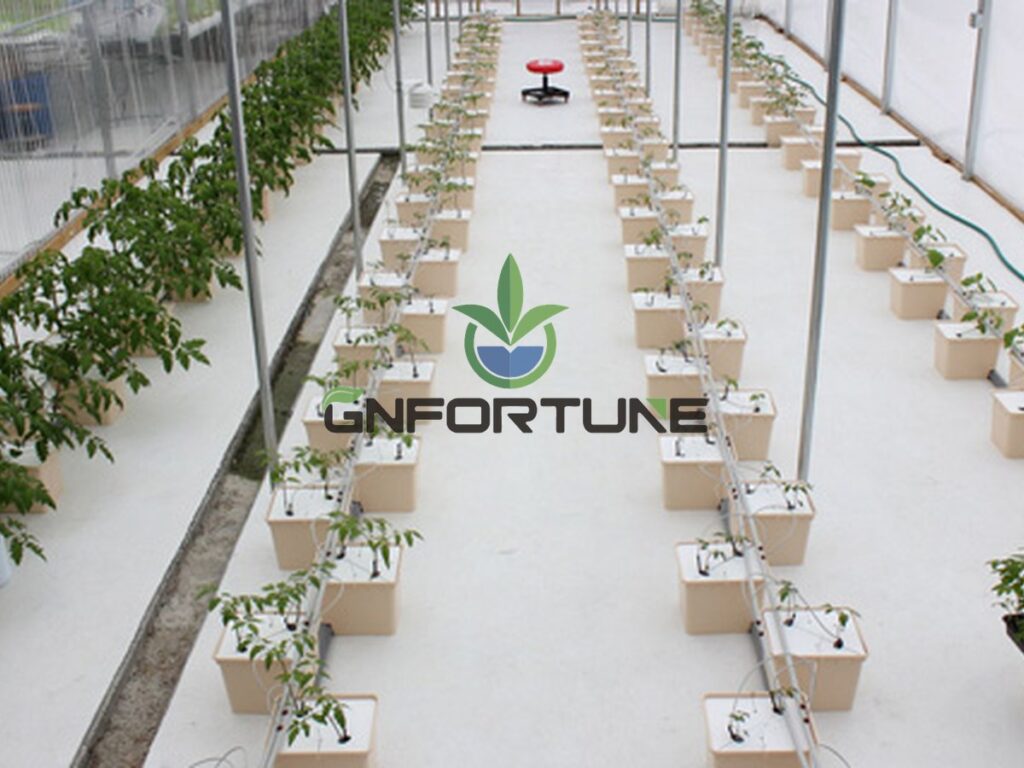
Most farms size a pump correctly, set the pressure, then run for years without knowing what each zone receives. A flow meter hydroponics installation closes that gap for a modest outlay, and it earns its cost in three specific ways: confirming that each zone gets its design flow, catching blockages and leaks before the crop shows them, and proving that a flush or an acid dose really went through the line. This guide covers which meter type suits which job, how to size it, and where the few meters a farm buys belong.
It is written for procurement teams weighing a measurement package against other capital items, where the question is how many readings justify their cost.
What a Flow Meter Actually Answers
A meter answers three questions that no other instrument on a farm answers well: is this zone getting its design flow, has something in the line changed since yesterday, and did the maintenance dose actually pass through. Pressure gauges, EC probes and sight glasses give partial clues, but none of them gives a flow rate.
- Zone flow confirmation: the design flow per zone is a number on a drawing. Without a meter, drift caused by emitter wear, filter loading or a partly closed valve is invisible until yield drops.
- Early fault detection: a falling reading points to blockage or a closed valve; a rising reading with no crop change points to a leak or a burst line downstream.
- Maintenance verification: line flushing, sanitiser circulation and acid dosing are all volume-dependent. A meter turns “we ran it for twenty minutes” into a measured volume.
Where zones are irrigated in sequence, a single meter on the common mainline covers most of this, with each zone read while it runs.
Meter Types Compared
Paddle and mechanical meters are cheap and readable at a glance, turbine meters are more accurate in clean water, electromagnetic meters have no moving parts and handle dirty solution, and ultrasonic clamp-on meters suit temporary checks and retrofits. The right choice follows from water quality, pipe size and whether the reading needs to be logged.
| Type | Typical accuracy | Dirty water tolerance | Power and output | Cost level | Best position |
|---|---|---|---|---|---|
| Paddle or vane | Moderate, a few percent of range | Moderate, debris fouls the vane | None, local dial | Low | Zone outlets, manual rounds |
| Turbine | Good in clean water | Low, wear and fouling shift readings | Pulse output available | Low to moderate | Clean filtered mains |
| Electromagnetic | Good across a wide range | High, no obstruction in the bore | Powered, analogue or digital output | Higher | Mainlines, dosing and return lines |
| Ultrasonic clamp-on | Depends on installation and pipe | High, non-contact | Powered, portable options | Moderate to high | Surveys, temporary verification |
| Variable area rotameter | Moderate, read by eye | Low, needs clean fluid | None | Low | Dosing and injection lines |
Accuracy figures should always be taken from the supplier’s datasheet for the specific model and range, because a stated percentage of full scale behaves very differently at the low end of the range. A meter quoted at two percent of full scale that normally runs at a quarter of full scale is a coarse instrument in practice.
Dosing lines follow the same clean-water assumption: fertilizer injectors and their meters need strainers upstream.
Sizing: Bore, Range and Turndown
Sizing mistakes are more common than type mistakes. The meter bore should match the line size, and the selected range should place normal operating flow in the middle rather than at the bottom.
A practical sizing sequence:
- Establish the design flow for the line from the pump curve and the zone demand, not from the pipe diameter alone.
- Choose a meter whose normal flow sits roughly between a third and two thirds of its stated range.
- Check the minimum readable flow, because flushing and low-rate dosing often run well below the irrigation rate.
- Confirm the pressure rating against the maximum the line sees, including any surge.
Turndown ratio is the specification that catches buyers out: it describes how far below full scale a meter still reads accurately. A line carrying high irrigation flow and much lower overnight maintenance flow needs a wider turndown.
Nutrient solution is conductive, which suits electromagnetic meters, but its conductivity differs from water. A meter calibrated on water needs the supplier’s guidance before its reading is trusted on solution.
Installation Position and Straight Pipe
Nearly every inaccurate meter on a farm is a badly sited meter rather than a bad instrument. Turbine and electromagnetic meters assume a developed flow profile, which means straight pipe upstream and downstream of the body, clear of elbows, valves and pump discharge.
- Straight lengths: follow the supplier’s figure, usually a multiple of pipe diameter upstream and a shorter one downstream. Guessing this is the largest source of error.
- Orientation: vertical flow upward keeps the bore full and avoids trapped air, which suits electromagnetic meters particularly well.
- After the filter: a meter downstream of filtration sees cleaner fluid and lasts longer, but it will not register a blockage upstream of itself.
- Away from the pump discharge: pulsation and turbulence right at the pump make readings unstable.
- Access: a dial nobody can reach is a dial nobody reads; mount at eye height where rounds are walked.
Entrained air makes mechanical meters over-read and can drop out electromagnetic meters entirely, so any meter placed after an air entry point reads erratically.
How Many Meters and Where
The number of meters is a budget decision, and the point of diminishing returns arrives quickly. A workable starting pattern for a commercial site is one meter on the mainline after filtration, one on the return or drain line, and additional meters only on zones that have a history of variation or that carry a different crop.
| Position | What it tells you | Priority |
|---|---|---|
| Mainline after filter | Total delivered flow, pump performance, filter loading | Highest, one per farm |
| Return or drain line | Volume actually leaving the crop, leak and blockage balance | High, one per system |
| Individual zone outlets | Per-zone balance against design | Medium, on problem or high-value zones |
| Dosing or injection line | Volume of stock or acid delivered | Medium, paired with the injector |
| Portable clamp-on meter | Spot checks anywhere, commissioning survey | Useful as a shared tool |
Where the budget allows one fixed meter, the mainline position gives the most information, because every zone passes through it; a portable ultrasonic meter then covers the per-zone survey at commissioning and after changes.
Meters that feed a controller rather than a human eye cost more and need a power and signal run, so pump and mainline layout should be settled before the measurement package is specified.
Flow Meter Hydroponics: Reading, Logging and Accuracy Drift
A meter only creates value if the reading is used. The cheapest effective routine is a weekly round with readings written into the same log as EC and pH, so flow is reviewed alongside the chemistry.
- Baseline first: record each zone’s reading at commissioning under known conditions; every later judgement compares against it.
- Watch the trend: a slow decline means filter loading or emitter wear; a step change means a valve position or a leak.
- Note the conditions: readings taken with a different number of zones open are not comparable.
- Verify periodically: compare against a volumetric check or a portable meter once or twice a year.
Accuracy drifts with wear and fouling: mechanical meters wear at the bearing, electromagnetic meters drift if electrode coating changes. A meter unchecked for two years is an indicator, not a measurement.
Buying Checks Before Ordering
The specification worth writing into the RFQ is short:
- Fluid stated as nutrient solution, not water, with the conductivity range if it is known.
- Flow range with normal, minimum and maximum values, and the required turndown.
- Accuracy stated as a percentage of reading or of full scale, with the test conditions.
- Body and wetted materials confirmed against the solution and the sanitisers used.
- Pipe size and connection standard, plus the straight-pipe length the supplier requires.
- Output type if the reading is logged, and whether the meter is powered or purely mechanical.
- Spare or serviceable parts, particularly seals and, for mechanical types, the vane assembly.
Asking two suppliers to quote against that list produces comparable bids. Asking for “a flow meter” produces two different technologies at two different prices.
A flow meter hydroponics budget spread across two well-placed meters usually returns more than one expensive meter in the plant room.
FAQs About Flow Measurement on Hydroponic Farms
How many flow meters does a commercial farm need?
One on the mainline after filtration and one on the return line cover most sites. Further meters go on zones with known variation, and a portable unit covers per-zone surveys.
Is an electromagnetic meter worth the extra cost?
On dirty or recirculating solution, usually yes, because there is no moving part to foul. On clean filtered water at a steady rate, a mechanical meter serves for much less.
Why does my meter read differently from the pump curve?
Commonly because of installation: insufficient straight pipe, entrained air, or a partly closed valve upstream. Check the site conditions before assuming the instrument is wrong.
Can one meter cover several zones?
Yes, if zones run in sequence rather than simultaneously, since each zone’s flow passes the meter while it runs. Simultaneous zones need separate meters or a portable survey.
How often should a meter be checked?
Compare against a volumetric check or a portable meter once or twice a year, and re-baseline after any change to pump, filter or zone layout.
Related Reading
- Hydroponic Pump Sizing: Flow Rate, Head Pressure and Redundancy — The flow and head figures a meter later has to confirm on site
- Irrigation Filtration: Screen vs Disc vs Sand Filter — Where filtration sits relative to metering and what each type removes
- Fertilizer Injectors for Hydroponic Farms — Injection hardware and the dosing volumes a meter verifies
- Handheld Meters vs Fixed Sensors in Hydroponics — The same fixed versus portable trade-off applied to EC and pH
- Hydroponic System Commissioning: Sequence, Testing and Site Acceptance — Where baseline flow readings belong in the commissioning record
Next Step: What to Send for a Quotation
Measurement is specified against flow rates, and those come from the pump and zone design rather than from a catalogue. A supplier quoting without them sizes by pipe diameter, which is how a flow meter hydroponics package ends up reading at the bottom of its range and telling the farm very little.
Specifying a measurement package or a full system? For RFQ or project consultation, send: system scale and number of zones; design flow per zone and pipe diameters; pipe and channel material requirements; thread or connection standard; growing media and crop; operating temperature range and water quality; whether readings are logged or read locally; spare ratio for wear parts; delivery schedule; and the budget band. G AND N FORTUNE LIMITED supplies NFT channels, tank sets, pump and filtration packages quoted to those parameters.