
Damping Off and Poor Germination: A Propagation Triage
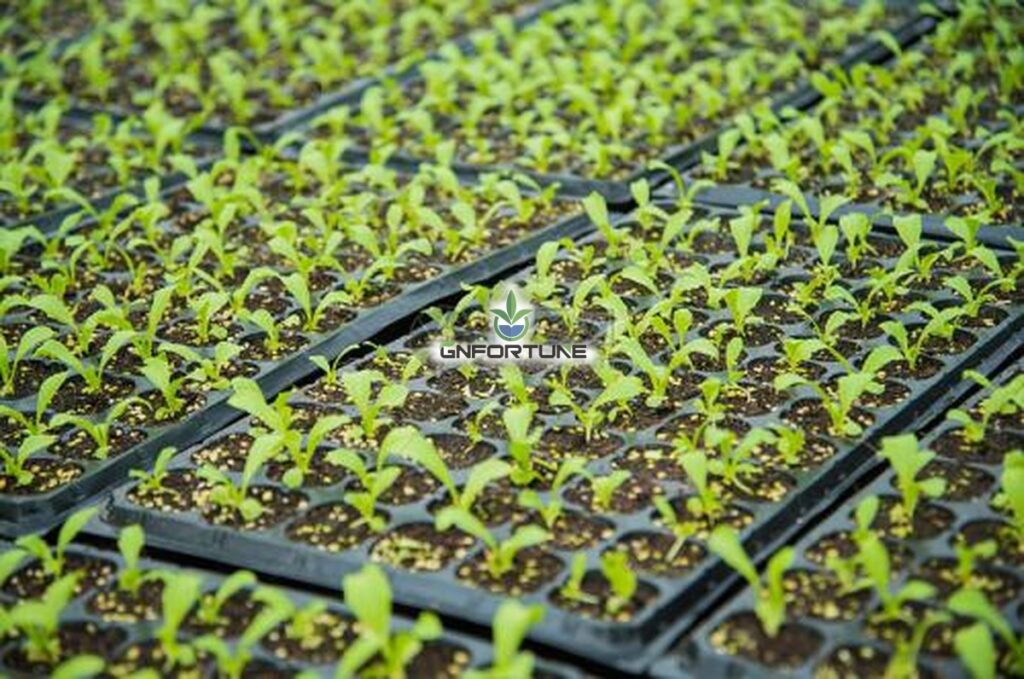
A propagation room rarely fails all at once. The first signal is a tray with gaps where seedlings should be, then a second tray where upright seedlings pinch at the base and fall within a day. Called damping off by growers, that pattern is one of several ending the same way: fewer saleable plugs per tray and a transplant schedule that slips. Damping off seedlings hydroponics cases are usually decided before the seed is sown, by water content in the plug, irrigation timing, and how the previous cycle trays were cleaned. This article sets out the symptom patterns, a triage table and the chamber settings to check.
Symptoms and What Each Pattern Suggests
The loss pattern is the fastest diagnostic available and should be recorded before anything is changed.
- No emergence, uniform: usually seed viability, a dormant lot or sowing depth, occasionally media outside the species range.
- Patchy emergence in a scatter: uneven moisture or poor seed-to-media contact. Check whether dry cells correlate with tray edges.
- Emerged, then pinched at the base: the classic presentation. Water-soaked and soft points to Pythium; dry and wiry points to Rhizoctonia.
- Upright, stunted and pale: rarely a pathogen. Suspect waterlogging, low root-zone oxygen, EC or light.
Sketch the tray and mark where losses sit: ends point to drying, the bottom shelf to drainage, one corner to air distribution.
Where collapse follows emergence, the pathogen route matters more than the seed route; see the article on root rot and Pythium in NFT and DWC.
Damping Off Seedlings Hydroponics: Seed Lot vs Environment vs Media
Work the columns in order. A germination test on the seed lot separates seed from everything downstream.
| Check | How to run | Pass indication | A fail points to |
|---|---|---|---|
| Seed germination | 100 seeds on moist paper at 20 to 25 degrees Celsius | At or above stated lot germination, commonly 90 to 98 percent | Lot age or storage |
| Sowing depth | Dissect ten cells, measure cover | Two to three seed diameters | Dibber setting |
| Media moisture | Weigh saturated cell, then after twenty minutes | Forty to seventy percent of saturation at sowing | Irrigation volume |
| Media EC and pH | Pooled pour-through sample | pH 5.5 to 6.2, EC at propagation strength | Pre-charge or water |
| Temperature | Logged probe at canopy and in plug | Within two degrees Celsius of target | Heat mat or rack position |
| Tray hygiene | Visual check plus swab after cleaning | No debris, below action level | Wash or contact time |
| Air movement | Smoke pencil at canopy height | Gentle movement, no dead corners | Fan placement |
When seed and media checks pass, the cause is almost always environment.
Media Moisture and Oxygen in the Plug
A plug holds two competing requirements: enough water to complete germination, enough air to keep the emerging radicle alive. Most losses come from holding the first and losing the second.
Water-filled pores carry almost no oxygen, and a saturated plug held below target temperature for more than two days is the most reliable way to lose a batch.
Manage plugs by weight, not by schedule. A fixed interval ignores evapotranspiration, which varies with rack position, ventilation and stage. Weighing a reference tray twice daily and irrigating when it drops below a set percentage of drained weight holds the air-filled pore fraction near fifteen to twenty-five percent.
Record the targets: hold media near sixty to seventy percent of saturation through radicle emergence, then fifty to sixty percent once cotyledons open. Irrigate in the morning so the surface dries before dark, and keep drain holes clear. Pre-conditioning matters with rockwool; the sequence is in the guide to rockwool plugs, cubes and slabs.
Nutrient strength is secondary: run at half to three-quarters of finish strength until true leaves appear.
Water Temperature and Irrigation Timing
Water from a cold main or hot header tank moves media temperature faster than air setpoints do, and germination responds to media temperature.
- Target: media at 20 to 25 degrees Celsius for most leafy and herb crops; lettuce stalls above about 26.
- Storage: holding water in the room a day removes the daily cold shock.
- Timing: late irrigation leaves the plug wet through the dark period, when infection pressure rises.
- Volume: short frequent doses wet the surface and starve the interior of air.
- Misting: fog cools media by evaporation, useful in summer and costly in winter.
A worked example: a 1.5 liter per hour emitter at three minutes per event, four times daily, delivers about 300 milliliters per tray. Two events of four minutes gives the same volume with a longer dry-down.
Tray Hygiene Between Cycles
Hygiene failures are cumulative. A cycle finishing with fifteen percent loss leaves inoculum behind, and the next cycle starts with a head start.
- Remove media and debris before washing, since sanitizer is consumed by organic matter.
- Wash at 60 to 80 degrees Celsius with detergent; cold rinsing leaves films.
- Apply a registered sanitizer at label rate and observe contact time.
- Dry before stacking, because a wet stack incubates.
- Segregate suspect trays and re-clean them separately.
- Replace crazed plastic, since damage holds biofilm.
Product choice depends on water chemistry, contact time and material compatibility; the trade-offs are in the article on peracetic acid, hydrogen peroxide and chlorine dioxide. Verify by swab or dip slide.
Chamber Settings: Humidity and Light
Setpoints interact, so changing one alone often confuses the diagnosis. The table gives working ranges for a covered germination phase and the post-emergence phase.
| Parameter | Germination, covered | Post-emergence | Notes |
|---|---|---|---|
| Relative humidity | 90 to 100 percent | 60 to 75 percent | Reduce in steps |
| Air temperature | 20 to 25 degrees Celsius | 18 to 22 degrees Celsius | Lower after emergence |
| Light | Off; most species prefer dark | 100 to 200 micromol per square meter per second | Some need light |
| Air movement | Minimal under the dome | 0.2 to 0.5 meters per second | Keep continuous |
| Carbon dioxide | Ambient | 400 to 1,000 parts per million | Once leaves function |
Two patterns explain much of the field loss: leaving the dome on too long after emergence gives stem pathogens the saturated warm air they need, and holding the chamber dark while waiting for slow cells produces stretched plants that collapse in hardening. Layout and equipment are covered in the article on germination chamber and propagation room setup.
When to Dump a Batch and Restart
Salvaging a failing tray absorbs labor and delays the schedule.
- Above thirty percent loss with active spread: restart, since culling rarely stops spread in a shared tray.
- Collapse still progressing after two days of corrected settings: restart, the inoculum load is high.
- Uniform non-emergence past double the stated interval: restart, and quarantine the lot.
- Below fifteen percent loss, no new collapse for two days: hold, fill gaps from a reserve tray.
- Transplant deadline within five days: decide immediately, a partial tray missing the window has no value.
Log every restart with seed lot code, tray batch, media batch and three days of chamber data; the pattern across entries identifies the cause faster than any single investigation. The next stage matters too: see the guide to transplant shock and hardening off, and keep new pressure out of a clean room with the measures in the article on sealing greenhouse openings.
Frequently Asked Questions
How quickly can damping off destroy a tray?
A: Collapse can run through a tray in two to four days once stems are infected, so daily inspection during emergence matters more than treatment.
Is overwatering the usual cause?
A: It is the most common contributor, since saturated media excludes oxygen and lowers media temperature, and pathogens finish the job.
What water temperature suits most propagation?
A: Irrigation water held near 20 to 22 degrees Celsius suits most leafy crops, avoiding cold shock and heat build-up in the plug.
Should the germination chamber stay dark?
A: Most crops germinate in darkness and many prefer it, though some species require light, so check the supplier note.
When is a batch not worth saving?
A: Above roughly thirty percent loss with collapse still spreading, or any batch that will miss the transplant window.
Poor germination causes fall into three groups, and the triage sequence separates them cheaply: test the seed lot, check media water content by weight, then verify chamber temperature and humidity through emergence. Where damping off seedlings hydroponics losses repeat across cycles, the fix is usually a hygiene change, and the tray log will show which one.
Narrow the Cause in Your Propagation Room
Describe your germination room setup and loss pattern and we will help you narrow the cause. Include crop and seed lot code, media type, irrigation method and event times, and the cycle day losses appear.


