

A hydroponic fodder system is a controlled indoor room where cereal grain — usually barley — is sprouted into a dense mat of fresh green feed and harvested about seven days after seeding. Livestock producers use it to produce feed every day of the year on a small footprint, independent of pasture and weather. Like any livestock investment, the decision turns on arithmetic: how much feed comes out, what it is worth in the ration, and what the room costs to build and run. This guide walks through the cycle, the output math, the equipment, and the economics with the numbers kept honest.
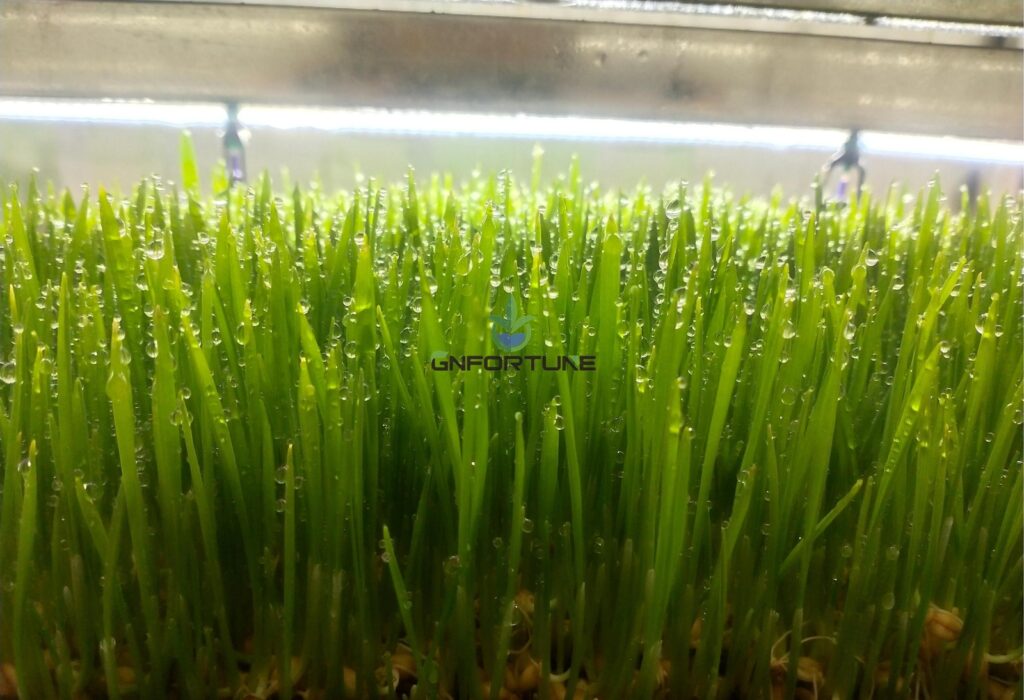
Green hydroponic barley fodder mats under grow lightsWhat Hydroponic Fodder Is and Who Buys It
Fodder systems grow sprouted grain as a supplement to, not a replacement for, the main ration. The buyers fall into predictable groups:
- Dairy and beef operations that want fresh green feed during winter or drought, when pasture is unavailable and stored feed is dry.
- Sheep and goat flocks around lambing and kidding, where a small room can provide a palatable supplement without hauling forage.
- Horse owners and studs, who value consistent quality and freedom from dust and mold in the feed.
- Poultry and small-scale units testing sprouted grain as a welfare or diet supplement, usually at a much smaller scale.
All share one constraint: fodder is roughly 85% water and keeps only a few days, so it must be produced where it is fed. That is why fodder is an on-farm technology rather than something bought in by the truckload.
The 7-Day Cycle, from Soaking to Harvest
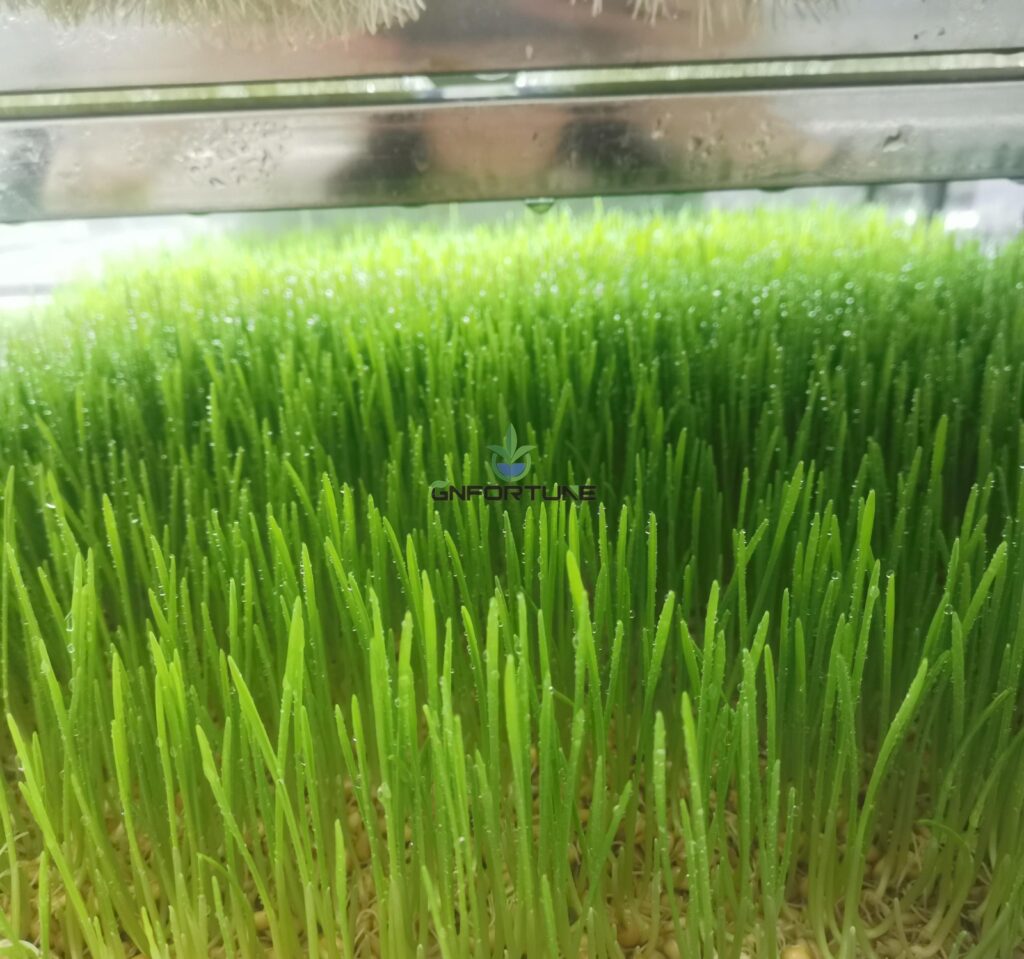
Close-up of hydroponic fodder sprouts ready for harvestThe cycle is deliberately simple, and reliability comes from doing every step on a fixed schedule. A representative daily routine:
- Day 0 — soak. Clean whole grain is soaked for 12–24 hours. Damaged or moldy seed is skimmed off, because dirty seed carries mold problems into the room.
- Day 1 — tray out. Drained grain is spread evenly across trays, typically 1–2 cm deep. Uneven spreading means uneven sprouting and patches that rot or dry.
- Day 1–6 — mist. Trays are misted on a timer, usually every few hours, keeping the seed bed moist without standing water. The room is held near 18–24 °C with gentle airflow and drainage that never lets trays sit in runoff.
- Day 6–7 — harvest. The mat of shoots and roots is lifted and fed whole, then tray, rack, and room are washed before the next seed goes in.
Because the cycle is seven days, a room that holds seven daily batches produces every day: seed one rack of trays each morning and harvest one rack the same afternoon. Racks and trays are the load-bearing idea behind the whole room, and the layout thinking is the same as in the hydroponic rack systems guide, adapted for feed weight rather than leafy greens.
Output Math: Grain In, Green Feed Out, and Floor Space Needed
This is where fodder marketing usually goes wrong, so read the numbers carefully. Suppliers commonly advertise a 1:6 or even 1:8 ratio — one kilogram of grain producing six to eight kilograms of fresh green fodder. Independent feeding trials often report lower fresh ratios, and the honest way to compare is on dry matter.
Dry grain is roughly 88–90% dry matter; fresh seven-day fodder is roughly 12–15%. Six kilograms of fresh fodder at 13% dry matter delivers about 0.8 kg of dry matter — close to the dry matter in the original kilogram of grain. Fodder does not create dry matter from water; it mobilizes the seed. That is the key economic fact: fodder is a feed-quality tool, not a feed-quantity miracle.
| Measurement | Typical published range | What it means on the farm |
|---|---|---|
| Fresh fodder per kg of grain | 1:4 to 1:8 fresh weight | Varies with grain quality, temperature, and harvest day — figures vary by region and season |
| Dry matter of harvested fodder | 12–15% | Compare rations on dry matter, never on fresh weight |
| Water use | ~1.5–3 L per kg fresh fodder | Includes soaking and misting; a real operating cost where water is metered |
| Shelf life after harvest | 2–4 days | Fodder must be fed locally and on schedule |
Floor space follows from herd demand. A working example, using round numbers you should re-run for your own herd: a 600 kg dairy cow eats on the order of 15–20 kg of dry matter per day. If the goal is to supply roughly 20% of that as fodder, one cow needs about 25–30 kg of fresh fodder daily. A room producing 1 tonne of fresh fodder per day on a 7-day cycle needs about 7 tonnes of standing capacity — seed, tray, rack, and water system sized for a full week before harvests return. Run the spreadsheet before you build the room.
Equipment: Racks, Trays, and Irrigation for a Fodder Room
The hardware list for a fodder room is short, but each item has a feed-grade version and a garden-grade version, and the difference shows up in hygiene:
- Racks. Galvanized or coated steel racks carrying trays on 3–6 levels, built for wet weight and washable in place.
- Trays. Shallow food-safe trays with drainage. Washable, sanitizable plastic matters more here than in any crop system, because livestock eat the product directly; the material grades are covered in our article on food-safe materials in hydroponics.
- Irrigation. A misting or spray line fed by a timer or small controller, sized so every tray receives even coverage — the same irrigation systems used in crop houses, with fine-mist nozzles rather than drip emitters.
- Drainage and ventilation. Trays drain to a channel that leaves the room; standing water and stale air create mold, so an extractor fan and airflow between racks are not optional.
- Environment control. Heating and cooling keep the room in the sprouting band; lighting is minimal because the crop is not grown for photosynthesis.
Because the process runs every day, the layout must make seeding, harvesting, and washing efficient — one person should be able to run the daily cycle in under an hour or two at a moderate scale. If you are building the room from a shell, a turnkey climate room approach keeps the environment and drainage decisions in one design rather than patching them together later.
The Honest Economics: Where Fodder Wins and Where It Does Not
Set the marketing aside and fodder has real, defensible uses — and clear limits.
- Where it wins: fresh, palatable green feed in winter or drought; consistent daily supply on a small footprint; sprouting that can improve starch digestibility and lift vitamin content relative to dry grain; a useful supplement around calving, lambing, or after transport. For operations that already pay a premium for fresh forage, the value is real.
- Where it does not: as a bulk source of dry matter or energy. Compared with the grain you started from, fodder delivers roughly similar dry matter at a higher cost per kilogram of dry matter once you pay for the room, water, power, labor, and daily washing. Precise payback depends entirely on local grain prices, power costs, and what you would otherwise feed — no reputable supplier can quote you a universal return.
Advisor’s economic reminder: Ask one question before any fodder budget: “compared with what?” If the comparison is purchased green forage, fodder can win. If the comparison is grain at a good price, fodder usually loses on cost per kilogram of dry matter. Know your baseline before you size the room.
The same system design discipline that applies to a crop house applies here: water flows, drainage fall, tray levels, and room ventilation should be drawn before equipment is ordered. And run a pilot — two or three racks, a few weeks of feeding, with your own scale and your own nutritionist — before committing to a full room. Feeding value is measured on your animals, not on a brochure.
FAQ
What is a hydroponic fodder system?
A: A controlled room where cereal grain is sprouted for about seven days and fed as fresh green fodder, produced daily on a fixed cycle of soaking, misting, and harvest.
How much fodder comes from one kilogram of grain?
A: Suppliers commonly quote 1:6 to 1:8 fresh weight, but independent figures often run lower and depend on grain and conditions. On a dry matter basis, fodder delivers roughly the dry matter contained in the grain.
Is hydroponic fodder cheaper than hay or grain?
A: Usually not per kilogram of dry matter — fodder adds water, labor, power, and a building. Its value is freshness and palatability, so it competes best with purchased green forage rather than dry grain.
How much floor space does a fodder room need?
A: It depends on herd demand. Multiply daily fodder dry matter need by seven days of standing capacity, then divide by the effective growing area of your rack levels. A design spreadsheet beats any rule of thumb.
How long does fresh fodder keep?
A: Two to four days in cool conditions. It is produced where it is fed, on a rolling daily schedule, not stored and shipped.
Request a Fodder Layout for Your Herd Size
If the numbers still look right for your operation after a pilot, the next step is a room layout sized to your herd. Send us your animal numbers, target daily fodder amount, and available floor space through the quote form — request a fodder system layout and output estimate for your herd size. Related reading: