

A Dutch bucket cucumber block is one of the more forgiving ways to move into hydroponic fruiting crops, and also one of the easiest to over-crowd. The question commercial growers ask us most is about planting density: how many cucumber plants per 5 gallon bucket can you grow? The short answer is one — one vigorous, trellised plant with a large root system, a large daily water demand, and no patience for competition. This guide covers plants per bucket, row spacing, drip feeding, EC and pH targets, trellising, pruning, and the yield expectations a commercial greenhouse supplying wholesale buyers can reasonably plan around.
Why Dutch Buckets Suit Cucumbers
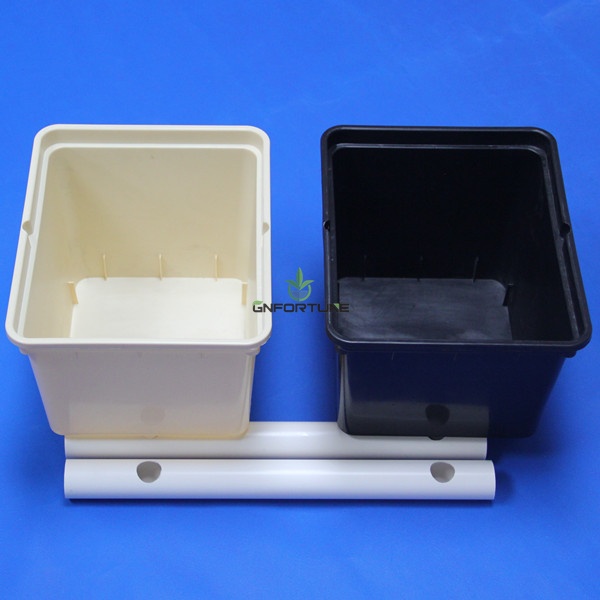
Dutch bucket with return pipe for cucumber growingCucumbers are among the greediest greenhouse crops at the root. A full-season plant can draw several liters of water a day in summer and grow a root system that quickly outgrows small troughs. The Dutch bucket gives that root mass three things it needs: volume, drainage, and air.
- Volume. A 5-gallon bucket holds roughly 18–19 liters when full, and is normally filled to around 14–16 liters of media so the top stays dry and clean for drip lines. That reservoir of media smooths out the swings between irrigations on hot days.
- Drainage. The bucket drains fully between events instead of holding a perched water table, which is the fastest way to keep oxygen at the root and pythium out. The drain outlet is set low on the side so a layer of solution never sits across the bottom.
- Aeration. A coarse coco-perlite or perlite-heavy mix drains quickly and re-aerates within minutes, so frequent small irrigations do not suffocate the roots. Most commercial blocks run coco coir blended with 20–30% perlite or a coarse perlite-only fill.
The same bucket geometry that works for tomatoes carries cucumbers well; the differences are in irrigation frequency and pruning, which we cover below. For a side-by-side look at when buckets beat NFT or gutter systems, the Dutch bucket versus NFT comparison walks through the root zone trade-offs. Bucket hardware — the pot, lid, drain fitting, and return lines — is covered on the Dutch bucket system product page.
Plants per Bucket and Row Spacing
Plant one cucumber per bucket. Two plants in a five-gallon bucket is the classic rookie mistake: the root masses strangle each other by mid-season, the canopy shades itself, and pruning labor doubles for no extra saleable fruit. Under commercial glass, greenhouse cucumber types are almost always grown as single plants with one main stem trained to a wire.
Spacing then decides how many plants fit a bay. Row spacing follows the length of the canopy you intend to carry, and in-row spacing follows how much leaf area you can keep lit. Indicative ranges:
| Layout | Plants per bucket | In-row spacing | Row centers | Indicative density |
|---|---|---|---|---|
| High-wire, single row | 1 | 40–50 cm | 150–180 cm | 1.2–1.6 plants/m² |
| High-wire, wider canopy | 1 | 50–60 cm | 180–200 cm | 0.9–1.2 plants/m² |
| Lower-trellis, short season | 1 | 45–55 cm | 140–170 cm | 1.2–1.7 plants/m² |
Light drives the choice more than any other factor. Growers in low-light winter regions run fewer plants per square meter so each plant carries more leaf to harvest the same fruit load; in high-light summer programs the same bay can run at the upper end. Treat the table as a starting point — figures vary by region and season, and your greenhouse light and ventilation record is the best guide. Leave a working aisle of 60–80 cm beside each block, and keep every bucket level so drains run back cleanly.
Drip Feeding and EC/pH Targets for Cucumber
Cucumbers in buckets are drip-fed, and the rhythm matters as much as the recipe. The crop drinks heavily, so most operations fertigate in short pulses several times a day — from two or three events in winter to eight or more in peak summer — letting the bucket drain 10–20% between events to flush salts. For the plumbing details, the article on drip irrigation in Dutch buckets covers emitter choice, flow rates, and drain-line layout.
Target ranges by stage, measured in the delivered nutrient solution:
| Crop stage | EC (mS/cm) | pH | Notes |
|---|---|---|---|
| Young plant, first 2–3 weeks in bucket | 1.6–1.9 | 5.6–5.9 | Easy start; keep roots moist, not wet |
| Vegetative, climbing the string | 1.9–2.2 | 5.5–6.0 | Steady growth before heavy fruit load |
| Full fruiting | 2.2–2.5 | 5.5–6.0 | Raise EC gently as fruit load builds |
These are operational starting points, not universal rules; blend recipes and regional water chemistry shift them, and the response of the plant is the final judge. Watch the youngest expanded leaf: pale leaf margins usually mean feed is running low, while dark, brittle leaves with burnt tips mean the EC has run too high. Adjust one variable at a time and allow two to three days before reading the result.
Trellising and Pruning for High-Wire Cucumber
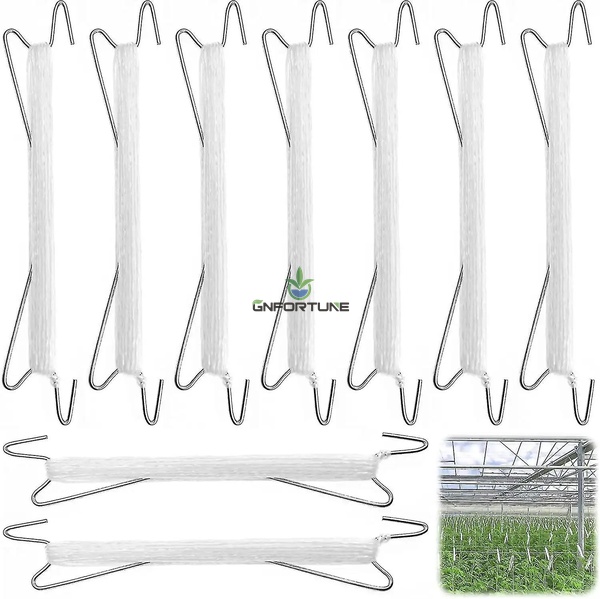
Tomato clip and twine set for trellising vine cropsGreenhouse cucumber types produce fruit on the main stem, which changes pruning from the tomato model. Practical high-wire rules:
- Train one stem. Attach a string or twine at the overhead wire and clip or wind the stem weekly. Remove any side shoot you are not deliberately keeping for fruit as soon as it appears.
- Remove flowers below the first fruit set height. Most guides clear the first 60–80 cm of stem of flowers so the plant builds structure before carrying fruit.
- Keep one fruit per leaf axil on the main stem during heavy load, and remove deformed or double fruit early. On side shoots kept for extra production, allow one fruit and two leaves, then pinch.
- Pluck and strip weekly. Remove the two or three oldest leaves below the lowest harvest as the stem advances, so the crop zone stays open and ventilated.
- Lower the stem, or work at the wire. In high-wire systems the head is wound along the wire and the stem is lowered in stages so pickers always work at a comfortable height.
Most wholesale cucumber programs run parthenocarpic varieties that set fruit without pollination — no bees required in the house. Seeded types are a different project: they need bumblebee hives and produce a different market product.
Consultant’s pruning note: A cucumber plant balances leaves and fruit continuously, and it will drop fruit it cannot feed. If your pickers are removing aborted fruit every week, the plant is over-loaded or the roots are under-fed — fix the load before you fix the variety.
Yield Expectations and Harvest Windows
From transplant into the bucket, the first pick typically arrives in five to seven weeks, with full production two to three weeks later. From seeding, plan on roughly 10–11 weeks to first harvest. Once the plant is cropping, it produces along the stem steadily rather than in one flush, so harvesting is a two-to-three-times-per-week job — and cucumbers size fast, so a missed pick turns saleable fruit into over-size seconds within days.
Per-plant output depends on season length and light. Indicative commercial magnitudes:
| Program length | Typical fruit per plant | Typical weight per plant | Harvest rhythm |
|---|---|---|---|
| Short season, 3–4 months | 15–25 fruit | 6–12 kg | 2 picks per week at peak |
| Long season, 7–9 months | 40–60 fruit | 18–30 kg | 3 picks per week at peak |
Figures vary by region and season, by variety, and by how much light the house delivers; the bands above are planning magnitudes, not guarantees. Wholesale buyers pay on grade as well as weight — uniform length, straight fruit, and clean skin matter more than a heavy odd-shaped cucumber. If you are weighing crop choices for the same greenhouse footprint, our round-up of the most profitable hydroponic crops puts cucumber revenue into context against lettuce, herbs, and berries.
FAQ
How many cucumber plants can I grow per 5 gallon bucket?
A: One. A full-season, trellised cucumber plant needs the whole bucket for roots and canopy, and two plants per bucket shade each other and compete for water.
What EC and pH do cucumbers need in Dutch buckets?
A: Start young plants around EC 1.6–1.9 and pH 5.6–5.9, then run vegetative crops at 1.9–2.2 and fruiting plants at 2.2–2.5 with pH 5.5–6.0. Adjust for your water and climate.
Do greenhouse cucumbers need bees for pollination?
A: Parthenocarpic types, which dominate wholesale programs, set fruit without pollination. Seeded types need bumblebees and a different market setup.
When does the first cucumber harvest start?
A: About five to seven weeks after transplanting into the bucket, or roughly ten to eleven weeks from seeding. Production builds over the following weeks.
Why are my cucumber leaves yellowing between the veins?
A: Usually a magnesium or iron uptake problem — often from root-zone pH drift or cold root temperature — rather than a disease. Check delivered pH and EC first, then lift a plant to inspect root color and drainage.
Plan a Cucumber Block with Us
Bucket counts, drain runs, drip rates, and feeding schedules belong in one drawing before you order. Send your greenhouse footprint and target weekly fruit volume through the quote form — plan a cucumber block with us — request a bucket and drip BOM. Useful companion reading: