

By the G&N commercial consulting team · First published: September 2026 · Reviewed for field accuracy
Hydroponic spinach is the second-fastest leafy green a commercial grower can cycle, after radish and ahead of most lettuces. A well-run NFT or DWC line goes from a sown plug to a cut-and-pack leaf in 30–40 days, and a single bay can deliver eight to ten crops a year. It is also a crop that punishes inattention: bolted plants, yellow tips, or a single day of reservoir EC drift will erase a week’s margin. This guide walks a buyer through variety selection, system choice, EC targets, bolting prevention, and the harvest method that protects shelf life.
Why Spinach Is the Second-Fastest Hydroponic Crop
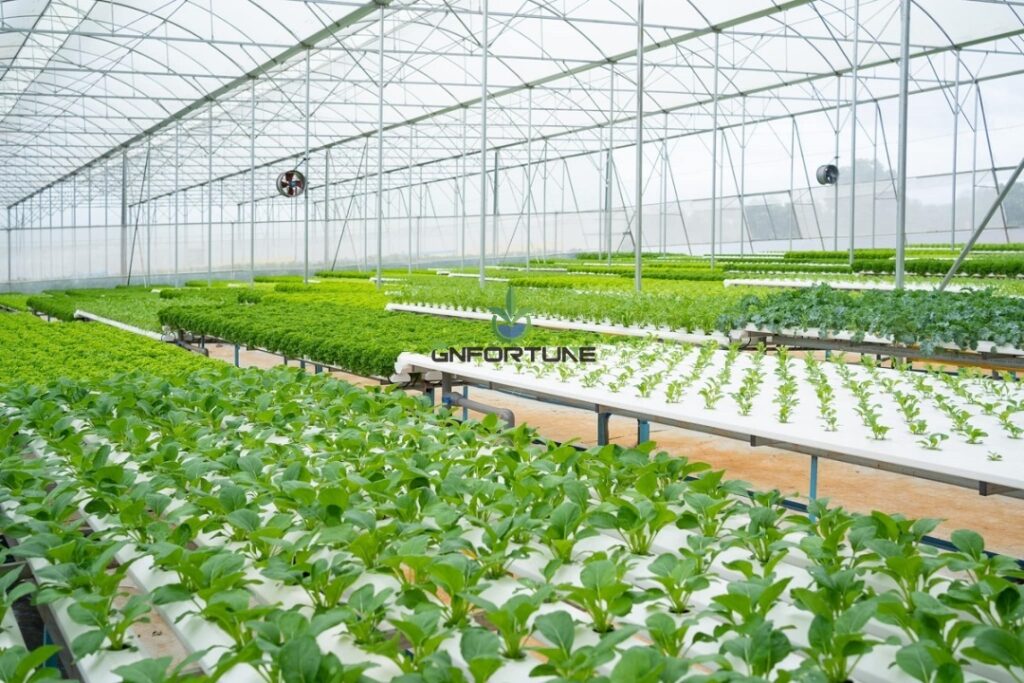
Commercial greenhouse NFT channels with dense dark-green leafy crops representing fast-turnover hydroponic spinachGrowth-rate math is what makes hydroponic spinach commercially attractive. A well-run NFT line delivers 8–10 cycles per bay per year, and the economic case rests on three numbers:
- Cycles per year. 8–10 turns on a single bay is hard to beat with anything except microgreens.
- Yield per square meter per year. Healthy lines run 25–40 kg/m²/year, a number that varies by region and season.
- Market window. Greenhouse spinach hits premium pricing in cool shoulder seasons when field supply drops.
That math only holds when the system stays between the rails. Spinach is unforgiving of EC drift, dissolved oxygen swings, and warm nights. For a wider look at how spinach sits in a leafy-greens portfolio, see our leafy-greens processor guide.
Variety Selection: Slow-Bolt, Savoy, and Smooth-Leaf
Cultivar choice sets the ceiling for yield, leaf quality, and bolting resistance. There is no single “best” spinach for hydroponics; the right pick depends on climate, market, and cut style:
- Slow-bolt hybrids. The default for warm-season or low-altitude production. They tolerate day-time peaks that would trigger a faster variety. Most commercial NFT spinach today is a slow-bolt hybrid.
- Semi-savoy types. Wrinkled but not flat; they wash better than smooth-leaf and ship well in a clamshell. The common pick for bagged-salad processors.
- Smooth-leaf (flat) types. Easiest to wash, but they bolt quickly under heat and need strict climate control.
Two rules from projects we ship: avoid open-pollinated “baby spinach” seed for commercial production, and buy treated seed when offered; spinach seed carries Fusarium and damping-off pathogens.
| Variety class | Best climate | Cycle to cut | Bolting risk | Best for |
|---|---|---|---|---|
| Slow-bolt hybrid | Warm shoulder seasons | 30–35 days | Low to medium | Year-round NFT, premium bagged lines |
| Semi-savoy | Cool seasons | 32–38 days | Medium | Processor / clamshell supply |
| Smooth-leaf | Cool, high-altitude | 28–32 days | High | Local fresh-cut, restaurants |
NFT vs DWC for Spinach
Both systems produce commercial spinach; the right pick depends on water control and labor model. NFT is the dominant choice because the thin film keeps root zone oxygen high and lets the operator walk the bay for harvest and IPM scouting. DWC is the lower-cost option for small to mid-size operations, but the deeper reservoir swings more slowly in EC and pH and demands stricter oxygen management:
- Pick NFT for: cycles above 6 per year, premium leaf quality, larger bays, and operations that also run lettuce, basil, or herbs.
- Pick DWC for: first-time hydroponic growers, smaller footprints, lower capex, and operations that already run raft systems for lettuce.
The NFT system layout is explained in the NFT channel explainer, and the NFT channel size comparison covers the width and depth that suits spinach versus lettuce.
EC, pH, and the 25–35-Day Schedule
The agronomic rails for hydroponic spinach sit in a tighter window than lettuce. The commonly used ranges:
| Parameter | NFT target | DWC target | Notes |
|---|---|---|---|
| EC (mS/cm) | 1.8–2.2 | 1.8–2.2 | Drop 0.2–0.3 in the last week to lock in leaf quality |
| pH | 5.8–6.2 | 5.8–6.2 | Outside this band, iron and manganese lock out and tips yellow |
| Reservoir temperature | 18–22 °C | 16–20 °C | Above 24 °C invites Pythium; chillers pay back fast in warm climates |
| Dissolved oxygen | 6–8 mg/L | 7–9 mg/L | DWC needs active aeration; NFT depends on flow and channel design |
| Photoperiod | 12–14 h | 12–14 h | Longer days accelerate bolting — control with blackout screens |
| Day / night temperature | 18–22 / 12–15 °C | 18–22 / 12–15 °C | Wide DIF delays bolting and improves colour |
The biggest management mistake we see is a fixed EC recipe applied to every growth stage. Spinach responds better to a stepped schedule: 1.6–1.8 mS/cm in the first 10 days after transplant, climbing to 2.0–2.2 mS/cm in the next 10 days, then easing back to 1.8 mS/cm in the final week. Keep pH inside 5.8–6.2 the entire time — outside that band, iron and manganese stop being available and the youngest leaves yellow.
The consultant’s warning most growers only learn the hard way: hydroponic spinach looks identical from EC 1.6 to 2.2, but shelf life is not the same. A line running hot EC at the cut window ends up with thin leaves that wilt on the retail shelf in 48 hours. Pull EC down in the last 5–7 days before harvest — leaves look slightly smaller but out-compete the neighbour’s product on day three after packing.
Bolting Prevention: Light and Temperature Are the Levers
Bolting is the single largest economic loss in hydroponic spinach. Once a plant bolts, it is unsellable. The two levers a commercial operator can actually pull:
- Temperature control. A day temperature above 24 °C for three or more consecutive days triggers bolting in most hybrids. The minimum investment is a screen and good ventilation; in warm climates the line needs active cooling. A 6–8 °C day–night swing (DIF) is the target.
- Photoperiod control. Spinach is a long-day plant; once day length exceeds 13–14 hours, most cultivars accelerate toward flowering. Blackout screens deployed at the end of the photoperiod delay bolting and extend the harvest window.
Variety choice sets the genetic ceiling, but day temperature and photoperiod decide whether the crop gets there.
Harvest at 25–35 Days: Cut Method and Packaging
Harvest is where a hydroponic spinach line either wins or loses on shelf life. The schedule:
- Day 25–30: first baby-leaf cut at 5–7 cm above the crown, leaving the growing point intact. Many operations take two cuts from a single NFT cycle.
- Day 30–35: whole-plant cut for bunched or bagged lines. Cut height around the crown matters — too low cuts the meristem, too high leaves saleable leaf on the channel.
- Day 35+: quality drops, leaves yellow, and bolting risk rises sharply. Do not hold the line past day 40.
Cut into a chilled tote within 30 minutes, hydrocool to 4 °C, and pack in a cool room at 2–4 °C. The combination of a relaxed final-week EC, an early-morning cut, and rapid hydrocooling is what gets hydroponic spinach to a 10–14 day shelf life on the retail shelf.
Common Losses: Downy Mildew, Yellow Tips, and Tip Burn
Three losses recur in hydroponic spinach, and each has a clear root cause:
- Downy mildew: yellow spots on the upper leaf with grey sporulation underneath. Driven by high humidity and leaf wetness; prevent with horizontal airflow fans, proper spacing, and morning irrigation only.
- Leaf yellowing: most often an iron or manganese lockout from pH drift above 6.2. Daily pH checks in the first two weeks catch this before it spreads.
- Tip burn: calcium delivery failure from rapid growth under high EC. Pull EC back 0.2 mS/cm and confirm airflow across the bay.
Sanitation between cycles matters as much as the in-cycle routine. The cleaning and sanitizing SOP lays out the channel and reservoir reset that keeps Pythium and Fusarium from carrying over.
FAQ
How long does hydroponic spinach take from seed to harvest?
A: Roughly 25–35 days from transplant to first cut in NFT, and 30–40 days in DWC. A single bay can deliver 8–10 cycles per year.
Which is better for spinach — NFT or DWC?
A: NFT is the dominant choice because of higher dissolved oxygen and easier IPM scouting. DWC suits smaller operations and growers already running raft lettuce.
What EC should hydroponic spinach run at?
A: 1.8–2.2 mS/cm in the bulking phase, easing to 1.8 mS/cm in the final week before harvest.
How do you stop hydroponic spinach from bolting?
A: Keep day temperature below 22–24 °C and use blackout screens to keep photoperiod at or below 13 hours. Wide day–night temperature swings (6–8 °C) also delay bolting.
What is the most common cause of yellow tips in hydroponic spinach?
A: pH drift above 6.2, which locks out iron and manganese. Daily pH checks for the first two weeks after transplant catch the problem early.
Send Your Climate Zone — We Recommend a Spinach Variety
Send your greenhouse climate (high/low temperatures, photoperiod, water analysis) and target market window through the quote form, and our consulting team will return a spinach NFT or DWC layout with channel sizing, EC and pH schedule, and a cultivar recommendation that matches your season. To put the crop in the context of a wider farm plan, the hydroponic farm ROI guide and our most profitable crops page both use spinach as a worked example.
— G&N Fortune Limited · hydroponic equipment manufacturer since 1996 · Reviewed by the engineering team