

NFT hydroponics (Nutrient Film Technique) is a growing method where a thin film of nutrient solution — usually just 1–3 mm deep — continuously flows along the bottom of a sloped channel, and plant roots sit in that film. The top of the root mass stays in air; only the bottom touches the flowing solution. That single design decision is what gives NFT its strengths and its failure modes, and we’ll be blunt about both.
After delivering NFT systems into hundreds of commercial greenhouses, we’ve seen exactly where NFT earns its reputation — and the five ways it fails when it’s misapplied. This guide covers how the system works, the honest pros and cons, and whether your crop belongs in channels at all.
How the Thin-Film Technique Actually Works
Every NFT system, from a 200-channel research house to a 10,000-channel commercial farm, is built from the same five components. If you’re reviewing a hydroponic system diagram from a supplier, these are the parts it should show:
| Component | Commercial function | Typical spec |
|---|---|---|
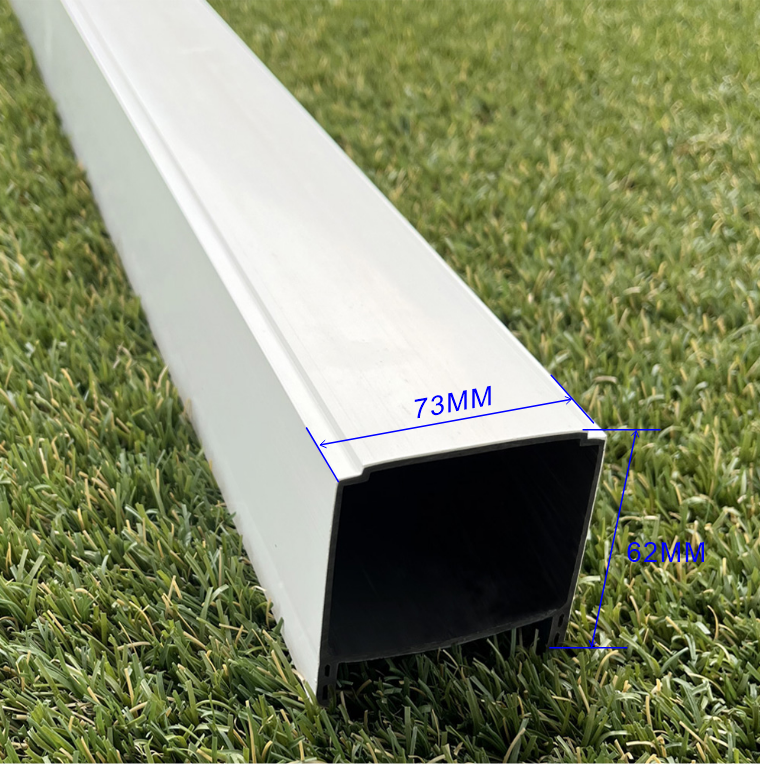
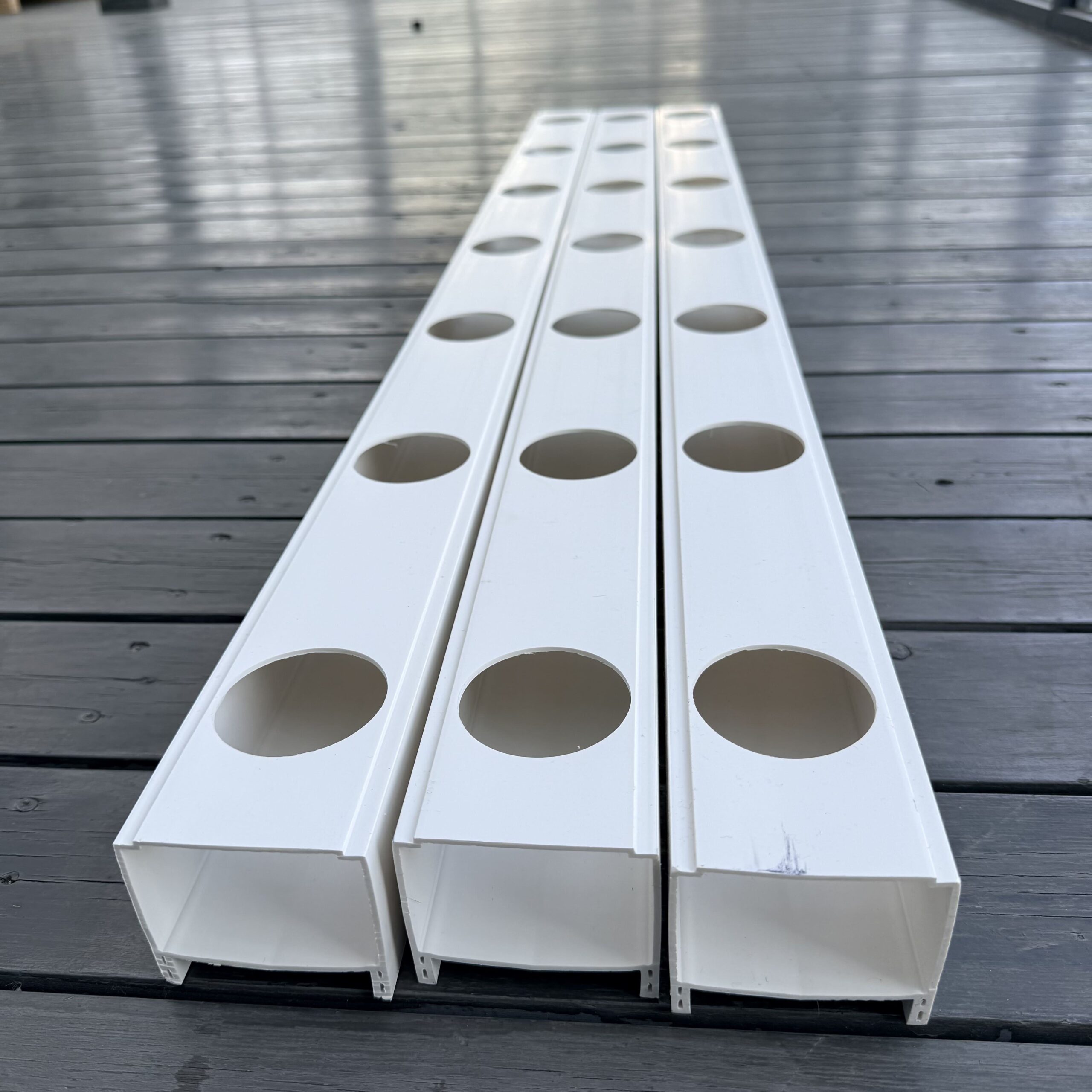
| Growing channels | Hold net pots and plants; carry the nutrient film | Food-grade PVC-U, 100×50 mm or 73×62 mm profile |
| Support structure | Sets the slope that drives flow | 1–2% fall along channel length |
| Supply piping | Delivers solution to the high end of each channel | 1–2 L/min per channel |
| Return piping + tank | Collects runoff, gravity return to reservoir | Sized for total system volume |
| Pump + filtration | Circulates and cleans the solution | Redundant pumps on commercial builds |
The flow loop is simple: the pump lifts solution from the reservoir to the high end of each channel; gravity pulls a thin film down the channel floor past the roots; the return line carries it back. The film is shallow on purpose — deep water starves roots of oxygen, no water kills them. The film depth is the whole trick.
Why the slope matters more than people think: a channel set dead level pools solution and drowns the lower roots; set too steep, the film breaks into rivulets and the upper roots run dry. On commercial installs we check slope with a laser level, not by eye. Eye-balled channels are the number one installation defect we get called out to fix.
NFT Pros & Cons — The Honest Version
Most NFT marketing lists only the pros. Here is the version we give our own project clients before they sign anything.
What NFT does well
- Low water and nutrient use. The recirculating loop typically cuts irrigation water consumption 70–90% versus open-field growing, and there’s no media to pre-wet.
- No growing media to buy, store or dump. Compared to dutch bucket growing, you eliminate a recurring consumable cost — coco or perlite every season.
- Consistent, repeatable crops. Leafy greens and herbs in NFT mature uniformly because every plant sees the same EC, pH and temperature.
- Cheap to scale per plant. Channels, stands and fittings are the bulk of the system; adding 1,000 more channels is largely linear cost.
- Easy to inspect roots. Lift a lid and the root health is visible — problems get caught early.
Where NFT bites
- No buffer during power failure. There is almost no water held around the roots. A pump outage in summer heat starts damaging roots within 30 minutes. If your site has unreliable power, budget for a backup generator before you budget for channels.
- Water temperature is unforgiving. Above roughly 26–28°C the dissolved oxygen in the film collapses and root disease follows. Hot-climate farms need reservoir cooling or buried tanks — that’s a real cost line.
- Not for large or long-cycle crops. Tomatoes, cucumbers and peppers need more root mass and anchorage than a thin film supports. That’s what dutch bucket systems are for.
- Algae in any light leak. Nutrient solution + sunlight = algae. End caps, lid seams and drill holes need to be light-tight from day one, or you’ll be scrubbing channels monthly.
NFT vs DWC vs Dutch Bucket: 30-Second Comparison
The three mainstream commercial methods in one table — this is the question we answer most often from farm planners:
| Criterion | NFT | DWC (Deep Water Culture) | Dutch Bucket |
|---|---|---|---|
| Root environment | Thin flowing film, high oxygen | Submerged in aerated tank | Media (coco/perlite), drip-fed |
| Best crops | Lettuce, basil, bok choy, herbs | Leafy greens, some herbs | Tomatoes, peppers, cucumbers |
| Power-outage buffer | Minutes | Hours (mass of water) | Hours (wet media) |
| Water use | Lowest | Low | Low (recirculating) to high (drain-to-waste) |
| Media cost | None | None (net pots only) | Recurring, every cycle |
| Hot-climate tolerance | Needs reservoir cooling | Needs chiller/aeration | Most tolerant |
| Cost per m² | Low–medium | Medium | Medium–high |
Is NFT Right for Your Crop?
A quick checklist we run through with every client. NFT fits when:
- Your crops are leafy greens, salad mixes, basil or Asian greens
- You can guarantee power (grid stability, generator, or solar + battery)
- You can keep reservoir temperature in the low-to-mid 20s °C
- You want the lowest operating cost per head of lettuce
Step back and look at dutch buckets or a mixed design when your crops are fruiting vines, your power is uncertain, or your summer water temperature runs high. Plenty of successful commercial farms we’ve outfitted run both systems side by side — channels for greens, buckets for tomatoes — because no single method wins every crop.
FAQ
How many lettuce plants fit in one 100×50 mm NFT channel?
A: A standard 6 m channel at 20 cm spacing carries roughly 28–30 heads per cycle. Your channel count comes from target weekly harvest, not from greenhouse area alone.
What slope and flow rate should I use?
A: 1–2% channel slope and 1–2 L/min flow per channel. These two numbers do more for crop health than any equipment upgrade.
Can I grow strawberries in NFT?
A: Strawberries do better in dedicated gutter systems with larger root volume — see our strawberry gutter system page for the differences that matter.
Next Step
If NFT matches your crop and site conditions, the practical first move is a channel list: crop, weekly harvest target, greenhouse dimensions and water source. Send that to our engineering team through the quote form and you’ll get a system layout with channel counts and pump sizing — before any purchase decision.
- Explore the NFT hydroponic system product line
- Read NFT vs DWC: which to choose
- See our commercial lettuce growing guide