Phase two is a good problem, and it arrives at exactly the moment the farm can least afford disruption: production is finally paying. Most of the pain, though, is decided years earlier — in the diameters written into the pipework specification, the floor space left beside the tanks, and the breaker slots left in the panel. Spare capacity is the cheapest insurance a project buys, but only for the components where retrofitting genuinely costs more than over-sizing.
Scope note: the construction side of adding capacity to a live farm is covered in the article on expanding without downtime, and the financing logic of building in stages in the article on phasing a project. This piece covers only the design-stage decision: what to reserve in mains, tanks and power from day one.
What Phase Two Usually Adds
The planning conversation needs a shape, and most expansions take one of three:
- More of the same: duplicate bays of the current system on adjacent land or under an extended greenhouse. Demand roughly doubles in the same pattern — the easiest case to size for.
- A new crop or system type: vine crops on substrate beside leafy greens in NFT, for instance. Demand pattern changes, not just quantity — drip zones, longer run times, different peak simultaneity.
- Added infrastructure load: a packhouse, cold room, or post-harvest line that multiplies electrical draw without adding irrigation demand at all.
Buyers should size reserves against the case the business plan actually names, not a generic “more”. Reserving for the wrong expansion is wasted capital twice — once buying it, once ignoring it.
Mains and Manifolds: Oversize Where Digging Hurts
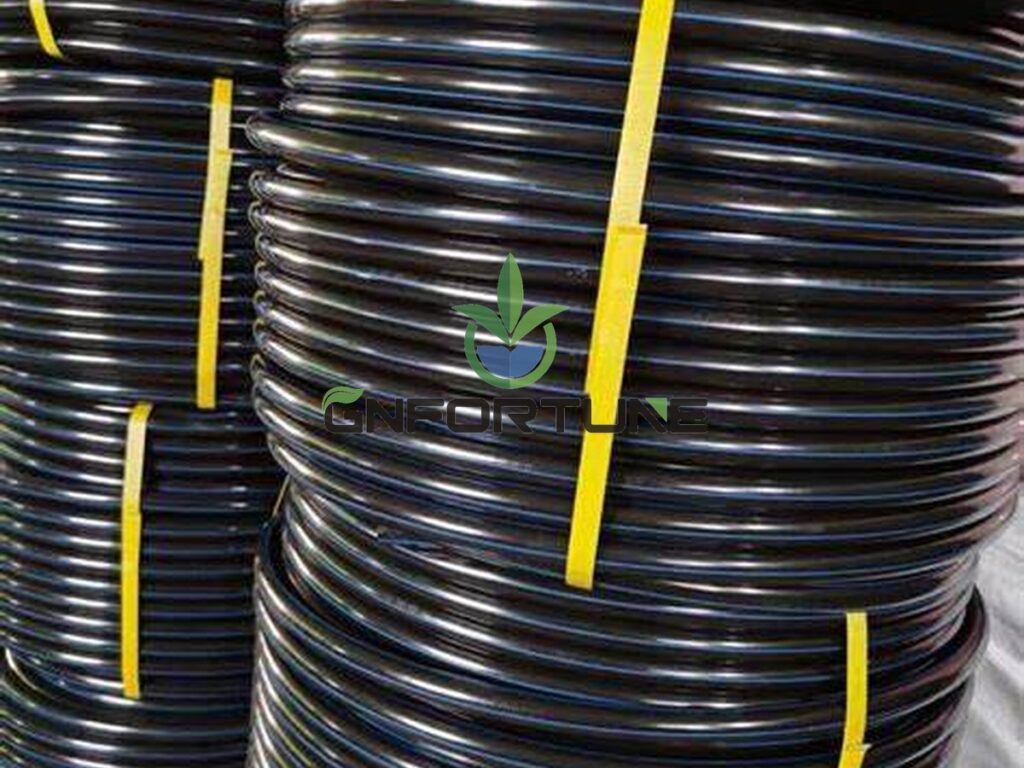
Pipework is the classic case for spare capacity, because the pipe is cheap and the trench, re-piping and production interruption are not. The logic from the mains sizing discipline — velocity and friction limits — applies here with an added rule: size for the doubled design flow now, and the velocity band still holds.
In practice that usually means one to two pipe sizes above phase-one need on the trunk sections, with capped or valved spare tees at the positions phase two zones will hang from. Two specific provisions repay themselves:
- Capped stub outlets at each future zone boundary — a tee, valve and cap installed for the price of the fitting while the trench is open, versus a new excavation through a working farm later.
- Manifold length and pump-room wall penetrations sized for the final wall, not the phase-one wall: extra stubs through a wall are trivial at construction and messy afterwards.
What does not justify over-sizing: zone-level pipework inside bays, which is cheap to extend and easy to route later. Reserve belongs on the trunk and the penetrations, where access is the cost.
Tank Volume and Fertigation Room Headroom
Tanks are a split decision. Buying double tank volume on day one buys standing inventory — water, chemical, cleaning duty and stagnation risk — for capacity the farm will not use for years. The better reserve is spatial:
- Reserve floor space and load capacity for the future tank positions: a levelled, drained pad with the pipework stubs already through the wall, waiting for tanks that arrive when the demand does.
- Size the pump room for the second dosing skid — wall space, floor drains, and the access clearances the fertigation layout rules require, reserved on the drawing now.
- Spec dosing hardware with range in mind. Where an injector or dosing channel has an adjustable range, buy the model whose range covers phase two rather than the cheapest one that covers today.
The same spatial logic applies to the reservoir and storage design: the tank geometry guide covers working levels and access; the phase-two decision is simply where the next tanks stand and where their pipes enter.
Electrical Capacity: The Rigid Reserve
Electrical supply is the least forgiving of the three. Growing a transformer connection, a service entrance or a main distribution board after energisation is a utility-and-permit process measured in months, and on some sites the supply itself — the incoming cable, the agreement with the utility — cannot be grown at all. As planning ranges, projects that seriously expect a second phase typically reserve:
- Incoming supply and transformer: sized for the projected total site load, not the phase-one load, where the utility agreement allows it.
- Main panel: physical space and busbar rating for the future feeders, plus at least 20–30% spare breaker ways as a planning band on distribution boards.
- Cable routes: ducts and tray runs sized so a second set of feeders can follow without re-opening finished floors and walls.
Panel layout for wet areas follows its own rules — covered in the electrical panel layout article — and backup power deserves the same forward look: a generator sized or at least plumbed for the final load avoids buying the same machine twice. The sizing method is in the backup generator article.
Spare Capacity: Reserve Now or Buy Later
| Component | Reserve at phase one | Retrofit cost if skipped |
|---|---|---|
| Trunk mains and wall penetrations | Oversize 1–2 sizes; capped stubs at future zone boundaries | High — excavation through a producing farm, production interruption, redoing finishes |
| Zone-level pipework | Nothing special — standard phase-one sizing | Low — extends easily alongside live bays |
| Tank farm | Pad, drainage, pipework stubs for future positions | Medium — new trenching and pad work in the fertigation area |
| Pump room / fertigation room | Floor space, drains and clearances for the second skid | Medium to high — layout rules are hard to satisfy after the fact |
| Electrical incoming supply | Size for projected total load where the utility allows | Very high — utility process, permits, months of lead time |
| Distribution boards | Spare ways and busbar rating, cable routes sized for a second set | Medium — doable, but re-opens panels and shutdowns |
| Dosing pumps / injectors | Spec for range coverage of phase two, not a second unit | Low to medium — add channels or replace at phase two |
| Pumps | Nothing — size for phase one; add a pump at phase two | Low — the standby-pump plumbing pattern extends naturally |
The pattern behind the table: reserve where access costs money (trenches, walls, buildings, utility connections), and buy later where the component is modular (pumps, dosing channels, tanks themselves).
Writing the Reserve Into the Specification
Reserve capacity that is not in the specification does not survive procurement. Three documentation habits make it real:
- Name phase two on the drawings. Future zone boundaries, tank positions and panel space marked on the as-built set, so every contractor bidding phase two sees the intended structure instead of improvising one.
- Priced options, not vague intentions. Ask suppliers to carry the oversizing as priced line items — a DN110 main versus DN90, the capped tees, the bigger panel — so the reserve is a decision, not an accident. The bid-normalisation method for comparing those options is covered in the article on comparing equipment quotations.
- Re-verify at phase two design. Before ordering, re-check the reserved capacity against the actual phase-two load — plans drift, and a reserve sized for a plan that changed is still wasted capital.
Sizing for phase two is a discipline of small premiums in the right places: bigger trunk pipe, a reserved pad, spare breaker ways, a utility agreement with headroom. Spent there, spare capacity makes expansion a construction job; skipped, it makes expansion a surgery.
FAQs About Sizing for Phase Two
How much should we oversize the mains for a likely phase two?
On trunk sections, size for roughly the doubled design flow while staying inside the normal velocity band — usually one to two standard pipe sizes above phase-one need, with capped stubs at future zone boundaries. Zone-level pipe needs no special over-sizing.
Should we buy double tank capacity now?
Usually no. Buy the floor: a reserved pad with drainage and pipework stubs, then add tanks when demand arrives. Early tank volume costs money and adds standing-water hygiene duties years before it earns anything.
What happens if we undersize the electrical supply?
It is the hardest reserve to recover: growing a transformer or service entrance involves the utility, permits and months of lead time, and on some sites the incoming connection cannot be grown at all. Size incoming supply and panel space for the projected total load from the start.
Does spare capacity raise operating costs?
Slightly, in the right places only: a bigger main has negligible standing losses, spare breaker ways cost nothing to hold, and a reserved pad is just space. Oversized dosing hardware or huge tank volume, by contrast, can add stagnation and maintenance burden — reserve space and capacity, not machinery.
How do we stop the reserve from disappearing during procurement?
Put it on the drawings and in the bill of quantities as named, priced items — the larger main, the capped tees, the panel space — so bidders quote it and value-engineering cannot quietly delete it. Unlisted reserves are the first thing cost pressure removes.
Related Reading
- Expanding a Hydroponic Farm Without Downtime — The construction reality the reserves are meant to soften
- Phasing a Hydroponic Project: Building in Stages — The cash-flow logic that decides how phases split
- Reservoir Sizing and Water Storage Tank Design — The tank geometry the reserved pad will host
- Backup Generator Sizing: kW, Fuel, Days — Sizing backup power for the final load, not the first
- Equipment Bill of Materials by Scale — How the item list grows with scale
Next Step: What to Send for a Quotation
Reserve capacity is priced from the phase-two intent, so the business plan’s expansion line belongs in the RFQ alongside the phase-one parameters. With both, suppliers can carry the oversizing as priced options instead of assumptions.
Planning a two-phase build? For RFQ or project consultation, send: phase-one system type, area and zone count; the expected phase-two scenario (more of the same, new crop, or added infrastructure); site plan with space for expansion; utility supply situation and expected total load; water source capacity; delivery schedule for each phase; and the budget band. G AND N FORTUNE LIMITED supplies phased NFT, DWC, Dutch bucket and substrate projects with mains, tanks, dosing and power packages quoted per phase, with reserve items priced as options.