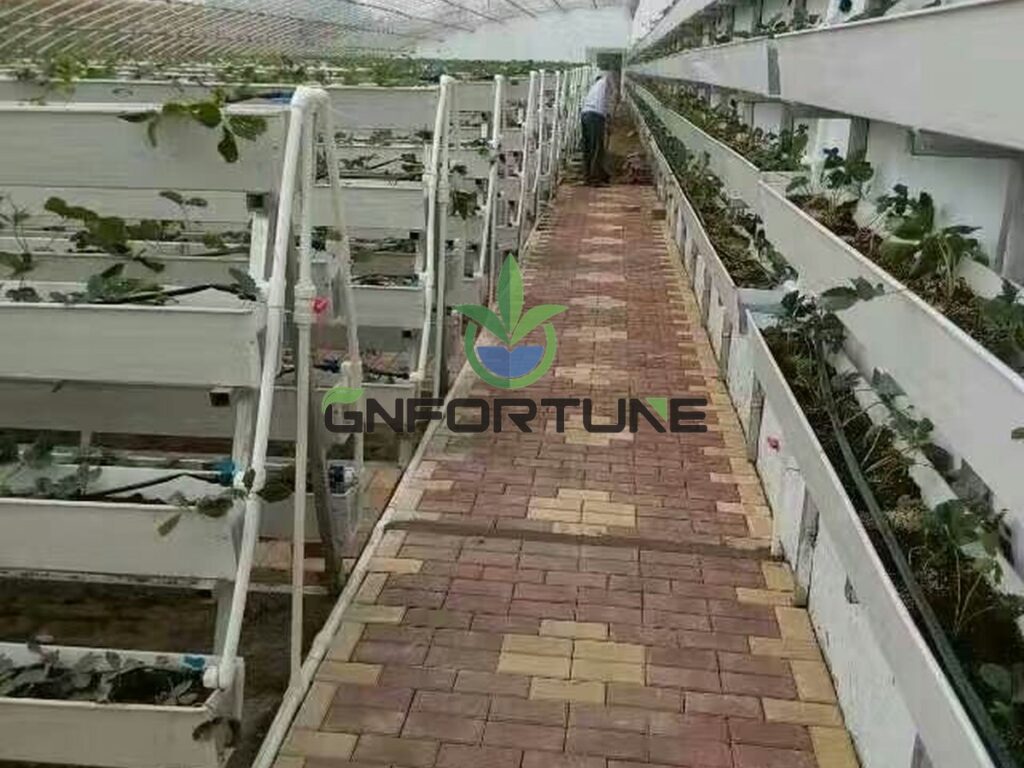
Most farms can produce a quotation and a container list within a day. Far fewer can produce an accurate drawing of what is actually installed. Hydroponic as built drawings are the record of the system as constructed — valve numbers, zone boundaries, pipe sizes, pump and filter models — and they are the first thing a site needs when a line is modified, a fault is chased at night, or an auditor asks what is in the house.
This is the equipment-side record, distinct from crop and batch records. The two meet at one point: the zone and valve identifiers that let a batch be traced back to the hardware that fed it.
Why Hydroponic As-Built Drawings Earn Their Keep
Because the design drawing and the installed system always diverge, and the divergence is exactly the information needed during a fault. Channel lengths get trimmed on site, a valve is added to split a zone, a filter is swapped for a different model during year two. None of that reaches the original drawing unless someone records it.
Four situations where the record pays for itself:
- Modification or expansion: knowing which existing valve isolates a section avoids shutting down a house to find out.
- Out-of-hours repair: a numbered valve and a marked zone boundary let one person isolate a leak safely instead of guessing at a manifold.
- Training: a labelled house teaches a new operator in weeks rather than seasons, and reduces the “which one is this” question that causes most valve errors.
- Audit, insurance or sale: buyers and inspectors ask for equipment lists, material certificates and maintenance history. A maintained record answers in an afternoon.
The cost of not having it shows up as a survey visit before every modification, a spare part ordered twice because the model was recorded wrong, and a valve closed on the wrong zone during a fault.
What a Hydroponic As-Built Record Should Contain
The minimum field set is smaller than most farms assume. It does not need to be a full piping isometric; it needs to answer, for any point in the house, what is fitted and what it is connected to.
| Field | Where it lives | Why it matters |
|---|---|---|
| Valve and isolation point ID | Tag on the valve, mark on the drawing | Isolating a section without shutting the house |
| Zone boundary and coverage | Drawing, floor marking | Knowing which crop a fault affects |
| Pipe diameter and material per run | Drawing, tag at both ends | Correct fittings and solvent cement on a repair |
| Pump make, model, serial and duty point | Nameplate photo, asset list | Replacement and spare seal ordering |
| Filter type, micron rating, element part number | Tag on the housing, asset list | Re-ordering the right element |
| Sensor locations and calibration dates | Drawing, calibration log | Trusting a reading during a fault |
| Electrical circuit per pump and valve | Panel schedule, circuit label | Safe isolation before work |
| Drain and flush points | Drawing, tag at the point | Clean-out and sanitising between cycles |
Two habits make the difference between hydroponic as built drawings that get used and ones that get filed. Record part numbers rather than descriptions — “filter element, 120 mesh, part no. X” is purchasable, “the small filter” is not. And photograph every nameplate at commissioning, because serial numbers on a pump body fade long before the pump does.
Labelling That Survives a Wet, Corrosive House
Tag failure is a material problem before it is a discipline problem. A greenhouse wet area combines permanent humidity, fertiliser splash, sanitiser during clean-out, UV near openings and daily temperature cycling — most office-grade labels are not rated for any of it.
| Tag option | Where it works | Where it fails |
|---|---|---|
| Pre-printed UV-stable plastic or polyester tag on a tie | Valve handles, manifolds, short pipe runs | Standard ink fades; plastic ties embrittle in UV |
| Engraved or embossed plastic / stainless tag | Permanent IDs, wash-down areas | Higher cost per tag, slower to change |
| Wrap-around pipe label | Straight pipe runs indoors | Adhesive creeps on dusty or wet pipe |
| Stencil or paint mark on floor and structure | Zone boundaries, drain points | Needs refreshing at least annually |
Fixing matters as much as printing. A stainless tie or a rivet outlasts a nylon tie in a UV-exposed position, and a tag that hangs loose gets caught and lost during cleaning. Buyers should confirm ink and adhesive ratings with the supplier and expose a sample on site for one season before committing to a full house.

Numbering Schemes That Stay Readable After Year Three
Number by physical position rather than by function, because function changes. A valve coded Z3-V14 — zone 3, valve 14 — still means something after the crop in that zone changes. A valve coded “lettuce feed” does not.
- Put the zone and direction on the tag, not just in the drawing.
- Never reuse a retired number. A reused ID makes old work orders ambiguous.
- Keep the legend at the panel and in the controlled drawing, and update both at the same time.
- Treat a QR code as an addition to readable text, not a replacement. Text works when the network does not.
- Colour-code by system — feed, return, drain — and keep the colour key on the same sheet as the number key.
The scheme should be decided before installation starts. Retrofitting a numbering system onto a populated house means re-tagging everything while it is in production.
Who Updates the Record, and When
Assign the record to a named role rather than to “the team”, and define the events that trigger an update. The trigger list that works on most sites:
- Any pipe, valve or drain point added, moved or removed.
- Any pump, filter or sensor changed to a different model.
- Any zone re-split or re-balanced.
- Any electrical change in the panel that feeds pumping or dosing.
- Any change a future fault-finder could not reasonably guess.
Reconcile the drawing against the house at least twice a year, or once per crop cycle, by walking the lines with the drawing in hand. Keep one controlled file carrying a revision number and date, and keep the printed copy at the panel in a sleeve — a drawing that only exists on one laptop is a drawing the night shift cannot read.
Commissioning is where this record begins. The testing and site-acceptance stage produces the first accurate equipment list; the commissioning and site acceptance process is the natural point to capture it, and the as-built set is what that list becomes after changes.

Where Equipment Records Stop and Crop Records Start
The two record systems serve different questions. Crop and batch records answer what was grown, when, with what input lot, and where it went. Equipment records answer what is fitted, what it is connected to, and what its part number is.
They link through identifiers. If the batch record for a bay names the zone ID, and the equipment record names every valve and sensor in that zone, a quality question about one batch can be traced to the hardware and the readings behind it. That link is what makes an audit short rather than long, and it is covered in more detail in the guide to farm traceability and batch records.
The equipment record also feeds purchasing directly. Once pump models, filter elements and valve types are recorded with part numbers, the downtime-based spare parts list can be built from what is actually installed rather than from a generic catalogue.
That record only holds if the hydroponic as built drawings are updated when a line changes, which is why the set needs an owner rather than a template.
FAQs About Hydroponic As-Built Records and Labelling
What should hydroponic as built drawings include at minimum?
Valve and isolation IDs, zone boundaries and coverage, pipe diameter and material per run, pump and filter models with part numbers, sensor positions, the circuit feeding each item, and drain or flush points. Anything that changes the answer to “what is fitted here” belongs in it.
Is a photo set enough instead of drawings?
Photos capture nameplates well and should be part of the record, but they do not show routing or which valve isolates which section. Use photos for serial numbers and drawings for topology; the two are complementary rather than interchangeable.
Which label materials survive a wet greenhouse?
UV-stable printed plastic or polyester tags on stainless ties work in most wet areas; engraved plastic or stainless suits wash-down zones. Adhesive wrap-around labels fail on dusty or wet pipe, and nylon ties embrittle under UV. Confirm ratings with the supplier and test a sample for a season.
How often should the as-built record be updated?
On every change event, plus a scheduled walk-through reconciliation twice a year or once per crop cycle. A record updated only annually is usually a record that is wrong by the time it is needed.
Who owns the record on a multi-site operation?
One named role per site, with a single controlled file and a revision number. Where sites share a maintenance team, the identifier scheme must be identical across sites so a work order raised at one location is readable at another.
Related Reading
- Hydroponic System Commissioning: Sequence, Testing and Site Acceptance — The stage where the first accurate equipment list is produced
- Hydroponic Traceability: Batch Records That Pass an Audit — How crop records link back to zone and valve identifiers
- Critical Spare Parts for Hydroponic Farms — Building a stock list from the equipment actually installed
- Hydroponic Equipment Lifespan: 10-Year vs 3-Year Parts — Which items need replacing on a known cycle, and when to re-tag
- Electrical Panel and Circuit Layout for Wet Greenhouse Areas — Circuit labelling and safe isolation, the other half of a maintenance record
Next Step: What to Send for a Quotation
Hydroponic as built drawings start with the supplier. If documentation deliverables are agreed at quotation stage, the as-built set arrives with the shipment instead of being reconstructed two years later from memory.
Planning a new block or replacing a line? For RFQ or project consultation, send: greenhouse dimensions and zone layout; system type and channel section; pipe sizes and material preference; pump, filter and dosing models required; thread or connection standard used on site; whether drawings, manuals and a labelled spare parts list are required as contract deliverables; language and file format for documentation; raw water analysis and operating temperature range; delivery schedule; and the budget band. G AND N FORTUNE LIMITED supplies NFT channels, Dutch bucket and DWC systems, pumping and filtration sets, and documentation packs quoted to those parameters.