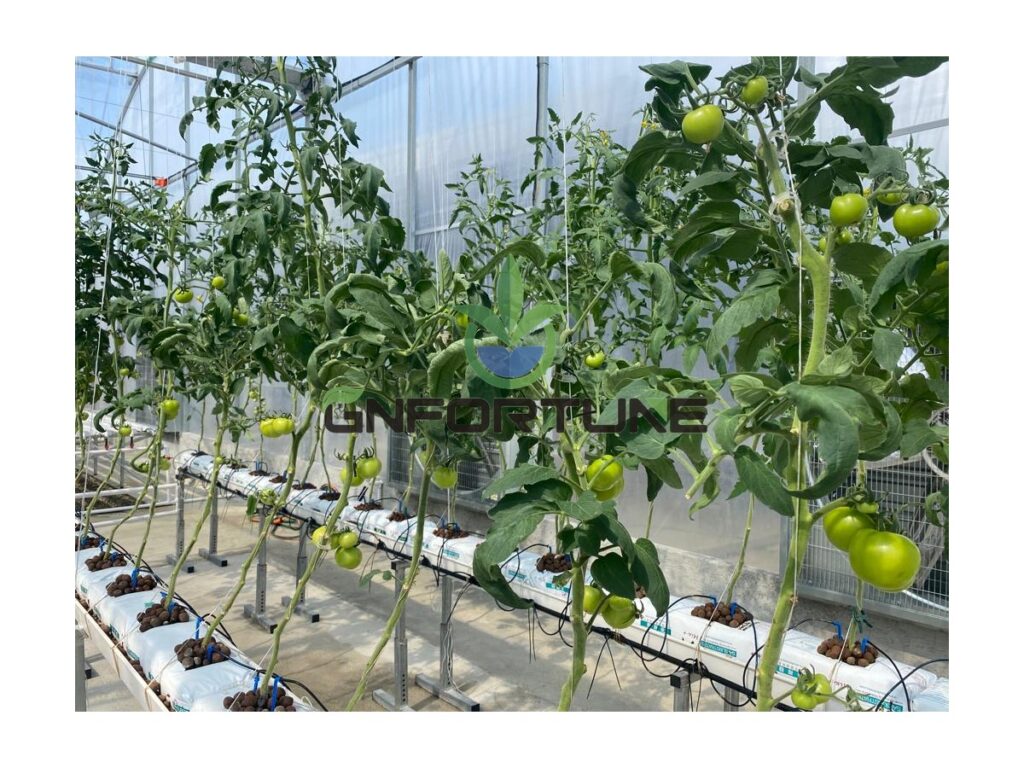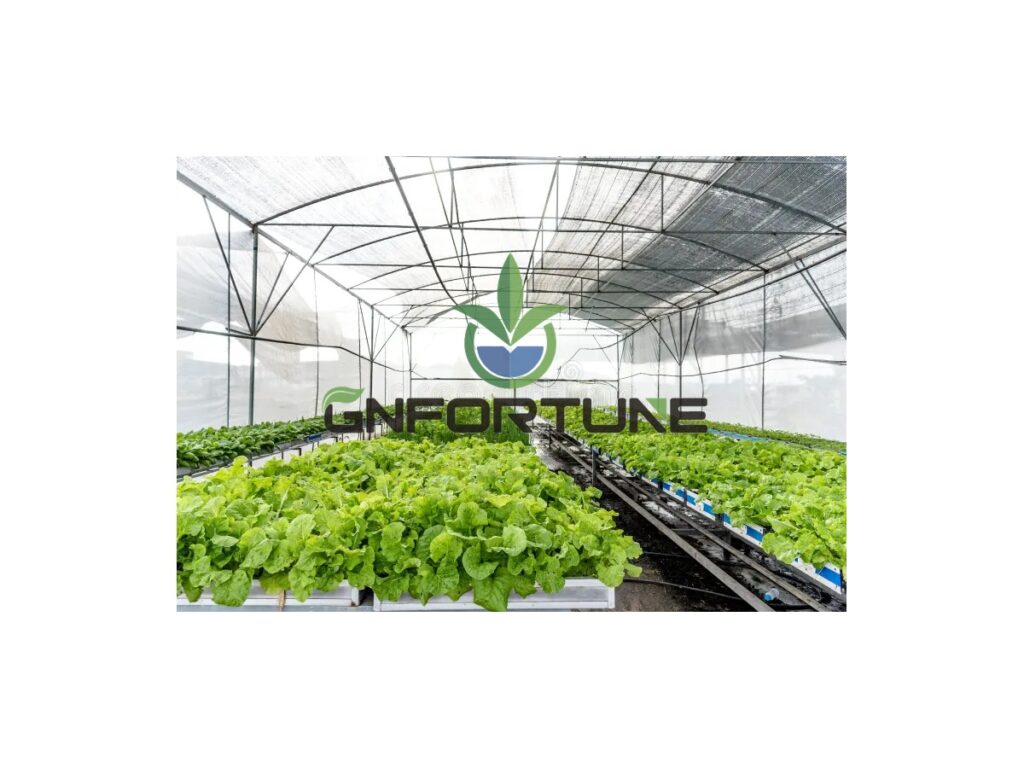
Celery is one of those crops that looks like a natural fit for soilless production and then quietly punishes optimistic planning. It takes longer than lettuce, occupies more root volume, and demands a specification rather than just a harvest date. This guide covers hydroponic celery production the way a project actually experiences it: system selection, spacing, the nutrient programme, then the harvest and packing specification that decides whether the crop has a buyer.
It is written for growers and engineering teams evaluating celery as a diversification line, where the farm already runs leafy crops and wants higher value per square metre.
Is Celery a Realistic Hydroponic Crop
Yes, but it belongs in the long-cycle bracket. Celery is a petiole crop with an establishment period in propagation followed by a substantial finishing phase, and modest early mistakes compound over that longer period.
The trade-offs that matter commercially:
- Longer occupancy: bays are tied up for considerably longer than a lettuce cycle, which raises the value required per square metre.
- Higher standing biomass: canopies are tall and root plates are large, so systems need physical capacity, not just adequate volume.
- Specification risk: petiole length, colour and absence of defects are graded, and downgrades are common if the programme is loose.
- Climate sensitivity: bolting and pithiness follow temperature history, so season planning is part of system design.
Farms already running short-cycle leafy production often fit celery into a smaller dedicated block rather than converting the whole house. That keeps the weekly output pattern intact while testing the crop.
NFT or DWC for a Long-Cycle Petiole Crop
Both routes are used commercially, and the choice turns on how much failure tolerance the site has rather than on yield potential. NFT gives lower solution volume and clean root-zone access; DWC beds give a buffered root environment and more physical stability for a tall canopy.
| Factor | Celery NFT system | Celery DWC beds |
|---|---|---|
| Root environment | Shallow film, low buffer | Deep solution, buffered |
| Failure tolerance | Low; pump loss shows within hours | Moderate; standing volume carries the crop |
| Plant support | Depends on lid and plug anchor | Raft or board supports larger plants |
| Sanitation | Simple, frequent clean-out | Tank hygiene and biofilm management |
| Best fit | Tight control, experienced crew | Sites prioritising risk reduction |
Pump redundancy deserves specific attention on either route. A crop that will stand for months needs a failover path that is tested during commissioning, not discovered during a storm.
Design detail for the raft route is covered under DWC raft bed design, and channel selection for the film route in the NFT channel wholesale guide. Existing expertise with fast crops such as the Asian greens cycle transfers partially, mainly in propagation.
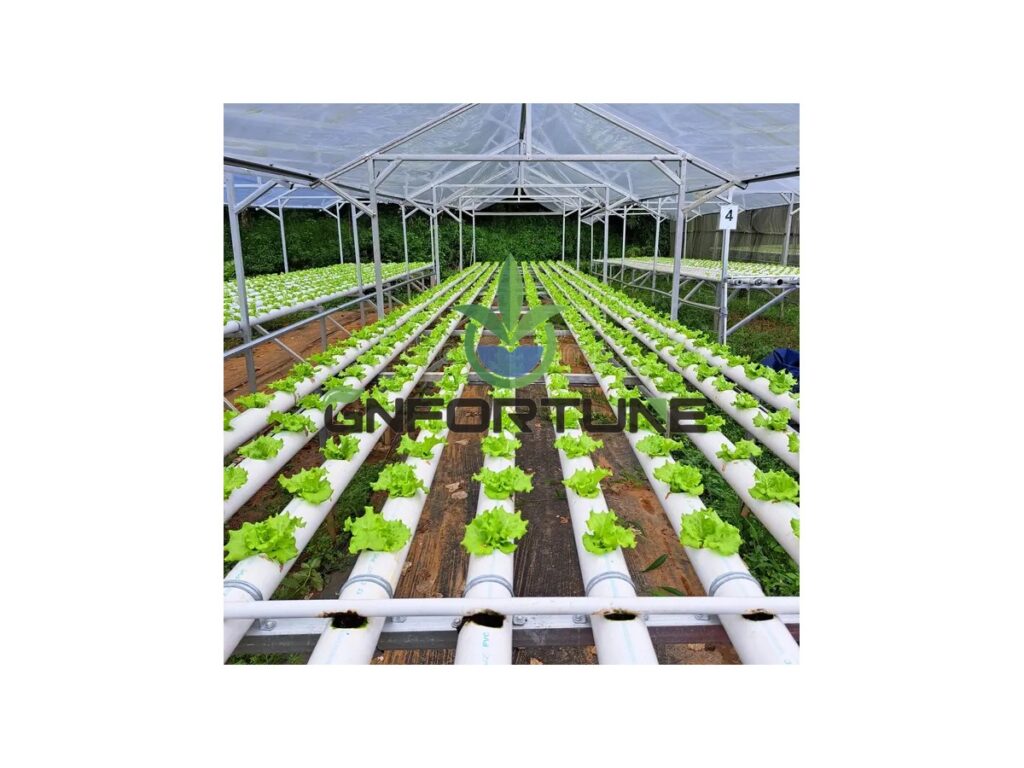
Spacing, Density and Canopy Management
Spacing is the single decision that most directly shapes specification. Wider spacing produces heavier, larger plants with better air movement; tighter spacing produces more plants per square metre at smaller individual size. Which is right depends entirely on which grade the buyer pays for.
Treat celery plant spacing as a contract variable rather than an agronomic preference. The practical steps are:
- Obtain the buyer’s specification — minimum petiole length, count per bunch or plant, and acceptable diameter bands.
- Work backwards to the plant size that reliably produces that grade.
- Set grid spacing to achieve that size, then check plants per square metre still cover fixed costs.
- Adjust for season, because winter growth rates change what the same spacing delivers.
Canopy management follows from density. Air movement through a dense celery stand matters more than for lettuce, because the crop is taller and stays longer; growers planning tight grids should verify horizontal airflow and dehumidification before committing.
Uniformity is the other half of the story. Buyers accept average size far more readily than erratic size, so a slightly wider grid that delivers even bunches usually out-sells a dense block that needs sorting.
Nutrient and EC Programme, Tipburn and Quality Risks
Celery is generally run on a moderate rather than aggressive feed. Specific targets should always be confirmed with your agronomist and adjusted for cultivar, season and water analysis, so treat the ranges below as starting points rather than instructions.
Calcium movement is the recurring quality issue. Petiole crops show tipburn and related disorders when calcium transport cannot keep pace with demand, which is driven by transpiration rather than by solution concentration alone.
- Airflow at canopy level drives transpiration more reliably than raising the recipe.
- Root-zone temperature influences uptake, and hot solution reduces both oxygen and transport.
- EC drift under high transpiration needs monitoring; recirculating designs should have a documented dump or correction cycle.
- Boron and micronutrient balance deserve regular tissue or solution checks on a long crop.
Pithiness and bolting are not nutrient problems. They follow temperature history and cultivar choice, and once visible they cannot be corrected after the fact — so season and variety planning belongs before the first plug arrives.
Cycle Length, Harvest Specification and Packing
Cycle length in hydroponic celery production is usually treated as a planning band rather than a fixed number, because cultivar and season move it substantially. Farms tend to schedule against observed days to target size in their own house rather than against a published figure.
The celery harvest specification is where most commercial disappointment originates. Typical contract elements include:
- Trimmed plant length and minimum petiole count.
- Bunch weight range and count per carton.
- Colour expectations, including how much pale inner growth is acceptable.
- Defect tolerance for pithiness, cracking, insect damage and disease symptoms.
- Cooling requirement — field heat removal immediately after cutting.
Packing is a capital line, not an afterthought. Trim tables, wash or hydro-cooling, cold storage and packing benches must be sized to the daily cut, and labour peaks on harvest day rather than spreading evenly through the week.

Labour and Cost per Kilogram
Celery carries more handling labour than most leafy lines. Transplanting, canopy work, selective harvest, trimming, bunching and boxing are all manual steps, and the crop’s taller habit makes each pass slower.
The accounting should therefore be built per kilogram, not per plant:
- Direct labour allocation per square metre per week, weighted toward harvest periods.
- Media, plugs and consumables amortised across the longer cycle.
- Energy for pumping and any chilling, attributed by bay where metering allows.
- Downgrade and waste percentage — the most commonly omitted line, and often the largest one.
The same cost-per-kilo method used for lettuce applies here, with the crucial difference that occupancy time is longer, so every day in the house has to earn more.
FAQs About Hydroponic Celery Production
How long does a hydroponic celery cycle take?
It varies widely by cultivar, temperature and light, so plan against observed days to target size in your own house rather than adopting a published figure. It is materially longer than any lettuce cycle.
Is NFT or DWC better for celery?
NFT suits operations with tight control and experienced crews; DWC suits sites that prioritise failure tolerance and physical plant support. Neither produces better crop in the hands of a team that cannot run it.
What spacing should we use?
Start from the buyer’s grade requirement and work backwards. Spacing that maximises plants per square metre often produces size variation that costs more in downgrades than it gains in count.
Why do petioles show tipburn even when calcium is adequate?
Because transport depends on transpiration. Poor canopy airflow, high root-zone temperature or erratic watering limit calcium movement regardless of recipe concentration.
Can celery share a nursery with lettuce and herbs?
Propagation can often be shared, since plug-stage requirements are similar; growers already running short-cycle greens can cross-reference the specialty greens cycle guide. Finishing is harder to share because of the different cycle length.
Related Reading
- NFT vs DWC Hydroponics: Difference, Costs & Which to Choose — How the two systems differ on cost, root zone and crop fit before you commit a bay to celery
- Plant Spacing and Density in Hydroponics: Plants per Square Metre That Pay — Plants per square metre that pay, and why celery spacing is a grade decision
- Tipburn, Bolting and Other Physiological Disorders in Hydroponic Crops — Tipburn, bolting and the physiological disorders that decide saleable yield
- Grading Standards for Hydroponic Produce: How to Build a Line That Ships to Spec — How to build a grading line that ships to the specification your buyer wrote
- Cost per Kilo: Simple Accounting for Lettuce Farms — Simple per-kilo accounting for checking whether the crop pays at your yield
Next Step: What to Send for a Quotation
Celery lines are quoted like any other crop-specific scope: the system follows from the specification, not the other way round. Suppliers asked to quote without a target grade will guess, and their guess will not match your buyer.
Planning a celery block? For RFQ or project consultation, send: greenhouse dimensions and available bay area; cultivar and buyer grade specification if available; target weekly or annual output; preferred system (NFT, DWC beds or undecided); local climate range and raw water analysis; existing packing and cooling capacity; automation level requested; delivery schedule; and the budget band. G AND N FORTUNE LIMITED supplies NFT channels, DWC bed systems and matching greenhouse packages quoted to those parameters.