
Baby Leaf Production: Cut Height and Regrowth
Baby leaf production is a direct-sown, machine-cut crop, and almost none of the equipment logic carries over from head lettuce. There are no plugs, no holes, no single-plant spacing: seed goes onto a flat media surface at high density, the whole surface is cut 20 to 40 days later, and the leaf is washed, dried and packed loose. This article covers how baby leaf differs from a head crop, the sowing density and surface flatness the cut depends on, where the growing point sits relative to the blade, whether a second cut pays, and what the washing line has to handle.
Baby Leaf vs Full Head: What Changes
A head crop is grown to maturity as individual plants with defined spacing. Baby leaf is harvested at the young vegetative stage, typically 50 to 120 mm of leaf, and the saleable unit is weight of loose leaf rather than count of heads.
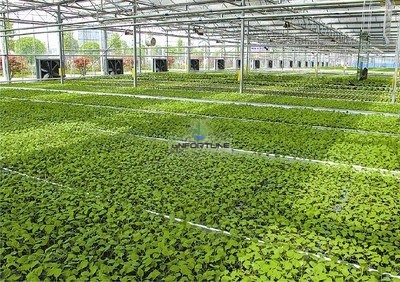
- Planting: direct sown, no transplant, no plug, no net pot.
- Density: hundreds of plants per m² rather than a dozen.
- Harvest: a horizontal cut across the whole surface, by hand sickle, walk-behind cutter or conveyor-mounted blade.
- Post-harvest: wash, dry and pack every gram the same day, with no trimming bench.
- Equipment risk: the cut is the yield event, so blade height, sharpness and surface flatness decide pack-out.
The overlap zone is worth being clear about, because buyers use the terms loosely. Baby leaf is cut above the media and sold loose; microgreens are harvested younger with the stem attached; a full head is a mature plant. Equipment for the first two is closer to each other than to a lettuce line.
Sowing Density and Media Surface
Density sets both yield and disease pressure. Sow too thinly and the leaf is coarse and stemmy; sow too densely and airflow collapses at the base and the stand rots before cut. Commercial practice sits in these bands:
| Crop | Seed rate | Target stand | Days to cut |
|---|---|---|---|
| Arugula and mustard | 15 to 25 g per m² | 120 to 200 plants per m² | 21 to 30 |
| Spinach and chard | 20 to 35 g per m² | 150 to 250 plants per m² | 25 to 35 |
| Frill and oak leaf | 15 to 25 g per m² | 120 to 200 plants per m² | 25 to 35 |
| Cress and small mustards | 30 to 50 g per m² | 300 to 600 plants per m² | 14 to 21 |
Evenness matters more than the absolute number. A broadcast sowing that clumps gives a canopy of different heights, and the blade then either scalps the tall clumps or leaves the short ones behind. A precision seeder or a broadcast unit followed by a light rolling gives a far more uniform cut.
The media surface has to be flat and level. In channels, that means a wide channel or a shallow bed with a mat, filled to a consistent depth of roughly 20 to 40 mm and levelled so the surface varies by no more than a few millimetres across the cut width. On site we often see beds that were levelled once at install and have since settled, which shows up as a strip of uncut leaf down one side of every bed.
Cut Height and the Growing Point
Cut height is where the money is. Cut too high and you leave saleable leaf in the bed; cut too low and you take the growing point, media and debris with it, and the crop either dies or regrows badly.
- One-cut crops: cut at 20 to 40 mm above the media surface, low enough to take most of the leaf, high enough to stay out of the media.
- Regrowth crops: cut above the growing point, which for most brassica and lettuce types means 30 to 50 mm, and accept that the first cut is smaller.
- Blade condition: a sharp blade severed cleanly; a dull one tears, and torn stubs are where Botrytis starts.
Cut height is a setup number, not a crew preference, and it has to be checked with a gauge at the start of every block. The failure mode we keep meeting is a bed cut 10 mm lower than intended because the blade shoe wore down, which pulls media into the harvest, doubles wash loading and kills the regrowth the schedule was built around.
One-Cut vs Regrowth: Yield and Quality
Regrowth looks like free area, and it rarely is. A second cut from the same stand typically yields less than the first, produces smaller and more variable leaf, and carries more debris, so wash loading and labour per kilogram both rise.
| Factor | One cut | Cut and regrow |
|---|---|---|
| Cycle on the bed | 21 to 35 days | 21 to 35 days plus 12 to 18 to the second cut |
| Second-cut yield | Not applicable | Roughly half to two thirds of the first cut |
| Leaf size and uniformity | Consistent | Smaller, more variable |
| Debris and wash loading | Low | Higher, with more senescing stub material |
| Disease risk | Lower | Higher at cut stubs |
| Buyer acceptance | Standard for most specifications | Often excluded by salad processors |
The deciding question is usually contractual rather than agronomic. Many salad blend specifications exclude regrowth material on quality grounds, so a farm planning two cuts may end up selling the second cut at a discount or into a different channel. Blend specifications are set out in the leafy greens guide for salad processors.
Sanitation Between Cuts
Every cut opens hundreds of wounds per square metre on a wet, densely planted surface, and the interval between cuts is when the stand is most vulnerable.
- Clear debris: remove all cut material the same day; leaf left on the surface rots and inoculates the stubs underneath it.
- Hold water: keep irrigation off the cut surface for 24 to 48 hours so stubs dry and seal.
- Sanitise blades: between beds and between blocks, not once per shift.
- Watch the base: inspect the stand at the media line daily after a cut; botrytis and pythium show there first.
- Reset on schedule: strip and resow rather than pushing a third cut out of a tired stand.
Beds used for baby leaf turn over far more often than a lettuce house, so the sanitation interval, not the crop calendar, sets the labour load. A head lettuce programme in NFT channels might strip a channel a handful of times a year; baby leaf beds can turn over ten or more.
Washing, Drying and Pack-Out Rates
Baby leaf cannot be packed without washing. Cut leaf arrives with media particles, debris and a high surface microbial load, and the wash line is part of the production system, not an afterthought at the end of it.
- Wash: two or three stages, water held at 1 to 4 °C, with sanitiser residual monitored and logged.
- Dry: spin or forced-air drying to remove free surface water, which does more for shelf life than any sanitiser step.
- Cool: into 0 to 4 °C quickly after packing; the post-harvest cooling guide compares the options.
- Pack-out rate: expect a meaningful loss between harvested fresh weight and packed weight once debris, wash water and trim are accounted for, and measure it per block.
Pack-out rates and prices vary by region and season, so run your own numbers for a full season before sizing the line. Wash water control limits are set out in the wash water sanitation guide.
Frequently Asked Questions
What is baby leaf in hydroponics?
A: Young leaf direct sown at high density and cut 20 to 40 days later, sold loose rather than as heads. It needs a flat media surface and a wash line, not net pots.
How high should baby leaf be cut?
A: 20 to 40 mm above the media surface for a single cut, or 30 to 50 mm above the growing point where regrowth is planned.
Does regrowth pay?
A: Rarely at full price. A second cut yields roughly half to two thirds of the first, with smaller leaf and more debris, and many blend specifications exclude it.
What sowing density should I use?
A: 15 to 25 g per m² for arugula and frills, 20 to 35 g for spinach, 30 to 50 g for cress. Evenness matters more than the exact rate.
Can baby leaf be grown in NFT channels?
A: Yes, in wide channels or shallow beds with a mat at 20 to 40 mm media depth, provided the surface is level enough for a clean horizontal cut.
Request a Baby Leaf System Quote
A baby leaf hydroponic system is specified differently from a lettuce line: bed or channel width, media depth and surface flatness, seed rate per crop, cut method, and a wash and dry line sized to the daily harvest. Baby leaf production puts the cut and the pack-out at the centre of the design, so the two numbers to fix first are daily packed kilograms and the wash line capacity behind them.
Send the crop mix, weekly pack-out target, bed area available and whether you intend single or double cuts, and the engineering team will return a bed layout, seeding rate and wash line sizing. To request a baby leaf system quote, include the blend specification if you are supplying a processor, since cut height and regrowth rules follow from it.


