

Bato Bucket vs Dutch Bucket: Which Fits Your Crop?
Search results treat bato bucket and dutch bucket as one product, and many suppliers quote them interchangeably. They are not the same. A bato bucket drains through a siphon elbow that keeps a shallow layer of solution at the base; a Dutch bucket drains through a fitting set at a fixed height and empties almost completely. That single difference decides whether a vine crop survives a pump outage, how much runoff you have to treat, and which drainage layout you can build. This comparison is written for buyers specifying volume, where the choice is made once and repeated for years.
What Each Bucket Is
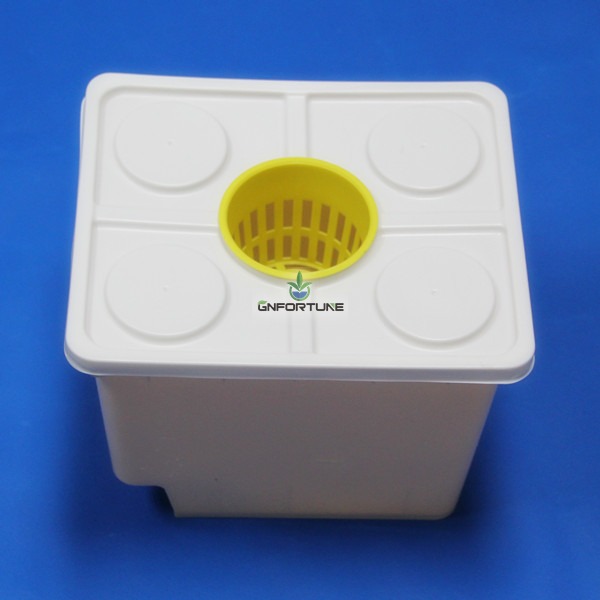
A bato bucket is a tapered container of roughly 9 to 12 litres with a moulded drain elbow on one side. The elbow rises inside the bucket and turns down at the outlet, so a band of solution stays in the base after every irrigation event and the outlet feeds a shared drain pipe running along the row. Because the buckets sit on a common line, the row is installed as a system rather than as individual containers.
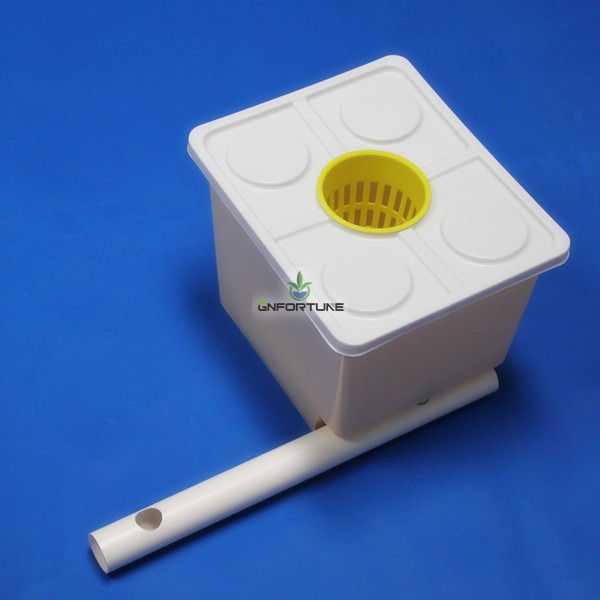
A Dutch bucket is usually a square or round pail of 10 to 25 litres with a drain fitting or internal baffle positioned a few centimetres above the floor. Solution leaves through a short hose into either a return line or an open drain. The bucket empties between events, stands on the floor or on a slab, and can be moved or replaced without disturbing its neighbours. Both types are filled with perlite or a perlite and coir blend and fed by pressure-compensating drippers.
The Drainage Difference That Decides Everything
Drainage geometry is the whole decision. A siphon elbow leaves roughly 0.5 to 1.5 litres of solution in the base of a bato bucket, which is a buffer against a blocked emitter, a power cut or a hot afternoon. A Dutch bucket has no reserve: the root zone drains within minutes, which gives better gas exchange but no margin for error.
The buffer cuts both ways. In a bato bucket on a recirculating loop, salts concentrate in the retained band and root disease spreads more easily through the shared drain line, so the loop needs filtration and disinfection plus tighter EC control. The same elbow can trap media fines and roots, and cleaning it means flushing the row rather than tipping out a bucket. A Dutch bucket is easier to inspect and flush, dries faster, and needs more irrigation events per day to hold the same root-zone moisture.
On runoff volume, both systems are typically run at 20 to 30 percent drain. Recirculation is possible with either type, but it only makes financial sense once the return water is filtered to 120 mesh or finer and treated before reuse.
Side-by-Side Comparison
| Item | Bato bucket | Dutch bucket |
|---|---|---|
| Drain mechanism | Siphon elbow, shared drain line | Fixed-height fitting or baffle, hose to drain |
| Solution retained | 0.5 to 1.5 litres in the base | Almost none |
| Typical volume | 9 to 12 litres | 10 to 25 litres |
| Installation | Row on a rail or support, level | Free-standing on floor or slab |
| Salinity control | Retained band needs monitoring | Flushes naturally each event |
| Cleaning | Flush the row; elbow can clog | Tip, rinse, replace individually |
| Unit cost level | Higher, elbow is an extra part | Lower for the same resin grade |
| Best fit | Long cycles, recirculating rows | Drain-to-waste, frequent replanting |
Unit prices sit in the same band for a given resin grade, with the elbow and the closer tolerances adding a few percent to the bato bucket. Freight, not resin, usually dominates the landed cost of both: buckets nest, so a container holds far more than buyers expect, and figures vary by region and season.
Which Crops Suit Which Bucket
Match the bucket to crop cycle length and to how much root-zone stability the crop tolerates. Long-cycle crops with a low tolerance for moisture swings belong in bato buckets; short cycles and crops that like a wet-dry rhythm do fine in Dutch buckets.
| Crop | Preferred bucket | In-row spacing | Note |
|---|---|---|---|
| Tomato, indeterminate | Either; bato if recirculating | 40 to 50 cm | Long cycle, high water demand |
| Cucumber | Either | 40 to 50 cm | Two drippers per plant is common |
| Sweet pepper | Bato bucket | 30 to 40 cm | Stable moisture reduces fruit disorders |
| Rose and cut flowers | Bato bucket | 30 to 40 cm | Multi-year crop, buffer matters |
| Melon, large fruit | Dutch bucket, 20 to 25 litres | 50 to 70 cm | Root volume drives fruit size |
| Strawberry, leafy greens | Neither | Not applicable | Both belong in gutters or channels |
The last row is the one buyers get wrong most often. Bucket volume suits a single large plant with a deep root system; shallow-rooted crops in a bucket waste media, water and floor area. Strawberry belongs in a gutter system, and lettuce belongs in channels — see the strawberry gutter equipment buying guide for the correct container geometry.
Layout and Dripper Notes
Layout follows the drain. Bato buckets are installed as a level row on a rail or support so the elbow can connect to a shared pipe, usually 40 to 50 mm, falling at 0.5 to 1 percent to a collection point. Dutch buckets sit individually and connect by short hoses to the same main, which makes row spacing more flexible but adds one hose and one fitting per bucket.
On the irrigation side, plan for these ranges:
- Emitters. Pressure-compensating drippers at 2 to 4 L/h, one per plant for young crops and two for tomato, cucumber and melon at full canopy.
- Filtration. 120 mesh or finer ahead of the emitters, with a flush valve at the end of every manifold.
- Events. Three to six irrigations per day for fruiting crops, adjusted by radiation and by the runoff you measure.
- Row spacing. 1.2 to 1.8 m between rows depending on trellis height and the picking aisle you need.
- Bucket handling. Confirm whether the elbow, hose and drain connector are included in the unit price before comparing quotations.
Row length matters for a recirculating bato layout: the shared pipe has to stay level enough that the retained band is the same depth in every bucket, or the plants at the high end of the row underperform all season. The component-by-component view in the Dutch bucket components and layout guide applies to both types.
Red Flags When Comparing Supplier Quotations
Two quotations for the same bucket can differ by 30 percent and both be honest, because of what each one leaves out. Compare the included parts before the price.
The cheapest line in a bucket quotation is the bucket; the expensive lines are the ones nobody asks for. Get five things in writing before comparing prices: whether drain elbows, hoses and connectors are included, whether the resin is virgin PP or PE or declared regrind, whether a UV stabiliser is specified, wall weight in grams per bucket rather than litres, and the per-container count so freight can be converted to a landed cost per bucket. A quotation that answers only “20 litre bucket, USD X” has not quoted a system.
Three further checks separate a factory from a trading desk. Ask for a sample pulled from the production mould rather than a hand-made prototype, because tooling drift shows up in wall thickness and in how the elbow seats. Ask for a material declaration if the crop is destined for a retail supply chain; the food-safe materials guide explains what to request. And ask what the MOQ applies to: per bucket size, per colour, or per container, because those three answers produce very different order quantities.
FAQ
Is a bato bucket the same as a Dutch bucket?
A: No. A bato bucket drains through a siphon elbow that retains solution in the base; a Dutch bucket drains through a fixed fitting and empties. Their uses overlap, but the drainage behaviour is different.
Which bucket is better for tomatoes?
A: Both are used commercially. Choose a bato bucket for a recirculating row with long cycles, and a Dutch bucket for drain-to-waste with frequent, short irrigation events.
Can drain water from these buckets be recirculated?
A: Yes, with filtration and disinfection in the loop. Many farms still run 20 to 30 percent drain-to-waste on vine crops to limit disease spread.
How much media does each bucket need?
A: A 9 to 12 litre bato bucket takes roughly the same volume of perlite or blend, and a 20 litre Dutch bucket around 18 to 20 litres. Confirm with the supplier, since wall and base design change the fill.
Do drain fittings come with the buckets?
A: Often quoted separately. Confirm the elbow, hose and connector count per bucket before you compare unit prices.
Both buckets are mature, low-risk hardware. The decision is drainage behaviour, cycle length and what the quotation includes, in that order.
Get Both Bucket Options Quoted
Send your crop, plant count and drainage plan through the bucket quotation request and ask for both a bato bucket and a Dutch bucket option, each priced with fittings included and with per-container freight shown separately.