
What’s in a Complete Hydroponic System Package?
A complete hydroponic grow system package should be a line-item bill of materials that a third-party installer can build from without asking a single clarifying question. In practice, most packages sold as “complete” cover the growing hardware and stop. The buyer discovers at commissioning that tanks, filtration, dosing, cabling, and consumables were never in scope. This article lists what should appear on a package quotation, flags the lines suppliers most often omit, and shows how to put two bids side by side so the comparison means something.
Why “Complete” Is Never Complete
“Complete” is a sales term, not a scope term. Two suppliers can both describe a package as complete while one ships channels, a pump, and a tank, and the other ships a full bill of materials with controls, filtration, spares, and commissioning. The gap is rarely dishonest; it is usually a difference in what each supplier assumes the buyer will supply locally.
The fix is to define scope before asking for a price. Send every supplier the same written scope and require the same breakdown. A supplier that has real project experience will push back on unclear items rather than quote around them, which is itself a useful signal. The design inputs a supplier needs before quoting covers the information set that makes a quotation meaningful.
Structure and Growing Units
This is the visible half of the package, and the part that is easiest to price and easiest to verify on arrival. It should be specified by profile, material, length, and count rather than by a lump sum.
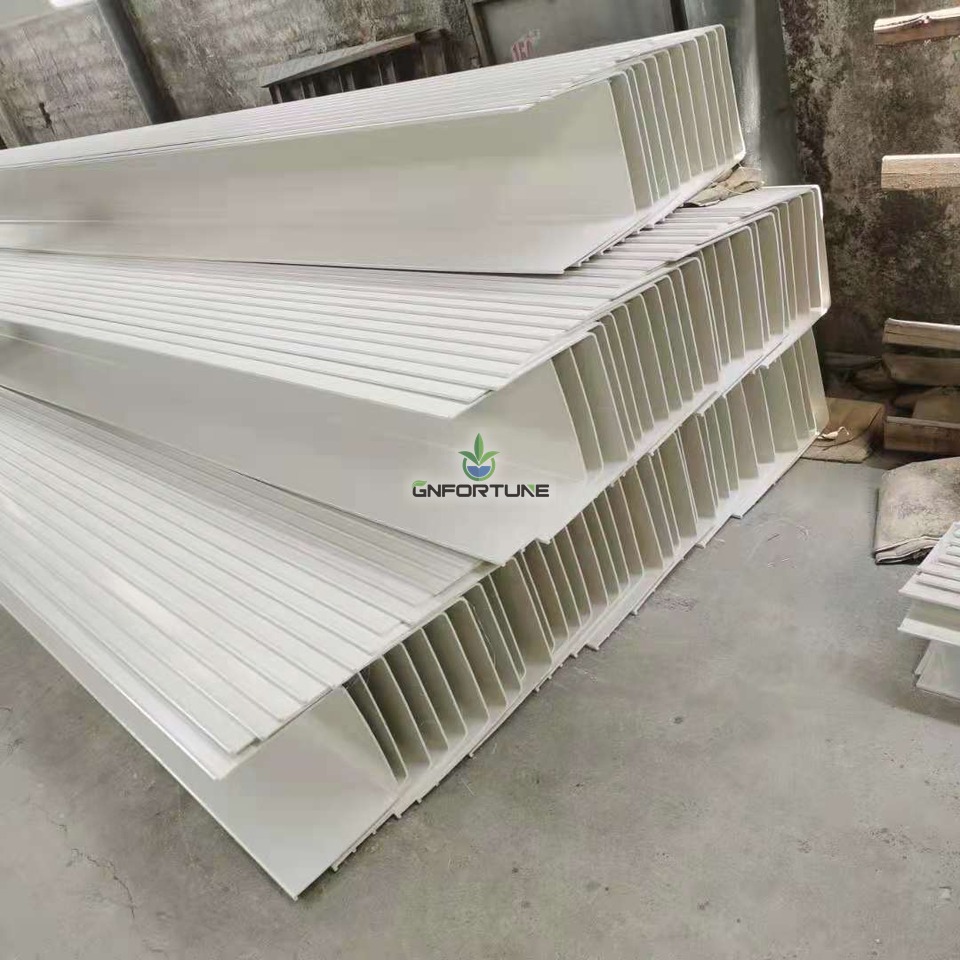
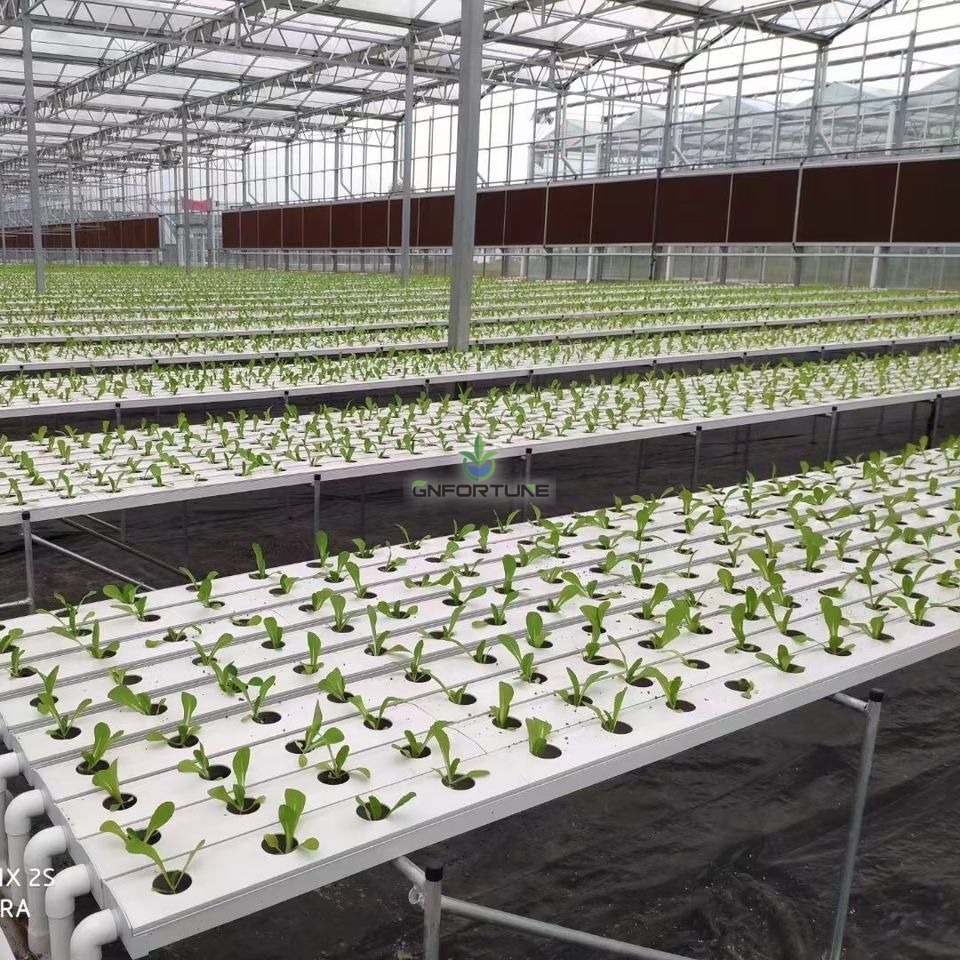
- Growing units. Channels, gutters, buckets, raft beds, or towers, with profile dimensions, wall thickness, and material grade stated. For extruded gutter, minimum order quantities apply on custom profiles; a typical production threshold for NFT gutter is 1,000 m.
- Support structure. Racks, frames, hangers, trellis wire, and fixings. State the load rating and the corrosion protection.
- Plant hardware. Net pots, lids, slabs or media, and starter plugs, with quantities matched to port count.
- Consumables for the first cycle. Often missing. Media, plugs, and cleaning chemicals should be in the first order, not sourced after the container lands.
Water System: Reservoir, Pump, Filtration
The water system is where quotes diverge most. Ask for tank volume in litres, pump duty point in flow and head, and filtration grade in mesh or micron, and require all three on the quotation.
- Reservoir. Volume sized to crop demand plus a working minimum, with level control and a drain point. State whether the tank is delivered as a moulded unit, a liner, or a site-built pit.
- Pumps. Duty flow and head, duty plus standby configuration, and material of the wetted parts. Redundancy is a separate line, not an assumption.
- Filtration. Screen, disc, or sand media, sized to emitter or nozzle orifice, with a stated cleaning method.
- Mains, manifolds and valves. Pipe material, pressure class, and fitting type. Zone valves should be counted, not implied.
- Return and drainage. Return lines, collection channels, and the drain-to-waste path, including where the waste goes.

Dosing and Control
Dosing and control decide whether the package runs at design performance or drifts. This section is frequently reduced to “controller included”, which is not a specification. Require brands or the performance envelope, sensor count, and what each controller actually actuates.
- Nutrient dosing. Number of channels, dosing pump capacity, injection method, and whether A and B tanks, mixers, and suction assemblies are included.
- Sensors. EC, pH, water temperature, and flow or level sensing, with the count and mounting locations.
- Actuated equipment. Which pumps, valves, vents, and lights the controller drives. Output count matters more than brand.
- Alarms and logging. Remote alerting, data logging interval, and whether the software licence is perpetual or annual.
Climate Equipment and Site Services
Climate equipment is the line most often handed to a third party. That is acceptable, but it must be stated explicitly so the buyer knows to budget for it. The same applies to site services: power, water supply, drainage, and compressed air rarely sit inside an equipment package.
- Ventilation and cooling. Fans, pads, vents, shade screens, and their drives, or a written exclusion naming the responsible party.
- Lighting. Fixture count, PPFD at target height, and mounting hardware, or a stated exclusion.
- Electrical. Distribution boards, cable, and containment. Confirm whether the supplier provides a panel or a load schedule only.
- Water treatment. Reverse osmosis, UV, or ozone units where source water requires it, plus pre-filtration.
Installation and Commissioning Scope
Commissioning is the boundary where equipment supply ends and project delivery begins. The scope split between buyer, supplier, and installer should be written down before the purchase order, because disputes almost always land here.
| Package section | Usually quoted | Often omitted | What to require in writing |
|---|---|---|---|
| Growing units | Channels, buckets, towers | Fixings, end caps, spare lengths | Profile, material, count, spare factor |
| Water system | Tank, pump, filter | Standby pump, level control | Duty point, mesh grade, redundancy |
| Dosing | Dosing pump | Stock tanks, suction lines, calibration kit | Channels, capacity, actuated outputs |
| Controls | Controller box | Sensors, cabling, licence term | Sensor count, outputs, alarm routing |
| Climate | Fans and pads if in scope | Screens, drives, install labour | Named exclusion or full scope |
| Installation | Supervision days | Commissioning, training, handover docs | Days on site, acceptance criteria |
Ask for installation scope in days, not in adjectives. “Supervision included” can mean one engineer for two days or a crew for six weeks. Require the number of technician-days, the acceptance test list, and the training session count.
How to Compare Two Complete Hydroponic System Packages
Normalise before comparing. Put both bids on the same unit basis, the same Incoterms, and the same spare factor, then look at what remains. A lower headline price usually means a shorter bill of materials, not a better one.
The check that resolves most package disputes: ask each supplier to mark every line as included, excluded, or buyer-supplied, and to state the quantity and unit price separately. A quotation with a single lump sum for “complete system” cannot be compared with anything, and a supplier unwilling to break it down is telling the buyer how change orders will be handled later. Line-item transparency is worth more than a 5 percent price difference.
| Line | Bid A | Bid B | Normalisation rule |
|---|---|---|---|
| Growing units | Per metre | Lump sum | Convert to unit price per metre or per port |
| Pump | Duty only | Duty plus standby | Add standby to A before comparing |
| Freight | EXW | CIF | Convert both to landed cost at the same port |
| Spares | None | 2 percent | Add a stated spare factor to both |
| Installation | Not included | 10 technician-days | Price installation separately for both |
The guide to normalising equipment quotations walks through the same exercise with a worked example. Manufacturers with in-house production capacity, such as G&N Fortune Limited, a hydroponic equipment manufacturer since 1996, can usually itemise faster because the bill of materials comes off their own production system rather than a trading catalogue.
FAQ
What is included in a complete hydroponic system package?
A: Growing units, support structure, reservoir, pumps, filtration, dosing, controls, and the pipework and fittings to connect them, plus a stated installation and commissioning scope.
What do suppliers most often leave out?
A: Standby pumps, sensors and cabling, stock tanks, first-cycle consumables, spares, and commissioning days. Each is small on its own and material in total.
Does a complete package include the greenhouse structure?
A: Usually not. Growing equipment and the building envelope are separate scopes, and the buyer should confirm which party supplies the structure.
Should installation be in the equipment quotation?
A: Price it as a separate line. That keeps the comparison clean and makes the technician-day count negotiable on its own terms.
How do I compare two quotes that list different items?
A: Convert both to landed unit prices with the same Incoterms and the same spare factor, then compare the remaining gaps line by line.
Get a Line-by-Line Package Quote
A complete hydroponic system package is only comparable when every line is itemised with a quantity and a unit price. Send the crop, floor area, water analysis, and target output through the request a line-by-line package quote form and the team will return a bill of materials with included, excluded, and buyer-supplied lines marked separately.


